
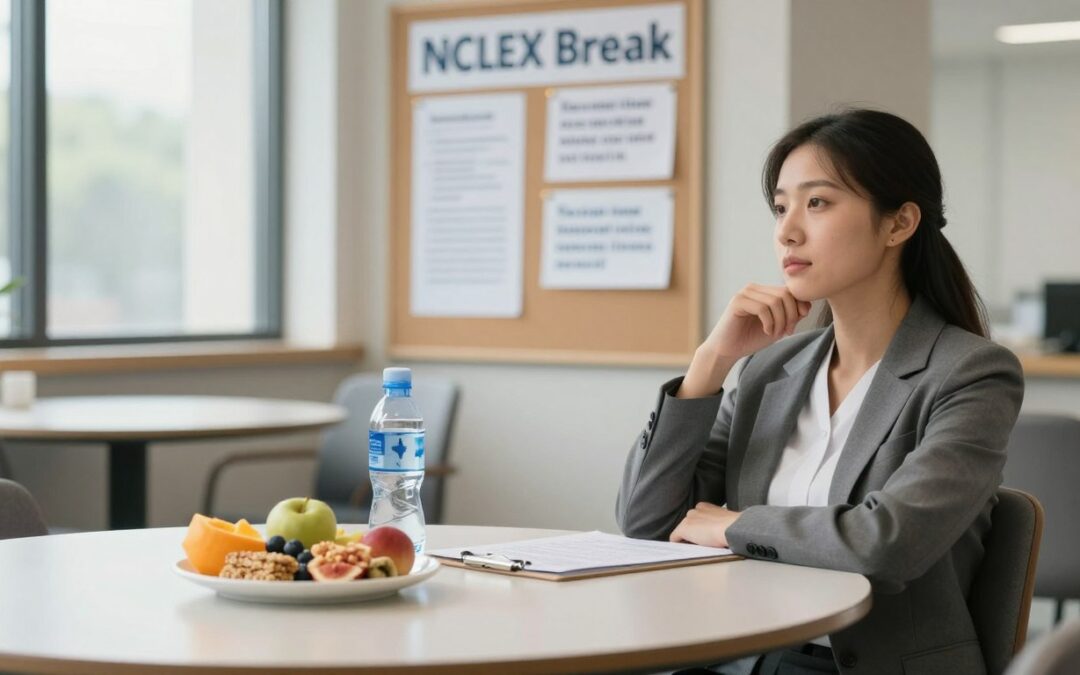
Did you know that your brain power can drop by nearly 20% after four hours of intense testing? For nursing students, staying focused is absolutely critical to pass. Many wonder if they can eat to keep their brains sharp during the exam.
Understanding the rules can be tough. Our guide helps you know the NCSBN’s rules on proper nutrition and breaks. Knowing these rules helps your test day go smoothly. We want you to feel fully prepared and confident for your test.
Key Takeaways
- Review official NCSBN guidelines to understand your specific testing rights.
- Plan your snacks to provide sustained energy, not a quick sugar crash.
- Always check your testing center’s rules on food storage.
- Avoid heavy meals that might make you feel tired or uncomfortable.
- Stay hydrated to keep your mind sharp during the exam.
Understanding the NCLEX Testing Process
Getting ready for the NCLEX is more than just knowing your nursing stuff. You also need to know how the test works. Mental endurance is as key as your nursing skills when you take this big test.
What is the NCLEX?
The NCLEX is a computer test that checks if you’re ready to be a nurse. It tests if you can use your nursing knowledge in real situations.
The test changes based on how you do, which can be mentally exhausting. You have to stay sharp and focused from start to finish.
Why Breaks Matter
Keeping your mind sharp for hours is tough. Breaks are key to help you stay focused.
These breaks let you rest and clear your mind. They’re essential for accuracy. Taking a break helps you come back stronger to finish the test.
How Long Are the Breaks?
The test has breaks to help you keep going all day. You get a break after about two hours of testing.
After about three and a half hours, you get another break. Managing your time wisely during these breaks is important for your test strategy.
NCLEX Break Rules and Regulations
Understanding the rules for your testing day is key. We aim to make you feel ready for every part of your exam, including breaks. This includes the time you spend away from your screen.
Official Policies on Food and Drink
The National Council of State Boards of Nursing (NCSBN) has strict rules. You can’t bring food during NCLEX break sessions into the testing room. But, you can access these items during official breaks.
You must put all your things in a locker at the testing center. Remember, the facility won’t be responsible for lost items. So, keep your stuff safe.
What You Can and Cannot Bring
Knowing what you can store in your locker is helpful. You can keep snacks, water, and even gum or candy for breaks.
But, these items must stay outside the testing area. Picking the right NCLEX break food options can help you stay focused all day.
Rationale Behind the Rules
Why are these rules so strict? They’re mainly to protect the integrity of the exam and ensure fairness for all.
Keeping personal items in lockers reduces the chance of unauthorized materials getting in. Following these rules is critical. Any rule-breaking could mean your exam results are withheld or cancelled.
Importance of Nutrition During the Exam
We think that choosing the right snacks for your breaks is key to doing well. Good NCLEX break nutrition does more than just fill your stomach. It fuels your brain for a tough day of nursing exams.
How Food Affects Focus and Energy
Your brain needs glucose to work its best. The wrong food during NCLEX break can cause a blood sugar spike and crash. This can make you feel foggy and less focused when you need to be sharp.
Go for complex carbs and proteins for sustained energy. Avoid sugary snacks to keep your mind clear. Learn more about diets for the NCLEX exam to get your body ready for the test.
Recommended Snacks for Long Testing Days
Picking the right NCLEX break snack is key. Look for snacks that are easy to eat, give lasting energy, and don’t upset your stomach. Here are some top picks for best snacks for NCLEX break:
- Almonds or Walnuts: These offer healthy fats and protein for steady brain power.
- Fresh Berries: Blueberries and strawberries offer antioxidants without the heavy sugar crash.
- Greek Yogurt: A great source of protein that keeps you feeling full longer.
- Whole Grain Crackers: These offer complex carbs for consistent energy levels.
Plan your NCLEX break nutrition in advance to focus on your exam. The right NCLEX break snack supports your brain. These best snacks for NCLEX break will keep you alert until the end.
Preparing for the NCLEX Break
Planning your food strategy is key to staying sharp during the exam. Knowing how to manage your energy can greatly improve your score.
Packing Snacks and Drinks
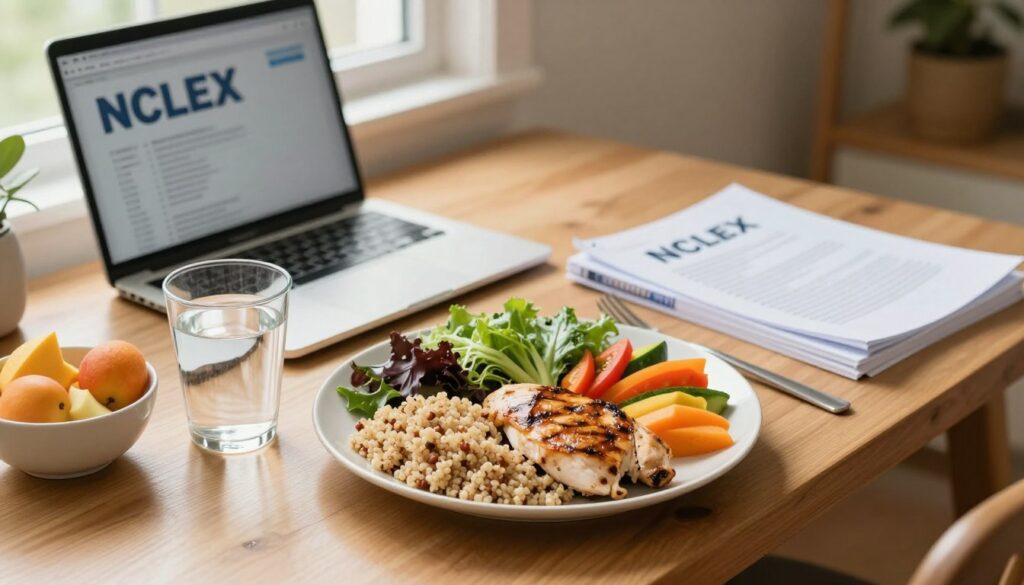
Before you enter the testing room, organize your items wisely. You can’t access your locker once the exam starts. So, leave your NCLEX break meal and water outside the room.
Make sure your items are easy to find. This way, you can quickly grab them during your break. Check the official candidate rules to know where to store them. Proper organization helps you rest instead of searching for your supplies.
Timing Your Meals Before the Exam
What you eat before arriving is as important as what you bring. Eat a balanced meal for sustained energy, not a quick sugar rush. This keeps you focused during the test.
Stay away from heavy or greasy foods that can make you feel tired or uncomfortable. Opt for complex carbs and lean proteins to prepare you for the exam.
Staying Hydrated Throughout the Day
Drinking water is essential for mental clarity during the exam. Keep your water bottle in the designated area for a refreshing sip during your NCLEX break time snacks. Staying hydrated prevents fatigue during long tests.
Watch your water intake to stay comfortable. Having your NCLEX break meal and hydration plan ready lets you focus on showing your nursing skills.
Types of Acceptable Snacks for the NCLEX
Choosing the right NCLEX break snack is key to keeping your mind clear during the test. The right snack helps you stay focused and ready for the next questions.
Healthy Snack Options
When you eating during NCLEX break, pick snacks that give you lasting energy. Foods high in protein and healthy fats are best. They keep your brain working well for a long time.
Almonds, Greek yogurt, or string cheese are great choices. They’re easy to eat and give you the energy you need to do your best.
Avoiding Heavy Foods
It might be tempting to eat a big NCLEX break meal, but don’t. Heavy, greasy, or sugary foods can make you feel tired and lose focus. This can hurt your performance in the second half of the exam.
“Proper nutrition is the silent partner of your cognitive performance; choose fuel that sustains your focus instead of depleting it.”
Stay away from fast food or heavy pasta. These can make you feel slow. Instead, eat light to stay alert and comfortable while you test.
Snacks to Boost Your Energy
Choose NCLEX break food options that give you a quick energy boost without crashing later. Fresh fruit like berries or apple slices are great. They give you natural sugars to help focus.
Adding a bit of nut butter or whole-grain crackers to your fruit makes a perfect snack. This mix gives you the energy to finish the exam with confidence.
| Snack Category | Examples | Benefit |
|---|---|---|
| Protein-Rich | Almonds, Cheese | Sustained focus |
| Quick Energy | Berries, Grapes | Mental alertness |
| Balanced | Whole-grain crackers | Steady blood sugar |
By planning your NCLEX break time snacks carefully, you control your energy levels. The best snacks for NCLEX break are those that keep you light, energized, and ready to succeed.
Managing Stress During NCLEX Breaks
Sitting for the NCLEX can feel overwhelming, but you can regain your focus during breaks. The testing environment is tough, and it’s normal to feel the pressure. Taking a step back is not a sign of weakness; it’s a smart move to do your best.
Importance of Taking a Breath
When you’re deep into questions, your brain gets tired. This can lead to mistakes or more anxiety. Stepping away lets your mind reset, so you can come back with a clearer perspective.
Think of your break as a pit stop in a race. Just like balancing work and life, you should manage your exam day with discipline. A few deep breaths can calm you down and help you face the next questions.
Techniques for Quick Stress Relief
You don’t need a lot of time to manage stress. Simple actions can release tension in your shoulders and neck. Try these quick techniques during your break:
- Deep Breathing: Inhale slowly through your nose for four seconds, hold for four, and exhale through your mouth for four. This simple rhythm signals your nervous system to calm down.
- Gentle Stretching: Roll your shoulders, stretch your arms overhead, or gently rotate your neck to release the physical strain of sitting in one position.
- Mindfulness Reset: Close your eyes for a moment and focus entirely on your breathing to clear away intrusive thoughts about previous questions.
Remember, self-care is key to your success on this exam. By managing your stress, you’re investing in showing your true nursing knowledge. Stay focused, stay calm, and trust in your preparation.
Timing Your Breaks Wisely
Every second away from your desk matters during the exam. The pressure can make these minutes feel like an eternity. But, staying organized helps you return feeling refreshed, not rushed.
How to Maximize Your Break Time
Being efficient is key when you’re away from the test. Have your water and snacks pre-packaged in your locker. This saves time and lets you focus on breathing and resetting.
Don’t worry about your previous answers while you’re away. Instead, focus on your physical needs. Strategic movement keeps your blood flowing and your mind sharp for the next questions.
Planning Your Study Schedule Around Breaks
Practice your study sessions like the real test to build stamina. Include timed breaks that match the test’s rhythm. This helps you get used to working under a clock.
Simulating these conditions helps you know how much time you need to feel ready. This removes the uncertainty on test day, letting you move through breaks with confidence. Use the table below to see how different habits affect your test experience.
| Habit Type | Action Taken | Impact on Exam |
|---|---|---|
| Efficient | Pre-packed snacks ready | Maintains mental focus |
| Inefficient | Searching for items | Increases anxiety levels |
| Strategic | Practiced timed breaks | Better time management |
| Disorganized | No break plan | Risk of rushing questions |
The Role of Breaks in Test Strategy
Think of your scheduled break as a tactical reset button for your brain. When we face a long exam, our mental stamina changes. A planned break helps us regain our composure. Strategic downtime is not just a luxury; it’s key to your testing success.

Using Breaks to Recap Your Answers
During your break, you might want to review the questions you just did. But, we advise against obsessing over them. This can cause unnecessary anxiety. Instead, use this time to mentally clear your workspace and get ready for the next challenges.
Remember, the NCSBN strictly prohibits discussing exam content with others. To stay focused, consider these productive ways to spend your time:
- Practice deep breathing exercises to lower your heart rate.
- Stretch your neck, shoulders, and back to release physical tension.
- Hydrate and enjoy a light, healthy snack to fuel your brain.
- Visualize yourself approaching the next section with confidence and clarity.
How Breaks Can Impact Your Performance
Stepping away from the computer screen gives us a much-needed change of view. Sitting for too long can make our focus wander, leading to mistakes. By taking a brief break, we prevent mental burnout and keep our minds sharp throughout the test.
Your performance is linked to managing your energy levels. A well-timed break lets you return to your seat feeling refreshed, not tired. By using your break as a strategic tool, you’re ready to tackle the rest of the questions with the same energy as the start.
Communicating with Test Administrators
We think it’s important to get along well with the testing staff. When you get to the center, remember, the proctors are there to keep the exam fair and help you out. Treating them with respect makes things easier for everyone.
Asking About Break Policies
The testing area is very controlled. If you need a break or have to leave, you can’t just go. You must raise your hand and wait for someone to come over.
When the administrator comes, they’ll show you how to leave properly. You might be taken out of the room to keep the test safe. Always listen to what they say to avoid any problems with your test.
Reporting Issues with the Testing Environment
Technical problems or distractions can happen. If something like a frozen screen or a broken keyboard happens, don’t try to fix it. Notify the administrator right away by raising your hand.
The staff knows how to deal with these problems quickly. Whether it’s a room temperature issue or a tech problem, telling them helps them fix it. This way, your test experience stays fair and consistent.
| Situation | Action Required | Communication Method |
|---|---|---|
| Unscheduled Break | Request permission | Raise hand and wait for escort |
| Hardware Malfunction | Report to staff | Raise hand and explain issue |
| Environmental Distraction | Seek assistance | Raise hand and speak quietly |
Real Experiences from NCLEX Test Takers
Learning from others is a great way to prepare for your own success. Many find the testing center is different from what they thought. Hearing from those who passed can help you know what to expect.
Insights from Successful Candidates
Many nurses say the testing center is a high-security facility that feels intense. You’ll face strict check-in, like palm vein scanning and security checks. These steps are common but can feel overwhelming.
The silence in the room is deep. Staying focused in this quiet is a skill. Practice in a quiet place to get used to the pressure.
Lessons Learned from Break Time
Break time is important, and managing it well is key. It’s tempting to rush back to questions, but taking a moment to breathe is vital. Mental clarity often comes back after a quick stretch or a sip of water.
Here are some common lessons from successful test-takers about break time:
- Plan your movement: Use your break to stretch and reset your posture to avoid fatigue.
- Respect the rules: Always follow the administrator’s instructions during check-in and check-out to avoid stress.
- Keep it simple: Don’t review complex notes during your break; focus on calming your mind.
- Stay hydrated: Small sips of water can help you stay focused without discomfort during the second half.
These real-world lessons offer valuable context for your testing experience. By managing your expectations and preparing for the strict environment, you can approach the exam with greater confidence. Remember, every candidate faces these challenges, and you can overcome them too.
Tips for a Successful NCLEX Experience
We believe your success is tied to both mental and nursing studies. Getting a good score is not just about knowing nursing stuff. It’s also about understanding the test environment well. By getting the logistics right, you’ll feel more confident on test day.
Pre-Test Preparation Strategies
Practice your pre-test routine to feel comfortable with the rules. Knowing the check-in process and the center’s layout can reduce surprises on test day. Think of it as a dress rehearsal for a big event.
Here are some habits to help you perform better:
| Strategy | Benefit | Action Item |
|---|---|---|
| Environment Review | Reduces anxiety | Visit the center early |
| Routine Practice | Builds muscle memory | Simulate test timing |
| Rule Compliance | Prevents disqualification | Review official handbook |
Managing Post-Break Anxiety
Starting again after a break can feel tough, with the exam pressure high. It’s normal to feel more tense when you start again. Try taking three deep, slow breaths to calm down before moving on.
“Success is not final, failure is not fatal: it is the courage to continue that counts.”
Your break is meant to help you do your best. Stay calm and focused to smoothly get back into the test rhythm. Trust your prep and focus on each question to keep your energy up until the end.
Final Thoughts on NCLEX Breaks and Nutrition
Passing the National Council Licensure Examination is not just about knowing the material. It’s about treating your body like an athlete getting ready for a big game. Taking care of your physical needs helps your brain work at its best.
Many students wonder if they can eat during the NCLEX break. Yes, you can, but only if you follow the rules set by Pearson VUE. Planning your meals right helps keep your blood sugar steady and avoids stress.
Optimizing Your Performance
Good nutrition during NCLEX breaks is like having a secret advantage. The right snacks can prevent that dreaded crash in the middle of the test. Choose snacks that give you energy for a long time, not just a quick sugar rush.
Prioritizing Your Well-being
Getting to be a registered nurse is a big achievement. It’s important to take care of your mind and body while taking the test. Making smart choices during your breaks can help you stay calm and focused until the end.
We wish you all the best as you start your nursing career. Believe in your hard work and confidence. You’ve made it this far, and you’re ready to do great.