

Ever wondered if your practice scores really show you can pass the national board exam? Many nursing students feel anxiety when they face these big tests. Yet, they are key to getting your nursing license.
These exams are a standard for nursing programs in the U.S. They mimic the Next Generation format to find out what you need to work on. If you want to feel more sure, you might look into online classes to help you get ready for the NCLEX-RN.
Knowing how reliable these exams are is essential for students. We’ll look into why these tests are so important in nursing school. And how they shape your journey to becoming a registered nurse.
Key Takeaways
- Predictive assessments act as a vital benchmark for gauging student readiness.
- These tools help identify specific areas that require additional study time.
- Simulating the testing environment reduces anxiety and improves performance.
- High scores on these evaluations often correlate with first-time licensure success.
- Utilizing supplemental resources can significantly boost your confidence and knowledge base.
Understanding NCLEX Predictor Exams
Getting ready for nursing licensure can be tough. But, these tools help guide you to success. Knowing how these exams work is a vital step on your path to becoming a registered nurse.
What Are NCLEX Predictor Exams?
These exams are made to feel like the real board exam. For example, CJE-RN REs are like the Next Generation NCLEX-RN (NGN) in style and scoring. They help you get used to the real test’s pressure.
Students often look for NCLEX predictor exam reviews to find the best fit for them. These exams are not meant to be a final test. They are diagnostic instruments that show how ready you are.
Purpose of Predictor Exams
The main goal is to find out where you need to improve before the real exam. They show you where you might struggle. This lets you focus your studying better.
So, you might ask: How accurate are NCLEX predictor exams? They are very good at finding your weak spots. But, they work best as part of a solid study plan. They help you turn weaknesses into strengths.
Types of Predictor Exams
There are many types of exams, each for different needs. Some cover all nursing areas, while others focus on specific topics like pharmacology or maternal-child health.
Choosing the right exam is key to your success. We suggest looking at NCLEX predictor exam reviews to match your school’s style. The right tool gives you the confidence to face your official results.
Importance of NCLEX Predictor Exams
Getting ready for the licensure exam is more than just studying hard. It’s about using smart, data-driven insights. These exams help bridge the gap between learning in class and practicing in real life. They show you how ready you are for the big test.

Role in Nursing Education
Nursing schools across the U.S. use these tools to make sure their programs meet high standards. Teachers use them to see how students are doing. This helps schools keep their pass rates high.
Looking at NCLEX predictor exam reviews, we see these tests are more than just tests. They help teachers find students who need extra help. This way, schools can guide students better towards graduation.
Prediction of NCLEX Success
The data from these exams is very encouraging for students aiming to pass. For example, students who score 84% or higher on certain exams have a 99% chance of passing the NCLEX-RN on their first try. Knowing how predictive exams affect NCLEX success is key to your study plan.
While no test is perfect, the NCLEX predictor exam accuracy is a good sign of your knowledge. High scores mean you understand nursing basics well. This confidence can really help when you take the real board exam.
Identifying Areas for Improvement
One big plus of these exams is finding out where you’re weak early on. Instead of guessing what to study, you get a clear report of your strengths and weaknesses. This lets you focus on improving in the right areas.
We suggest using your results to make a study plan. Here are some steps to boost your score:
- Look at the content areas where you scored low.
- Talk to your teachers about NCLEX predictor exam reviews and study tips.
- Practice with more questions to get better at tough topics.
By fixing these weaknesses, you’ll get better and feel more confident. Keeping a high NCLEX predictor exam accuracy in your last semester means you’ll be ready for nursing’s challenges.
How NCLEX Predictor Exams Work
Let’s dive into how these exams prepare you for the real test. Knowing how they work is key to reaching your career goals and feeling ready on test day.
Structure and Format
These exams are made to be like the real test. They use different question types, like multiple-choice and select-all-that-apply. This makes sure you’re ready for the rigor of the actual test.
They help you get better at thinking critically. Knowing the question styles ahead of time is a big plus when you take the official exam.
Scoring Mechanism
The scoring systems give you a clear idea of how likely you are to pass. They show you where you are in your study journey.
You can use an ATI score to NCLEX pass probability chart to see how ready you are. This helps you know what areas you need to work on before the big test.
Exam Duration and Conditions
It’s important to take these exams in a quiet place, just like the real test. This way, you get the most accurate results possible.
Practicing under real test conditions helps you feel less anxious. When you get used to the pressure, you’ll be more ready for the actual exam.
Assessing the Accuracy of Predictor Exams
These exams are key to measuring success in nursing programs. They help shape the curriculum and support student growth. By looking at the numbers, we see how these exams prepare students for real-world challenges.
Statistical Reliability
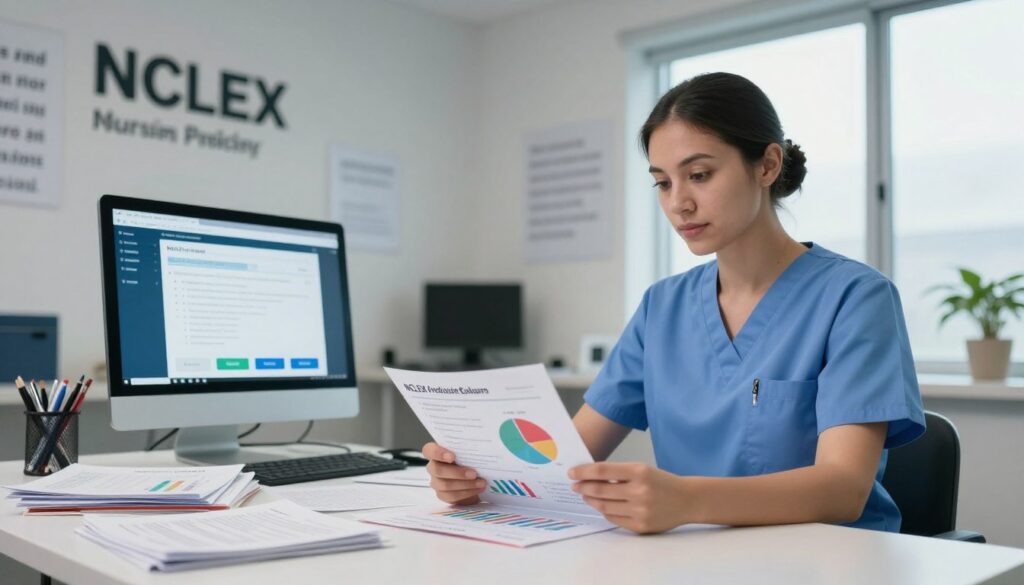
The NCLEX predictor reliability is essential in nursing education. These exams aim to give consistent results. This means a student’s score truly shows their knowledge, not just luck.
When an exam is reliable, teachers trust it. They know it accurately measures clinical skills.
We check a few important things when we review these exams:
- How consistent they are in different settings.
- If they match up with today’s nursing standards.
- If they pinpoint specific knowledge areas that need work.
Correlation with NCLEX Pass Rates
A study of 1,000 students showed a clear link between CJE-RN RE scores and passing the licensing exam. This proves the NCLEX predictor validity. Students who do well on these exams are more likely to pass on their first try.
No test is perfect, but the NCLEX predictor exam accuracy is a strong sign for both students and teachers.
The table below shows how these metrics help us see if students are ready:
| Metric | Significance | Impact on Success |
|---|---|---|
| Reliability Score | High consistency | Predicts stable performance |
| Validity Coefficient | Strong correlation | High pass rate probability |
| Error Margin | Low variance | Increases confidence in results |
These tools give us invaluable insights into a student’s path. By focusing on these stats, we can better prepare students for nursing’s challenges. This ensures every graduate is ready for the profession.
Factors Influencing Predictor Exam Scores
Many hidden factors affect your score on nursing exams. Knowing a lot is important, but how you handle the test matters too. Getting better at this is key to boosting your NCLEX predictor reliability over time.
Test-Taking Skills
Learning good test-taking strategies is essential. Many students find that mastering time management helps them solve complex questions without rushing. By practicing to pick the right answers quickly, you can do better under pressure.
Study Habits and Preparation
Staying consistent is the best way to feel confident before a test. We suggest making a study plan that includes active learning, not just reading. A consistent routine helps avoid cramming, which improves your NCLEX predictor reliability.
Test Anxiety and Performance
Feeling nervous before a big test is normal. But too much anxiety can mess with your focus and memory. Try mindfulness to reduce stress when you’re taking the test.
By tackling these mental challenges, you can show what you really know on the exam. Remember, your NCLEX predictor reliability can grow as you improve your study habits and mental game.
Comparing NCLEX Predictor Exams and NCLEX Scores
Many nursing students use assessment tools to prepare for the NCLEX. But how accurate are these tools? They offer insights, but they’re not perfect predictors of success.
When we compare NCLEX predictor exams, we see they are guides, not guarantees. It’s important to understand how these tools have evolved over time.
Historical Data and Trends
In the last decade, nursing education has changed a lot. More commercial products aim to simulate the real exam.
These tools were first used to spot knowledge gaps early. Even with their improvement, national pass rates have stayed steady. This is despite the rise in digital resources.
Case Studies Highlighting Accuracy
Studies on these products show mixed results. For example, a study of 688 students found no big change in pass rates with a specific product.
This means just taking the exam doesn’t guarantee success. How well you use the feedback from these systems matters a lot.
Limitations of Predictor Exams
These exams have their limits. They can’t fully capture factors like test anxiety or personal stress. How a student manages their time during the test also matters.
Don’t rely too much on one score. See it as part of a bigger picture. Balanced preparation is the best way to reach your nursing goals.
Preparing for NCLEX Using Predictor Exams
Mastering the nursing boards starts with how you use practice exams during your final semester. Students who treat these exams as diagnostic tools often see better results. By comparing NCLEX predictor exams, you can find your knowledge gaps.
Integration into Study Plans
Make sure to include these exams in your weekly schedule. This keeps your study pace steady. Use the results to fine-tune your focus for the next week. This way, you learn to understand clinical reasoning, not just memorize facts.
Recommended Study Resources
We recommend using high-quality review books and digital question banks with your practice tests. A balanced approach helps you review content and test what you’ve learned. When comparing NCLEX predictor exams, look for resources with detailed rationales for each answer.
Building Test-Taking Strategies
Building a strong strategy is key, not just knowing the medical content. Practice under timed conditions to get used to the real test environment. Consistency builds the confidence you need to ace the exam.
Feedback and Improvement Strategies
Once you get your NCLEX predictor exam results, it’s time to make a plan. Don’t see your score as a final verdict. Instead, view it as a valuable roadmap for your final prep.
Interpreting Your Scores
Start by diving deep into your report to find areas needing more study. Reports often break down your performance by subject, like pharmacology or physiological adaptation.
“Success is not final, failure is not fatal: it is the courage to continue that counts.”
Look for patterns where your scores are low. This helps you focus on what you need to work on. You can skip what you already know well.
Creating a Study Action Plan
After finding your weak spots, make a detailed study plan. Spend more time on tough subjects and keep up your skills in easier ones with quick daily checks.
Your plan should be doable and not too hard. Being consistent is key to getting better.
| Action Step | Focus Area | Recommended Resource |
|---|---|---|
| Review Report | Identify Weak Topics | Score Analysis Tool |
| Targeted Study | High-Priority Concepts | Remediation Modules |
| Practice Tests | Application Skills | Question Banks |
Utilizing Resources for Weak Areas
To improve your weak spots, use top-notch products for remediation. Use question banks to make quizzes for your weak areas.
Don’t skip remediation modules from your program or other sources. They offer detailed explanations that help you understand the exam better.
By using these resources, you’ll gain the confidence you need. Remember, your NCLEX predictor exam results are just a tool to help you become a licensed nurse.
Success Stories from Nursing Graduates
Recent graduates share how they overcame tough practice scores. They saw these exams as essential growth opportunities, not just tests of their knowledge.
Personal Experiences with Predictor Exams
Many students feel overwhelmed by their NCLEX predictor exam results at first. But, graduates say these scores made them work harder on their study habits.
One graduate changed her study method after a low score. She moved from memorizing facts to focusing on clinical reasoning. This change helped her pass the NCLEX on her first try.
Impact on NCLEX Outcomes
First-time pass rates are key for nursing program accreditation. Students who deeply engage with their NCLEX predictor exam outcomes help their cohort succeed.
Those who took these exams seriously felt more confident on test day. They knew the format, timing, and difficulty level. This knowledge reduced their anxiety and helped them perform well.
Lessons Learned from the Process
If you’re preparing for your boards, here are important lessons from those who passed:
- Consistency is key: Review your NCLEX predictor exam results regularly, not just at the last minute.
- Analyze your errors: Every wrong answer shows a gap in your understanding.
- Stay positive: Use your NCLEX predictor exam outcomes to improve, not to judge yourself.
- Seek support: Ask mentors or peers for help with tough topics.
Learning from others helps you use these tools to reach your nursing career goals. Stay focused, trust the process, and keep moving toward your nursing career.
Conclusion: The Value of NCLEX Predictor Exams
Getting a nursing license needs a smart study plan. Predictor exams guide you through your studies.
These exams show how ready you are for the real test. By looking at your results, you can improve your focus on key clinical areas.
They give you important information to link what you learn in class to real nursing situations. This helps build your confidence for the big exam.
See these exams as a way to grow, not just a test of your skills. Keep practicing with top resources like ATI or HESI to stay on track.
Working hard to understand your results will help you pass the official exam. Keep aiming for your goal of becoming a registered nurse.