

Did you know that nearly 20% of the nursing board exam focuses on safety and environment? Mastering these topics is essential for your success. We’re here to guide you through these complex exams with our detailed guide.
Our team offers NCLEX preparation tips to boost your confidence. By learning these strategies, you’ll be ready for any challenge.
We’ll show you how using these NCLEX exam tips can greatly improve your test day performance. Let’s make it easier for you to achieve your dream of becoming a licensed nurse.
Key Takeaways
- Understand the high priority of safety and environment categories.
- Use systematic approaches to evaluate clinical scenarios effectively.
- Prioritize patient safety protocols to boost your exam score.
- Apply proven study strategies to reduce test-day anxiety.
- Focus on core nursing principles to solve complex problems.
Understanding Infection Control Basics
Learning safety protocols is key for anyone studying infection control NCLEX review. These concepts are not just for tests; they’re daily habits that keep healthcare safe. By mastering them, we ensure quality care and protect our health.
Definition of Infection Control
Infection control is the systematic effort to stop pathogens in healthcare. It uses policies and procedures to break the infection chain. Knowing these helps us stop harmful microorganisms from spreading.
Importance in Nursing Practice
As nurses, our main goal is patient safety. Using these protocols prevents infections, which are dangerous for sick patients. A good infection control NCLEX review prepares us to apply these critical practices in any situation.
The table below shows what we aim to achieve with these practices:
| Objective | Primary Action | Expected Outcome |
|---|---|---|
| Patient Safety | Strict hand hygiene | Reduced infection rates |
| Staff Protection | Proper PPE usage | Minimized exposure risk |
| Environment | Surface disinfection | Sterile care areas |
| Compliance | Following protocols | Standardized care delivery |
Key Principles of Infection Control
We will explore the essential principles that keep both patients and healthcare workers safe in any clinical environment. Mastering these concepts is a vital step in your journey toward becoming a competent nurse. As you build your NCLEX study guide, focus on how these rules apply to daily patient care.
Standard Precautions
Standard precautions represent the minimum level of infection prevention that applies to all patients, regardless of their suspected or confirmed infection status. We treat every patient as if they are potentially infectious to ensure maximum safety. This approach includes consistent hand hygiene, the use of gloves, and proper disposal of sharps.
By integrating these habits into your practice, you protect yourself and your patients from bloodborne pathogens. Remember that these measures are the foundation of safe nursing. They remain the most effective way to prevent the spread of germs in any healthcare setting.
Transmission-Based Precautions
When standard precautions are not enough, we implement transmission-based precautions based on how a specific pathogen spreads. These are used for patients known or suspected to be infected with highly transmissible agents. As you refine your NCLEX study guide, keep these three categories in mind:
- Contact Precautions: Used for infections spread by direct or indirect contact.
- Droplet Precautions: Required for pathogens spread through large respiratory droplets.
- Airborne Precautions: Necessary for diseases that remain infectious over long distances in the air.
| Precaution Type | Primary Focus | Key PPE |
|---|---|---|
| Contact | Direct/Indirect touch | Gloves and Gowns |
| Droplet | Respiratory droplets | Surgical Mask |
| Airborne | Small particles | N95 Respirator |
Understanding these distinctions helps you make quick, accurate decisions during your exams. Always evaluate the mode of transmission before choosing your protective gear. This logical approach will serve you well throughout your career and your upcoming certification tests.
Types of Infections to Know for NCLEX
To do well on your board exams, you need to know about common pathogens. Our NCLEX study guide helps you learn about bacterial, viral, and fungal threats. Knowing these is key for nursing students.
Bacterial Infections
Bacterial pathogens are a big part of any NCLEX study guide. They need strict precautions like contact or droplet precautions. Look out for signs like redness, swelling, and pus from infections like Staphylococcus aureus and Streptococcus.
Viral Infections
Viruses are different from bacteria and need airborne or contact precautions. You should know about symptoms like fever, malaise, and rashes from viruses like Influenza or Varicella. Remember, viruses don’t get better with antibiotics.
Fungal Infections
Fungal infections, or mycoses, often hit people with weak immune systems. Our NCLEX study guide helps you spot signs like mouth white patches or skin lesions. These need special treatments and good hygiene to manage.
“Infection control is not just a set of rules; it is the fundamental language of patient safety that every nurse must speak fluently.”
| Pathogen Type | Common Example | Primary Precaution | Key Symptom |
|---|---|---|---|
| Bacterial | MRSA | Contact | Purulent drainage |
| Viral | Influenza | Droplet | High fever |
| Fungal | Candida | Standard | White lesions |
Common Infection Control Measures
Keeping ourselves and our patients safe starts with daily infection control habits. In our infection control NCLEX review, we learn these habits are key to fight off infections. Knowing these skills well is vital for passing exams and doing well in clinical rotations.
Hand Hygiene
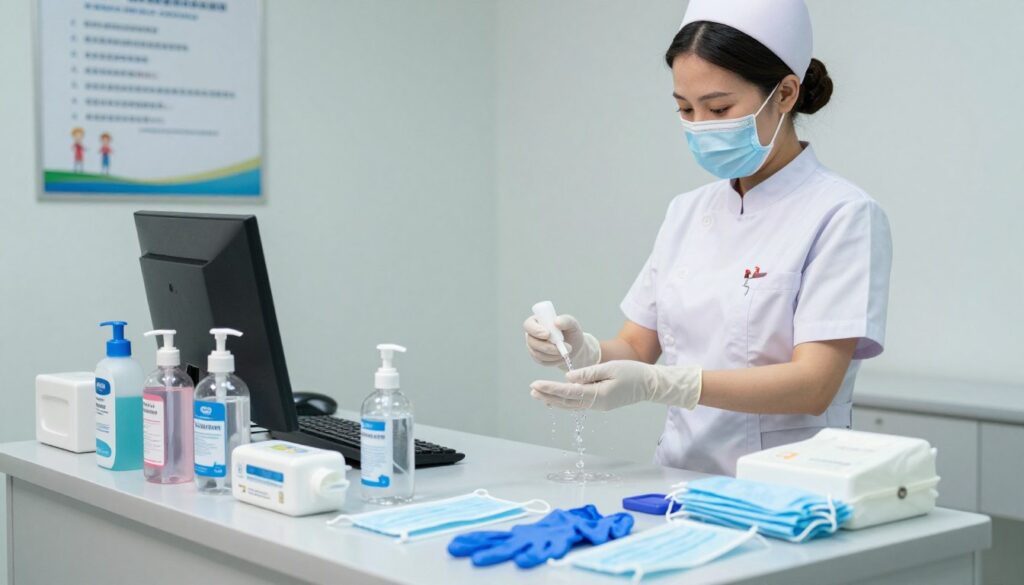
Hand hygiene is the best way to stop germs from spreading. We should wash our hands before and after touching each patient. Remember, use alcohol-based hand rubs most of the time. But, if our hands are dirty, we need to use soap and water.
Try these infection control NCLEX practice questions to improve your skills. Regular practice helps these actions become automatic, even when it’s busy.
Use of Personal Protective Equipment (PPE)
Using personal protective equipment (PPE) correctly is key in our infection control NCLEX review. We need to know how to put on and take off PPE without getting infected. Donning means putting on a gown, mask, goggles, and gloves in that order.
When taking off PPE, we do it in reverse order. Start by removing gloves, as they are the most dirty. Then, take off the gown and eye protection. Learning these steps is essential for nursing students who want to be safe.
Recognizing Infections in Patients
Spotting an active infection needs a sharp eye for small changes in your patients. As you get ready for your exams, learning these skills is key to your NCLEX test strategies. We aim to help you link physical signs to possible infections.
Signs and Symptoms
Early signs of infection often show up in vital signs. Keep an eye out for fast heart rates, quick breathing, or sudden fever. These signs mean the body is battling an infection.
Also, look for signs like redness, swelling, or pus at a wound. Lab results, like high white blood cell counts, are also important. Learning to understand these signs is vital for your NCLEX test strategies.
Risk Factors for Infection
Knowing who’s at risk helps you spot problems early. Babies and older adults often have weaker immune systems. Also, people with long-term health issues or taking drugs that weaken the immune system are at risk.
When you see these high-risk patients, be extra careful. For example, an older person might not have a fever but could seem confused or very tired. Using these NCLEX test strategies helps you focus on the right care and report confidently during exams.
Role of the Nurse in Infection Control
Nurses play a key role in keeping patients safe from infections. We follow strict protocols to protect our patients. Learning these skills is vital for passing NCLEX infection control questions and doing well in your job.
Patient Education
Teaching patients about infection control is very important. We explain the need for hand washing, covering mouths, and isolation. Taking online classes can help you teach these ideas clearly.
Clear communication makes patients feel less scared and more willing to follow safety rules. When patients understand why we do things, they help us more. This teamwork is key to passing NCLEX infection control tests.
Monitoring and Reporting
We watch patients closely for signs of infection. We check their vital signs, wounds, and overall health. If we see something wrong, we tell the team right away.
Keeping accurate records and reporting quickly is important. It helps the team work together smoothly. This careful attention is what makes nurses great and helps with passing NCLEX infection control parts.
| Responsibility | Action Taken | Goal |
|---|---|---|
| Patient Education | Teaching hand hygiene | Prevent pathogen spread |
| Monitoring | Tracking fever trends | Early detection |
| Reporting | Notifying the provider | Rapid intervention |
Infection Control Protocols in Healthcare Settings
Understanding healthcare environments is key to passing the NCLEX. Infection control varies by setting, adapting to each facility’s risks. Mastering these variations is essential for passing NCLEX infection control questions.
Hospitals
In hospitals, the focus is on rapid intervention and strict isolation. Patients often have serious illnesses, making cross-contamination a big risk. Nurses must use contact, droplet, and airborne precautions to protect everyone.
“The hospital environment is a complex ecosystem where every interaction requires a conscious decision about infection prevention.”
Long-term Care Facilities
Long-term care settings face unique challenges. The goal is to prevent outbreaks in a shared living space. Questions often involve managing residents with chronic conditions and resistant organisms.
It’s important to understand these differences for passing NCLEX infection control exams. Balancing resident quality of life with strict hygiene is key to preventing infections like influenza or norovirus.
Outpatient Clinics
Outpatient clinics have high patient turnover, needing quick and effective sterilization. The main concern is quick disinfection of rooms between visits. Nurses must ensure equipment is cleaned to prevent pathogen spread among diverse patients.
| Setting | Primary Focus | Key Risk |
|---|---|---|
| Hospital | Acute Isolation | Cross-contamination |
| Long-term Care | Outbreak Prevention | Communal Spread |
| Outpatient | Rapid Disinfection | High Patient Volume |
By understanding these protocols, you’ll feel more confident in passing NCLEX infection control scenarios. Always consider the setting in the question to choose the right nursing action.
The Importance of Vaccination
Vaccines are key to keeping our communities safe. They help stop the spread of harmful germs. By getting vaccinated, we protect not just ourselves but also others around us.

Vaccines to Consider
For your exams, knowing about important vaccines is essential. Nurses play a big role in giving these shots. It’s important to understand when and why they are given.
- Influenza: Recommended annually to protect against seasonal viral strains.
- MMR (Measles, Mumps, Rubella): A critical series for preventing highly contagious childhood diseases.
- Varicella: Essential for preventing chickenpox and its complications in vulnerable populations.
- Hepatitis B: A standard requirement for healthcare workers to prevent bloodborne transmission.
Educating Patients on Vaccinations
Talking about vaccines needs to be friendly and professional. Some patients might have doubts or worries. We must listen to their concerns and give them solid facts.
Always highlight the big benefits of vaccines. Explain how they help our bodies fight off diseases. Being patient and supportive helps our patients make informed choices. This way, we all stay safer together.
Effective Communication Strategies
Sharing information clearly is as important as following safety protocols. Good communication is the foundation for success in healthcare. As you prepare for your infection control certification, remember that knowing the facts is only part of it.
Interprofessional Collaboration
Healthcare is a team effort that needs constant teamwork. Nurses, doctors, and support staff must work together. When they talk openly, they can quickly spot any safety issues.
This teamwork makes sure everyone knows the rules for keeping patients safe. It’s all about working together.
Good handoffs are key to this teamwork. Using tools like SBAR helps avoid missing important details. Learning these skills is essential for your infection control prep. It affects the care every patient receives.
Communicating with Patients
Talking about medical stuff can be tough, but it’s very important. We need to explain things in simple, easy-to-understand language. When patients understand why they need certain treatments, they’re more likely to follow them.
Always encourage patients to ask questions. Listening with empathy builds trust and lowers anxiety. By improving your communication skills, you make sure patients feel informed, respected, and safe during their recovery.
Preparing for NCLEX Infection Control Questions
Wondering how to answer infection control questions on NCLEX? Remember, consistent preparation is key. Breaking down safety protocols into smaller parts can boost your confidence. Focus on active recall to go beyond memorization and understand clinical concepts.
Study Resources
Building a strong foundation is essential. Use high-quality materials that match the exam environment. Saunders and UWorld are great for detailed answers and rationales.
Don’t forget to check the NCSBN website for the latest candidate bulletins. These give you a clear view of the exam structure. This way, your study time is focused on what matters most.
Practice Questions
Effective NCLEX preparation tips involve applying knowledge to real scenarios. Practice answering questions that test your ability to prioritize patient safety. This sharpens your skills in identifying necessary precautions.
Keep track of your progress to pinpoint areas needing more focus. If you struggle with transmission-based precautions, review those protocols. The table below shows how different study methods can help you improve.
| Study Method | Primary Benefit | Best For |
|---|---|---|
| Active Recall | Strengthens memory | Retaining protocols |
| Question Banks | Simulates exam | Testing application |
| Concept Mapping | Visualizes links | Complex scenarios |
| Peer Review | Clarifies doubts | Group learning |
Test-Taking Strategies for NCLEX
Passing the NCLEX exam is not just about knowing the facts. It’s about how you approach each question. We aim to make you feel ready for tough questions with NCLEX exam tips that make decisions easier. Learning to break down information can turn a stressful test into a manageable challenge.
Analyzing Question Types
Every question tests your ability to make quick decisions. First, find the main issue in the question. Then, decide if it’s about a priority, safety, or a specific finding. For more help, check out online classes to help you prepare for the cbx.
After understanding the question, start removing obviously wrong answers. Think about why each option is right or wrong. This method is key to staying accurate when time is tight.
Time Management Tips
Managing your time is essential to complete the exam without rushing. Set personal goals to keep your pace steady. If a question is hard, try to eliminate wrong answers to guess the best choice.
| Question Category | Primary Strategy | Goal |
|---|---|---|
| Priority Questions | Use Maslow’s Hierarchy | Identify immediate needs |
| Safety Questions | Assess for harm | Prevent patient injury |
| Assessment Questions | Look for data gaps | Gather missing info |
| Management Questions | Delegate appropriately | Optimize team workflow |
Using these NCLEX test strategies will boost your confidence. Remember, practice these NCLEX exam tips regularly. This way, the actual test will feel like just another study session. Stay calm, read carefully, and trust your nursing education.
Common Mistakes to Avoid on Infection Control Questions
Passing the nursing board exam needs careful attention to detail. Many students lose points on NCLEX infection control questions because they hurry through the clinical scenario.
Take a moment to read every word in the prompt. Missing a small detail about a patient’s immune status or a specific lab value often leads to the wrong choice.
Overlooking Key Details
Focus on the whole patient picture to avoid errors. We encourage you to highlight keywords that describe the patient’s current health status. This simple habit keeps your mind centered on the specific needs of the individual in the scenario.
Misinterpreting Questions
Misreading the intent of a question is a common trap. We suggest you pause to identify exactly what the exam is asking you to prioritize. Reviewing your answers before moving to the next item ensures you meet the high standards required for your nursing career.
Your dedication to learning these protocols will serve you well in your future practice. We believe in your ability to succeed on your upcoming exam. Stay calm, trust your preparation, and keep your focus on patient safety.