
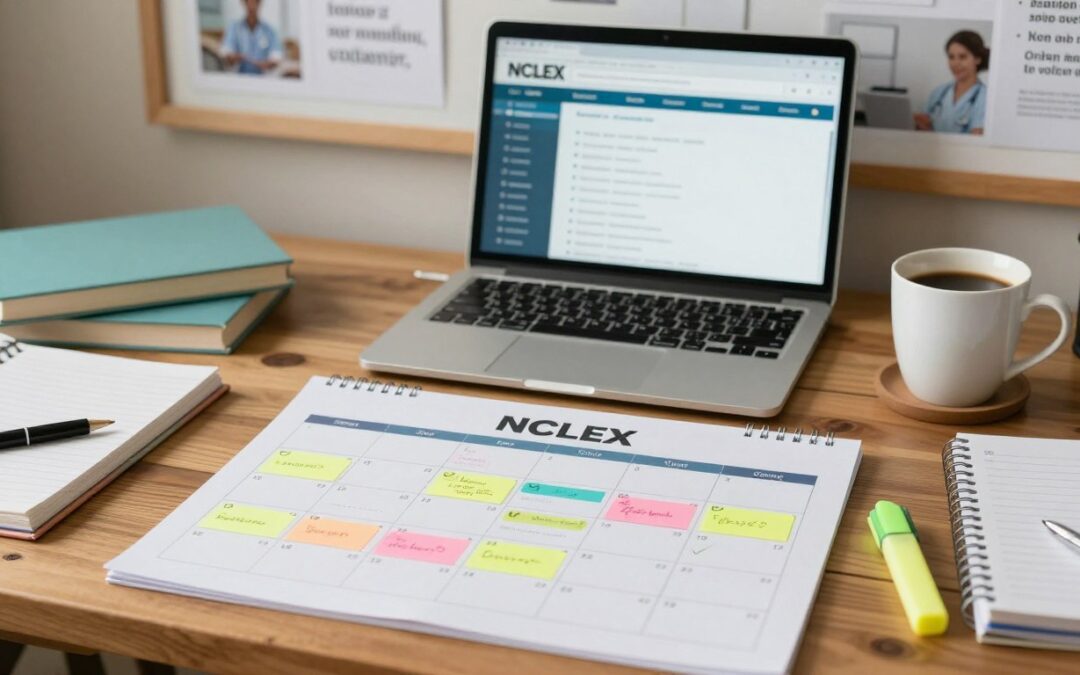
Ever feel like your study plan isn’t enough to pass the NCLEX? Many nursing students get overwhelmed by all the material. Creating a clear, organized plan helps you focus on the most important topics at the right time.
Using proven NCLEX study calendar tips can make studying less stressful. A structured plan keeps you on track and focused. Start with a structured NCLEX study plan that fits your schedule and goals.
Key Takeaways
- Set a clear timeline based on your schedule and exam date.
- Focus on key topics like pharmacology and management of care first.
- Use baseline assessments to find and improve your weak areas.
- Balance daily questions with deep review of rationales.
- Stay consistent by treating studying like a job.
Understand the NCLEX Exam Structure
To create a strong effective NCLEX study calendar template, we need to understand the exam’s purpose. The NCLEX tests more than just memorization. It checks our clinical judgment and critical thinking.
Knowing how the exam works helps us focus our study efforts. This ensures we’re preparing for what really matters.
Overview of Exam Format
The exam uses Computerized Adaptive Testing (CAT). This technology changes question difficulty based on our answers.
Correct answers lead to harder questions. Wrong answers mean easier ones to check our knowledge. This dynamic process makes sure the exam truly tests our nursing skills.
Types of Questions
We’ll face more than just multiple-choice questions. The exam includes different types that test our practical skills.
These might be fill-in-the-blank, ordered response, or hot-spot items. Getting used to these formats is key for a good effective NCLEX study calendar.
Duration and Number of Questions
The exam’s length varies for each candidate. It usually has 75 to 135 questions, based on how quickly we show our skills.
We should be ready for a longer test. Consistency and endurance are important. The computer keeps asking questions until it’s sure of our pass or fail.
Assess Your Current Knowledge
To make a good study plan, we must know what we already know and what we don’t. Understanding our starting point is key to success. Finding out what we need to work on helps us use our time wisely.
Evaluate Your Strengths and Weaknesses
First, we should look at what we know about nursing. This helps us not waste time on easy topics. By focusing on what we’re not good at, we can build a strong base for the exam.
Take a Practice Test
Taking a diagnostic test shows us where we are. Many students find online classes helpful for the CNA exam. These tests give us a real idea of our skills.
Identify Key Focus Areas
After the test, we can plan our study schedule. We can use an NCLEX study calendar to guide us. Using data to plan is the best way to study for the NCLEX.
By planning our study, we stay on track. Being organized from the start reduces stress and keeps our goals in sight. Now, we can make a solid plan based on what we’ve learned.
Set Your Study Goals
Starting our learning journey means setting clear goals. These goals help us conquer the exam and stay motivated. A good NCLEX study plan keeps us on track, even when things get tough.
Short-term vs Long-term Goals
It’s smart to separate immediate tasks from our big goals. A long-term goal might be to review all content in eight weeks. This ensures we cover every topic needed.
Short-term goals are about what we aim to do next. For example, mastering the cardiovascular system or finishing practice questions by the end of the week.
SMART Goal Framework
The SMART framework makes our goals effective. It makes sure our NCLEX study plan is Specific, Measurable, Achievable, Relevant, and Time-bound.
This structure turns vague goals into clear steps. If you need help organizing your study, you can create a personalized learning plan online.
Daily, Weekly, and Monthly Objectives
Breaking big goals into smaller steps helps us stay on track. We suggest setting daily objectives to keep moving forward. Like reviewing ten pharmacology flashcards every morning.
Weekly, we check if we’ve met our content goals. And our monthly objectives help us see if we’re on track for the big exam.
Determine Your Study Timeline
Setting a clear timeline turns our study goals into real plans. The time we spend studying affects how often we review. Starting early avoids the rush of cramming at the last minute.
How Much Time Do You Have?
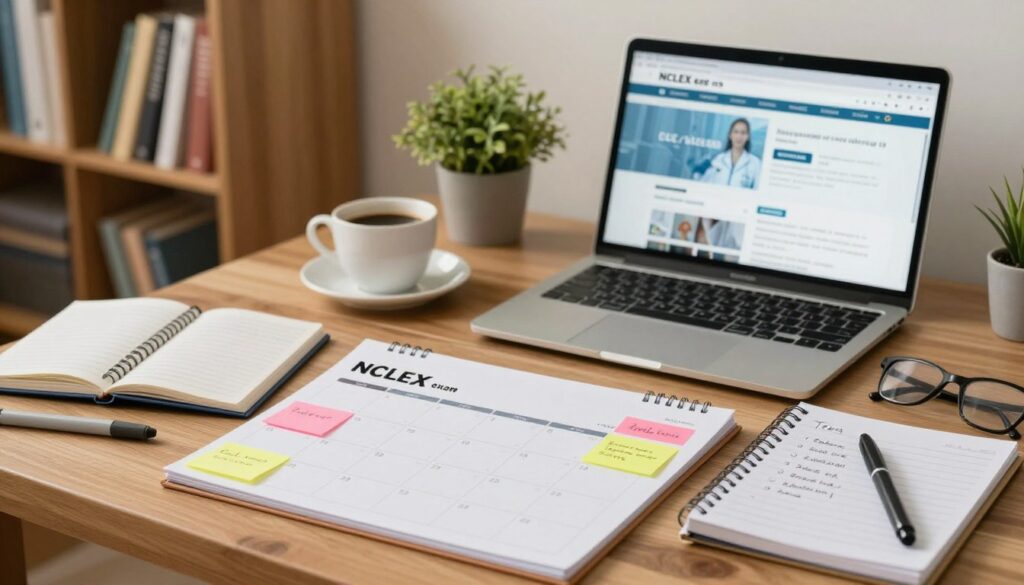
Looking at our calendars shows how many weeks we can study. Recent graduates might aim for a 4-week plan for deep prep. But, if we have other duties, we might need more time.
Whether it’s eight or twelve weeks, staying consistent is key. It’s more important than how long we study.
Creating Time Blocks
We need to set aside specific times for studying. This keeps our study sessions balanced with life. Breaking our day into parts helps avoid burnout and keeps our minds fresh.
- Morning blocks: Great for tackling tough clinical topics when we’re most alert.
- Afternoon blocks: Best for practice questions and reviewing rationales.
- Evening blocks: Good for light review or flashcard drills to boost memory.
Prioritizing Study Sessions
It’s important to focus on our most challenging topics. We should plan these for when we’re most productive. This makes our study plan effective.
Success is the sum of small efforts, repeated day in and day out.
Being flexible with our study times keeps our prep effective and manageable. We’re building habits to pass the exam with confidence.
Choose Study Materials
Choosing the right study materials is key to mastering nursing concepts. High-quality resources make our study time effective and based on evidence. This is vital for our journey.
By using these tools in our NCLEX exam preparation calendar, we can see our progress clearly. Sticking to a plan is essential for success.
Recommended NCLEX Prep Books
Textbooks are the foundation of our study. We should pick books with detailed rationales for each question. Knowing why an answer is correct helps us remember it better.
Choose guides that break down nursing content into easy-to-manage sections. These books give us the basics needed to handle tough clinical scenarios confidently.
Online Courses and Resources
Digital platforms have changed how we study for the boards. Studies show students who use detailed resources pass at a 98% rate. This shows the value of deep learning over just memorizing.
Whether it’s video lectures or interactive questions, these tools keep us interested. Following a NCLEX study calendar example helps us use these resources every day.
Review Apps and Tools
Mobile apps let us study anywhere, fitting into our busy lives. We can use them during short breaks or while commuting.
To stay on track, using an NCLEX study calendar is helpful. A clear NCLEX study calendar example helps us see our goals and stay motivated for exam day.
Break Down the Content Areas
When we prepare for the NCLEX, breaking down information into smaller chunks is key. Organizing our materials helps us not miss any topics. This way, we can create a study calendar for NCLEX that works well for us.
Nursing Processes to Focus On
The nursing process is the base for making clinical decisions. We need to focus on assessment, diagnosis, planning, implementation, and evaluation. Understanding these steps helps us think logically, which is important for the exam.
If these steps seem too much, consider online classes to help you get ready for the NCLEX-RN. These classes offer the clarity needed to apply the nursing process in different patient situations.
Key Concepts in Nursing
We also need to focus on important areas like safety and infection control. Management of care is another key area that often comes up on the exam. We should set aside days to thoroughly review these core concepts.
Pharmacology and Medications
Pharmacology makes up 13-19% of the exam and is the most challenging area. It’s essential to focus on it early when we create a study calendar for NCLEX. Regularly reviewing drug classifications and side effects will boost our confidence for the test.
| Content Area | Exam Weight | Priority Level |
|---|---|---|
| Pharmacology | 13-19% | High |
| Management of Care | 17-23% | High |
| Safety & Infection Control | 9-15% | Medium |
| Psychosocial Integrity | 6-12% | Medium |
By focusing on these key topics, we make sure our study time is effective. Staying on track with our schedule will help us do well on the exam.
Create a Weekly Study Schedule
Creating a weekly NCLEX study schedule turns our prep into a smooth journey. Being consistent is key to success. It keeps us going without burning out from cramming.
Allocating Time for Each Subject
Breaking down our study into subjects helps us focus better. We can tackle tough topics like medical-surgical nursing or pharmacology. By setting aside days for each subject, we make sure we cover everything.
Remember, daily practice at a moderate volume beats cramming on weekends. It lets our brains absorb info deeply, not just memorize it.
Incorporating Review Sessions
Regular review sessions are key to solidifying our learning. We should plan review time on Fridays or Saturdays. This helps us tackle tough topics and check our memory.
These sessions help us spot where we need more help. Following these NCLEX study calendar tips helps us build on what we know.
Balancing Study and Rest
It’s important to balance study time with rest. Rest keeps our minds sharp for the next challenge.
For those juggling work and study, check out strategies for balancing work and study. These habits keep our minds healthy while we stay on track for our exams.
Incorporate Active Learning Techniques
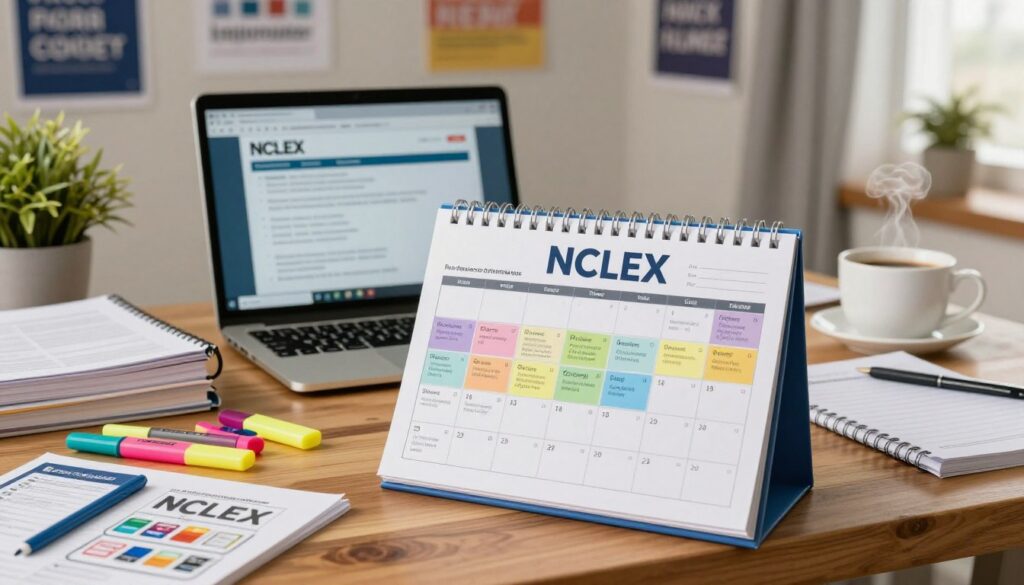
To really get the hang of it, we need to do more than just read. Passive learning can lead to forgetting, but active learning helps us keep what we learn. By adding these techniques to our NCLEX exam preparation calendar, we can make studying more dynamic and effective.
Practice Questions and Quizzes
Active learning is way more effective than just sitting back and reading. When we make our brains work to remember, we make those memories stronger. We should make it a habit to do daily practice questions to check our grasp of tough nursing topics.
“The beautiful thing about learning is that no one can take it away from you.”
Study Groups and Discussions
Teaching someone else what you’ve learned is a great way to make sure you really get it. Try the Feynman Technique by explaining a concept to a study buddy as if they were starting from scratch. This teamwork helps us spot any knowledge gaps we might miss on our own.
Being part of group discussions lets us see different views on clinical situations. This variety prepares us for the wide range of questions we’ll face on the real exam.
Flashcards and Visual Aids
Flashcards are great for moving info from short-term to long-term memory. Make decks for things like pharmacology, lab values, and key nursing actions to go over during quick breaks. This regular practice is key to a good NCLEX exam preparation calendar.
- Spaced Repetition: Review cards at longer intervals to improve retention.
- Visual Mapping: Create diagrams to link body systems and disease processes.
- Active Recall: Always try to answer the card before checking the answer.
Stay Consistent with Your Study Routine
Success on the NCLEX isn’t just about being smart. It’s about being unwaveringly consistent in your study habits. When we ask, “How do I create a NCLEX study calendar?” the answer is clear. It’s about sticking to a routine every day, not just when you feel like it.
This daily routine builds the mental strength needed for the exam. It helps you perform at your best when it counts.
Building Daily Habits
Effective prep comes from making study sessions a must-do part of your day. Treat them like a job, and you’ll find it easier to stick to a schedule. This structure helps you avoid feeling overwhelmed.
If you’re struggling with time management, check out these tips for succeeding in self-paced online courses. They can help you refine your study routine.
“Success is the sum of small efforts, repeated day in and day out.”
Avoiding Procrastination
Feeling overwhelmed by nursing content is common. To fight this, break down big goals into tiny tasks. These tasks should take less than an hour to do.
By focusing on one small topic at a time, you’ll find it easier to stay on track. This makes procrastination less tempting.
Monitoring Your Progress
Tracking your progress is key to staying on track. As you create a study calendar, be ready to adjust it if needed. Use the table below to keep your study metrics organized.
| Metric | Goal | Current Status |
|---|---|---|
| Daily Questions | 50 Questions | On Track |
| Content Review | 2 Hours | Needs Focus |
| Practice Exams | 1 Per Week | Completed |
Consistency is the heart of your study routine. By keeping an eye on your progress, you’ll feel more confident. This confidence will help you succeed when you take the exam.
Include Breaks and Self-care
Creating a good NCLEX study plan means knowing that rest is key. Our brains need time to absorb complex medical info. Taking care of ourselves keeps us sharp and focused.
Importance of Taking Breaks
Mental exhaustion can block our ability to learn new things. Working too hard without breaks lowers our productivity. Regular breaks help our minds reset, boosting memory and focus.
Techniques for Stress Relief
Managing stress is essential for a successful NCLEX study plan. Simple activities like deep breathing or short walks can reduce stress. For more tips, check out online courses that help with stress management.
Here are some ways to keep your mind clear:
- Practice mindfulness meditation for ten minutes daily.
- Engage in light physical exercise to boost endorphins.
- Use guided imagery to visualize your success on exam day.
Healthy Study Habits
For consistent studying, try the Pomodoro Technique. Study for 25 minutes, then take a 5-minute break. This keeps you focused and avoids burnout.
| Habit Type | Recommended Action | Benefit |
|---|---|---|
| Time Management | Pomodoro Technique | Prevents mental fatigue |
| Physical Health | Daily movement | Reduces physical tension |
| Mental Wellness | Deep breathing | Lowers exam anxiety |
| Consistency | Scheduled rest | Improves long-term focus |
Taking care of ourselves is not a setback but a key to success. By adding these habits to our NCLEX study plan, we’re better prepared for exams and future careers.
Prepare for Exam Day
Getting ready for the exam is more than just knowing the material. It’s about being strategic in the testing environment. We’ve followed our study calendar for NCLEX for weeks. Now, it’s time to shift from intense studying to peak performance.
By focusing on logistics and mindset, we can make sure our hard work pays off. This means we’ll get a passing score.
Review Strategies the Night Before
The night before the exam, don’t cram too much. Instead, review complex notes and test-taking strategies we’ve practiced. If needed, look into online classes to help you prepare for the cbx to boost confidence.
Getting a full night’s sleep is key. A clear, rested mind is our best asset for the exam. Avoid late-night studying to prevent stress and clouded focus.
What to Bring on Test Day
Being prepared is the best way to avoid last-minute panic. Gather your ID and any needed documents the night before. Remember, the exam has a 5-hour time limit, so we must be ready for a long test.
Bring a light snack and water if allowed. Staying hydrated is key for focus. Having everything ready reduces stress and helps us arrive calm and organized.
Managing Exam Day Anxiety
Feeling nervous at the testing center is normal. Simulating exam conditions in our final practice sessions helps us feel at ease. Trusting our study calendar for NCLEX process lets us enter the room with confidence.
If overwhelmed, take a moment to breathe and reset. Focus on one question at a time to keep our pace. We’ve prepared for this, and we’re ready to succeed.
Adjust and Revise Your Calendar
Success on the NCLEX needs a flexible study plan. We should see our study plan as something that changes as we learn more.
Assessing Your Progress Regularly
Every week, we should check how we’re doing. Looking at our scores on UWorld or Kaplan shows us where we are. This helps us stay on track to pass the test.
Making Changes as Needed
If our scores drop, we need to update our study plan right away. We might need to spend more time on tough topics like pharmacology. Changing our schedule helps us fill in the gaps before they become big problems.
Staying Flexible with Your Plans
Life can throw us curveballs that mess up our plans. We should be able to adjust our study schedule as needed. A flexible study plan reduces stress and keeps us focused. This way, we can face the exam with confidence.