


Ever felt like pharmacology texts are written in a language you don’t understand? Mastering medication classes is a big challenge in nursing school. Many students wonder, “How do I remember insulin types for NCLEX?”
It’s normal to feel lost when dealing with complex drug categories. You’re not alone, and we’re here to make it easier. We aim to give you actionable strategies to clear up any confusion.
By breaking down these medications into smaller groups, you’ll feel more confident. Let’s go through these key concepts together. This way, you’ll be ready for your exams.
Key Takeaways
- Understand the distinct onset, peak, and duration of various medications.
- Use mnemonic devices to recall critical safety information quickly.
- Focus on the clinical application of drug classes instead of just memorizing.
- Identify the most common testing patterns found in nursing board exams.
- Build lasting confidence through structured study habits and consistent review.
Understanding Insulin Basics
We need to understand how insulin works naturally to grasp the insulin types for NCLEX success. This knowledge is essential for nursing students getting ready for clinical exams.
What is Insulin?
Insulin is a vital hormone made by the beta cells in the pancreas. It acts like a key, unlocking our cells to let glucose in from the bloodstream.
If the body doesn’t make enough insulin or if cells don’t respond well, blood sugar levels can get too high. In these situations, we give manufactured insulin to help keep homeostasis.
The Role of Insulin in the Body
Insulin’s main job is to lower blood glucose levels by moving sugar into cells for energy. Without it, our cells would lack energy, and the bloodstream would be filled with too much sugar.
Knowing how the body naturally controls sugar is key to understanding insulin types for NCLEX. This knowledge helps us predict how insulin will affect our patients in a clinical setting.
Types of Insulin: An Overview
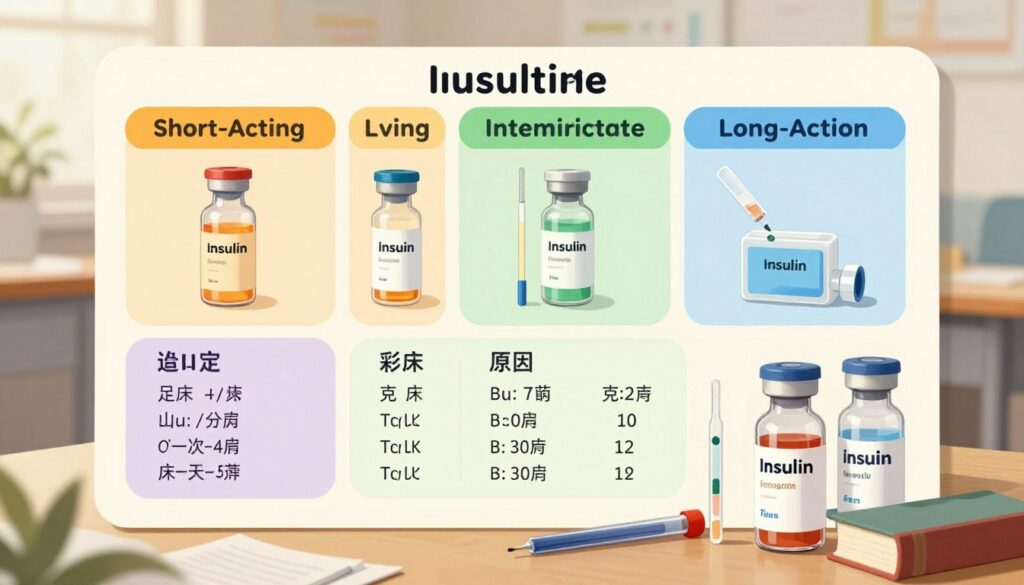
When you’re getting ready for your exams, it’s key to know about insulin types for NCLEX. We sort these medicines by how fast they start working and how long they stay in the blood. Knowing these four groups helps you predict how patients will react and ensures you administer the insulin safely.
Rapid-Acting Insulin
Rapid-acting insulin is the fastest choice for managing blood sugar. It starts working in about fifteen minutes. This makes it perfect for meals, but patients need to eat right away to avoid low blood sugar.
Short-Acting Insulin
Short-acting insulin, or regular insulin, works a bit slower than rapid-acting. It takes thirty to sixty minutes to kick in. It’s a common choice in hospitals because of its predictable profile and flexibility in treatment plans.
Intermediate-Acting Insulin
Intermediate-acting insulin, like NPH, lasts longer than the first two types. It starts in one to two hours and lasts twelve to eighteen hours. It’s used to control blood sugar between meals and at night.
Long-Acting Insulin
Long-acting insulin keeps insulin levels steady all day. It starts slowly and doesn’t peak, helping keep blood sugar stable for up to twenty-four hours. Knowing about these insulin types for NCLEX is key for understanding basal insulin therapy.
| Insulin Type | Onset | Peak | Duration |
|---|---|---|---|
| Rapid-Acting | 15 min | 1-2 hours | 3-4 hours |
| Short-Acting | 30-60 min | 2-4 hours | 5-8 hours |
| Intermediate | 1-2 hours | 4-12 hours | 18-24 hours |
| Long-Acting | 1-2 hours | None | 24 hours |
The Importance of Timing
When we talk about insulin therapy, timing is truly everything for patient safety. Knowing the exact times when insulin works best is key. This is important when you are remembering insulin types for NCLEX. If you need extra help, you can check out various online courses to help you get ready for the USMLE and other nursing exams.
Onset, Peak, and Duration Defined
To keep patients safe, we need to understand the three phases of insulin action. Onset is when the insulin starts to lower blood sugar after injection.
The peak is when the insulin is at its strongest. And duration is how long the insulin stays active in the body.
Why Timing Matters in Patient Care
Timing is key because it shows when a patient is most at risk for hypoglycemia. Knowing these times helps us plan when to give meals to our patients.
Good management means watching for bad reactions during the peak of each insulin type. Always remembering insulin types for NCLEX ensures our patients get the right medicine and food at the right time.
Memory Aids for Rapid-Acting Insulin
Learning when to give rapid-acting insulin is key for safe nursing. These medicines work fast and need your full attention. We aim to make your NCLEX insulin types memorization easier, so you feel ready for tests.
Common Brands to Remember
Grouping these medicines by their generic names helps when studying. You’ll often see Lispro (Humalog), Aspart (NovoLog), and Glulisine (Apidra). They mimic the body’s natural insulin response to food.
These insulins act quickly, so make sure the patient’s meal is ready before giving them. Timing is everything with these medicines. If food is late, the patient risks low blood sugar.
Mnemonic Devices for Quick Recall
Use the mnemonic: “15 minutes feels like an hour during 3 rapid responses.” It helps you remember onset, peak, and duration. This is a great tool for your NCLEX prep.
| Insulin Type | Onset | Peak | Duration |
|---|---|---|---|
| Rapid-Acting | 15 Minutes | 1 Hour | 3 Hours |
| Lispro | 15 Minutes | 1 Hour | 3 Hours |
| Aspart | 15 Minutes | 1 Hour | 3 Hours |
| Glulisine | 15 Minutes | 1 Hour | 3 Hours |
Visualizing this table helps you recall exam data quickly. Regular practice with these aids will make memorizing easier. Stay focused on these details for patient safety and success.
Short-Acting Insulin Identification
Short-acting insulin is key in managing diabetes in hospitals. Knowing this type well is vital for your NCLEX insulin types memorization plan. It’s used often, so you need to spot its unique features fast and right.

Key Characteristics of Short-Acting Insulin
Short-acting insulin, also known as regular insulin, works faster than others. It’s important to watch patients closely after giving it to avoid low blood sugar. Always check the vial’s look before you take the dose.
Regular insulin should be perfectly clear. Any cloudiness or color change means it’s bad and should be thrown away. Remember these times for your exams:
- Onset: 30 minutes
- Peak: 2 to 3 hours
- Duration: 3 to 6 hours
Easy Ways to Memorize Brands
Remembering these details can be tough under stress. A mnemonic can be a great help for NCLEX insulin types memorization. Try this phrase to remember:
“Short-staffed nurses went from 30 to 8 patients.”
This trick uses “30” for the onset and “8” for the duration’s upper limit, around 6 to 8 hours. These creative tricks will help you remember important facts when it counts.
Intermediate-Acting Insulin: What to Know
Students often find it hard to remember when to take intermediate-acting insulin. But, with the right strategy, it gets easier. This insulin helps keep blood sugar stable between meals. Learning this well will make you more confident when using an insulin types mnemonic for NCLEX study strategy.
Insulin NPH: A Closer Look
NPH, or Neutral Protamine Hagedorn, is a common intermediate-acting insulin. It looks cloudy because it’s a suspension, unlike clear rapid-acting insulins. Always rotate the vial gently before drawing your dose to mix the medication well.
Don’t shake the vial hard, as it can create air bubbles. These bubbles can mess up your dose. It’s key to prepare it right for safe use. Always check the insulin’s look before injecting.
Remembering the Duration of Action
Use the “Neil Patrick Harris” mnemonic to remember. Think of him as an actor who starts working in 2-4 hours, peaks in 4-12 hours, and stays for 12-18 hours. This insulin types mnemonic for NCLEX trick helps you remember the details.
| Phase | Time Frame | Clinical Note |
|---|---|---|
| Onset | 2-4 Hours | Initial effect begins |
| Peak | 4-12 Hours | Highest risk for hypoglycemia |
| Duration | 12-18 Hours | Total coverage period |
Long-Acting Insulin Clarified
Understanding long-acting insulin is key to doing well on the NCLEX. These insulins offer a steady, basal level of glucose control all day. They work quietly in the background to keep blood sugar stable.
Long-acting insulins like glargine and detemir are important to remember. They start working in 3 to 4 hours. They have no peak and last for 24 hours.
Common Names and Their Characteristics
In clinical settings, you’ll mostly see glargine and detemir. They have a lower risk of hypoglycemia because they don’t peak. This makes them safer for keeping glucose levels steady all day.
It’s important to remember these insulins can’t be mixed with others. Their unique chemical structure means mixing them could change how they’re absorbed. Always aim for consistency when giving these meds to patients.
Tips for Long-Term Memory Retention
For studying, use a simple insulin types mnemonic for NCLEX. Try to remember: “Long shift = no peak = minimal risk.” This phrase is key for your exams.
Visualizing their 24-hour coverage as a flat line can help. This shows there’s no sudden drop in blood sugar risk. Keep this safety-focused perspective in mind for basal insulin therapy questions.
Combining Insulin Types in Practice
Learning to mix insulin safely is key for nursing students getting ready for the NCLEX. As you learn your insulin types mnemonic for NCLEX, it’s important to know how these medicines work together. This way, we can give patients fewer injections each day.
Mixing Insulin: When and Why
We mix short-acting and intermediate-acting insulins to match how our bodies handle glucose. This mix gives quick action after meals and steady coverage all day. It makes patients more comfortable and helps them stick to their treatment plans.
When mixing, we must keep the medicine stable. Consistency is key to avoid bad reactions and make sure patients get the right dose. Knowing how to mix insulin is as important as knowing your insulin types mnemonic for NCLEX.
Safety Considerations in Insulin Administration
The main rule for mixing insulin is to draw clear before cloudy. First, draw the rapid or short-acting insulin (clear) into the syringe. Then add the cloudy intermediate-acting NPH insulin. This stops the cloudy insulin from mixing with the clear, which could change how the faster-acting insulin works.
“Precision in medication administration is the cornerstone of patient safety; always verify your sequence before drawing the final dose.”
Always double-check your math and the insulin labels before giving the injection. If you mix cloudy insulin with the clear, throw the vial away and start again. This ensures absolute accuracy. Following these steps keeps our patients safe and helps us succeed in clinical settings.
Reviewing Insulin for NCLEX Practice
Wondering how to remember insulin types for NCLEX? The answer is through consistent practice. We believe moving from just memorizing to making clinical judgments is key. True mastery happens when you can use your knowledge in real patient situations.
“Tell me and I forget, teach me and I may remember, involve me and I learn.”
Practice Questions for Insulin Types
To succeed, focus on questions about peak times. Most hypoglycemic episodes occur at the peak time of insulin. This is a critical safety concept for nurses. Look for scenarios that ask when a patient is at the highest risk for a blood sugar drop.
Try to visualize the insulin action curve when answering these questions. If you’re struggling, try drawing the onset, peak, and duration for each type. This visual approach helps connect theory to bedside care.
Resources for Additional Study
Using high-quality Q-banks is a great way to prepare for the exam. These tools provide rationales that explain why a specific answer is correct. This deepens your clinical reasoning. We recommend adding these resources to your daily routine:
- NCLEX-style Q-banks: Focus on pharmacology-heavy modules.
- Visual Study Aids: Use color-coded charts to track insulin peaks.
- Peer Study Groups: Discussing complex cases helps reinforce your memory.
By consistently testing yourself, you’ll gain the confidence you need. Remember, every practice question brings you closer to your goal of becoming a licensed nurse. Keep practicing, stay focused, and trust in your preparation.
Common Mistakes to Avoid with Insulin
When we prepare for the NCLEX, we often focus on the pharmacology. But we must also address the practical mistakes that occur at the bedside. Using an insulin types mnemonic for NCLEX study helps with recall. But clinical safety requires a deeper understanding of how these medications interact with the human body. Avoiding these common errors ensures that we provide the highest standard of care to our patients.
Misunderstanding Insulin Actions
One frequent error involves the failure to rotate injection sites consistently. When patients inject insulin into the same spot repeatedly, they risk developing lipohypertrophy. This condition involves the formation of scar tissue or thickened fat deposits under the skin.
Lipohypertrophy is dangerous because it significantly interferes with insulin absorption. When absorption becomes unpredictable, blood sugar levels fluctuate wildly. This makes it nearly impossible to maintain glycemic control. We must teach patients that varying their injection sites is not just a suggestion; it is a vital safety practice.
Patient Education Errors
Another critical area where errors occur is in the patient’s ability to recognize the early warning signs of hypoglycemia. If a patient cannot identify when their blood sugar is dropping too low, they cannot take the necessary steps to correct it.
We must ensure our patients are educated on the classic symptoms of low blood sugar. These include diaphoresis, tachycardia, and noticeable shakiness. By mastering these concepts alongside your preferred insulin types mnemonic for NCLEX, you will be better prepared to educate your patients effectively. This prevents life-threatening emergencies.
Final Tips for NCLEX Success
Mastering pharmacology needs a focused effort in your daily studies. We think that regular practice is the best way to build your confidence in clinical knowledge.
Creating a Study Plan
Make a detailed schedule that focuses on active recall over just reading. Set aside certain times each week to work on remembering insulin types for NCLEX exams. This approach helps you keep track of important details like onset and peak times for insulins like Humalog or Lantus.
Utilizing Flashcards Effectively
Flashcards, digital or physical, are great tools for getting ready. Create cards that connect specific insulin types to their duration profiles. By testing yourself often, you get better at recalling key information under pressure. This method makes sure you’re ready for any pharmacology question on your nursing exam.