

Did you know nearly 20% of first-time nursing candidates fail their licensure exam each year? This shows the huge pressure on your final nursing exam. The NCLEX-RN is your last step to becoming a nurse, after years of hard work.
Feeling overwhelmed is normal, but proper preparation can help you feel more confident. By using online classes for NCLEX-RN prep, you can turn stress into a clear path to success. Our guide offers tips to keep your focus and build lasting confidence.
Key Takeaways
- See the licensure exam as a big but doable challenge.
- Stick to a routine to keep your mind clear during study sessions.
- Use professional tools to get ahead in your prep.
- Small, steady efforts are better than cramming at the last minute.
- Boost your confidence with mock exams that feel like the real thing.
Create a Study Schedule That Works for You
Building a consistent routine is key for nursing students. A clear NCLEX study schedule removes the guesswork from your daily prep. It keeps you organized and ensures you cover all material without feeling overwhelmed.
Identify Your PEAK Study Times
We all have specific hours when our brains are most alert. Some are early birds, while others focus better at night. Tracking your energy levels for a few days will help you find these times.
Once you know your peak hours, tackle your toughest topics then. Aligning hard tasks with your highest energy boosts retention. For extra help, consider online classes to prepare for the to build habits.
Block out Distractions
Deep work needs a quiet space without interruptions. Turn off phone notifications and find a quiet spot. This lets your brain enter a flow state, essential for mastering nursing concepts.
Using these NCLEX study tips means knowing what distracts you. Set firm boundaries during study blocks. Protecting your time ensures your efforts pay off.
Incorporate Breaks for Maximum Productivity
Long study hours without breaks can lead to burnout. Try the Pomodoro technique to break your study into manageable chunks. A five-minute break every hour keeps your mind sharp.
Use breaks to stretch or get a drink. This simple habit prevents exhaustion. A well-rested brain is better at recalling information during exams.
Choose the Right Study Environment
Having a dedicated space for studying is key. Your surroundings affect your focus and understanding of nursing topics. A well-prepared space helps you achieve consistent success.
Find Your Ideal Study Space
Your study area should be both comfortable and alert. Look for a spot with excellent lighting and a good chair. This prevents tiredness during long study times. It could be a quiet corner in your room or a local library.
Minimize Noise and Interruptions
Distractions harm your focus. If you live with others, use noise-canceling headphones. Tell your family or roommates when you need quiet time.
Keep your phone away or use apps that block social media. A peaceful sanctuary helps you focus better. Without distractions, you can fully concentrate on your studies.
Organize Your Study Area
A messy desk can mess with your mind. Keep only what you need for the moment within reach. This saves time and keeps you focused.
Keeping your space clean is simple but effective. A tidy area reduces stress and makes studying feel more professional. Take pride in your study area, as it’s your base for a nursing career.
Utilize Effective Study Techniques
Getting ready for your nursing boards is more than just reading books. Passive review doesn’t help you understand deeply. Using NCLEX study techniques makes studying more efficient and less of a chore.
Active Learning Strategies
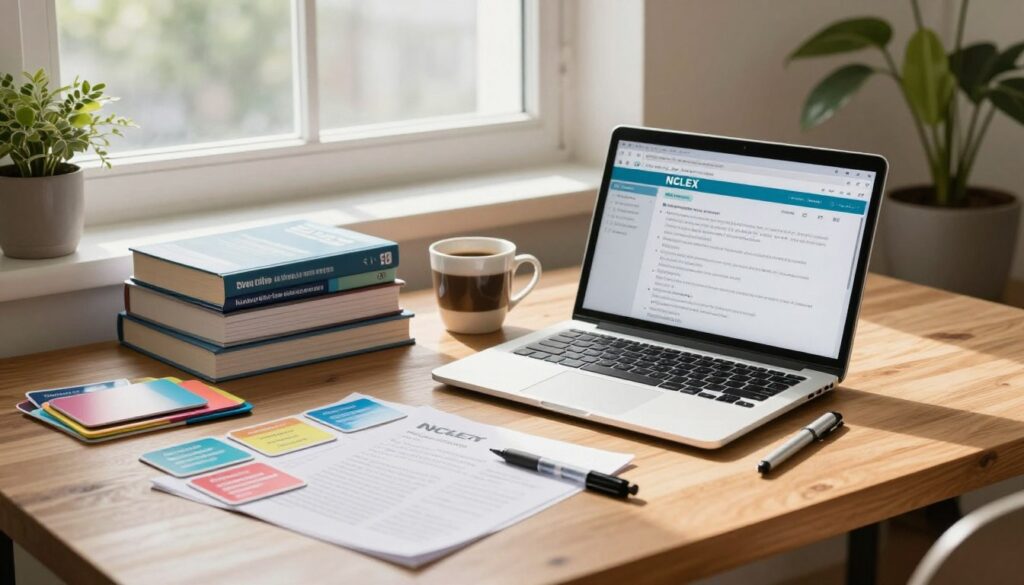
Active learning makes your brain work harder with medical info. Instead of just highlighting, try writing out chapters in your own words. Or make diagrams that show how symptoms relate to treatments. These NCLEX study tips help you spot where you need to focus.
Practice Questions and Simulations
Doing practice exams is key for NCLEX time management. Simulations feel like the real test, helping you get used to the long exam day. For extra help, check out online classes to help you prepare for the cbx.
Teach Back Method to Reinforce Learning
The teach-back method is great for remembering things for a long time. By explaining a tough concept to someone, you make your brain organize it better. If you can’t explain it, you know you need to review it more.
| Study Method | Primary Benefit | Effort Level |
|---|---|---|
| Passive Reading | Basic Familiarity | Low |
| Active Summarizing | Better Retention | Medium |
| Practice Simulations | Exam Pacing | High |
| Teach-Back Method | Deep Understanding | High |
Set Realistic Goals for Each Study Session
Learning to set realistic goals for each study session can change your prep game. When you’re faced with a lot of nursing info, it can feel overwhelming. But, using NCLEX study habits can keep you focused and confident.
Break Down Content into Manageable Chunks
It’s hard to handle a lot of nursing material at once. We suggest breaking it down into smaller, digestible segments. This way, you can focus on one concept at a time and really get it before moving on.
Set Time Limits for Each Topic
Good time management is key to NCLEX study techniques. Try setting a time limit for each topic. This helps you avoid getting stuck and keeps your study pace steady.
Celebrate Small Achievements
It’s vital to celebrate your small wins. These milestones give you the emotional boost you need to keep going. Every chapter you finish brings you closer to your goal of becoming a licensed nurse.
Make Use of NCLEX Prep Resources
Starting good NCLEX study habits means picking the right materials. Mix old-school books with new digital tools for a solid prep plan. This mix keeps your study sessions interesting and covers all the bases.
Study Guides and Review Books
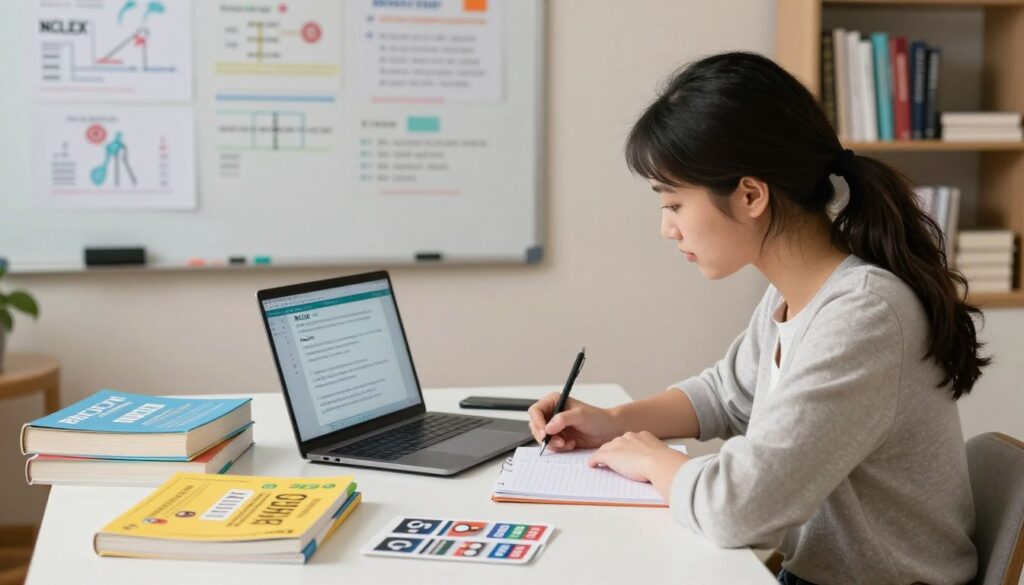
Review books are a key part of studying for many. They give a broad view of nursing topics. Consistency is key when using these books to grasp the exam’s core material.
“Success is the sum of small efforts, repeated day in and day out.”
Online Courses and Practice Tests
Interactive online courses are great for honing your NCLEX study techniques. They offer test-like scenarios that help you get used to the exam. Check out our guide on how and when to study for the NCLEX to stay on track.
Choose platforms that explain each question in detail. Knowing why an answer is right is as important as picking it. This helps you spot where you need to improve.
Mobile Apps for On-the-Go Learning
Today’s tech lets you study in short moments. Mobile apps are great for quick reviews or questions on the go. They keep your study momentum going all day.
- Flexibility: Study anytime, anywhere.
- Gamification: Many apps offer rewards to keep you going.
- Portability: Carry your study library in your pocket.
Using these varied resources helps build strong NCLEX study habits. The best NCLEX study techniques are those you can keep up with long-term. Stay curious, stay organized, and aim for your nursing license.
Stay Healthy and Take Care of Yourself
Your health is key to doing well on the NCLEX. Taking care of your body helps your brain work better. It’s important to treat your body as well as you treat your patients.
Ensure Proper Nutrition and Hydration
The brain uses a lot of energy when you study hard. Eating foods like nuts, berries, and leafy greens helps keep your focus sharp. Drinking enough water is also critical, as dehydration can make you feel foggy and tired.
Keep a water bottle with you to stay hydrated. Avoid too much caffeine or sugary snacks to prevent energy crashes. This helps you stay focused on your NCLEX study habits.
Prioritize Sleep Each Night
Sleep is when your brain processes what you learned. Aim for seven to nine hours of sleep to keep your mind fresh. Having a regular sleep schedule is important for NCLEX study habits.
Having a calming bedtime routine helps you relax. Turn off screens an hour before bed to let your brain unwind. Quality sleep is essential for your success.
Regular Physical Activity
Exercise is great for managing stress while studying. Even a short walk or some stretching can improve your mood and brain function. Regular physical activity keeps your energy levels up.
Find an activity you enjoy, like yoga, jogging, or dancing. Being consistent is more important than how hard you exercise. Staying active gives you the stamina you need to learn for a long time.
| Habit Category | Recommended Action | Benefit to Learning |
|---|---|---|
| Nutrition | Eat whole, balanced meals | Sustained mental energy |
| Hydration | Drink water consistently | Improved concentration |
| Sleep | 7-9 hours per night | Better memory retention |
| Exercise | 30 minutes of movement | Reduced exam anxiety |
Form a Study Group for Support
Studying for the nursing boards can feel lonely, but you don’t have to face it alone. Creating a community can greatly help your NCLEX concentration strategies. It offers emotional support and clear academic guidance. Working with others can also help you see nursing concepts in new ways.
Select Study Partners Wisely
The success of your group depends on who you choose. Look for peers who are as dedicated as you and share your goals. It’s important to find people who are reliable and focused during your study sessions.
Establish Rules and Objectives
Study groups can easily become social events without a plan. It’s key to set clear rules to keep everyone on track. Here are some important guidelines for your meetings:
- Set a specific agenda for every meeting to ensure all topics are covered.
- Limit the duration of your sessions to prevent burnout and maintain high energy.
- Assign roles, such as a timekeeper or a discussion leader, to keep the group accountable.
Share Resources and Tips
One of the best things about a study group is sharing knowledge. By sharing study guides, practice questions, and mnemonic devices, you get more learning tools. This teamwork helps you explain complex topics to each other. Teaching others helps you understand the material better.
Use Visual Aids for Better Retention
If you find it hard to focus on nursing texts, visual learning might help. Reading long texts can be a challenge. Visual aids make complex topics easier to understand.
Create Mind Maps and Charts
Mind maps are great for linking nursing concepts. They show how body systems work together during illness. Drawing these connections helps us remember information better.
Charts are also useful. They let us compare medications, lab results, or symptoms easily.
Utilize Flashcards for Quick Reference
Flashcards are a quick way to check your knowledge. Digital decks focus on important topics like pharmacology. This method is great for students with little time.
Incorporate Videos and Infographics
Watching a procedure or animation can make things clearer. Infographics summarize complex information in a colorful way. These tools help keep you focused and improve memory.
| Visual Tool | Best Use Case | Primary Benefit |
|---|---|---|
| Mind Maps | Connecting systems | Big-picture understanding |
| Flashcards | Quick facts | Rapid recall |
| Infographics | Summarizing data | Simplified retention |
| Videos | Complex processes | Multi-sensory learning |
Stay Motivated Throughout Your Prep
Keeping a positive outlook is key for NCLEX concentration strategies. The path to licensure is long and can feel overwhelming. Focus on your long-term goals to stay energized and focused.
Visualize Your Success
Visualization is a powerful tool for bridging your studies to your future career. Spend a few minutes each day imagining yourself passing the exam. Picture the relief and pride when you see your results.
This mental practice boosts your confidence to tackle tough topics. Visualizing success trains your brain to focus on the outcome, not just the stress of studying. It makes your goals feel real and achievable.
Keep a Positive Mindset
Your thoughts greatly affect how well you retain information. Instead of focusing on what you don’t know, celebrate your daily progress. Positive affirmations help you stay strong when faced with tough questions.
Every mistake is a chance to learn. Using these NCLEX concentration strategies lets you view your study materials with a growth mindset. You can master this material, and your hard work will pay off.
Reward Yourself for Hard Work
Creating a positive feedback loop is vital for success. Celebrate your study goals with small, meaningful rewards. Enjoy a favorite snack, take a short walk, or watch an episode of your favorite show.
These rewards serve as milestones to keep you moving forward. By acknowledging your effort, you stay motivated. Consistent NCLEX concentration strategies and self-care will help you achieve your goal of becoming a nurse.
Manage Stress Effectively
The pressure of nursing exams can be overwhelming. Learning to manage stress is key. Healthy habits in your NCLEX exam prep help you stay calm and focused. Taking care of your mental health helps you remember complex medical info better.
Practice Mindfulness Techniques
Mindfulness is a great tool for staying calm under pressure. Start your day with five minutes of deep breathing. This simple act lowers stress and gets your brain ready for deep learning.
Try “grounding” techniques when you feel stressed. Notice five things you see, four things you can touch, and three things you can hear. It helps you focus on the present and forget anxiety.
Sample Relaxation Exercises
Stress can build up in your shoulders and neck while studying. Try progressive muscle relaxation to release it. Tense your toes for five seconds, then release suddenly to feel the relaxation.
Visualization can also boost your confidence. Imagine yourself answering tough questions easily. For more help, check out online courses on test-taking anxiety for medical exams.
Know When to Take a Break
Knowing when to take a break is part of NCLEX time management. Don’t push through exhaustion; it leads to burnout. Taking a break is a strategic necessity to stay sharp.
Use this table to pick the right relaxation method for your stress level:
| Method | Best For | Time Required |
|---|---|---|
| Deep Breathing | Immediate Anxiety | 1-2 Minutes |
| Progressive Relaxation | Physical Tension | 5-10 Minutes |
| Mindful Walking | Mental Fatigue | 15 Minutes |
| Visualization | Exam Confidence | 5 Minutes |
Remember, your health is the key to success. Balance your study with recovery techniques to be fully ready for challenges.
Monitor Your Progress and Adjust Accordingly
Regular check-ins are key to reaching your goals. By watching your progress, you can see how far you’ve come and what you need to work on. This proactive approach keeps your NCLEX exam prep focused and effective.
Track Study Time and Topics Covered
Success in exam prep comes from being consistent. Keeping a log of your study hours and topics helps you see your effort. It also makes sure you cover all the material before the exam.
Tracking your study sessions shows you how well your NCLEX study schedule is working. You can spot patterns and adjust your study habits to improve your productivity.
Identify Areas Needing More Focus
Practice tests are great for checking your knowledge and finding weak spots. Analyze your results to see where you struggle most. Focus on these areas to boost your confidence.
By focusing on weak spots, you get the most out of your study time. Be honest with yourself about what you know and what you need to work on. This targeted approach is key to effective prep.
Be Flexible with Your Study Plan
Life can change, and so should your study plan. Stay open to adjusting your NCLEX study schedule if needed. Being flexible helps you adapt to your changing needs as the exam gets closer.
If you’re getting some topics quickly, use that time for harder subjects. Remember, your NCLEX exam prep should evolve with your learning. Being flexible helps manage stress and keeps you focused until the end.
Prepare for Exam Day
The finish line is in sight as you approach your test date. Success relies on your ability to stay calm and organized during these final hours. Mastering your NCLEX time management skills now ensures you walk into the testing center with total confidence.
Establish a Reliable Pre-Exam Routine
Create a predictable schedule for the night before your test. Go to bed at a consistent time to ensure your brain is fully rested. A calm morning routine helps you maintain focus and reduces unnecessary stress before you begin the exam.
Organize Your Essential Testing Materials
Gather your identification documents and registration papers the night before. Place these items in a clear spot near your door. This simple step prevents morning panic and keeps your mind clear for the challenges ahead. We believe in your preparation and your ability to succeed on this important journey.