
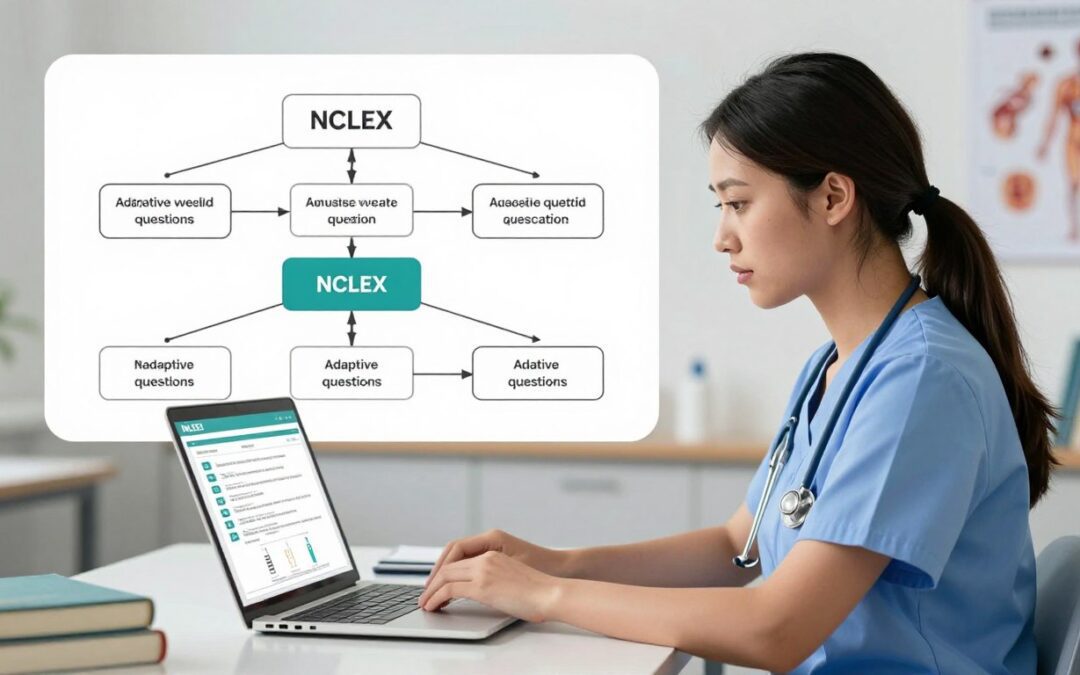
Did you know that no two students ever face the exact same exam? The testing engine adjusts in real-time based on your performance. This makes every single item unique to your skill level. We are here to help you understand the complex mechanics behind your nursing licensure exam.
This guide explains How do NCLEX adaptive questions work? to ensure you feel confident and prepared on your big day. We break down the technology and strategy to demystify the process for every nursing student. We will explore the core concepts that define your testing experience from start to finish.
Understanding these NCLEX adaptive questions is the first step toward success. Let us walk you through the logic that determines your path to becoming a licensed nurse.
Key Takeaways
- The exam uses a sophisticated algorithm to measure your competency level.
- Each response influences the difficulty of the next item you receive.
- The test stops once the system is 95% certain of your ability.
- You cannot skip items or return to previous answers during the session.
- Preparation focuses on mastering core nursing concepts, not just memorizing patterns.
Understanding the NCLEX Exam Structure
We think it’s best to clear up any confusion about the test. Knowing the NCLEX exam format helps you feel more confident and focused. It’s key to understanding the exam before you start studying.
What is an NCLEX Exam?
The NCLEX is a test used in the U.S. to check if you’re ready to be a nurse. It’s not just about remembering facts. It tests how well you can use your nursing skills in real situations. The NCLEX test structure makes sure all nurses meet the same standards.
If you need help, consider taking online classes for the NCLEX-RN. These classes can help you understand the test better. Knowing how to handle the questions is key to passing.
Purpose of the NCLEX Test
The main goal of the NCLEX is to keep patients safe by making sure only qualified nurses work. It’s a critical gatekeeper in healthcare. The NCLEX test structure checks if you can make safe decisions for patients.
The NCLEX exam format also makes sure everyone is on the same level, no matter where they studied. This standard is essential for quality healthcare everywhere. Passing the exam shows you’re ready to be a professional nurse.
The Concept of Computer Adaptive Testing
Getting ready for your exam is a big step toward becoming a licensed nurse. The NCLEX test structure uses a method called Computer Adaptive Testing, or CAT. This combines computer tech with measurement theory for a smart test process.
What is Computer Adaptive Testing?
This testing method is dynamic. You don’t get the same questions as everyone else. The computer picks questions based on your answers. If you get one right, the next one is harder. If you get it wrong, it’s easier to see how much you know.
Benefits of Adaptive Testing
This method keeps the test valid by adjusting the difficulty as you go. It saves time by avoiding questions that are too easy or hard. This makes the NCLEX test structure a true measure of your skills.
For those who are very skilled, it moves quickly past simple questions. This means the test can find out how good you are with fewer questions. It’s a more personal and efficient way to test your abilities.
| Feature | Traditional Testing | Adaptive Testing |
|---|---|---|
| Question Difficulty | Fixed for all | Adjusts to candidate |
| Exam Length | Set number of items | Variable based on ability |
| Efficiency | Lower | Higher |
| Focus | Broad coverage | Targeted competence |
How Adaptive Questions are Generated
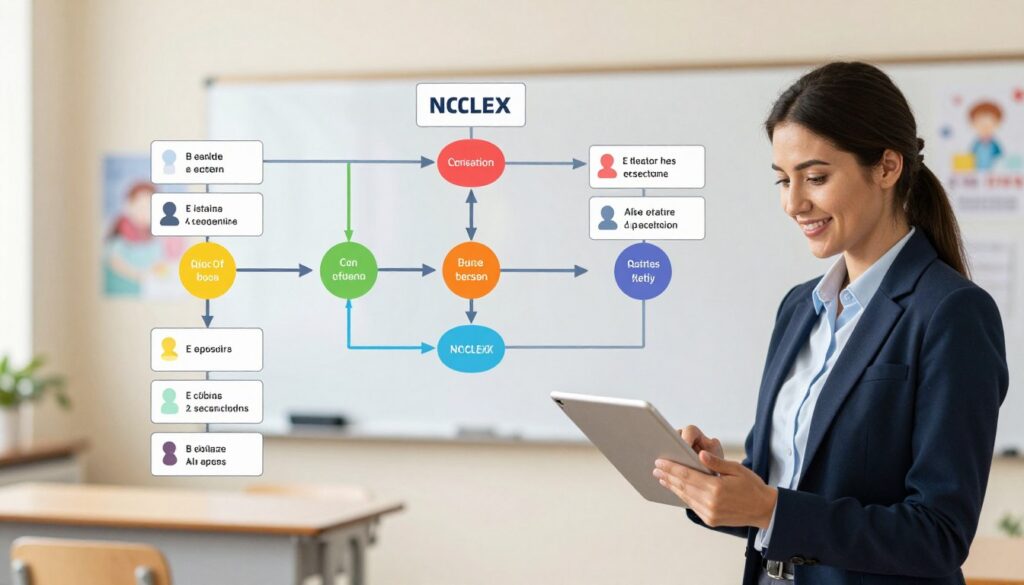
Ever wondered how the computer picks your next question? The NCLEX question algorithm is the secret behind your test experience. It works hard to make sure you get questions that match your nursing skills.
The system checks your answers in real-time to pick the right questions for you. This way, the test stays tough but fair. To get better, use top-notch NCLEX practice questions to prepare.
The Role of Question Banks
At the core is a huge, safe question bank. It holds thousands of questions that have been tested and fine-tuned. Each question has tags that help the system choose the best ones for you.
By doing NCLEX practice questions, you’re getting ready for different scenarios. This variety helps you think critically, which is key for safe nursing.
Understanding Item Response Theory
The NCLEX question algorithm uses Item Response Theory (IRT). This method updates your skill level after each answer. It looks at how hard the question was and how you did.
If you get it right, you get a harder question to test your limits. If you get it wrong, you get an easier one to adjust your level. This continuous adjustment makes the exam very precise in measuring your skills.
| Feature | Fixed-Format Test | Adaptive Test |
|---|---|---|
| Question Selection | Pre-determined | Performance-based |
| Difficulty Level | Static | Dynamic |
| Test Length | Fixed | Variable |
| Precision | General | High |
Factors Influencing Question Difficulty
The exam often feels tough, and there’s a clear reason for this. The system aims to pick questions where you have a 50% chance of getting them right. This makes the test challenging, no matter your skill level.
This dynamic adjustment makes sure the exam accurately tests your clinical skills. If you’re curious about how this works, check out how is the NCLEX scored to understand your testing journey better.
Different Levels of Difficulty
The exam has a wide range of questions, from simple to complex. These questions test your ability to make tough decisions in nursing. This mix of questions checks if you’re ready for real-world nursing.
Questions will ask you to prioritize care, delegate tasks, and spot safety risks. Each question has a difficulty level. This lets the computer pick the next question based on your answers. This way, the test is fair and thorough for everyone.
How Your Performance Affects Difficulty
Your answers shape the next question’s difficulty, making the test personal. If you get a question right, the next one is harder. If you get it wrong, the next one is easier. This keeps going until the computer is sure of your skills.
This back-and-forth is normal and expected. It’s not a sign of failure. It shows the system is working right to test your abilities.
| Performance Trend | Difficulty Adjustment | Testing Goal |
|---|---|---|
| Consistent Correct Answers | Increases | Challenge Proficiency |
| Consistent Incorrect Answers | Decreases | Identify Baseline |
| Mixed Results | Stays Stable | Refine Estimate |
Test-Taking Strategy for Adaptive Questions
Learning NCLEX adaptive testing strategies is key to staying calm during your exam. The pressure can be tough, but a solid plan helps you stay focused. By preparing your mind, you can tackle the exam with confidence.

Approaching Each Question
When you see a new question, take a deep breath and read it carefully. It’s important to avoid rushing and make sure you understand what’s being asked. Treat each question as a new challenge, no matter how you did on the last one.
If you’re struggling with tough topics, consider taking online courses to improve your critical thinking. Keep these tips in mind:
- Analyze the stem: Find the main clinical issue before looking at the options.
- Eliminate distractors: Use a process of elimination to narrow down your choices.
- Stay present: Don’t worry about previous questions, as the computer adjusts to your performance.
Managing Time Effectively
Time management is key to your success. Remember, any breaks you take will cut into your total time. So, practice sitting for long periods without breaks during your study sessions.
Building mental stamina helps you avoid feeling rushed at the end. If your focus wavers, take a quick moment to reset. By mastering these NCLEX adaptive testing strategies, you’ll be ready to handle the exam’s pace and perform your best.
Scoring on the NCLEX Exam
Many people wonder how the computer knows if they’ve passed or failed the NCLEX exam. It’s not just about getting the right answers. Instead, a NCLEX question algorithm checks your skills in real-time. This way, everyone gets a fair test of their nursing abilities.
How Scores are Calculated
The NCLEX question algorithm changes the questions based on your answers. If you get one right, it gets harder. If you struggle, it gets easier. This helps show how well you know your stuff.
The exam tests if you can give safe and effective care, not just remember facts.
This method builds a picture of your nursing skills as you go. Because the questions change, you might answer more or fewer questions than others. It’s okay if your test ends differently than theirs. It’s how the test is set up.
Understanding Pass/Fail Determination
The goal is to be 95% sure you can do the job. When the NCLEX question algorithm is sure, the test ends. This makes the results very reliable and fair.
There are three ways the test ends:
- The 95% Confidence Rule: The computer is certain you have passed or failed.
- Maximum Question Limit: You have reached the highest number of allowed items.
- Time Limit: You have used the entire allotted time for the exam.
If you hit the question limit, your final score is checked. If you’re above the pass mark, you pass. If not, you don’t. This strict process makes sure only the best nurses work with patients.
Common Misconceptions About Adaptive Questions
Let’s clear up the most common myths that might worry students. Many feel stressed because they don’t get how NCLEX adaptive questions work during the exam.
We aim to give you the confidence to pass. Knowing how the test works is key.
Adaptive vs. Fixed Format Testing
Traditional tests give everyone the same questions, no matter their skill level. This doesn’t really show how well each person can do.
NCLEX adaptive questions, on the other hand, change based on your answers. This makes the test fit your skill level better than a fixed test can.
The table below shows the main differences between these testing types. It helps you see how they work:
| Feature | Fixed Format | Adaptive Format |
|---|---|---|
| Question Selection | Pre-determined | Dynamic/Real-time |
| Difficulty Level | Uniform | Adjusts to ability |
| Measurement | General knowledge | Precise competency |
The Myth of Random Questioning
Many students worry that questions are picked randomly. But, the test is highly structured and intentional. Each question is chosen by a smart algorithm to test your skills.
“Success is not an accident; it is the result of preparation, hard work, and learning from failure.”
You’re not getting random questions. Instead, the system uses NCLEX adaptive questions to build a picture of your nursing knowledge. This makes sure the test score is fair and shows how ready you are to practice safely.
Trust the process and focus on your clinical judgment. Knowing that NCLEX adaptive questions are designed to show your best work will keep you positive during the test.
Preparing for the NCLEX Adaptive Format
Getting ready for adaptive testing takes time and a good plan. The questions change based on how well you do. So, you need to stay sharp from start to finish.
Think of your study time as a long race, not a quick dash. This approach helps you get used to the exam’s surprises. It also makes you feel less stressed and more ready to do your best.
Key Study Strategies
To ace the NCLEX exam format, focus on actively recalling information. Use spaced repetition to keep important nursing ideas fresh in your mind.
Being consistent is key to doing well with NCLEX adaptive testing strategies. Aim to do a certain number of questions each day. This helps you see how you’re improving and where you need to work harder.
“Success is the sum of small efforts, repeated day in and day out.”
Recommended Resources
Choosing the right tools is vital for your success. Look for platforms with top-notch question banks. These should match the dynamic nature of the real test.
Using NCLEX study tips is best with software that explains each answer. Learning why you’re right or wrong builds your confidence. This makes the NCLEX exam format easier to handle.
Check out different NCLEX adaptive testing strategies through trusted prep courses. These resources help you get used to the test’s unpredictability. They ensure you’re ready for your big test.
Your hard work with these NCLEX study tips will be worth it. Stay positive, keep practicing, and trust in your preparation.
Practice Questions and Their Importance
Taking an NCLEX adaptive quiz is a top way to get ready for your licensure exam. It lets you see how the computer changes the difficulty based on your answers. This helps you feel less nervous and prepares you for a long test.
Finding Quality Practice Tests
When picking study materials, look for ones that match the exam’s current format. Make sure they include Next Generation (NGN) case studies. These complex scenarios test your clinical judgment in ways simple questions can’t.
Choose providers with a big collection of NCLEX practice questions. A wide range of questions helps you learn about different clinical topics and difficulty levels. Good tests also explain every answer, which helps you learn deeply.
Analyzing Your Performance
Just taking a test isn’t enough to pass. You need to review your results to find areas where you need to improve. Analyzing your performance helps you spot knowledge gaps before the exam.
Watching how your scores change over time shows if you’re ready. Scoring well on NCLEX practice questions boosts your confidence. Remember, every mistake is a chance to learn and get closer to your goal of becoming a licensed nurse.
Tips for Remaining Calm During the Exam
Your mental state is key to handling complex nursing questions. Knowing a lot is important, but staying calm is just as critical. Students who keep their nerves in check often do better on adaptive tests.
Stress Management Techniques
Feeling your heart rate up? Try simple grounding exercises to focus. A few deep breaths can calm your mind and lower anxiety. Make these pauses part of your NCLEX study tips to stay mindful.
Stuck on a tough question? Close your eyes, relax, and refocus. Practice these steps during every NCLEX adaptive quiz. This way, they’ll be natural by exam time.
Importance of a Positive Mindset
Keeping a positive outlook boosts your brain power. When you’re confident, you analyze better, not out of fear. See every challenge as a chance to show your nursing skills.
A positive mindset helps you handle stress. Stay optimistic to keep your brain sharp for the next challenge. Remember your hard work as you prepare.
Frequently Asked Questions about NCLEX Adaptive Questions
Understanding how the NCLEX tests your clinical judgment is key. We aim to help you study with confidence.
Addressing Common Testing Confusion
Students often ask how NCLEX adaptive questions adjust their difficulty. The system changes based on your answers to match your skill level. Focus on thinking critically, not just the number of questions.
Reliable Resources for Further Information
For the latest on exam rules, check the National Council of State Boards of Nursing website. Use top platforms like UWorld or Kaplan for real practice. Regular practice is your best way to get ready for the NCLEX.
Your hard work shows you’re serious about nursing. We’re sure you’ll pass and do great in your career. Stay positive as you move closer to becoming a licensed nurse.