
Did you know that nearly 15% of first-time test-takers fail their nursing boards? This shows how important studying is for your career. Getting a nursing license in the U.S. is not just about knowing nursing. It’s about how well you prepare for the test.
Many graduates ask, “How long does NCLEX prep usually take?” The answer varies. It depends on your education, how well you know U.S. clinical standards, and your life commitments. Whether you’re a new grad or coming back, knowing what you need to study is key to success.
We think a good plan can help you learn well. By checking your strong and weak points early, you can make a study plan. This turns hard study times into achievable goals. Let us help you feel confident to pass your exam.
Key Takeaways
- Success on the nursing boards is highly dependent on a structured and consistent study schedule.
- Individual timelines vary based on your nursing education, clinical experience, and personal study habits.
- Most candidates find that an 8 to 12-week window provides enough time for a thorough review.
- Balancing work or family life often means you need more time to study without getting too tired.
- Mock exams and knowing your weak spots can greatly boost your first-time pass chances.
Understanding the NCLEX Exam Structure
To pass your nursing boards, you need to understand the exam’s structure. Whether you’re aiming for a Registered Nurse (RN) or Practical Nurse (PN) license, knowing how the test works is key. This knowledge is a big part of your NCLEX prep duration.
Overview of the NCLEX Exam
The National Council Licensure Examination is not your typical test. It uses Computer Adaptive Testing, or CAT. This system changes the difficulty of questions based on your answers.
If you answer a question right, the next one gets a bit harder. If you get it wrong, you get an easier question. This keeps going until the computer is 95% sure of your skill level.
Types of Questions on the NCLEX
Many think the exam is just multiple-choice questions. But it includes many formats to test your clinical skills. You need to prepare for different types to be ready for anything on test day.
Here are some common question types:
- Multiple-choice: The usual four-option format.
- Multiple-response: Choosing all correct options for a scenario.
- Fill-in-the-blank: Used for things like dosage calculations.
- Ordered response: Dragging and dropping steps in the right order.
- Hot spot items: Identifying a specific area on an image or chart.
Scoring and Passing Standards
Many think you need a certain percentage to pass. But the exam checks if you’re competent to practice safely as a nurse. It’s not about getting a certain score.
The test is adaptive, so your score isn’t just a number. The algorithm checks if you consistently meet the passing standard. This means you should focus on mastering key concepts, not just aiming for a high score.
Your goal is to show you can provide safe, effective care. By understanding these standards, you can study better. Focus on clinical decision-making instead of just memorizing.
Factors Influencing NCLEX Prep Time
Finding the right NCLEX preparation time frame is all about you. Every nursing student is different, with their own set of experiences and challenges. By looking at these early on, you can create a study plan that works for you.
Personal Study Habits
How you study and your daily routine are key. Some do well with short, frequent sessions, while others prefer longer blocks on weekends. What’s most important is being consistent, not just how many hours you study.
Find your best study times to learn more. If you get distracted easily, break your study into smaller bits. Staying disciplined is what drives you to succeed.
Previous Nursing Knowledge
How long it’s been for you to graduate affects your study time. If you graduated recently, you might need less time. But if it’s been a while, you might need more to get back into it.
If you’ve taken the exam before, look at your past scores. Knowing what you need to work on helps you focus. This way, you can save time and feel more confident.
Available Study Resources
The quality of your study materials is huge. Good question banks and guides help you stay on track. Bad resources can waste your time and confuse you.
Here’s a quick look at how different things affect your study time:
| Factor | Impact on Timeline | Recommended Action |
|---|---|---|
| Recent Graduate | Shortens duration | Focus on practice questions |
| Working Full-time | Extends duration | Create a flexible schedule |
| Repeat Candidate | Varies by gap | Analyze past performance |
| Limited Resources | Extends duration | Invest in reliable tools |
Your NCLEX preparation time frame should fit your needs. By matching your study habits with the right resources, you’ll feel ready for your exam.
Typical Study Timelines for NCLEX Prep
Choosing the right NCLEX prep duration is key to your success. It’s not about how many hours you study, but how consistent you are. A structured plan helps manage stress and ensures you cover all the material.
Recommended Study Duration
Most nursing graduates find eight to twelve weeks ideal for prep. An eight-week plan is best for those who can study full-time. If you have work or family, a twelve-week NCLEX study timeline is more manageable.
Common Study Plans
Students often succeed by breaking study into manageable blocks. Full-time plans involve four to six hours daily, five days a week. Part-time plans spread the workload over months, helping retain information without feeling rushed.
Intensive vs. Extended Prep
Choosing between intensive or extended prep depends on your style and schedule. Intensive preparation is great for recent graduates. But extended preparation is better for those who need to balance work and life.
- Intensive: Best for high-focus, short-term goals.
- Extended: Ideal for working professionals needing flexibility.
- Consistency: The key factor in passing the exam regardless of the timeline.
Creating Your NCLEX Study Schedule
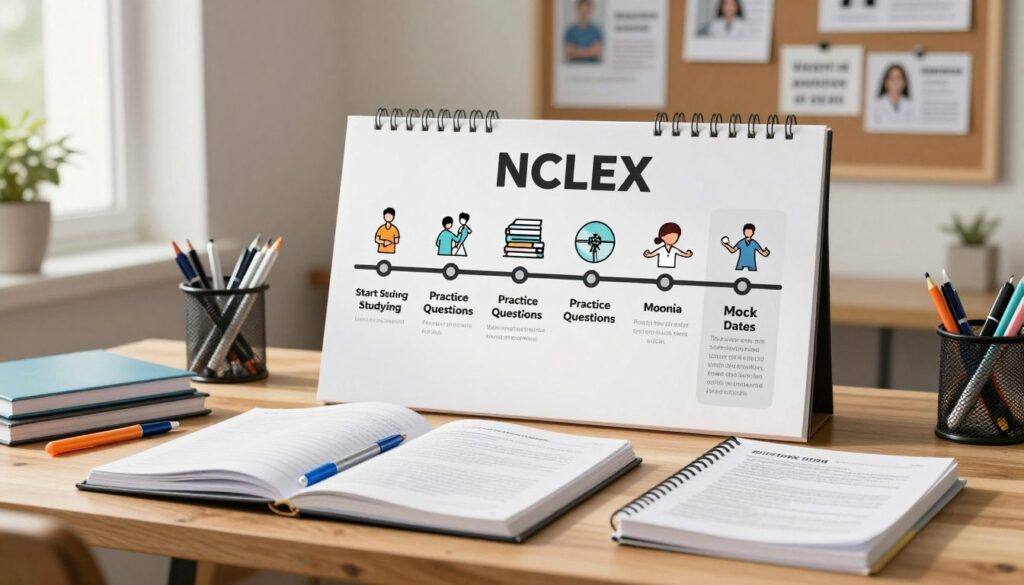
Your journey to licensure starts with a plan that fits your life. A structured NCLEX study timeline helps you cover all material without feeling overwhelmed. Breaking your prep into segments keeps you moving forward and stress low.
Setting Realistic Study Goals
Setting goals that are achievable and measurable is key. Instead of learning everything at once, focus on new content, review, and practice questions. This keeps your brain active and shows where you need more work.
Short, consistent sessions are better than long, tiring ones. Clear daily goals give you a sense of accomplishment and keep you motivated in your NCLEX study timeline.
Balancing Study with Other Responsibilities
You likely have work, family, or other commitments. To succeed, fit your study into your routine, not the other way around. Flexibility is key to balancing your life while studying.
Use a digital calendar for “study-only” hours when you’re most alert. If you struggle to stay organized, try the Archer NCLEX study calendar to structure your week.
Tools for Effective Time Management
The right tools can make you more efficient and help you stick to your NCLEX study timeline. Whether you like a physical planner or an online dashboard, seeing your progress is vital. Many find online courses helpful for staying on track.
| Study Session Type | Primary Focus | Recommended Duration |
|---|---|---|
| Content Review | New nursing concepts | 60-90 Minutes |
| Practice Questions | Application and logic | 45-60 Minutes |
| Review & Remediation | Analyzing mistakes | 30-45 Minutes |
| Quick Refresh | Flashcards or notes | 15-20 Minutes |
By using these tools and sticking to a schedule, you’ll build confidence for test day. Remember, your NCLEX study timeline can change as you learn what works for you.
Essential Study Resources for NCLEX
Choosing the right study tools can be tough. It’s key to pick materials that fit your learning style. This way, your study sessions can be productive and help you reach your goals.
Review Books and Guides
Review books are the core of your knowledge. They cover important nursing topics like pharmacology and patient safety. Focusing on key information helps you understand the main ideas without getting bogged down.
Use these books to build a solid base of knowledge. Pair them with your NCLEX review timetable to make sure you cover all important subjects before the exam.
Online Prep Courses
Digital courses offer interactive learning that books can’t match. They use active recall and spaced repetition to help you remember important details. These methods are key for keeping information in your long-term memory.
Video lectures and quizzes in these courses help you find your weak spots. This lets you focus more on tough topics and build on your strengths.
Practice Exams and Question Banks
Practice exams and question banks are the closest thing to the real test. They help you get used to the test’s style and difficulty. High-quality question banks also explain why each answer is correct, which is crucial for understanding the “why” behind clinical decisions.
Adding these practice sessions to your NCLEX review timetable will make you more confident. Here’s how different resources can help you succeed:
| Resource Type | Primary Benefit | Best Use Case |
|---|---|---|
| Review Books | Content Depth | Building foundational knowledge |
| Online Courses | Active Engagement | Mastering complex clinical topics |
| Question Banks | Exam Simulation | Testing readiness and speed |
Exam Day Preparation Tips
When your nursing exam day comes, having a plan is key to staying calm. Managing your morning is as important as your hard-earned knowledge. By controlling your environment, you can maximize your chances of success and feel confident.
Understanding the Exam Process
Knowing what to expect at the testing center reduces stress. Centers have strict security, like biometric scans or digital signatures. Arrive thirty minutes early to avoid feeling rushed during check-in.
The testing area is quiet and controlled for your focus. You’ll get a workstation to settle in before starting. Familiarizing yourself with these procedures beforehand lets you focus on the exam questions.
What to Bring to the Exam
Pack your bag the night before to avoid last-minute stress. Bring a valid photo ID that matches your registration. Without it, you can’t take the exam.
Personal items like bags, phones, and watches are not allowed. You’ll get a locker for your things. Keep it simple to focus on your performance without distractions.
Test Day Strategies
Start by practicing deep breathing to calm your nerves. It’s normal to feel anxious, but staying grounded helps you think better. If a question is tough, breathe and trust your prep.
Time management is key during the exam. Watch the clock but don’t rush. Stay calm and methodical to show your nursing skills and pass the exam.
Common Challenges During NCLEX Prep
Many nursing students face both academic and emotional challenges on their path to licensure. Feeling overwhelmed is a universal experience for candidates. By tackling these challenges head-on, we can pave a more sustainable path to success.
Overcoming Test Anxiety
Test anxiety often comes from the pressure of performing well on a high-stakes exam. Consistent practice is the best way to make the testing environment less scary. When you get used to the question format, your brain reacts less to stress.
“Success is not final, failure is not fatal: it is the courage to continue that counts.”
Keeping a healthy work-life balance is also key for your mental clarity. Prioritizing sleep, nutrition, and physical activity helps keep your nervous system in check. Remember, your worth is not defined by a single test score.
Dealing with Time Management Issues
Managing study sessions with personal responsibilities can feel like juggling. Using digital calendars or physical planners to plan your week in advance is helpful. Breaking down large topics into smaller chunks prevents feeling overwhelmed.
If you fall behind, don’t panic. Just adjust your schedule to match your current pace. Effective time management is about being consistent, not perfect.
Staying Motivated Throughout Prep
Staying motivated for weeks or months requires a clear vision of your goals. Remind yourself daily why you chose nursing. Celebrating small victories, like mastering a tough concept, can give you the motivation to keep going.
Connecting with peers who are also preparing for the NCLEX can help. Sharing your struggles can make them feel less heavy and more manageable. Be kind to yourself during this time, as your mental health is the base of your future professional success.
Support Systems for NCLEX Candidates
Surrounding yourself with the right people is as important as choosing the right study materials. Preparing for the NCLEX can feel lonely, but it doesn’t have to be. Connecting with others gives you the emotional boost you need when things get tough.

Study Groups and Peer Support
Joining a study group is a great way to stay accountable and focused. Studying with peers helps you explain complex concepts to each other. This makes learning more active and engaging.
Sharing your struggles with peers who are going through the same thing helps. You’ll find that they often have valuable insights or tips that make hard topics easier. Working together ensures everyone stays on track.
Mentorship Opportunities
Looking for a mentor who has passed the exam can guide you to success. A mentor gives you practical advice on time management and resource use. They’ve been there before and can help you avoid mistakes.
Talking to a mentor about your progress can reduce test anxiety. They offer a safe space to ask questions. Their encouragement can be the extra motivation you need.
Online Forums and Communities
Digital platforms and nursing forums are great for flexible support. These communities connect you with thousands of candidates anytime. You can find answers to questions or share your personal experiences.
Being part of these forums makes you feel connected to a larger community. Reading about others’ successes and challenges boosts your confidence. Joining these groups helps you feel less alone while working towards your nursing license.
Adjusting Your Study Plan as Needed
Being flexible is key for anyone aiming to pass the NCLEX exam. Your initial study plan might look great, but real study sessions often uncover gaps. These can be in your knowledge or how you manage your time.
Recognizing When to Change Strategies
It’s normal to hit a study plateau. If your practice test scores aren’t improving or you’re feeling mentally exhausted, it’s time to change. Stagnation is a clear signal that your current method isn’t working.
Don’t hesitate to drop a study resource or technique that’s not working. Struggling with certain topics or feeling anxious about the test? Changing your approach can offer a fresh perspective and help you overcome challenges.
Adapting to Learning Styles
Everyone learns differently, and your study plan should reflect that. If reading textbooks for hours doesn’t inspire you, try something more interactive. Active engagement often helps you remember information better than just reading it.
Visual aids, group discussions, or practice questions might be more effective for you. Tailoring your study habits to your learning style makes studying more enjoyable and efficient.
Tracking Progress Effectively
To keep a top-notch NCLEX exam readiness schedule, rely on data. Keep a detailed log of your practice exam results to spot weaknesses. For more structure, consider online classes to help you prepare for the cbx.
Using performance reports helps you make data-driven decisions on where to focus. Tracking your progress boosts your confidence. Knowing exactly where to improve keeps you on track to pass the exam.
Importance of Practice Questions
We think practice questions are the backbone of any good nursing exam prep plan. Textbooks give you the basics, but it’s the practice that really gets you ready for the exam.
Building Confidence through Practice
It’s key to take full-length, timed practice exams to build your mental strength. By simulating the real test, you get used to the format.
Confidence grows when you can handle the test’s pressure. Regular practice turns nursing theories into practical decision-making skills under stress.
“Success is the sum of small efforts, repeated day in and day out.”
Analyzing Practice Test Results
Just finishing a practice exam isn’t enough to improve. You need to analyze your results to find your mistakes.
Check if you’re missing questions because of knowledge gaps or bad test-taking habits. Spotting these weak spots early helps you focus better.
Integrating Feedback into Study Plans
After finding your weak areas, add this feedback to your study plan. A good NCLEX review timetable helps you review tough topics while keeping up with your progress.
Adjusting your study plan based on your results makes learning more effective. This disciplined approach boosts your skills in applying nursing concepts to real patient care.
Understanding the Significance of NCLEX Prep
Looking at the NCLEX preparation time frame means more than just counting days. It’s about deep learning. This time is not just for passing a test; it’s a key part of your nursing career growth. Spending enough time studying lays a strong foundation for your nursing career.
The Impact of Preparation on Success
How you study affects your confidence in real-world nursing. Those who dive deep into their studies find it easier to start their nursing jobs. Consistency turns hard ideas into skills you’ll use every day.
“Success is where preparation and opportunity meet.”
Long-term Benefits of Thorough Study
A good NCLEX preparation time frame helps you remember complex medical info better. Instead of last-minute studying, you build a lasting knowledge base. This knowledge helps you make quick, accurate decisions in stressful situations.
The table below shows how studying affects your nursing career:
Study Approach Knowledge Retention Clinical Confidence Career Impact Short-term Cramming Low Minimal High Stress Balanced Prep Moderate Growing Steady Growth Thorough Mastery High Excellent Long-term Success Ensuring Patient Safety Through Competence
The main reason to respect your NCLEX preparation time frame is patient safety. Nursing is all about trust and accuracy. Mastering the material now means you can give top-notch care from the start.
See your study time as a critical investment in your future. Every study hour is a step towards better patient care. Your dedication to excellence today makes healthcare safer for all tomorrow.
Final Thoughts on NCLEX Prep Duration
Your journey to becoming a registered nurse is special, just like your study needs. You might wonder, how long does NCLEX prep usually take? The answer varies based on your background and knowledge.
Quality study sessions are more important than the hours you spend studying. Whether it takes eight weeks or twelve, focus on building consistent habits. Trust in the hard work you’ve put into your nursing education.
Stay positive as your exam date approaches. You have the skills and dedication needed for this profession. When you think about how long NCLEX prep takes, remember focused work is key, not just memorization. By taking care of your mental health and using the right resources, you’ll be ready to pass the exam. We’re excited to see you begin your rewarding career in healthcare.