
Ever thought about how staying up all night to study might hurt your nursing career? Many students think that missing sleep for more study is key to passing. But, this often doesn’t work out.
It’s tough to resist the urge to study more, but ignoring your body’s needs can make you mentally tired. When we overwork, our brains find it hard to handle tough clinical scenarios. Prioritizing rest is not weak; it’s smart to keep your mind sharp for the exam.
Knowing the NCLEX sleep requirements is key to doing well. By balancing self-care and study, we can face the exam with confidence. Let’s look into how much sleep you should get before NCLEX to do your best.
Key Takeaways
- Rest is a critical component of cognitive performance during high-stakes testing.
- All-night study sessions often decrease retention and increase test anxiety.
- Consistent sleep schedules help regulate your focus and memory recall.
- Quality rest allows your brain to synthesize complex nursing concepts effectively.
- Self-care is an essential part of your professional nursing preparation.
Understanding the Importance of Sleep for Test Day
Getting the best results on the NCLEX is not just about studying hard. We often forget how important sleep is before the test. Sleep is a key tool, not a luxury.
The role of sleep in cognitive function
Our brains need sleep to process what we learn. The REM stage helps organize complex nursing ideas. This makes it easier to recall information during the test. For more tips, check out nurses’ advice for the night before.
Sleep and stress reduction
Good sleep helps manage stress, which can hurt our test scores. Lack of sleep raises cortisol, making us anxious. Meeting NCLEX sleep requirements keeps our minds calm and focused.
The link between sleep and memory retention
Sleep helps move information from short-term to long-term memory. Without enough sleep, our brains can’t retain what we’ve learned. Consistent sleep patterns bridge our study efforts to exam performance.
| Sleep Stage | Primary Benefit | Impact on Nursing Students |
|---|---|---|
| Light Sleep | Initial recovery | Helps reduce physical fatigue |
| Deep Sleep | Physical restoration | Repairs body for long testing hours |
| REM Sleep | Memory consolidation | Essential for recalling complex protocols |
Knowing how sleep works helps us see why it’s essential for the NCLEX. Resting well supports our career goals. Recognizing the importance of sleep before NCLEX boosts our confidence on test day.
Recommended Sleep Duration for Optimal Performance
Getting ready for your exam starts long before you arrive at the testing center. Many think an all-nighter is the answer, but it’s not. Quality rest is key for clear thinking and applying nursing concepts well.

General recommendations for adults
Health experts say adults need 7 to 9 hours of sleep each night. This helps our brains process the day’s events and remember them. Getting this amount keeps our thinking sharp, including solving problems and thinking critically.
The ideal sleep range for nursing students
For the NCLEX, we need to focus on the exam’s stress. While 7 hours is good for daily life, 8 to 9 hours is better for NCLEX prep. This extra sleep ensures our brains are ready for the exam’s challenges.
Adjusting your sleep schedule before the exam
It’s important to get our bodies used to the exam schedule. Start adjusting your sleep times two weeks before the exam. Following these NCLEX sleep recommendations helps us stay alert and focused for the exam.
| Sleep Duration | Cognitive Impact | Exam Readiness |
|---|---|---|
| Less than 6 hours | Impaired judgment | Low |
| 7 hours | Baseline function | Moderate |
| 8-9 hours | Peak mental clarity | High |
Timing Your Sleep: Night Before the NCLEX
Many students don’t realize how important a calm evening is for NCLEX exam preparation. What we do in the hours leading up to the test can greatly affect our focus the next day. Choosing to rest instead of cramming helps us perform better.
Establishing a bedtime routine
Having a consistent bedtime routine is key. It tells our body it’s time to sleep. We recommend stopping all study activities two hours before bed. This helps our brain relax.
Try reading something light, stretching, or getting ready for the next day. Just like using online courses for the USMLE, a good evening routine sharpens our minds for the test.
The effects of late-night cramming
It’s tempting to cram in one last study session. But it usually backfires. It can make us anxious and mess with our memory.
Instead, trust the prep work you’ve done. Resting your mind is just as important. It helps you remember what you’ve learned when it counts.
Using relaxation techniques for better sleep
If you can’t sleep because your mind is racing, try relaxation techniques. Deep breathing or muscle relaxation can calm you down. They’re great for managing test-day nerves.
By using these techniques, we prepare our bodies for the test. A calm mind is our greatest asset during the exam. These small steps help us stay focused.
Potential Consequences of Sleep Deprivation
Knowing the risks of not getting enough sleep is key to our NCLEX prep. We often focus on study guides and practice questions. But, the importance of sleep before NCLEX is huge. Not listening to our body’s need for rest can really hurt us on the big day.

Impaired judgment and decision-making
As future nurses, making good decisions is critical. When we’re tired, our thinking gets cloudy. Critical thinking slows down, and we might miss important patient details.
Following NCLEX sleep recommendations keeps our minds sharp. Without enough sleep, our decisions get slower. This can lead to mistakes we could have avoided with a clear mind.
Difficulty concentrating during the exam
The NCLEX is a long test that needs our full focus. A well-rested brain is essential for this. When we’re tired, it’s hard to stay focused on the screen.
- Reduced ability to parse complex Select All That Apply (SATA) questions.
- Increased likelihood of misreading instructions or question stems.
- Frequent mental lapses that break our flow and rhythm.
Increased anxiety levels on test day
Sleep loss affects our emotions, making us more stressed. When we’re not well-rested, the test feels even scarier. By focusing on the importance of sleep before NCLEX, we can handle our nerves better.
Following NCLEX sleep recommendations helps us stay calm. When we’re rested, we can handle the pressure. This shows our true skills as nursing professionals.
Napping Strategies for Pre-NCLEX Preparation
When we’re tired during long study sessions, napping can be a big help. Our brains get tired after hours of studying, making it hard to focus. Short naps can refresh our minds and keep us focused on NCLEX exam preparation.
Benefits of short naps
Short naps give our brains a quick break. They help us process information better. This habit keeps us alert and helps us remember nursing concepts.
Resting for a short time also makes us less irritable. Feeling refreshed helps us tackle practice questions better. This is key for our NCLEX sleep strategies.
How to incorporate naps into your study schedule
Adding naps to our study routine is easy. We can treat them as planned breaks. It’s best to nap during our natural afternoon slump.
- Set a consistent time for your daily rest.
- Use a timer to ensure you do not oversleep.
- Find a quiet, dark space to maximize the quality of your rest.
Nap timing and duration recommendations
Timing is key for napping. We want to wake up feeling refreshed, not groggy. Aim for nap lengths that keep you in light sleep.
| Nap Duration | Primary Benefit | Best Time to Nap |
|---|---|---|
| 10-20 Minutes | Boosts alertness and energy | Early afternoon |
| 30 Minutes | Improves creative thinking | Mid-afternoon |
| 90 Minutes | Full sleep cycle completion | Before late study sessions |
By following these tips, our naps will help us stay focused. Staying consistent with these habits keeps our energy up throughout our studies.
Nutrition and Sleep: What to Eat Before Bed
Getting the right food is as key as studying for the NCLEX. We often worry about caffeine during the day. But, what we eat at night is critical for good sleep. Eating right helps us wake up feeling sharp and ready for the exam.
Foods that promote restful sleep
Some foods help our body make melatonin, which controls our sleep. Eating tart cherries, almonds, or a small bowl of oatmeal can help us sleep better. These foods give us the nutrients we need without making us too full.
“The food you eat can be either the safest and most powerful form of medicine or the slowest form of poison.”
Avoiding stimulants and heavy meals
Stay away from heavy, spicy, or acidic foods before bed. They can cause indigestion and keep you awake. Also, avoid foods with caffeine or chocolate to keep your mind calm. Following these tips helps avoid stress from digestive issues on exam day.
Staying hydrated without disrupting sleep
Drinking water is good for your brain, but timing is important. Drink water all day to stay focused. But, cut back on fluids two hours before bed to avoid frequent nighttime awakenings. This helps keep your sleep cycle steady, which is important for the NCLEX.
Creating an Ideal Sleep Environment
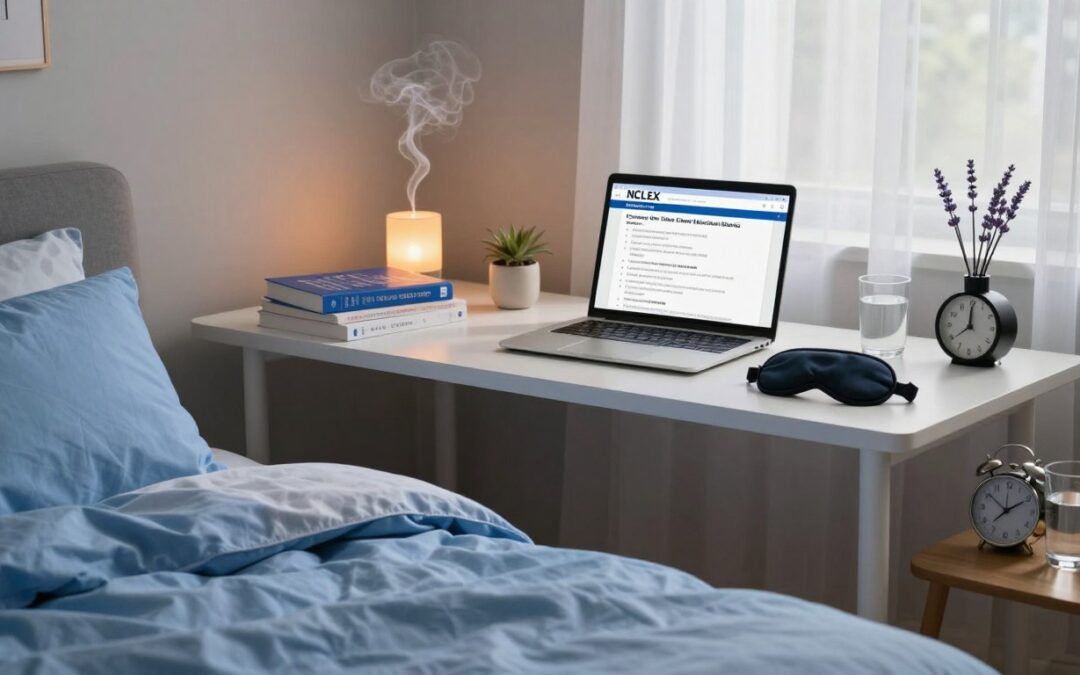
Our surroundings greatly affect our sleep quality. When we’re getting ready for a big exam, our bedroom needs to be a peaceful sanctuary. By following simple NCLEX sleep guidelines, we tell our bodies it’s time to rest.
Noise and light management
Light and sound can ruin a good night’s sleep. Blackout curtains help block out streetlights and early sun. For noisy areas, a white noise machine or fan can cover up sounds.
- Use blackout curtains to keep the room dark.
- Invest in a white noise machine to drown out sudden sounds.
- Consider using soft earplugs if external noise is unavoidable.
Comfortable bedding and temperature control
Our comfort affects how fast we fall asleep. Make sure our mattress and pillows support us well. A cool room, between 60 and 67 degrees Fahrenheit, helps our body temperature drop, aiding sleep.
Small adjustments to our bedding can greatly improve sleep. Breathable fabrics like cotton keep us comfortable. Feeling physically relaxed helps our minds relax too.
The importance of a technology-free zone
It’s tempting to study in bed, but it’s not good. Our bedroom should be a technology-free zone. Keeping study materials elsewhere helps our brain see the bedroom as a place for rest.
Smartphones and tablets can disrupt our sleep. Charge devices outside the bedroom to avoid checking them. By following these NCLEX sleep guidelines, we ensure a deep, restful sleep.
Coping with Pre-Exam Anxiety
Feeling anxious as your test date gets closer is normal. But you can stay calm. Using NCLEX test day tips can turn nervous energy into focus and calm.
Strategies for reducing test-day nerves
Start by preparing well and staying consistent. A structured plan makes you feel in control. Here are some steps to manage your nerves:
- Prepare your testing materials the night before to avoid morning chaos.
- Stick to a consistent sleep schedule to keep your brain rested and resilient.
- Limit your intake of caffeine, which can often mimic or worsen feelings of anxiety.
- Visualize yourself walking into the testing center with confidence and clarity.
Mindfulness and breathing exercises
Feeling overwhelmed can make our breathing shallow. Deep, rhythmic breathing tells our nervous system we’re safe. Try “box breathing”: inhale for four, hold for four, exhale for four, and hold for four.
Mindfulness keeps us in the moment, not worried about the future. Focus on your senses for a few minutes each day. This simple habit is a key NCLEX test day tip for staying calm during the exam.
The role of positive affirmations
What we tell ourselves matters a lot. Replacing doubt with positive affirmations changes our mindset. Repeat phrases that show your hard work and readiness.
Try saying, “I am prepared, I am capable, and I am ready to succeed.” Using these NCLEX test day tips builds mental strength. You’ve worked hard and are ready for this challenge.
Planning Your Day Around Sleep
Let’s explore how to plan our last hours to feel our best at the testing center. Success on the exam is not just about knowing the material. It’s also about being mentally sharp. A calm and predictable environment helps us perform at our best.
Developing a test day schedule
We should plan our morning carefully to avoid stress. A detailed NCLEX study schedule should be done before the exam. This leaves the morning for simple tasks.
Plan your travel, breakfast, and final preparations the night before. This saves mental energy. Consistency is our greatest ally in stressful situations. Arrive at the center early to relax without rushing.
Prioritizing sleep over last-minute studying
It’s tempting to cram in one last study session. But, our brains need sleep to process information. Sleep sharpens our minds and keeps us focused.
If you’re anxious, remember you’ve prepared well. Prioritizing sleep is key to recalling nursing concepts. Trust in your preparation and let your mind rest.
Tips for getting up on test day
When the alarm rings, move gently and drink water. These NCLEX test day tips help us wake up smoothly. Opening curtains helps set our internal clock.
Avoid heavy meals that make you feel slow. Choose a balanced breakfast for steady energy. Here’s how to start your morning right.
| Action | Recommended Approach | Why It Works |
|---|---|---|
| Morning Routine | Simple and calm | Reduces early anxiety |
| Study Habits | Zero review | Prevents mental fatigue |
| Hydration | Water and light tea | Maintains focus levels |
| Arrival Time | 30 minutes early | Allows for acclimation |
Post-Exam Sleep: How to Recover
Leaving the testing center is a big relief. We’ve worked hard and need a break. Resting helps us deal with the stress and anxiety.
Prioritizing Rest for Mental Clarity
Our bodies need to recover after the exam. This time is important for our growth. Learning effective strategies for work-life balance helps us stay focused in our nursing careers.
Reflecting and Moving Forward
Feeling mixed emotions after the test is normal. Taking time to reflect helps us see our hard work. Now, we can focus on relaxing and finding peace.
Establishing Long-Term Sleep Habits
Getting back to a regular sleep schedule takes time. We can use our discipline to create lasting sleep routines. Consistent sleep strategies are key to our future health. We stay committed to our well-being as we start our nursing careers.