

Ever thought if where you live affects your nursing board exam chances? Many nursing students worry if their location matters. This worry can add to the stress of a tough time.
The exam is a standardized national assessment. Rumors about regional differences are common, but the truth is more complex. We aim to clear up how educational quality and local rules affect your test.
We want to give you the facts to help you succeed. By focusing on prep, not where you are, you can feel confident and ready for your career. Let’s debunk these myths together.
Key Takeaways
- The exam is a national standard, meaning the difficulty level remains consistent across the country.
- Pass rates often reflect the quality of local nursing programs, not the exam itself.
- State boards of nursing set individual requirements for licensure, which can vary by location.
- Focusing on solid study habits is more effective than worrying about your testing site.
- We encourage you to prioritize your clinical knowledge to ensure you are fully prepared for success.
Understanding the NCLEX Exam Structure
To understand how different states perform, we must first grasp the exam’s structure. Whether you aim for the NCLEX-PN for practical nurses or the NCLEX-RN for registered nurses, the goal is the same. It checks if you have the clinical judgment needed to work safely in any healthcare setting.
What is the NCLEX?
The National Council Licensure Examination is a test to ensure nurses are competent. Nationally, 91.2% of first-time test-takers pass the NCLEX-RN. This is a good benchmark for students. Despite worries about NCLEX pass rates by state, the exam’s content is the same everywhere.
How is the NCLEX Scored?
The exam uses Computerized Adaptive Testing (CAT) to measure your skills. After each question, the computer adjusts the difficulty based on your answers. If you get it right, the next question is harder. This method accurately assesses your level of competence.
Exam Content and Format
The test covers four main areas that nurses deal with every day. These are safe care environments, health promotion, psychosocial integrity, and physiological integrity. Knowing these well is key to success, no matter where you work.
| Exam Type | Target Audience | Primary Focus |
|---|---|---|
| NCLEX-RN | Registered Nurses | Complex Clinical Judgment |
| NCLEX-PN | Practical Nurses | Direct Patient Care |
| National Average | All Candidates | Safety Standards |
By focusing on these core areas, you lay a solid foundation for your nursing career. While looking at NCLEX pass rates by state might help, remember the test’s standardized nature. This means your license is recognized and respected across the country.
Factors Influencing NCLEX Difficulty
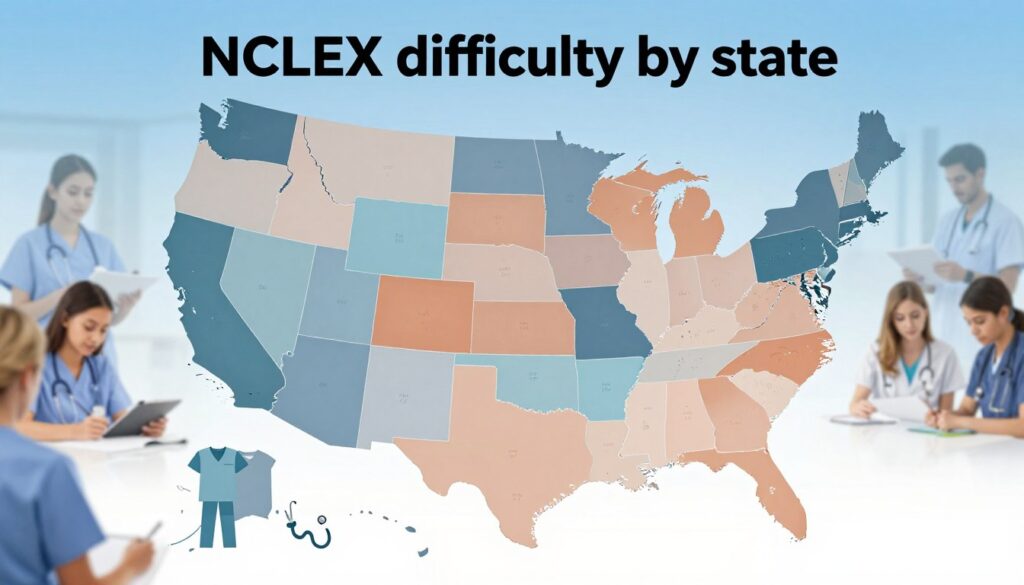
Getting a nursing license is more than just studying. State-specific factors often play a role. The exam is the same everywhere, but NCLEX difficulty by state is a common question. It’s important to understand the factors that affect your test journey.
State Regulations and Requirements
Each state has its own rules for getting a nursing license. These rules can make the NCLEX seem harder in some places. Some states need extra background checks or documents, adding stress before the test.
Knowing what your state board requires is key. This lets you focus on learning nursing skills, not paperwork.
Nursing Education Quality in Different States
The quality of your nursing school is very important. BSN graduates usually do better on the NCLEX than those with associate degrees. This shows how your school’s quality affects your score.
Nursing schools must meet high standards to keep their accreditation. They need at least an 80% pass rate. This means you get a good education, no matter where you are, to help you pass the NCLEX exam differences by location.
Candidate Preparation and Resources
Your study habits and access to good resources are key to your score. While some areas might have better tutoring, you must prepare yourself. Consistency is the way to beat any NCLEX difficulty.
Use different study materials like practice questions and review books. A strong knowledge base will help you feel ready for the test, wherever you are.
Variability Among States
Looking at nursing licensure, we see big differences from state to state. Many wonder, is NCLEX harder in certain states? The exam is the same everywhere, but support and resources vary greatly.
Overview of Passing Rates by State
Looking at NCLEX pass rates by state shows how different areas prepare nurses. Some states do much better, thanks to strong training and support.
New Hampshire is leading with a 96.5% pass rate. This shows how local education affects success. When we look at NCLEX difficulty by state, many factors come into play:
- The quality of local nursing school curricula.
- Availability of clinical placement opportunities.
- State-level investment in nursing education resources.
- Student-to-faculty ratios in accredited programs.
Exam Trends and Changes Over Time
States with a big need for nurses often focus on helping students succeed. As they improve their teaching, their pass rates go up. This helps us see which states are the best and worst for NCLEX success.
Remember, these numbers change over time. Education and testing prep keep getting better, affecting pass rates. Keeping up with these changes helps us understand what affects success, no matter where you take the exam.
Unique Challenges in High-Difficulty States
Looking at nursing, we see that state variations in the NCLEX exam pose big challenges. These differences are linked to workforce pressures and local education. It’s key to grasp these points for those starting their nursing career.
Testing Environment and Conditions
The testing experience varies across the country. Places like California face huge nursing shortages. This puts a lot of pressure on their healthcare systems.
California is expected to have the biggest nursing shortage by 2030. This affects education and exam prep. The stress in these areas can change how students are ready for the exam.
Local clinical rotations and program speeds differ from other places. To see how your state compares, check out the easiest and hardest states for RN licenses.
Variations in Test-taker Demographics
Demographic factors also play a big role. States draw different nursing students, each with unique needs. These NCLEX exam differences by location mirror the local student population’s needs.
Several factors lead to these differences, including:
- The availability of mentorship programs for new graduates.
- Access to high-quality clinical simulation labs.
- The ratio of faculty to students in local nursing schools.
- Regional economic pressures that may force students to work while studying.
By understanding these challenges, we can prepare better for our state’s demands. Remember, while the exam is the same, the journey to get there varies by location.
The Role of Nursing Schools
Choosing the right nursing school is a big decision for your future. The quality of your education is key for your clinical skills and the licensing exam. Look closely at each program you consider.
Accreditation and Its Impact
Accreditation shows a program’s dedication to quality. Schools with national or regional accreditation meet high standards. This means their curriculum is up-to-date with healthcare practices.
Going to an accredited school can help you get licensed easier. Many state boards require it. Always check your school’s accreditation to make sure your efforts pay off.
School Resources and Support for Students
The nursing field is facing a big challenge. In 2019, about 80,000 qualified students were turned away due to a lack of teachers. It’s more important than ever to pick a school that supports its students well.
Great programs offer advanced resources to help you learn. Look for schools with:
- Simulated hospital environments for training.
- Modern cadaver labs or high-fidelity mannequins.
- Dedicated tutoring and NCLEX-prep workshops.
These resources can really help you feel ready for the exam. Supportive faculty and good facilities can make a big difference on exam day.
Study Strategies for Success
To pass your nursing boards, you need a solid study plan. It should focus on the exam’s four key areas. Remember, it’s more than just memorizing. You must learn to think critically and make quick decisions.
Recommended Study Materials
Use official practice materials to get ready. They look like the real test and help you get used to the format. For extra help, consider online classes to improve your test skills.
Make sure to study the four main areas: safe care, health promotion, psychosocial integrity, and physiological integrity. Consistency is your greatest ally during this time. Set aside time each day to review these key topics.
Practical Tips for Exam Day
On exam day, stay calm and focused. Effective time management is key. Keep an eye on the clock but don’t let it stress you out.
Before starting, take a few deep breaths. This helps calm your nerves. Trust in your preparation. Stay calm and read each question carefully to do your best.
Real Experiences from Test Takers
Learning from those who have taken the NCLEX gives us a real look at what to expect. Personal stories help connect what we learn in class to the actual test. Hearing from others gives us invaluable perspective on what to expect.
Testimonials from Successful Candidates
Many nurses say consistency is the key to beating exam anxiety. They share that a good study plan makes tough material easier. They also say staying calm helps them think clearly under pressure.
“The most important thing I learned was to trust my preparation. Even when the questions felt difficult, I knew I had put in the work to succeed.”
Common Challenges Faced
The nursing field is under a lot of pressure. About 10% of Nebraska’s nurses left after the pandemic. This shows the resilience needed to work in healthcare today.
Many find the adaptive nature of the exam hard. The exam gets harder as you do well, making it feel like you’re struggling. Knowing this helps us stay calm and focused.
| Challenge Type | Impact Level | Recommended Strategy |
|---|---|---|
| Adaptive Questioning | High | Focus on clinical judgment |
| Exam Anxiety | Medium | Practice deep breathing |
| Time Management | Medium | Use timed practice tests |
| Content Overload | High | Prioritize high-yield topics |
By getting ready for these challenges, we can face the NCLEX with confidence. We’re not just studying for a test; we’re building the mental toughness for a fulfilling nursing career.
Seeking Help and Support
Preparing for your nursing boards doesn’t have to be a solo effort. We know the pressure can be overwhelming, but connecting with the right resources can change everything. With the right support, you can understand tough topics better and feel more confident for the exam.
Tutoring and Online Resources
Struggling with certain clinical concepts or pharmacology questions? Professional tutoring could be the solution. Tutors offer personalized feedback to pinpoint your knowledge gaps. Many students also explore financing options for expensive online courses to access quality prep materials without breaking the bank.
Online platforms are great because they fit into your busy schedule. They often include adaptive testing software that simulates the real exam. This way, you can track your progress and focus on what’s most important.
Study Groups and Peer Support
Being part of a study group can be incredibly helpful. It offers a sense of community and helps you understand tough topics better through group discussions. Plus, learning about the Nurse Licensure Compact (NLC) can make your career path easier if you plan to work in multiple states.
The NLC lets nurses work in several states with just one license. This is a big plus for your future career. Talking to peers who are also dealing with these regulations can keep you informed and motivated. Here’s a comparison of common support methods to help you choose what’s best for you.
| Support Method | Primary Benefit | Best For |
|---|---|---|
| Professional Tutoring | Customized guidance | Targeting specific weaknesses |
| Online Prep Courses | Adaptive learning tools | Comprehensive content review |
| Peer Study Groups | Collaborative discussion | Motivation and accountability |
Conclusion: Preparing for Your State’s NCLEX
Passing the NCLEX is a big step in your career. It opens doors to a growing field, expected to expand 12% by 2028. You have the power to shape your future with hard work and focus.
Every state has its own challenges for the NCLEX. Knowing the best and worst states helps you plan better. Your location is less important than your effort to learn well.
Achieving Your Professional Goals
Nursing is a key profession with strong job security. You become part of a team that changes lives. Focus on growing personally and learning more about healthcare to beat any challenges.
Learning about the best and worst states for NCLEX success helps you plan. Use this info to create a study plan that suits you. We believe you can succeed and thrive in this rewarding field.