

Did you know that heart problems make up a big part of the nursing exam? Learning about the heart is a vital milestone for future nurses. These topics might seem tough, but they’re key for safe care.
Our guide offers a clear path to tackle these tough questions. We focus on the most important info to boost your confidence. Check out our cardiovascular system disorders NCLEX practice questions to improve your thinking skills now.
Success starts with preparation. We aim to make your study easier and ensure you’re prepared for your exam.
Key Takeaways
- Cardiovascular health is a fundamental pillar of nursing practice and exam success.
- Focusing on high-yield topics like heart failure and EKG interpretation improves your efficiency.
- Utilizing structured practice exams helps you manage your time effectively during the test.
- Reviewing detailed rationales is essential for mastering difficult clinical concepts.
- Consistent practice with reliable resources builds the confidence required for licensure.
Understanding Cardiac Health in NCLEX
Cardiovascular care is a key part of modern medicine. Heart problems are common in hospitals, so you’ll see them often. Learning about them is not just for passing tests; it’s about ensuring patient safety in tough situations.
Importance of Cardiac Knowledge for Nurses
Knowing about the heart is essential for good nursing. When you study, you need to connect theory with real-life care. This clinical intuition is what examiners look for in NCLEX cardiac questions.
Understanding heart physiology helps you predict patient outcomes and act early. This skill lets you handle complex situations with confidence. Your ability to put information together will show how well you do on cardiac nursing NCLEX questions.
Overview of Cardiac Conditions
The heart system faces many serious problems that need constant watch. You’ll need to manage patients with dysrhythmias, hypertension, coronary artery disease, and heart failure. Each condition has its own challenges and needs specific care.
Knowing how these diseases work helps you focus your care. Whether it’s a patient with long-term high blood pressure or someone with sudden heart failure, your knowledge is key. Make sure to study these areas well to do well on your NCLEX cardiac questions and future exams.
Common Cardiac Topics in NCLEX Exams
Some cardiac conditions keep showing up on the nursing licensure exam. It’s key to master these areas for your confidence and skill. A top-notch NCLEX cardiac question bank helps you get ready for real-world scenarios.
These topics are key because they involve life-or-death situations. Studying these areas well helps you answer cardiac NCLEX exam questions more accurately and quickly.
Heart Failure
Heart failure happens when the heart can’t pump blood well. Knowing the difference between left and right-sided failure is vital. Spotting symptoms like fluid buildup in the lungs or legs is a must for nurses.
Myocardial Infarction
A heart attack is a serious emergency. The goal is to get blood flowing back to the heart within four hours. When looking at common cardiac NCLEX test questions, remember the urgency of these actions.
Arrhythmias
Arrhythmias are irregular heartbeats that can affect how well the heart works. You need to be able to tell if a rhythm is stable or not. An NCLEX cardiac question bank is great for practicing this skill.
To do well, remember these important signs:
- Heart Failure: Watch for signs of too much fluid and less activity.
- Myocardial Infarction: Focus on getting oxygen and quick treatment.
- Arrhythmias: Check if the heart rhythm is stable and if blood is flowing well.
Practicing with cardiac NCLEX exam questions sharpens your skills for critical patients. Understanding the underlying issues helps you give the best care.
Common NCLEX Cardiac Questions
Understanding the different types of exam questions can be tough at first. Knowing how the test is structured is as important as knowing the clinical content. You might ask, what are common NCLEX cardiac questions? These questions test your ability to make safe, effective nursing decisions under pressure.
Sample Questions and Formats
The exam has various formats to test your critical thinking. You’ll see fill-in-the-blank calculations and ordered response items. These require you to list nursing actions in order. Using high-quality NCLEX cardiac review questions helps you get used to these formats.
When practicing, pay attention to the instructions for each format. For example, an ordered response question might ask you to list the steps of a cardiac assessment in order. Consistent practice helps you avoid losing points due to unfamiliarity with the format.
Question Types: Multiple Choice vs. Select All That Apply
You’ll mostly see standard multiple-choice and Select All That Apply (SATA) items. Multiple-choice questions have one clear answer, but SATA questions require you to pick every correct option. Many students find SATA questions the toughest part of their NCLEX cardiac practice.
To do well with SATA items, treat each option as a true or false statement. This systematic approach helps you avoid missing or selecting incorrect answers. Here are some tips for SATA questions:
- Analyze each option independently before making your final selection.
- Look for keywords that indicate a priority nursing intervention.
- Remember that there is no partial credit for partially correct answers.
By mastering these question types, you’ll feel more confident on test day. Focus on the clinical logic behind each answer, not just memorizing facts. This approach will help you throughout your nursing career.
Heart Anatomy and Physiology Focus
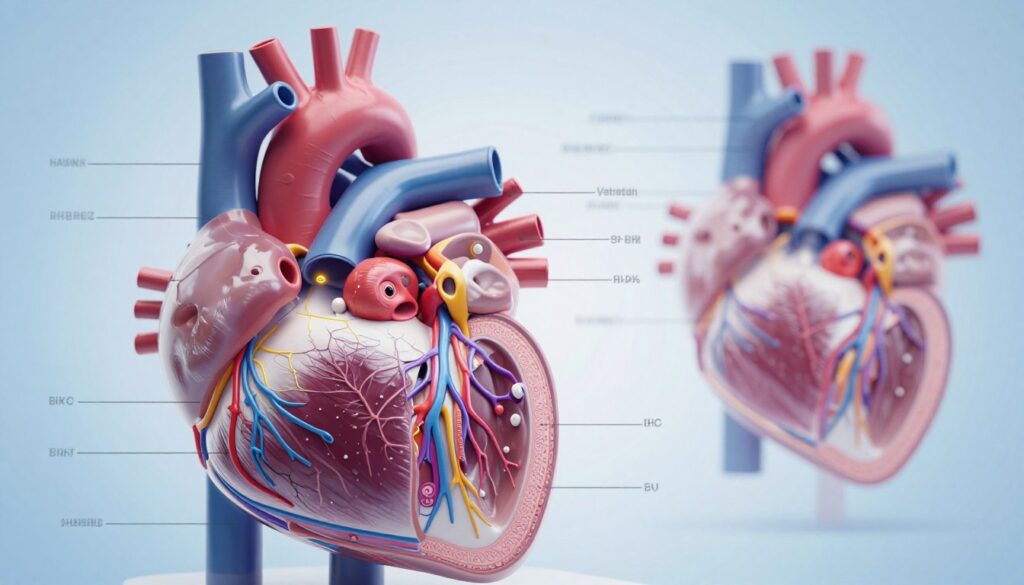
To provide top-tier cardiac care, we must first understand the mechanical wonders of the human heart. Knowing how the heart is built is key. It helps us spot problems early.
Key Structures of the Heart
The heart is a sophisticated double pump, divided into four distinct chambers. The two upper chambers, known as the atria, act as receiving areas for blood. The lower chambers, or ventricles, serve as the powerful engines that push blood throughout the body. Valves are equally critical, as they ensure that blood flows in only one direction, preventing any dangerous backflow.
The heart is a pump that never rests, a masterpiece of biological engineering that sustains our every breath and movement.
Understanding these components allows us to visualize how blood moves through the system. We rely on the coronary arteries to supply the heart muscle itself with oxygen. This is vital for maintaining its constant rhythm. Below is a breakdown of the primary chambers and their specific roles in the cardiac cycle.
| Chamber | Primary Function | Blood Type |
|---|---|---|
| Right Atrium | Receives deoxygenated blood | Venous |
| Right Ventricle | Pumps blood to lungs | Deoxygenated |
| Left Atrium | Receives oxygenated blood | Oxygen-rich |
| Left Ventricle | Pumps blood to the body | Oxygen-rich |
Heart Function and Blood Flow
The journey of blood through the heart is a precise, rhythmic process. Deoxygenated blood enters the right side, travels to the lungs for gas exchange, and returns to the left side to be distributed to the rest of the body. This continuous loop is what keeps our tissues healthy and functioning.
One of the most important metrics we use to evaluate this process is the ejection fraction. This measurement tells us exactly how well the heart pumps oxygen-rich blood with each contraction. A normal ejection fraction is 55% or higher, which serves as a key indicator of cardiac health.
If you notice a patient has an ejection fraction below this range, it often signals that the heart is struggling to meet the body’s demands. By mastering these physiological concepts, you gain the confidence to interpret complex data accurately. This knowledge is truly your greatest tool in the clinical setting.
Medications Related to Cardiac Care
Learning about cardiac medications is key for safe nursing care. These drugs help manage heart issues and keep patients stable. They affect how well the heart works, like cardiac output, which is 4 to 8 liters per minute in healthy adults.
Common Cardiac Medications
We often use several types of medications to support the heart. Beta-blockers slow the heart rate and lower blood pressure. This makes the heart work less hard. ACE inhibitors relax blood vessels, helping the heart pump blood better.
Diuretics help manage fluid levels. They remove sodium and water, lowering blood volume and pressure. Digoxin boosts heart muscle strength and slows the heart rate, helping those with heart failure.
Side Effects and Nursing Considerations
Keeping patients safe is our main goal. We check vital signs before and after giving these drugs. This ensures they work as planned without harming the patient.
It’s also important to watch for electrolyte imbalances, like when diuretics are used. We teach patients to report symptoms like dizziness or fatigue. This way, we make sure the drugs help the patient.
| Medication Class | Primary Action | Key Nursing Consideration |
|---|---|---|
| Beta-Blockers | Lowers heart rate and BP | Check apical pulse before dose |
| ACE Inhibitors | Vasodilation | Monitor for dry cough and hypotension |
| Diuretics | Reduces fluid volume | Monitor potassium levels and I&O |
| Digoxin | Increases contractility | Assess for signs of toxicity |
Interpreting Cardiac Assessment Findings
Often, the most important clues about a patient’s heart health are right in front of us. Developing a sharp eye for cardiac assessment is key for success on the NCLEX and in practice. By mastering these skills, we can spot subtle changes early, preventing serious emergencies.
“To observe is to see, but to assess is to understand the story the patient’s body is telling.”
Vital Signs in Cardiac Assessment
The base of any cardiac check is accurate vital signs. A normal adult heart rate is between 60 to 100 beats per minute. If we see values outside this range, we must quickly think about the patient’s situation and possible problems.
Blood pressure readings tell us a lot about the heart’s work and blood flow. We look for patterns, not just numbers, to see if a patient is stable. Consistent monitoring helps us catch early signs of trouble, like fast heart rates or low blood pressure, before they get worse.
Auscultation: Heart Sounds Explained
Listening to the heart gets better with practice and patience. We focus on the “lub-dub” sounds, S1 and S2, which show when heart valves close. S1 is when the mitral and tricuspid valves shut, and S2 is when the aortic and pulmonic valves close.
When we listen, we use the bell and diaphragm of our stethoscope to catch small changes. Extra heart sounds, like S3 or S4, or murmurs, can mean there’s a problem with the heart’s structure or too much fluid. Knowing how to tell these sounds apart helps us give a better picture of the patient’s heart health.
ECG Interpretation Basics
When you take the NCLEX-RN, you might see 75 to 145 questions. Some will test your skill in reading cardiac rhythms. Knowing ECG basics well can make you feel more confident. We aim to break down these complex patterns into simple concepts for you.
Understanding Normal vs. Abnormal Rhythms
To spot a rhythm, first look for the normal baseline. A normal rhythm starts in the sinoatrial node and follows a regular pattern. Check if the rhythm is regular by measuring the distance between R-waves.
Abnormal rhythms, or arrhythmias, happen when the electrical impulse is blocked or starts from an ectopic site. Recognizing these deviations is key for patient safety. If the heart rate is off, you need to categorize the rhythm fast.
Key ECG Waves and Their Significance
Every heartbeat has a unique electrical signature on the monitor. The P wave shows atrial depolarization, and the QRS complex shows ventricular depolarization. The T wave marks ventricular repolarization, the heart’s recovery phase.
Knowing the duration and shape of these waves helps spot issues. For instance, a wide QRS complex often means the electrical signal is taking a longer path through the ventricles. Use the table below to distinguish between common cardiac patterns during your study sessions.
| Rhythm Type | Rate (bpm) | P Wave | QRS Complex |
|---|---|---|---|
| Normal Sinus | 60–100 | Present | Narrow |
| Sinus Tachycardia | >100 | Present | Narrow |
| Sinus Bradycardia | <60 | Present | Narrow |
| Ventricular Fibrillation | None | Absent | Chaotic |
Risk Factors for Cardiac Conditions
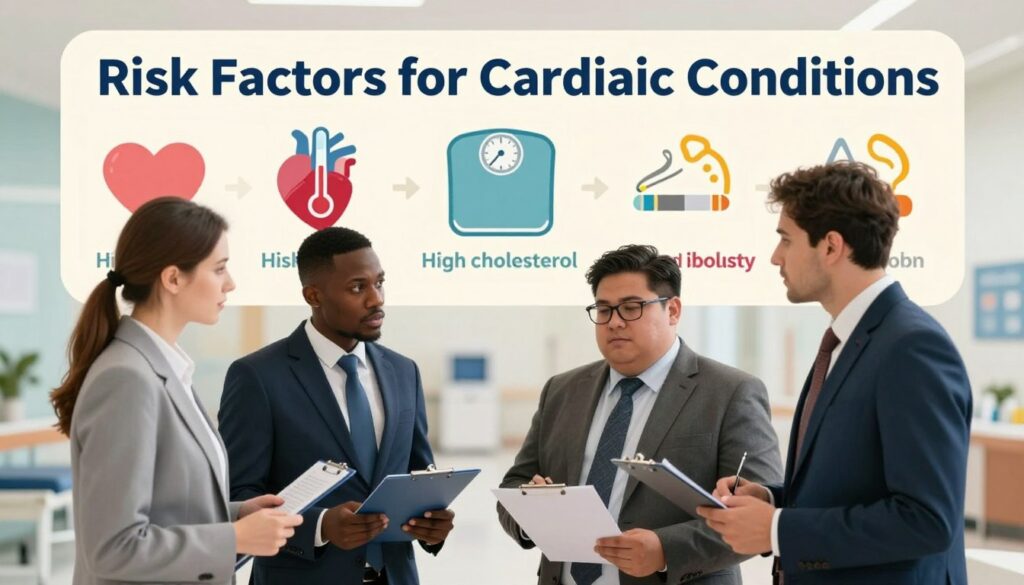
Heart disease happens for many reasons, some we can change, others we can’t. Nurses play a key role in helping patients understand these risks. By spotting these risks early, we can help patients manage their health better.
Modifiable and Non-Modifiable Risks
We divide cardiac risks into two groups. Non-modifiable risks are things we can’t change, like age, sex, and family history. These are fixed and can’t be altered by medical treatment or lifestyle changes.
Modifiable risks, on the other hand, are things we can change. These include habits like smoking, diet, and exercise. By focusing on these areas, nurses can help patients lower their risk of heart disease.
| Risk Category | Examples | Nursing Focus |
|---|---|---|
| Non-Modifiable | Genetics, Age, Gender | Assessment & Monitoring |
| Modifiable | Smoking, Diet, Activity | Education & Advocacy |
| Environmental | Stress, Pollution | Support & Resources |
Lifestyle Changes to Mitigate Risks
When we find modifiable risks, we guide patients to make better choices. Small, consistent changes are key to lasting improvements in heart health. Quitting smoking is one of the biggest steps a person can take to lower their risk.
We also stress the importance of a healthy diet and regular exercise. Eating more fruits, vegetables, and whole grains, and less saturated fats and sodium is beneficial. Exercise helps control blood pressure and weight, which are vital for heart health.
- Smoking Cessation: Reduces arterial inflammation and improves oxygen flow.
- Nutritional Adjustments: Lowers cholesterol levels and supports vascular integrity.
- Physical Activity: Strengthens the heart muscle and improves circulation.
- Stress Management: Decreases the release of hormones that strain the heart.
Important Lab Values for Cardiac Patients
Blood tests give us the clues we need to diagnose heart problems. As nurses, we must quickly understand these results to keep an eye on heart health. Using NCLEX cardiac quiz questions helps us get better at this under pressure.
Common Cardiac Biomarkers
When the heart muscle gets damaged, it releases certain proteins into the blood. Troponin is key because it stays high for days after damage. We also watch CK-MB, an enzyme that confirms heart attacks.
Myoglobin levels rise fast but aren’t as specific as troponin. It’s also important to check cholesterol levels to see long-term heart risk. Knowing these biomarkers is key for exams and clinical work.
Importance of Electrolyte Balance
Electrolytes are like the spark that keeps the heart’s rhythm going. Even small changes in potassium, magnesium, or calcium can cause serious heart problems. We must link these lab results with ECGs to keep patients safe.
For example, low potassium can make the heart unstable and increase the risk of dangerous rhythms. Keeping electrolytes balanced is a major focus in cardiac nursing. Reviewing NCLEX cardiac quiz questions helps us understand how electrolytes affect patient care.
Patient Education on Cardiac Health
When getting ready for cardiac nursing NCLEX questions, learning about patient education is key. Nurses connect complex medical info to a patient’s everyday life. They guide patients to manage their heart health confidently at home.
Teaching Strategies for Patients
Teaching is more than just giving out pamphlets. We need to use active methods to make sure patients get it. Engagement is key for successful cardiac recovery.
- The Teach-Back Method: Ask patients to explain the instructions back to you in their own words to verify comprehension.
- Visual Aids: Use diagrams or models to explain how the heart functions and where the blockage or issue exists.
- Small, Incremental Goals: Break down lifestyle changes into manageable steps to prevent overwhelming the patient.
These methods are often tested in cardiac nursing NCLEX questions. They show a nurse’s focus on patient safety. By checking understanding, we lower readmission risks and improve outcomes.
Common Misconceptions to Address
Patients often come with beliefs that can slow their recovery. It’s our duty to gently correct these myths with facts. Fixing these gaps early empowers patients.
“Education is the most powerful weapon which you can use to change the world.”
Here are some common myths that cardiac nursing NCLEX questions often cover:
| Common Myth | Nursing Reality | Actionable Advice |
|---|---|---|
| “I should avoid all exercise.” | Cardiac rehab is vital. | Start with light walking. |
| “I can stop meds if I feel fine.” | Medication prevents relapse. | Adherence is non-negotiable. |
| “Only salt affects blood pressure.” | Stress and sleep matter too. | Adopt a holistic approach. |
By clearing up these myths, we empower patients to take charge of their health. Remember, an informed patient is a safer patient. This focus on clarity and support is at the heart of great nursing.
Practice Tips for the NCLEX Exam
Success on the boards comes from smart practice and top-notch resources. Passing the exam is more than just memorizing facts. It’s about developing a sharp, logical mind for making clinical decisions. By changing how you study, you can turn your prep into a powerful tool for success.
Study Resources and Tools
To do your best, use materials that mimic the Computerized Adaptive Testing (CAT) format. This format adjusts the test’s difficulty based on your answers, just like the real exam. A reliable NCLEX cardiac question bank helps you get used to this format.
Choose materials with detailed rationales for each answer. Reviewing NCLEX cardiac review questions helps you understand the reasoning behind each decision. Regular practice with these tools will show you your weak areas before the test.
Strategies for Answering Cardiac Questions
Dealing with complex scenarios needs a calm and systematic approach. Start by identifying the main patient safety issue in each prompt. For tough cardiac NCLEX exam questions, try these tips to boost your accuracy:
- Prioritize safety: Always choose the answer that prevents immediate harm to the patient.
- Analyze the stem: Read the question carefully to figure out if it’s asking for an assessment, intervention, or teaching point.
- Use the process of elimination: Quickly rule out options that are clearly wrong or unsafe to narrow your choices.
- Simulate testing: Practice with your NCLEX cardiac question bank under timed conditions to build your mental endurance.
Your goal is to think like a nurse, not just a student. By regularly working through quality NCLEX cardiac review questions, you’ll improve your critical thinking. Stay focused, trust your prep, and keep a clear mind during every practice session.
Conclusion and Next Steps
Getting good at cardiac care is a big step towards your career goals. We think that keeping up with practice makes hard medical ideas easier for your exam.
Make sure to go over common cardiac NCLEX test questions often. This sharpens your clinical thinking. It also helps you spot patterns in patient cases and get better at making quick decisions.
Building Confidence in Cardiac Knowledge
Every study session makes you better at reading heart rhythms and knowing how medicines work. Use top-notch NCLEX cardiac practice questions to get used to the test feel. This method lowers your stress and gets you ready for the exam’s tough parts.
Keep going, even when it’s hard. If you don’t pass right away, you can try again up to eight times a year. You get 45 days to improve your study plan and fill in any knowledge gaps.
Resources for Continued Learning
Use sites like UWorld or the official NCSBN learning portal to keep track of your progress. Join study groups or use apps that focus on key cardiac topics. These help keep your skills sharp and make sure you’re ready for nursing’s demands.
Keep your eye on the goal of giving great patient care. Your hard work today will help you succeed in your nursing career.