

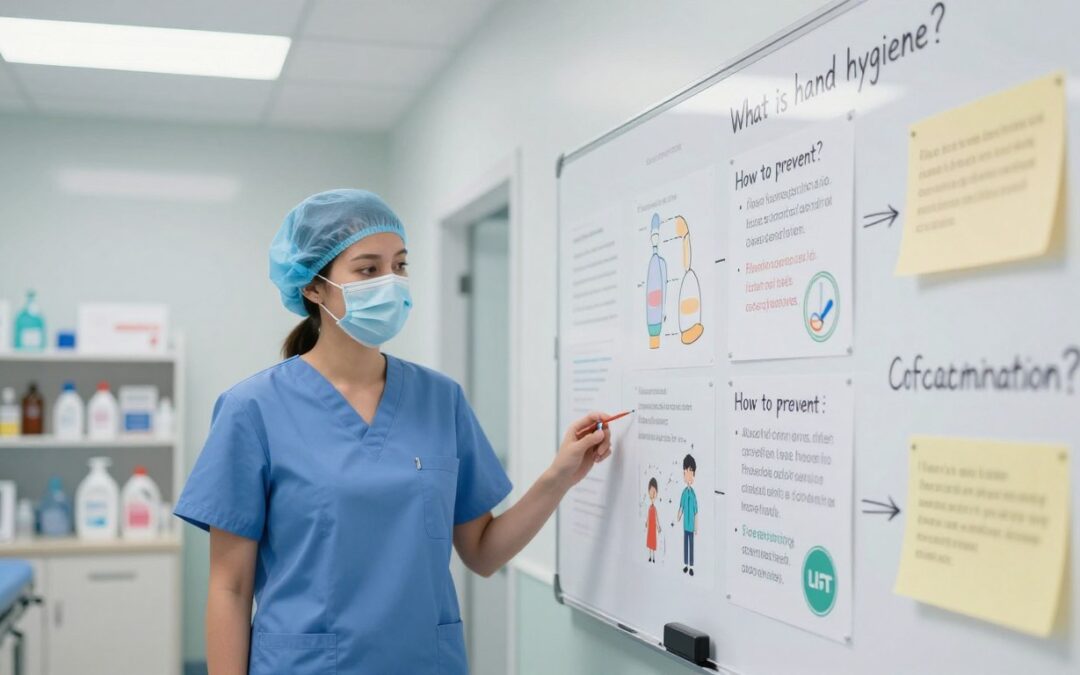
Ever wondered if your clinical judgment is sharp enough for the nursing boards? Preparing for the exam can feel daunting. You know that 9 to 15% of your score is about safety and preventative measures.
Dealing with these high-stakes topics can be tough. We aim to help you grasp the key principles and strategies for success. By focusing on these areas, you’ll gain the confidence needed for your clinical practice.
To improve your skills, try a free NCLEX practice quiz on infection. This quiz will help you spot any knowledge gaps in isolation types and gear usage. Let’s guide you on your path to success.
Key Takeaways
- Safety and hygiene topics account for up to 15% of your total exam score.
- Mastering isolation protocols is vital for passing the nursing boards.
- Consistent practice helps improve your clinical judgment under pressure.
- Understanding the correct order for donning and doffing gear is a frequent testing point.
- Focusing on these specific areas will significantly boost your overall test confidence.
Understanding Infection Control in NCLEX
Starting your NCLEX infection control review shows how key these rules are for patient safety. Safety and infection control are the most important parts of your nursing exam prep. Mastering these areas means you can give high-quality care anywhere.
Definition and Importance of Infection Control
Infection control is about stopping the spread of germs in hospitals. These germs, like bacteria and viruses, are big risks to sick patients. With 9 to 15% of the NCLEX-RN exam on this topic, your NCLEX infection control review needs to be detailed.
Learning these ideas is more than just passing a test; it’s about saving lives. These core ideas help you think critically for safe patient care. By following these standards, you keep your patients, their families, and your team safe.
Key Principles of Infection Control
The base of stopping infections is a few key principles we follow every day. Keeping things clean is key to stopping germs. A good NCLEX infection control review shows how these rules work in real life.
| Principle | Primary Goal | Clinical Application |
|---|---|---|
| Hand Hygiene | Reduce Pathogen Transfer | Before and after patient contact |
| Aseptic Technique | Prevent Contamination | During invasive procedures |
| Environmental Cleaning | Eliminate Reservoirs | Disinfecting high-touch surfaces |
| Waste Management | Contain Biohazards | Proper disposal of sharps |
By sticking to these rules, you show you’re a skilled nurse. We see these principles as the foundation of your clinical decisions. Using them consistently is the best way to ensure good patient results.
Types of Infections Encountered
We need to know how to handle different infections every day. Knowing what kind of pathogen we’re dealing with helps us take the right steps fast. This knowledge makes you more ready for an NCLEX infection control quiz.

Bacterial Infections
Bacteria are a big problem in hospitals and need targeted antibiotic therapy. We watch for signs like fever or high white blood cell counts. It’s very important to follow isolation rules to stop the spread of resistant bacteria.
Viral Infections
Viruses are tricky because they need special treatments, not just antibiotics. We stop them from spreading by washing hands a lot and using barriers. Vaccines are the best way to stop many viral diseases.
Fungal Infections
Fungal infections are a big worry for people with weak immune systems. On an NCLEX quiz, remember that finding them early is key. Keeping things clean helps protect these people from harmful germs.
Parasitic Infections
Parasites spread through dirty water, food, or touching infected things. We teach patients how to stay clean and keep their surroundings clean. Knowing how parasites work helps us keep our patients safe.
Standard Precautions in Healthcare Settings
Keeping everyone safe is our top priority. We use safety measures to protect our patients and ourselves. These steps are the first line of defense in patient care, even without confirmed infections. By sticking to NCLEX infection control guidelines, we keep every interaction safe and professional.
Hand Hygiene Practices
Hand washing is key to stopping germs. We should wash our hands or use sanitizers before and after touching patients. This habit is a must in NCLEX infection control scenarios.
“Clean hands are the first line of defense against the spread of healthcare-associated infections.”
Remember, gloves are not a substitute for hand washing. We must wash our hands right after taking off gloves. This ensures no germs stay on our skin. Being consistent is essential for a clean environment.
Personal Protective Equipment (PPE)
Wearing PPE correctly is critical to protect us from harmful substances. We need to know the right way to put on and take off gear. Following NCLEX infection control guidelines prepares us for tough clinical situations.
In NCLEX infection control scenarios, always know the right PPE for the job. Whether it’s a gown, mask, or face shield, removing it in the right order is just as important. Regular practice helps us perform well in exams and real-life situations.
Transmission-Based Precautions
Dealing with NCLEX infection control scenarios can be tough. We often struggle to pick the right isolation method for a patient. When standard precautions aren’t enough, we need to add more steps to keep everyone safe. These steps are essential for a safe healthcare setting.
Airborne Precautions
Airborne precautions are for diseases spread by tiny droplets in the air. Patients with these diseases need to be in a negative pressure room. We must wear an N95 respirator or a higher-level mask when we go in.
Droplet Precautions
Droplet precautions are for infections spread by larger respiratory particles, up to three feet. These are used for diseases like influenza or bacterial meningitis. A standard surgical mask is needed when we’re within three feet of the patient.
Contact Precautions
Contact precautions are for infections spread through touch. We wear a gown and gloves when we enter the patient’s room. Hand hygiene is the most critical step before and after removing our gear.
| Precaution Type | Primary PPE | Room Requirement |
|---|---|---|
| Airborne | N95 Respirator | Negative Pressure |
| Droplet | Surgical Mask | Private Room |
| Contact | Gown and Gloves | Private Room |
Learning these specific rules will make you more confident in handling NCLEX infection control scenarios. Remember, the goal is to stop the spread of infection by following these diligent protocols.
Common Infection Control Questions on the NCLEX
Wondering about common NCLEX infection control questions? You’re in the right spot. Seeing real test items is the best way to get ready for your exam. These scenarios help build your confidence for test day.
Our test bank has 75 NCLEX infection control practice questions. They test your knowledge of safety and isolation. These questions are as tough as the real exam, making sure you’re ready for anything. We think practicing often is key to mastering these nursing skills.

Examples of NCLEX Questions
An NCLEX infection control quiz often asks about prioritizing patient safety. You might need to pick the right PPE for a patient or figure out the correct order for putting on and taking off gear. These questions check if you can use your knowledge in real, high-pressure situations.
We give detailed NCLEX infection control rationales for every question. These explanations help you understand why each answer is right. By getting the logic, you can avoid mistakes and get better at thinking critically for your nursing career.
Test Strategies for Infection Control Topics
It’s important to have good NCLEX infection control strategies. Always think about the situation before choosing an action. Look for key words like “first,” “priority,” or “most appropriate” to guide you.
The table below shows common isolation scenarios you might see on your exam. It’s a quick guide to help you make better decisions.
| Isolation Type | Primary PPE Required | Example Condition | Nursing Action |
|---|---|---|---|
| Airborne | N95 Respirator | Tuberculosis | Negative pressure room |
| Droplet | Surgical Mask | Influenza | Maintain 3-foot distance |
| Contact | Gown and Gloves | MRSA | Dedicated equipment |
| Standard | Gloves | General Care | Hand hygiene |
Stay calm and read each question carefully. By using these strategies, you’ll handle tough topics with ease. We’re here to help you on your path to becoming a licensed nurse.
The Role of the Nurse in Infection Control
Nurses play a big role in keeping patients safe from infections. We act as the main defenders of infection prevention at the bedside. We connect the dots between medical rules and real patient care.
By staying alert all the time, we keep our healthcare setting safe for everyone.
Patient Education Responsibilities
Teaching patients and their families about staying clean and safe is a big part of our job. We need to tell them why these steps are important. When they get it, they help fight off infections better.
We give them easy-to-follow steps to keep safe at home. This way, we lower the chance of infections spreading. Consistent education clears up any confusion and builds trust.
Monitoring and Reporting Procedures
We also watch our patients closely for any signs of infection. We look for changes in their health, like changes in their vital signs or how their wounds look. Catching infections early helps the medical team act fast, which is good for the patient.
It’s also key to follow the rules for reporting infections. We need to write down what we find and report it right away. This proactive approach keeps everyone safe and helps track any outbreaks.
| Responsibility Area | Primary Action | Expected Outcome |
|---|---|---|
| Patient Education | Explain isolation rules | Increased compliance |
| Clinical Monitoring | Assess for symptoms | Early intervention |
| Institutional Reporting | Follow facility protocols | Improved safety data |
Infection Control for Specific Patient Populations
We make sure our care is safe for everyone, but we know some patients are at higher risk. We adjust our methods to protect them better. This way, every patient gets the best care possible.
Immunocompromised Patients
Patients with weak immune systems, like those on chemo or after transplants, need extra care. Their bodies can’t fight off germs like healthy people can. We create a safe space to protect them.
We follow strict rules to keep them safe. This includes:
- Ensuring all staff perform meticulous hand hygiene before entering the room.
- Limiting visitors who show any signs of illness or infection.
- Using specialized air filtration systems when required by facility policy.
- Avoiding the use of fresh flowers or plants that may carry mold spores.
Surgical Patients
Surgical patients have their own challenges, like keeping their skin and tissues clean. We work hard to prevent infections at the surgical site. We keep a close eye on wound healing.
To protect our surgical patients, we follow these steps:
- Strict adherence to aseptic technique during all dressing changes.
- Monitoring the surgical site for redness, swelling, or unusual drainage.
- Educating patients on how to keep their incisions clean and dry at home.
- Administering prophylactic antibiotics exactly as ordered by the surgeon.
By being careful and following these rules, we lower the risk of problems. Our dedication to these steps helps our patients heal faster and stay healthy.
Recent Trends in Infection Control Protocols
Healthcare is always changing, and so must our ways to stop illnesses from spreading. We face new challenges in keeping patients safe. By following the latest NCLEX infection control guidelines, we stay sharp and effective everywhere.
Emerging Infections
New diseases pop up often, making nurses need to be quick to adapt. These diseases spread fast, so we must follow new rules for keeping them contained. Constant vigilance is key when facing unknown or changing viruses.
We must quickly spot and act on symptoms in our patients. Knowing about health alerts helps us act fast. This quick thinking is what makes a nurse modern and skilled.
Antibiotic Resistance Issues
Drug-resistant germs are a big problem in medicine today. We help fight this by using antibiotics wisely. By following NCLEX infection control guidelines, we stop these tough bacteria from spreading.
“The future of medicine depends on our ability to use antibiotics wisely and maintain rigorous standards of hygiene to protect our most vulnerable patients.”
It’s important to know the old and new ways of fighting infections. The table below shows how our methods have changed to meet today’s needs.
| Focus Area | Traditional Approach | Modern Strategy |
|---|---|---|
| Pathogen Control | Standard cleaning | Evidence-based isolation |
| Antibiotic Use | Broad-spectrum usage | Targeted stewardship |
| Staff Training | Annual updates | Continuous monitoring |
| Risk Assessment | Reactive measures | Proactive surveillance |
By using these NCLEX infection control guidelines every day, you show you care about quality care. Keep learning and updating your skills as new nursing research comes out.
Resources for NCLEX Test Preparation
Finding good study materials is key to getting your license. A structured NCLEX infection control review helps you plan and pass the test on your first try.
Recommended Study Guides
Picking the right textbook is essential. Many students use top books to learn tough topics.
The Saunders Complete Review for the NCLEX-RN is a top choice. It has over 5,700 questions, covering important safety topics.
- Choose books with clear answers for every question.
- Find guides with tips for clinical scenarios.
- Make sure your materials are up-to-date with nursing standards.
Online Practice Questions
Online platforms are great for practicing anywhere. By doing NCLEX infection control practice questions, you get used to the exam style.
Good platforms give detailed NCLEX infection control rationales for each question. These are very important for learning from mistakes and improving your skills.
Use these tools to practice like you’re in the real test. This helps you feel less nervous and more confident on test day.
Final Tips for Mastering Infection Control on the NCLEX
Your journey to nursing excellence is all about patient safety and precision. As your exam date gets closer, remember that being consistent and critical is key. Spend time reviewing important concepts and practicing to get better at infection control.
Focusing on Core Competencies
Learning these topics is more than just memorizing. You need to apply what you know to real-life situations. This includes hand hygiene, PPE, and keeping environments safe. For extra help, check out online classes to prepare for the CNA exam.
Building Exam Confidence
We believe you can master these topics and do well in your nursing career. By using the NCLEX infection control strategies we’ve talked about, you’ll be ready for any question. Stay focused on your goals and keep improving your clinical skills every day.