

Did you know nearly 15% of first-time nursing graduates fail their licensure exam each year? This shows the huge pressure students feel when preparing for such a big test. We know the amount of clinical data can seem too much, but you don’t have to face it alone.
Our team created this NCLEX study guide to make complex nursing ideas easier. By using proven ways to remember, you can remember more and feel more confident. We aim to make sure you’re ready and calm on exam day.
Learning what are easy NCLEX memorization tricks? changes how you learn. These strategies are key to passing the NCLEX on your first try. Let us guide you to make studying easier and less stressful.
Key Takeaways
- Understand the high stakes of the nursing licensure exam.
- Utilize cognitive strategies to simplify complex medical data.
- Improve your information recall through proven study techniques.
- Reduce test-day anxiety with a structured preparation plan.
- Increase your probability of success on the first attempt.
Introduction to NCLEX and the Importance of Memorization
Becoming a licensed nurse in the United States starts with the NCLEX. Good nursing exam preparation connects your classroom learning to your career. Start early with NCLEX study tips to build a strong foundation for your future.
Overview of the NCLEX exam
The NCLEX is a computer-adaptive test that checks if you’re ready to practice safely. It’s not just about memorizing facts. It tests your ability to make decisions in real situations.
The test gets harder as you answer questions. You’ll face questions that test your ability to prioritize, delegate, and spot safety risks. Understanding nursing standards deeply is key, not just memorizing.
Why memorization is critical for success
While thinking critically is important, remembering procedures and data quickly is also key. Using NCLEX memorization techniques helps you access important information fast. This lets you focus on making tough decisions.
Make these memory strategies a part of your daily routine. This helps keep important information ready when you need it. A structured study plan helps avoid cramming stress. Here’s a comparison of study methods and how they affect retention:
| Study Method | Primary Benefit | Best For |
|---|---|---|
| Active Recall | Strengthens neural pathways | Long-term retention |
| Passive Reading | Provides initial context | Introductory learning |
| Spaced Repetition | Prevents forgetting curve | Complex clinical data |
Focus on retaining information to feel confident during the exam. Regular practice turns nursing theories into practical knowledge for the bedside. Keep track of your progress, and every step brings you closer to your nursing license.
Mnemonic Devices: A Helpful Tool for Nurses
Many nursing students find success by using creative memory aids. These tools help them remember complex clinical information easily. By using NCLEX memorization techniques, they can recall procedures with ease during exams.
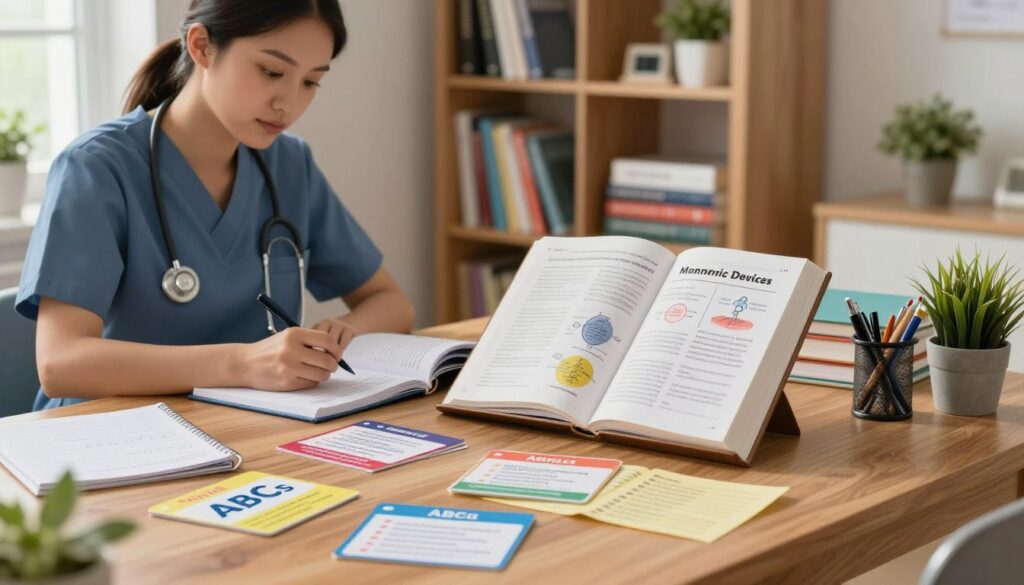
Mnemonic devices create links between hard medical terms and things you already know. Keeping these strategies ready helps you feel confident when tackling tough questions.
Types of mnemonics
There are many ways to use memorization strategies for NCLEX. The best method depends on how you learn and remember information.
- Acronyms: Create a new word from the first letter of each item in a list.
- Acrostics: Make a sentence where each word starts with the first letter of a step.
- Chunking: Break down long data into smaller parts to improve memory.
Examples of common mnemonics used in nursing
Many memory aids for nurses are widely used because they make complex protocols simple. For example, remembering the 5 A’s of Alzheimer’s or the order of cranial nerves becomes easy with a catchy phrase.
| Mnemonic Type | Primary Benefit | Best Use Case |
|---|---|---|
| Acronyms | Quick recall | Short lists or steps |
| Acrostics | Narrative flow | Sequential processes |
| Chunking | Reduced cognitive load | Large data sets |
Consistency is key when using these methods. Try different styles to find what works best for you.
Flashcards: An Effective Study Method
The best effective NCLEX memorization tools are those that make you actively think. Unlike just reading, which can overwhelm you, flashcards make you recall information. This strengthens your brain’s ability to remember complex medical facts during the exam.
Creating your own flashcards
Wondering how to improve NCLEX memorization? Making your own flashcards is a great idea. Writing down key terms or drug classifications helps reinforce your memory. Personalizing your cards means they focus on your weak spots.
Creating your own deck helps you understand the material better. You can focus on topics that often show up on the exam. This hands-on method is key for nursing students who do well.
Recommended apps for digital flashcards
If you like something more portable, digital apps are a good choice. They let you carry thousands of cards in your pocket. You can review during breaks. Many apps use spaced repetition algorithms to help you with tough cards.
Apps like Anki or Quizlet are great for organizing your study. They help you track your progress and find areas you need to work on. Using these apps makes your study time more effective and focused.
The Power of Study Groups
Learning together can make your nursing exam preparation more fun and effective. Studying alone can lead to missing important details. But, working with others brings new insights that help you learn faster.
Benefits of collaborative learning
Teaching others about tough topics is a great NCLEX study hack. When you explain something to someone, you remember it better. This way of learning is much better than just reading.
Study groups also offer a lot of support when you’re feeling stressed. You can share tips, discuss hard questions, and stay motivated together. For more tips, check out these proven NCLEX study tips.
Tips for organizing effective study sessions
To get the most out of your time, keep your meetings focused. Make a plan before you start to stay on track. Meeting at the same time every week helps keep things consistent.
Here’s a table to help you organize your study sessions:
| Session Phase | Activity | Goal |
|---|---|---|
| Warm-up | Quick-fire quiz | Recall core facts |
| Core Study | Peer teaching | Deepen understanding |
| Application | Case study review | Clinical reasoning |
| Wrap-up | Goal setting | Maintain accountability |
By staying organized, your nursing exam preparation will stay on track. The best NCLEX study hacks keep you interested and on track.
Visual Aids: Learning with Graphics
We think adding visual elements to your study routine is a game-changer for memory. Many students find visual tools key memory aids for nurses. They help with complex information like anatomy and procedures. By making abstract data into images, you can make tough topics easier.
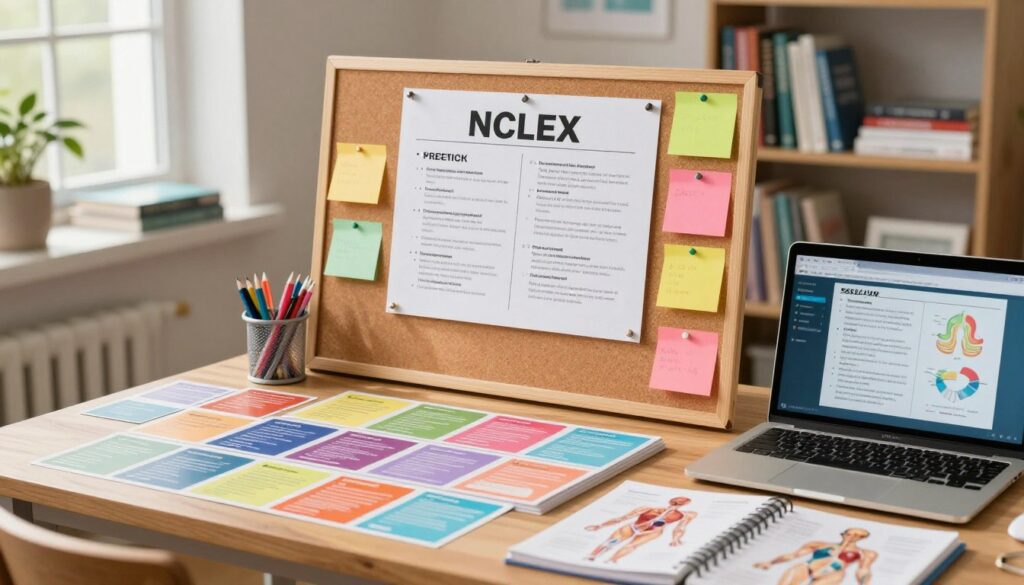
Infographics for critical nursing concepts
Infographics are great NCLEX study hacks because they pack a lot of info into one place. For example, the “Clouds over grass, smoke over fire” mnemonic makes ECG leads easy to remember. It turns complex electrical data into a simple mental image.
Using these visual aids cuts down on mental effort during study time. If you want more help, check out online classes for the NCLEX-RN. They show how experts use graphics to teach.
Using diagrams and charts for retention
Adding diagrams and charts to your notes makes learning more engaging. Try drawing your own flowcharts for body systems. This active learning is a top memory aid for nurses.
By using these NCLEX study hacks, you make studying easier for your brain. The table below shows how different visual tools can help you study better:
| Visual Tool | Best Used For | Primary Benefit |
|---|---|---|
| Flowcharts | Procedural steps | Logical sequencing |
| Anatomical Diagrams | Body systems | Spatial awareness |
| Comparison Charts | Drug classifications | Identifying differences |
| Infographics | Quick reference | Rapid recall |
Practice Questions: Testing Your Knowledge
We think that testing yourself is the secret weapon for nursing students aiming for success. The NCLEX is a multiple-choice exam. So, practicing with quality questions is a top memorization trick for nursing exams. This way, you go from just reading to actively recalling information.
Importance of incorporating practice questions
Adding these questions to your daily nursing school study methods is key. It’s not just about memorizing facts. You learn to apply what you know to real situations. This active learning is essential for developing critical thinking skills needed to pass the exam.
It’s important to use resources that explain each answer in detail. These rationales help you understand why the correct answer is right. When you get the logic, you can tackle similar questions, even with different wording.
Resources for quality NCLEX practice questions
Finding the right platform is critical for your prep. Many students use top tools to improve their skills. Here are some popular choices to boost your nursing school study methods:
- UWorld: Famous for tough questions and clear rationales.
- Kaplan: Offers a full approach that feels like the real exam.
- ATI: Helps you track your progress in various nursing fields.
Being consistent with these tools is vital. Regular practice makes these memorization tricks for nursing exams more effective. Keep at it, and you’ll see your confidence grow on test day.
Creating a Structured Study Schedule
A well-structured calendar is key to your prep journey. By sticking to a routine, you master NCLEX memorization and avoid last-minute stress. Consistency helps you keep complex nursing info in your long-term memory.
How to design an effective study plan
To make a plan that sticks, break your prep into small, daily goals. This method stops burnout and keeps you motivated. Follow these NCLEX study tips to turn a big task into smaller, doable steps:
- Set clear, measurable goals for each study session.
- Use a planner, digital or physical, to track your progress every day.
- Make sure to take breaks to let your brain absorb new info.
- Don’t cram, as it doesn’t help you remember things for long.
Allocating time for different subjects
Not all nursing topics need the same effort. Spend more time on subjects you struggle with and keep reviewing what you know well. This balance keeps you sharp on familiar topics while improving on tough ones.
Organize your week by focusing on different clinical areas. Spend specific days on pharmacology, pediatrics, or medical-surgical nursing. This keeps your brain active and prevents boredom. Remember, mastering NCLEX memorization is a long-term effort. Use these NCLEX study tips to stay focused and on track until test day.
The Role of Repetition in Memorization
When you look at the sheer volume of nursing data, repetition becomes your most reliable ally. It serves as the cornerstone for mastering NCLEX memorization. This is true, even when tackling complex topics like pharmacology and lab values.
By engaging in consistent review, you move information from your short-term memory into long-term storage. This process is essential for building the confidence needed to excel on test day.
Spaced repetition technique
We highly recommend the spaced repetition technique to optimize your study time. This method involves reviewing specific concepts at strategic intervals. It’s better than cramming everything into one session.
By revisiting difficult material just as you are about to forget it, you force your brain to work harder. This active recall strengthens your neural pathways significantly. If you are looking for extra support, you can explore online classes to help you prepare for the CBX to refine your study habits further.
How to implement repetition effectively
To make your memorization strategies for NCLEX truly effective, you must prioritize consistency over intensity. A single, long study session is rarely as powerful as several short, focused reviews spread across a week.
Try to dedicate a few minutes each day to reviewing your most challenging flashcards or notes. This habit ensures that you are constantly reinforcing what you have learned. Over time, this disciplined approach will make your recall much faster and more accurate during the actual exam.
Mind Mapping: A Creative Approach
Visualizing complex nursing concepts through mind mapping can change your study routine. If you’re looking for creative ways to improve NCLEX memorization, this technique is great. It lets you see the “big picture” of nursing care plans or disease processes by linking symptoms, treatments, and interventions.
What is mind mapping?
A mind map is a visual diagram that organizes information around a single central theme. You place a core concept in the center and branch out into related sub-topics. This logical organization helps you understand how different clinical concepts relate to one another, which is vital for passing the NCLEX.
When you draw these connections yourself, you engage more deeply with the material. This active process is more effective than just reading. For extra help, you can explore online classes to help you prepare for the CNA and other nursing certifications to refine your study habits.
Steps to create your own mind map
Creating a mind map is simple and requires only paper and colored pens. Start by writing your main topic in the center of the page. Then, draw branches for major categories, such as “Pathophysiology,” “Nursing Interventions,” and “Patient Education.”
Continue adding smaller branches for specific details like medications or lab values. Using different colors for each branch helps your brain categorize information more efficiently. This creative approach is a significant step toward passing the NCLEX because it turns overwhelming data into a manageable, visual map.
| Study Method | Primary Benefit | Best For |
|---|---|---|
| Mind Mapping | Visual Connections | Complex Care Plans |
| Flashcards | Rapid Recall | Pharmacology Terms |
| Practice Tests | Exam Simulation | Testing Knowledge |
| Study Groups | Peer Discussion | Clarifying Concepts |
By consistently using these visual tools, you will discover how to improve NCLEX memorization over time. Remember, the goal is to create a structure that makes sense to your unique learning style. Keep practicing, and you will build the confidence needed for success.
Utilizing Online Resources and Tools
Today, your smartphone can be your best study buddy. By using technology, you get access to effective NCLEX memorization tools that were once hard to find. These tools help you organize your thoughts and track your progress easily.
Recommended websites and apps for NCLEX prep
Finding the right digital study partner is key to success. A good NCLEX study guide in digital form can keep you on track. Here are some top picks:
- UWorld: Known for its tough questions and detailed answers.
- Archer Review: Offers key content that feels like the real exam.
- Picmonic: Uses pictures to help you remember tough medical terms.
- NurseAchieve: Provides tests that adjust to your skill level.
Benefits of using online quizzes
Online quizzes can really change your study game. They give you instant feedback, helping you spot gaps in your knowledge. This lets you focus on areas that need more work.
These tools also track your progress over time. This data acts like a personalized NCLEX study guide, showing your strong and weak points. Using these effective NCLEX memorization tools makes your study time more effective and productive.
Conclusion: Finding the Best Memorization Tricks for You
Passing the NCLEX needs both hard work and smart study habits. We hope this guide helps you find easy NCLEX memorization tricks that suit you.
The top memorization tricks for nursing exams are those you practice often. Make these methods fit your learning style for better results. Using these techniques every day helps you remember complex medical info better.
Tailoring Your Study Approach
Everyone learns differently, so try mixing these strategies. Some nurses do well with visual mind maps, while others like digital flashcards from Anki or Quizlet. Trying out different tools helps you find what works best for you.
Staying Driven and Focused
Test your knowledge with practice questions to boost your confidence. Trust in the preparation strategies you’ve developed. You have the tools and drive to succeed in this field.
Stay focused on becoming a registered nurse. Your hard work will show when you pass. Keep practicing and stay on track for your future career.