

Ever thought if your nursing exam really shows what you’ll face in a hospital? The Next Generation exam now focuses more on clinical judgment than just memorizing facts. It uses more complex questions to make sure you can give safe, skilled care in today’s hospitals.
This change goes beyond old tests to test how well you can use patient data. To get better at these questions, check out matrix grid questions advice for success on the next generation. Learning this will help you feel more confident in handling tough patient situations.
Key Takeaways
- The exam now emphasizes clinical judgment to better prepare nurses for real-world patient care.
- New question formats require candidates to interpret complex data from electronic health records.
- These updates ensure that licensure reflects a nurse’s ability to make safe, evidence-based decisions.
- Mastering these interactive formats is essential for achieving a passing score on the modern exam.
- Consistent practice with specialized resources helps build the critical thinking skills necessary for success.
Understanding Matrix Questions on the NCLEX
Nursing exams have changed to better match real-world patient care. As we get ready for our exams, we need to learn new formats. These formats test our ability to think clearly under pressure. They make sure future nurses are ready for the fast-paced hospital environment.
Definition of Matrix Questions
So, what are matrix questions on the NCLEX? They are questions in a grid format. You need to look at different pieces of information and choose the right answers for each part.
These questions are different from the usual multiple-choice ones. They ask you to think about many things at once. By working with the grid, you show you can organize information well. You can learn more about these NCLEX matrix questions and how they fit into the test.
Why They Are Important
These questions are key because they test our clinical reasoning skills. They go beyond just memorizing facts. They check if we can solve problems in a real-world setting. Learning this format is a big step towards getting our license.
“Critical thinking is the nurse’s most powerful tool, and modern testing must reflect the reality of bedside decision-making.”
When we tackle NCLEX matrix questions, we show we can make care choices and find the right actions. This format makes sure we’re not just passing a test. It prepares us for the real challenges of nursing. We should see these tools as a way to improve our professional skills.
Structure of Matrix Questions
At first, these questions might seem tough. But, we can tackle them together. They’re made to mimic real-life decisions, using a grid format. Getting to know these NCLEX question types boosts your confidence for the exam.
Components of a Matrix Question
These questions use an Electronic Health Record (EHR) at their core. You’ll see tabs with patient data like notes and lab results. Navigating these tabs well is key to making smart clinical choices.
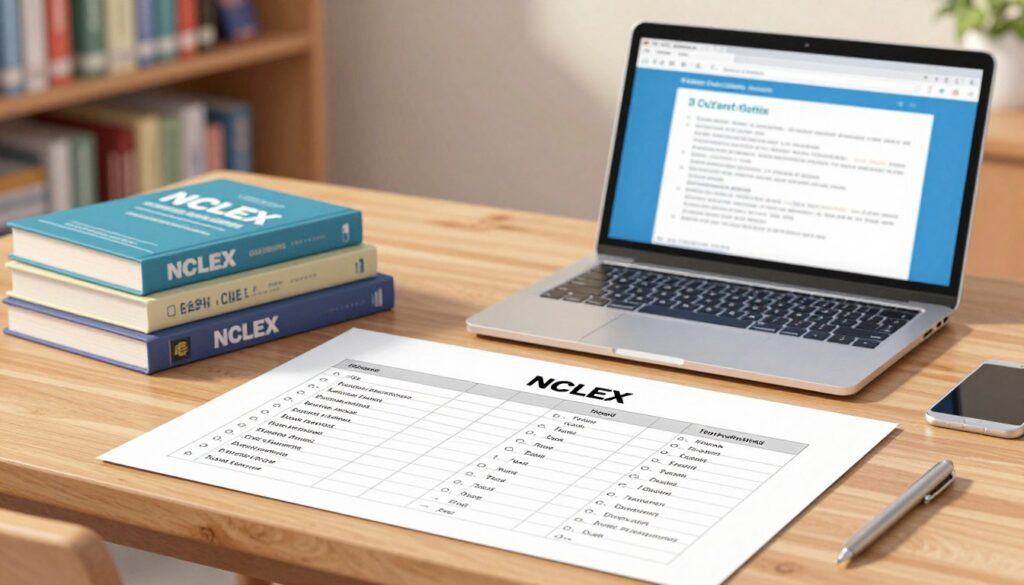
The matrix has rows and columns for categorizing your findings. Each row is for a patient assessment or action. The columns let you pick the right status or action. Knowing this NCLEX test format helps you spot the right actions for each scenario.
Example Format
In a matrix question, you’ll see a grid to pick options for each row. This NCLEX question structure makes you think about patient care in a holistic way. It’s important to read each column header to match your choices with the patient’s needs.
For example, you might need to choose nursing actions for a patient with a complication. You’ll go through each row and mark the correct interventions. Practicing this format makes you more comfortable with the test’s logic.
How to Approach Matrix Questions
Dealing with these special questions requires a step-by-step approach. When you see this NCLEX question style, it might seem too much. But breaking it down helps you stay focused and make good decisions.
Strategies for Answering
The best NCLEX exam strategies are to tackle each row separately. First, read the whole prompt to get the scenario. Then, look at each row one by one. Don’t try to solve everything at once to avoid mistakes.
As you go through the rows, make sure your answers are safe for nursing. If you get stuck, take a moment to re-read the scenario. Often, the introduction gives you the clue you need.
Common Pitfalls to Avoid
Don’t rush through the case study to save time. Hurrying can lead to mistakes or missing important details. Stay consistent and keep a steady pace, even if it looks tough.
Another mistake is not checking every row before moving on. Make sure you fill in every row, as blank ones mean incomplete answers. Use the table below to improve your study habits.
| Action | Effective Approach | Ineffective Approach |
|---|---|---|
| Data Analysis | Systematic row-by-row review | Scanning the entire grid quickly |
| Time Management | Steady, deliberate pacing | Rushing to finish early |
| Decision Making | Evidence-based clinical judgment | Guessing based on patterns |
| Final Review | Verifying every row is filled | Submitting without checking |
Differences Between Matrix and Traditional Questions
The NCLEX test format is changing. It now includes more complex, multi-layered scenarios. This change moves away from simple recall-based tests of the past. Now, we must handle questions that ask us to combine information from different clinical areas.

Comparison of Formats
Older questions usually focus on one idea, asking us to pick the right action or fact. But, matrix questions ask us to consider many factors at once. This change helps nurses prepare for the tough decisions they face in today’s healthcare.
| Feature | Traditional Question | Matrix Question |
|---|---|---|
| Cognitive Load | Low to Moderate | High |
| Response Type | Single Selection | Multi-Grid Selection |
| Focus | Fact Recall | Clinical Judgment |
Impact on Test-Taking Strategy
These questions require more critical thinking. We can’t just memorize answers. We must analyze each scenario carefully before making our choices.
To do well with these questions, try these tips:
- Analyze the entire grid before marking any boxes to ensure you understand the relationship between rows and columns.
- Prioritize clinical safety by evaluating each option against established nursing standards and protocols.
- Manage your time wisely, as these items often require more reading and processing than standard multiple-choice questions.
By changing how we think, we can handle the new NCLEX test format better. Staying calm and focused helps us use our knowledge well, even with tough questions.
Subjects Covered in Matrix Questions
To prepare for the exam, you need to dive deep into key clinical areas. These questions test your critical thinking skills more than just memorizing facts. Knowing the main subjects helps you study smarter and focus on what really matters.
Common Nursing Topics
The NCLEX often tests your knowledge in complex clinical situations with matrix questions. You’ll see topics like managing postpartum issues, understanding lab results, and prioritizing patient care. These areas need you to combine information from different sources to find the right answer.
It’s important to link patient data to the right nursing actions. This method helps you pick the best course of action from a grid of options. Learning these basics helps you stay calm when dealing with complex clinical problems.
“Success is where preparation and opportunity meet.”
Scenarios Frequently Encountered
Scenarios often ask you to match symptoms to diagnoses or treatment plans. For example, you might need to pair patient assessments with the correct nursing priority. This tests your ability to process data quickly while keeping patient safety in mind.
Getting familiar with these scenarios boosts your confidence for the exam. We recommend practicing these connections often to get faster and more accurate. Remember, consistent practice is key to mastering these challenging questions.
Tips for Mastering Matrix Questions
We believe success on the NCLEX depends on analyzing complex data well. Mastering these items needs more than just memorizing facts. It requires a habit of clinical reasoning. By following these key NCLEX preparation tips, you can feel more confident on the NGN exam.
Study Techniques
Practice with mock electronic health record (EHR) scenarios to get better. These simulations are like the real world you’ll face as a nurse. Try to spot the most important patient data first when you work with these records.
Also, review the reasons for every answer choice, even if you got it right. Knowing why an option is incorrect is as important as knowing why the right one is correct. This deep dive into the logic behind the questions is a key NCLEX preparation tip for long-term retention.
Practice Resources
Finding the right tools is key for your success. Use platforms that offer Next Generation NCLEX (NGN) style content. These resources give you the most accurate look at the matrix format you’ll see on test day.
Don’t be shy to join study groups or online forums to discuss tough questions. Sharing different views on solving a matrix problem can open up new ways of thinking. Using these diverse NCLEX preparation tips will keep you sharp and ready for any exam scenario.
Importance of Practice Questions
We believe that consistent practice is the secret weapon for every nursing student. Using a reliable NCLEX study guide daily helps you connect theory to practice. It prepares your mind for the real test.
Using NCLEX Practice Exams
Full-length practice exams are essential. They help you build mental stamina for long tests. By simulating the real test, you learn the NCLEX question structure well.
“Success is where preparation and opportunity meet.”
Set aside dedicated time for these exams. This helps you manage your time well. Consistency is key for training your brain under pressure.
Benefits of Realistic Testing
Realistic testing environments reduce anxiety. Knowing the test interface and questions makes you feel in control. This lets you focus on the clinical content.
| Practice Method | Primary Benefit | Focus Area |
|---|---|---|
| Timed Simulations | Time Management | Pacing Skills |
| Topic-Specific Quizzes | Content Mastery | Weakness Identification |
| Full-Length Exams | Mental Stamina | Exam Endurance |
The goal is to build your confidence. By knowing your strengths and weaknesses, you can improve your study plan. Consistent practice makes board preparation easier and more structured.
Exam Day Strategies for Matrix Questions
When the clock starts ticking, having a clear strategy is key. Your clinical knowledge is important, but how you handle the test is just as vital. We want you to feel empowered and ready for every challenge.
Time Management Techniques
Effective pacing is key for complex matrix questions. If you spend too long on one, choose wisely and move on. Use time management tips from online courses for your nursing exam.
These NCLEX exam strategies help you avoid getting stuck. Stay consistent to review each question well. Don’t let one tough question ruin your test.
Staying Calm Under Pressure
Keeping calm is as important as knowing the content. When stressed, take a deep breath and refocus. This simple act helps you think clearly.
See each matrix question as a chance to show your nursing skills. Staying calm helps you read instructions well and avoid mistakes. Use these NCLEX exam strategies to stay confident from start to finish.
Additional Resources for NCLEX Preparation
Passing the exam needs hard work and the right study tools. Look into different resources to improve your skills and feel more confident before the test.
Recommended Books and Websites
Books like Saunders offer deep insights into NCLEX questions. Websites like UWorld and Kaplan have digital tests that feel like the real thing. They give you tips to handle tough clinical scenarios.
Support Groups and Online Forums
Studying with others can make learning more fun. Sites like AllNurses or Reddit communities let you talk about hard topics with other students. These groups help keep you motivated and learn more about nursing standards.