

Did you know nearly 90% of nursing graduates feel anxious about their final exam? This anxiety comes from the pressure to show years of hard work in one test. Knowing if you’re ready for the NCLEX is not just about knowing facts. It’s about balancing knowledge with feeling calm and ready.
Many students feel unsure because they only focus on studying and ignore their mental state. True confidence comes from being able to solve complex patient problems. By using proven strategies, you can change your study habits to lead to success.
To build a strong foundation, you need to practice a lot and think about your own learning. Whether you’re taking online classes or studying on your own, aim to trust your decisions. Let’s look at what shows you’re really ready to pass.
Key Takeaways
- Mastering clinical judgment is more important than simple rote memorization.
- Consistent performance on practice exams serves as a reliable indicator of your progress.
- Emotional readiness and stress management are just as vital as technical nursing knowledge.
- Understanding the rationale behind every answer helps you learn from mistakes effectively.
- Structured study plans provide the focus needed to tackle the current test plan with confidence.
Understanding the NCLEX Exam Structure
Getting to know the NCLEX exam structure is key to becoming a licensed nurse. It helps you spot NCLEX readiness signs and study better. This exam checks if you’re ready to give safe care to the public.
Purpose and Importance of the NCLEX
The National Council of State Boards of Nursing (NCSBN) makes this exam. It ensures nurses meet the same standards everywhere in the U.S. Whether you’re taking the NCLEX-RN or NCLEX-PN, it’s all about protecting the public. For more help, check out online classes for the CNA or similar.
Types of Questions in the NCLEX
The exam uses Computer Adaptive Testing (CAT). It changes question difficulty based on your answers. You’ll see many question types, like:
- Multiple-choice questions with one right answer.
- Select-all-that-apply (SATA) items.
- Ordered response or fill-in-the-blank questions.
- Graphic items and hot-spot questions.
Scoring and Passing Standards
Many wonder, “How to know if you are ready for the NCLEX?” The answer is in the exam’s algorithm. It keeps checking if you meet the passing standard. The test ends when it’s 95% sure of your level.
Because the exam changes based on your answers, stay calm and focused. Spotting your NCLEX readiness signs is key. Knowing when you’re ready for the NCLEX means practicing a lot and understanding the exam well.
Academic Preparedness for NCLEX
Starting your journey to become a licensed nurse takes time. Building a strong academic base is key to spotting NCLEX preparation indicators early. Instead of cramming, start reviewing your main materials three to six months before you graduate.

Completion of Nursing Degree
Getting your degree is the first step to becoming a nurse. This study period gives you the knowledge needed for the exam. Consistency is key in these last months of your program.
- Review your foundational nursing textbooks regularly.
- Focus on understanding the “why” behind clinical interventions.
- Maintain a high level of engagement during your final semester lectures.
Relevant Coursework and Clinical Experience
Clinical rotations link classroom learning to real-world care. Students who dive into their clinical shifts do better on the test. These experiences sharpen your clinical judgment.
Reflecting on patient interactions helps you learn to prioritize care in tough situations. This hands-on experience is a top NCLEX test readiness sign. Always connect your clinical experiences with what you learn in textbooks.
Importance of NCLEX Review Courses
Review courses are great for organizing your study time. They help you focus on areas needing more work. Look for courses that mix content review with practice questions.
“Success is the sum of small efforts, repeated day in and day out.”
Using these resources turns complex medical info into a clear study plan. This way, you understand how to apply what you learn safely and effectively. Investing in a good review course is a smart step toward your nursing career.
Confidence in Nursing Knowledge
Knowing how to explain complex nursing topics simply is key. It’s more than just memorizing. When you can teach a concept to a peer, you show you really understand it.
Mastery of Nursing Fundamentals
Knowing the basics is a must. You should be able to explain why you do things in nursing, not just how. If you can explain the reason behind a nursing action, you’re showing you’re ready for the exam.
Think about how your thinking should change as you get ready for the exam:
| Focus Area | Rote Memorization | Clinical Judgment |
|---|---|---|
| Medication Safety | Memorizing drug names | Understanding high-alert side effects |
| Patient Care | Following a checklist | Prioritizing based on assessment |
| Nursing Theory | Recalling definitions | Applying concepts to scenarios |
Familiarity with Nursing Procedures
Knowing about pharmacology and high-alert medications is critical. It’s not just about knowing drug names. You need to understand the risks and monitoring needed for safety. Knowing these procedures helps you act fast and right in tough situations.
“Critical thinking is the nurse’s ability to assess a patient’s situation, identify the problem, and implement the most effective intervention based on evidence-based practice.”
Ability to Apply Critical Thinking Skills
Going from student to professional nurse depends on your ability to apply critical thinking skills. You’ll face questions that need you to choose the best option. This is what clinical judgment is all about.
When practicing, focus on the logic of each question. If you can see why a certain answer is right and others are wrong, you’re getting ready for the exam. Trusting your analysis shows you’re set to succeed.
Practice Test Performance
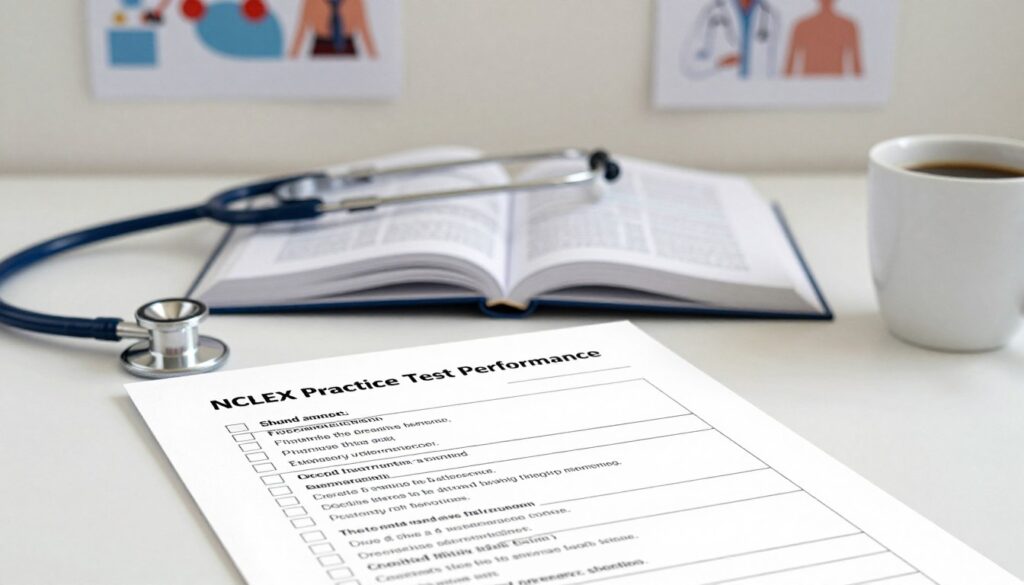
When you prepare for the NCLEX, your performance on practice exams is key. Don’t just see them as ways to check your grades. Use them as diagnostic tools to find out where you need to improve.
Benefits of Taking NCLEX Practice Tests
Regular practice exams help you get used to the real test environment. This makes you less anxious and more comfortable with the format. Consistent practice is a top way to prepare for the NCLEX.
These tests show you what you don’t know. By finding out early, you can focus on what’s most important. This way, you use your time wisely on the topics you need to improve.
Interpreting Your Practice Test Results
Reviewing your practice test results is where the real learning happens. Always look at the reasons behind each question, even if you got it right or wrong. Knowing why you answered a question correctly or incorrectly is key to understanding nursing concepts.
“Success is not final, failure is not fatal: it is the courage to continue that counts.”
When you review your results, look for patterns in your mistakes. You might find you struggle with certain topics. Spotting these patterns helps you focus your studying and improve your clinical skills.
When to Schedule More Practice Tests
Plan to take more practice tests after reviewing a lot of content. If your scores don’t improve, it’s time to go back to your study materials. Keep practicing and aim to see your scores go up.
- Schedule a full-length exam every two weeks to track progress.
- Use shorter, topic-specific quizzes to reinforce daily learning.
- Only move to the next phase of study once you achieve a passing percentage consistently.
Scoring well on practice exams shows you’re ready for the real test. Let the data from these tests guide your final preparation steps.
Time Management Skills
Having strong time management skills is key to being ready for the NCLEX. The exam can take up to five hours, including a short tutorial and breaks. You need to build up your mental strength to stay focused during the whole test.
Balancing Study Time and Personal Life
Nursing school is tough, but it’s important to keep a balance. Make sure your study time fits into your daily life without harming your health. Consistency is better than cramming because it helps your brain learn better over time.
“Success is the sum of small efforts, repeated day in and day out.”
Developing a Study Schedule
Creating a study plan is a big step. Set aside specific times for practice questions and deep review. This turns your study goals into tangible progress.
Think of these study times as important appointments with your future. Sticking to a schedule reduces stress and anxiety. This discipline shows you’re ready to pass the NCLEX.
Utilizing Study Techniques Effectively
Use active learning methods to make the most of your time. Techniques like spaced repetition and practice testing help solidify your nursing knowledge. These methods also prepare you for the exam’s pressure.
By practicing in timed sessions, you improve your focus for the full five hours. This builds the mental endurance needed for the test. Remember, managing your time well is just as important as what you study.
Stress Management Techniques
The path to becoming a registered nurse is tough, but managing stress is key. When you’re stressed, it’s hard to think clearly. Taking care of your mental health keeps your mind sharp and ready for what’s next.
Importance of Stress Relief Before the Exam
Stress relief is not just a nice-to-have; it’s essential. High anxiety can mess with your judgment and memory. Taking breaks helps your mind refresh, showing you’re ready for the NCLEX.
Mindfulness and Relaxation Strategies
Simple habits can keep you calm. Try deep breathing and visualization to calm your heart and mind. These methods help you stay focused and perform well under pressure.
- Practice deep belly breathing for five minutes each morning.
- Use visualization to imagine yourself successfully navigating difficult questions.
- Engage in short meditation sessions to clear mental clutter.
Maintaining a Healthy Lifestyle
Your physical health is as important as your studies. Avoid cramming, which can lead to burnout. Instead, focus on these habits to keep your mind sharp:
| Habit | Benefit | Impact on Readiness |
|---|---|---|
| Consistent Sleep | Memory Consolidation | High |
| Balanced Nutrition | Steady Energy Levels | High |
| Physical Activity | Reduced Cortisol | Medium |
Get enough sleep and eat well to fuel your brain. A positive attitude is also key to success.
Support System and Resources
Getting ready for the nursing board exam is a big task. It’s not just about books and practice tests. Building a strong network of friends and mentors is key. They help keep you motivated and on track.
Role of Study Groups
Study groups offer fresh perspectives on tough nursing topics. When you teach others, you learn more yourself. It’s a team effort that keeps you accountable.
Meetings help spot knowledge gaps you might overlook alone. Together, you can tackle hard questions and remember important facts. This teamwork is essential for success.
Seeking Guidance from Instructors
Your nursing teachers are full of valuable knowledge. They can help with tricky topics or test strategies. They give personalized feedback to improve your exam prep.
They share insights on what to focus on, saving you time. Their support can lift your spirits when you doubt yourself. They truly want you to do well.
Utilizing Online Forums and Communities
The internet has many forums and communities for nursing students. These places are great for finding study tips and resources. Talking to others who are also preparing can offer emotional support and a sense of belonging.
Heard from others can help you set realistic goals and calm your nerves. Many find these groups a valuable part of their prep. You’ll see you’re not alone in your struggles.
Understanding the NCLEX Test Day Experience
The day of your exam needs careful planning to stay focused. Knowing the details helps you feel calm and in control. We want you to feel confident as you enter the testing room.
What to Expect on Exam Day
When you get to the testing center, you’ll go through a formal check-in. They’ll check your ID and scan your palm vein or take a photo. Security is very strict, so you’ll store your things in a locker.
You can’t bring things like phones, watches, or notes into the test room. The room is quiet and free from distractions to help you focus. The staff is there to make sure the test is fair for everyone.
Preparing Required Documentation
Make sure you have all your paperwork before you go. You need your Authorization to Test (ATT) from your state board of nursing. Without it, you can’t take the exam.
You also need a valid, government-issued photo ID. This ID must match your registration exactly. Double-checking these details a few days before helps avoid last-minute stress.
Tips for Managing Test Day Anxiety
It’s normal to feel nervous, but being prepared helps. Plan your travel route ahead of time to avoid morning stress. Knowing how long it takes to get there helps you arrive composed and ready.
Use deep breathing exercises if you feel anxious. It helps you stay calm and focused. Recognizing these NCLEX exam readiness cues helps you show your nursing skills well.
Setting Personal Goals and Expectations
Think of studying for the NCLEX like training for a marathon, not a sprint. The journey to licensure can seem daunting, but breaking it down into smaller steps helps a lot. By focusing on NCLEX preparation indicators, you can keep a steady pace without getting exhausted.
Realistic Goals for NCLEX Preparation
Setting goals that are both reachable and have deadlines is key. Instead of trying to learn everything at once, focus on one subject at a time. This way, you can really understand the material and keep your stress levels down.
If you’re working while studying, it’s important to find a balance. Check out tips on balancing work and online to keep your study schedule realistic. Setting these boundaries early helps you save energy for the toughest topics.
Tracking Your Study Progress
Tracking your progress is a powerful NCLEX preparation indicator. Use a system to record your practice test scores and study time. This will show you where you’re doing well and where you need to improve.
| Study Milestone | Target Goal | Status |
|---|---|---|
| Fundamentals Review | 80% Accuracy | In Progress |
| Pharmacology Mastery | 75% Accuracy | Pending |
| Full-Length Mock Exam | Passing Score | Scheduled |
Importance of a Positive Mindset
Keeping a positive outlook is as important as your knowledge. When you struggle with questions, remember that mistakes are chances to learn. Your goal of becoming a nurse is achievable if you stay committed.
Don’t forget to celebrate your small victories. This keeps your motivation up. Trust your preparation and walk into the test with confidence. Your hard work today will shape your future tomorrow.
Final Assessment of Readiness
Reaching the end of your preparation journey brings a sense of clarity. Look back at your progress with a calm, objective mindset. This will help you understand your professional future better.
Self-Evaluation Checklists
Reviewing your performance on practice exams is key. Look for consistent scores that meet benchmarks from providers like UWorld or Kaplan. If your results show steady improvement, you’re likely ready to succeed.
Feedback from Peers and Mentors
Talking with nursing instructors or experienced colleagues offers valuable insight. They often spot strengths you might overlook. Their input confirms your grasp of complex nursing concepts.
Trusting Your Instincts About Readiness
Your clinical judgment skills are your most important asset. Trust your ability to navigate the exam questions. You’ve worked hard, and now it’s time to believe in your training. We wish you the best as you take this significant step toward your nursing career.