

Did you know nearly 20% of nursing graduates fail their licensure exam on the first try? This fact shows how tough the test is. It’s the last step before we start our careers as registered nurses.
We need to do more than just read to really learn. Learning how to study for NCLEX effectively helps us understand complex medical ideas. By improving our study habits early, we can feel genuine confidence instead of anxiety.
We aim to give you a clear plan for success. We’ll look at what are the best NCLEX study habits? to help you do your best. Let’s work together to overcome this challenge and secure our place in healthcare.
Key Takeaways
- Prioritize active recall over passive review to improve long-term retention.
- Create a consistent schedule to manage the vast amount of nursing content.
- Utilize high-quality practice questions to simulate the actual testing environment.
- Focus on understanding the rationale behind answers, not just memorizing facts.
- Maintain a healthy balance to prevent burnout before your exam date.
Understanding the NCLEX Exam Structure
Knowing the NCLEX blueprint is key to preparing for the exam. It helps us stop guessing and start planning. Finding what are the best NCLEX study habits? starts with understanding the exam’s design.
Question Types
The exam is more than just multiple-choice questions. You’ll see drag-and-drop, fill-in-the-blank, and hot-spot items. These test your ability to think critically in real situations.
We need to focus on critical thinking, not just memorizing. Each question asks us to make safe, effective nursing decisions. This change in approach is key to our success.
Exam Format
The NCLEX is a Computerized Adaptive Test (CAT). The next question’s difficulty depends on your previous answers. It covers four main areas of nursing to prepare you for entry-level care.
“Success is where preparation and opportunity meet.”
To find what are the best NCLEX study habits?, focus on the four core areas. The table below shows the main domains to prioritize in your studies.
| Content Area | Focus Goal | Clinical Priority |
|---|---|---|
| Safe Effective Care | Management of Care | High |
| Health Promotion | Prevention & Wellness | Medium |
| Psychosocial Integrity | Mental Health Support | Medium |
| Physiological Integrity | Basic Care & Comfort | High |
Scoring Mechanism
The scoring system checks if you’re ready for the exam. It keeps track of your performance to see if you meet the passing standard. If you answer a tough question right, it gets even harder to test your knowledge.
This adaptive nature makes the test a precise measure of your readiness. By understanding this, you can stay calm, even when questions are tough. Knowing how the system works is a top NCLEX study habit.
Creating a Study Schedule
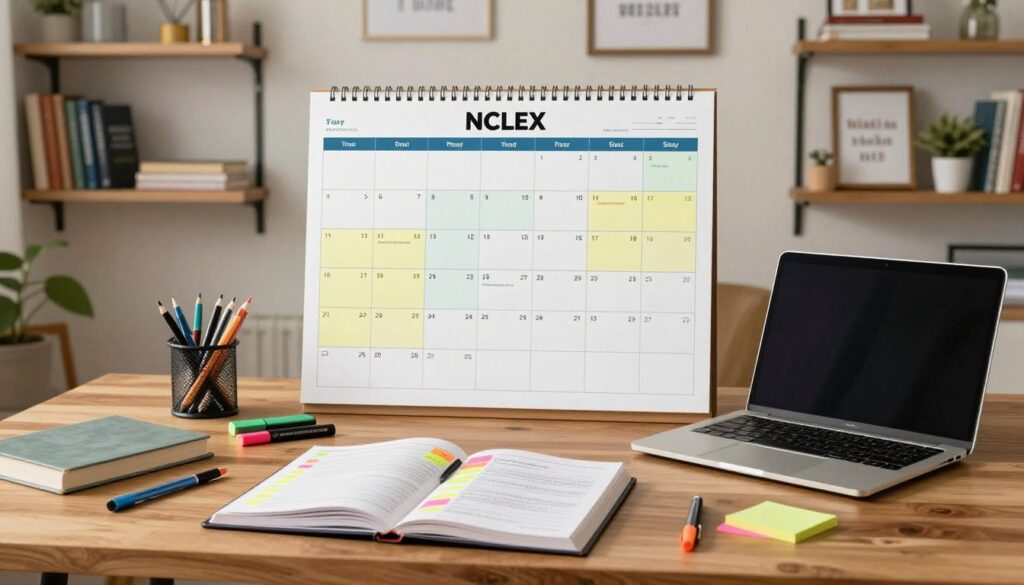
Creating a solid NCLEX study plan is key to handling our busy nursing school lives. It helps us break down big goals into smaller, daily tasks.
Importance of Consistency
Consistency is the secret to success. Instead of long, tiring study sessions, we focus on short, daily study periods.
This approach strengthens our memory over time. A regular study routine also cuts down stress from cramming at the last minute.
Time Management Techniques
We use the Pomodoro method to stay focused. It means studying for 25 minutes, then taking a short break.
These NCLEX study tips keep our minds sharp. Breaking down study material into smaller parts helps us cover everything without feeling overwhelmed.
“Success is the sum of small efforts, repeated day in and day out.”
Balancing Study and Rest
Our brains need breaks to process complex information. Regular breaks in our NCLEX study schedule prevent burnout.
By balancing study and rest, we make a lasting NCLEX study plan. Taking care of ourselves is as important as studying hard. This way, we feel ready and confident on test day.
Utilizing NCLEX Study Materials
Mastering the exam starts with quality materials that fit our learning styles. Diversifying our resources helps us see complex nursing topics in different ways. This is key for a strong foundation before the test.
Recommended Textbooks
Going back to our nursing school notes is very helpful. These texts cover the key terms and clinical thinking we need. When looking for more NCLEX study tips, choose books that summarize important info clearly.
Online Resources and Apps
Interactive online programs fit well into our busy lives. For example, Peterson’s has an NCLEX prep course with flexible lessons. Looking into online classes can also guide us.
Practice Question Banks
Using different NCLEX preparation methods daily is important. We should practice with question banks that feel like the real test. Consistent practice boosts our confidence and helps us spot question patterns.
Active Learning Techniques
We can change how we study by using active learning methods. Instead of just reading our textbooks, we should dive into topics that challenge us. By using effective study techniques for NCLEX, we make studying an engaging experience. This helps us develop the critical thinking needed to pass.

Summarizing Information
Summarizing in our own words is a great way to understand new material. By making notes from long chapters, we focus on the most important points. Using mnemonics like ADPIE (Assessment, Diagnosis, Planning, Implementation, and Evaluation) helps us remember key nursing steps.
These tools are great for organizing complex data, like the signs of a cholinergic crisis. By breaking down information, we can recall it better under pressure. Learning how to study for NCLEX effectively means making these small changes in how we learn.
Concept Mapping
Concept mapping lets us see how different nursing ideas connect. By drawing links between pathophysiology, pharmacology, and patient care, we build a strong mental structure. This visual method helps us understand the overall picture of patient health.
Teaching Others
Teaching a topic to our friends is a powerful way to learn it ourselves. When we explain something to someone else, we quickly see what we don’t know. This teamwork helps us really understand the material, not just recognize it.
| Technique | Primary Benefit | Best For |
|---|---|---|
| Summarizing | Information retention | Complex processes |
| Concept Mapping | Visualizing relationships | Systemic disorders |
| Peer Teaching | Identifying knowledge gaps | Clarifying difficult topics |
Taking Practice Tests
One of the most effective study techniques for NCLEX success is to simulate the real test environment. This helps us get used to the pressure of the actual exam. It prepares our minds for the challenges of the official test day.
Benefits of Simulating the Exam
The NCLEX is a tough test that lasts up to five hours. We have to answer between 85 and 150 questions while staying focused.
Practicing under timed conditions builds our mental stamina. It teaches us to manage our energy well during the test.
How to Analyze Your Performance
Just finishing a practice test isn’t enough to improve. We need to carefully review our results to see where we went wrong.
- Identify patterns in the questions we missed.
- Review the rationale for every incorrect answer choice.
- Practice the process of elimination to narrow down options.
This detailed review is a key effective study technique for NCLEX prep. It turns our mistakes into learning chances.
Incorporating Feedback
After spotting our weak spots, we need to adjust our study plans. We should focus more on the areas that gave us trouble during practice.
By refining our strategies based on feedback, we become better test-takers. Consistency is key as we aim to master the material and boost our confidence before the test.
Joining Study Groups
Building a support system is key for NCLEX success. Preparing for exams together unlocks new understanding. This is hard to do alone.
By working together, we make a tough task easier. We turn it into a team effort.
Finding the Right Group
The best study groups form from camaraderie in clinical rotations and classes. It’s good to find peers who study hard and at the same pace. When we share goals, we grow together.
“Coming together is a beginning, staying together is progress, and working together is success.”
Benefits of Collaborative Learning
Learning together lets us share knowledge. Explaining tough concepts to friends helps us understand better. This is a top strategy for NCLEX success.
Group discussions on case studies bring different views. We debate and learn from each other’s experiences. This makes studying more engaging and effective.
Staying Focused and Motivated
To keep sessions productive, set a clear agenda. Having specific goals keeps us on track. This structure keeps our momentum going.
Group study also boosts accountability. Knowing others rely on us keeps us motivated. Supporting each other helps us reach our licensure goal.
Focusing on Weak Areas
To create a strong NCLEX study plan, we must face our toughest topics. Spending hours on easy subjects won’t help us grow. We should tackle the areas that make us feel uncertain.
Identifying Weaknesses
Practice tests can show us where we need to improve. By looking at our mistakes, we find out what we don’t know. This is a key top strategy for NCLEX success.
Tailoring Your Study Plan
If exams are tough for us, we need to study more for the NCLEX. We should plan our study time to focus on hard topics. This strategic focus helps us build new skills, not just review old ones.
Resources for Improvement
After finding our weak spots, we need the right resources to improve. This could be a special textbook, video series, or question bank. The right tools help us use our study time wisely and boost our confidence.
Using Online Courses
Online courses offer a modern way to learn nursing concepts. They use digital content and focus on clinical judgment, not just memorization. Adding these tools to our NCLEX study schedule keeps us organized and focused.
Finding Quality Online Programs
Not all online platforms are the same. We should choose programs with evidence-based content. Look for clear roadmaps that match current NCLEX standards. Exploring online classes for pharmacy tech certification can help assess quality.
When picking a program, consider these factors:
- Expert Faculty: Are the teachers experienced nurses or educators?
- Updated Content: Does the material meet the latest NGN clinical judgment needs?
- Student Support: Is there help from mentors or forums for our questions?
Benefits of Video Lectures
Video lectures make complex nursing scenarios easier to understand. They let us see experts explain the “why” behind their decisions. This visual method helps us remember information better during our NCLEX study schedule.
These lectures teach us to think critically, which boosts our confidence. We learn to handle tough patient care situations. This is key for modern NCLEX preparation methods.
Interactive Learning Experience
Interactive programs make studying more fun than traditional methods. They include quizzes, case studies, and simulations. This active learning ensures we understand the material, not just read it.
These platforms track our progress, showing us where to improve. Using these tools turns study time into a dynamic process. It builds our clinical judgment skills and keeps us motivated.
Managing Test Anxiety
Learning how to study for NCLEX effectively means more than just reviewing content. It’s also about keeping our minds calm. Feeling nervous is normal, but we can manage these feelings with the right strategies.
Relaxation Techniques
Our body’s tension can show our mental stress. Simple relaxation habits can help lower our heart rate and clear our minds. Consistency is key to make these methods effective when we need them most.
- Deep breathing: Practice box breathing to stabilize your nervous system.
- Yoga: Gentle movement helps release physical tension stored in the body.
- Mental visualization: Imagine yourself calmly answering questions and succeeding on the exam.
Mindfulness Practices
Mindfulness keeps us focused on the present moment. It helps us avoid worrying about the future. Meditation trains our brains to stay focused and thoughtful.
Even five minutes of quiet reflection each morning can help a lot. Staying present ensures we absorb the material fully. This is key to how to study for NCLEX effectively without getting overwhelmed.
Building Confidence
Confidence grows over time with steady preparation. Every time we master a tough concept or finish a practice set, we boost our confidence. We must remember our hard work will pay off.
Believing in our preparation is the last step to beat test anxiety. When we know we’ve prepared well, we can enter the test calmly. Staying relaxed lets us perform our best when it counts.
Self-Care During Study
When we think about how to study for NCLEX effectively, we must consider our health first. Success isn’t just about reading books. It’s about keeping our energy up to learn well. Taking care of our bodies and minds helps us learn better over time.
Importance of Physical Health
Our bodies help our brains work. Regular exercise reduces stress and boosts blood flow. Even a short walk or stretch can significantly boost our focus during long study sessions.
Role of Sleep and Nutrition
Getting enough sleep is key for a sharp mind. A well-rested brain can think and solve problems better. Eating healthy and staying hydrated keeps us focused and alert.
If you need more help, check out online classes for CNA or nursing. Good nutrition and hydration are key for success. We should care for our bodies as much as we care for our patients.
Prioritizing Mental Well-Being
Looking after our mental health is important. Setting boundaries and taking breaks helps avoid burnout. Building confidence through self-care keeps us strong during prep.
On exam day, arrive early to relax. Eat well and stay hydrated to stay calm. Caring for our bodies and minds prepares us for success.
Reviewing Your Progress
Tracking our journey toward licensure needs a clear view of our growth. We should look back at our initial goals to see how far we’ve come. This helps us understand our progress in our NCLEX study plan.
Setting Milestones
We should break our preparation into manageable chunks to keep momentum. Setting specific dates to master certain clinical topics helps us stay on track. If we need extra help, we can look into online courses for medical testing prep.
Adjusting Your Study Plan
Our needs change as we learn and grow. We should stay flexible by updating our NCLEX study plan as needed. This ensures we focus on areas needing the most attention before the exam.
Celebrating Small Wins
The exam is a pass/fail test, so we must value every bit of progress. Recognizing our improvements in practice scores keeps our spirits high. We’re building the skills to provide safe patient care, and every step brings us closer to our goal.