
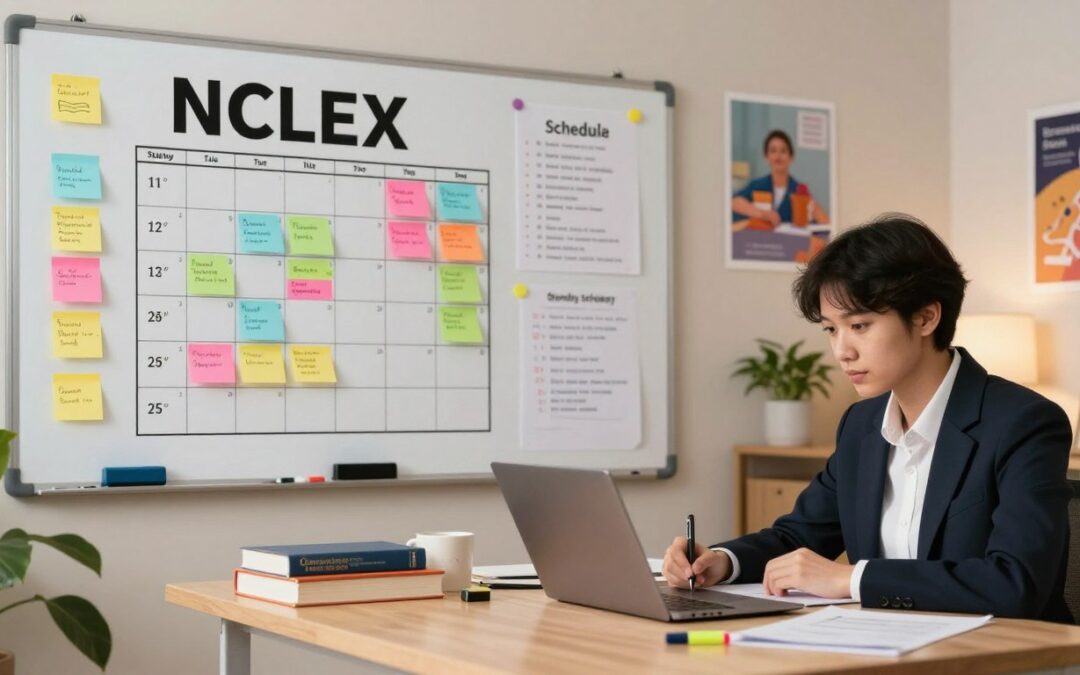
Did you know nearly 40% of nursing graduates feel overwhelmed by the exam material? Balancing work or school with studying is tough. It seems impossible to find time for complex medical topics.
We aim to help you go from stressed to confident and ready. A structured NCLEX study planner ensures you cover all content without exhaustion. We show you how to pick effective prep timelines that fit your life.
Whether you need a quick 4-week plan or a longer 12-week one, a clear path helps. We’ll help you create a schedule that respects your time and boosts retention. With the right plan, you can ace the exam with confidence.
Key Takeaways
- Identify your specific timeline to choose a plan that matches your current work-life balance.
- Use a structured calendar to prevent burnout and ensure consistent progress.
- Prioritize high-yield topics to make the most of your limited review hours.
- Incorporate regular practice assessments to track your readiness and identify knowledge gaps.
- Stay flexible by adjusting your daily goals based on your professional shift requirements.
Understanding the NCLEX Exam Format
Success on the NCLEX starts with understanding its structure and scoring. Many students feel overwhelmed because they don’t know what to expect. By explaining the exam’s mechanics, we can help you prepare better.
Overview of the NCLEX Exam
The National Council of State Boards of Nursing (NCSBN) manages the exam. It uses a framework called Client Needs. This ensures nurses are tested on essential knowledge for safe practice.
The content is divided into four major categories and six subcategories. These cover patient safety and physiological adaptation, among other topics.
“The NCLEX is not just a test of what you know, but a test of how you think under pressure.”
Question Types in NCLEX
The exam uses Computerized Adaptive Testing (CAT) to adjust question difficulty based on your answers. You’ll see traditional multiple-choice questions and alternate format questions. These test your clinical judgment in a more interactive way.
| Question Type | Description | Focus Area |
|---|---|---|
| Multiple Choice | Standard four-option questions | Core nursing knowledge |
| Select All That Apply | Multiple correct answers | Critical thinking skills |
| Ordered Response | Prioritizing nursing actions | Clinical decision making |
| Fill-in-the-Blank | Calculation or short answer | Math and safety accuracy |
Scoring and Results Interpretation
The CAT system is highly sophisticated. It adjusts question difficulty after each answer. If you answer correctly, the next question is harder. If you answer incorrectly, it becomes easier.
This process continues until the computer is 95% sure of your ability level. You won’t get a numerical score; it’s Pass or Fail. The test ends when you pass or run out of time or questions.
Understanding this adaptive nature helps us stay calm during the exam. A difficult question means we’re doing well.
The Importance of a Study Schedule
We believe a solid foundation for your nursing career begins with a good study plan. A structured roadmap turns chaotic preparation into a manageable, step-by-step journey to success. Using NCLEX study plans helps you focus on key content, avoiding the stress of not knowing what to study next.
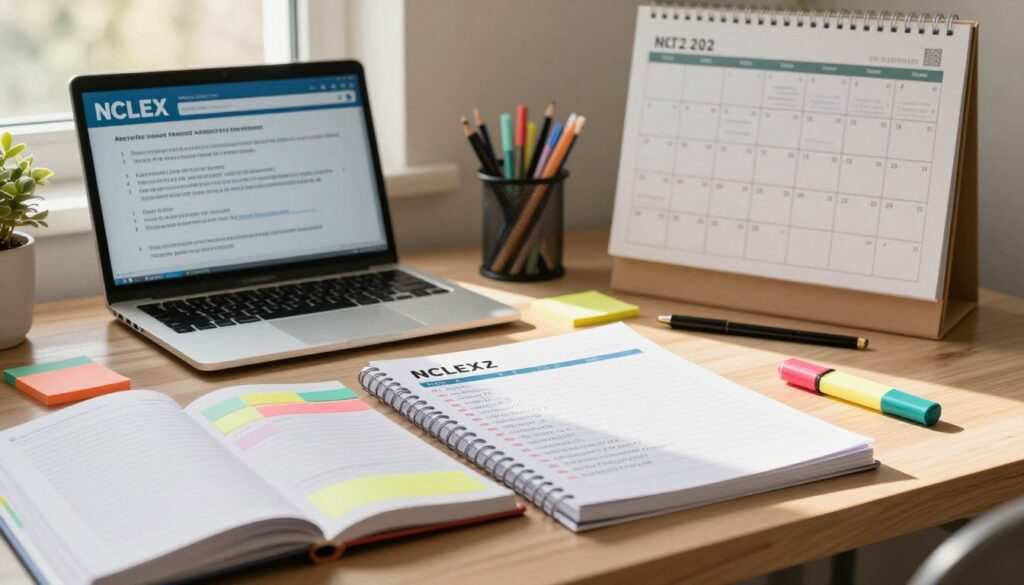
Benefits of Having a Study Plan
A clear schedule prevents burnout. It breaks down big amounts of info into daily goals, ensuring you cover all content areas. For extra help, consider online classes to help you prepare for the NCLEX-RN.
Here’s why a structured study plan beats random study sessions:
| Feature | Structured Study | Unstructured Study |
|---|---|---|
| Content Coverage | Comprehensive and balanced | Inconsistent and fragmented |
| Stress Levels | Low to moderate | High and unpredictable |
| Retention Rate | High through repetition | Low due to cramming |
Reducing Anxiety Through Preparation
Preparation is the best way to fight test-day nerves. Following NCLEX study plans gives you control over your progress. This predictability keeps you calm, knowing what you’ve covered and what’s left.
Confidence grows as you see your improvement. Sticking to your schedule replaces fear with a proven strategy. These NCLEX study plans are your best tool for success.
Assessing Your Current Schedule
Understanding your time is key to reaching your goals. Before starting your studies, examine your daily routine closely. This step is vital for busy student NCLEX prep, making sure your study plan is doable and keeps you going.
Time Management Techniques
Good NCLEX time management techniques mean putting tasks in order of importance. Start by tracking your time for three days to see where it goes. This will help you figure out what’s essential and what can be adjusted for studying.
Grouping similar tasks together helps avoid mental exhaustion. Doing chores or admin work in one go leaves more time for studying. Consistency is far more valuable than trying to cram all study into one long session.
Identifying Free Time Slots
Many students find hidden time in their day. Your commute, lunch break, or waiting time can be used for studying. These small, micro-learning opportunities can really add up over a week.
To make the most of these moments, keep your study materials handy. Whether it’s digital flashcards or a small review book, being prepared lets you use every spare minute. Learning these NCLEX time management techniques will keep you moving forward without feeling overwhelmed.
Creating an Effective NCLEX Study Schedule
A well-structured schedule is key for nursing students. Creating NCLEX study plans that fit your lifestyle boosts confidence. It turns hard material into achievable goals.

Daily Study Blocks vs. Weekly Goals
Choosing between daily blocks or weekly goals is important. Daily blocks give a clear plan, covering topics like pharmacology or pediatrics each day. This keeps your mind sharp.
On the other hand, weekly goals offer flexibility. They’re great if your schedule changes. Online classes with personalized schedules are ideal. They help you meet weekly goals without strict daily plans.
Balancing Study and Personal Life
Good study habits mean more than just studying. A healthy lifestyle is essential. Make sure to rest to keep your brain sharp. A good NCLEX study routine includes time for hobbies, exercise, and friends.
Here are some tips for balance:
- Take short breaks to avoid burnout.
- Keep study time separate from family time.
- Use weekends for review, not cramming.
Your mental health is as important as your grades. Balancing study and personal life keeps you motivated and focused.
Recommended Study Materials
Finding top-notch study materials is key to feeling ready for your exam. Choosing the right resources is a big step toward getting your nursing license. Using materials that match the exam format helps lower anxiety and boosts your score.
Popular NCLEX Review Books
Review books are the base for learning the exam content. Many students use guides like Saunders Complete Review for the NCLEX-RN. These books break down tough topics into easy-to-understand chapters.
Physical books let you mark important points and make your own notes. Pick a book with lots of practice questions at the end. This way, you can check your understanding right after learning something new.
Online Review Courses and Resources
Digital tools offer a fresh way to study, mimicking the exam’s computer format. For structured learning, check out online courses for the USMLE or nursing exams. These sites give detailed rationales for why answers are right or wrong.
Studies show students using UWorld often pass with a 98% rate. This success comes from the realistic exam feel. By practicing in a familiar setting, you can focus on the questions, not the tech.
| Resource Type | Primary Benefit | Best For |
|---|---|---|
| Review Books | Deep content review | Building foundational knowledge |
| Online Q-Banks | Realistic simulation | Testing and rationales |
| Video Lectures | Visual learning | Complex clinical topics |
| Flashcard Apps | Spaced repetition | Memorizing lab values |
Utilizing Practice Questions
We think practice questions are key to passing a nursing exam. Spend about 5 to 7 minutes per question. This time is for choosing an answer and understanding why each option is right or wrong.
Knowing why an answer is correct or not is essential. This way, you learn from your mistakes instead of just guessing.
Benefits of Practice Questions
Using top-notch question banks lets you practice at home. It helps you build the mental stamina needed for the real exam.
These tools also help you find your weak spots. By tracking your answers, you can see which topics need more work. This focused approach makes sure you use your study time wisely.
Recommended Question Banks
Choosing the right resource is important. Many students do well with platforms that match the real test’s complexity.
- UWorld: Praised for its detailed rationales and tough questions.
- Archer Review: Known for its realistic test prep and good price.
- Kaplan: Has a long history of providing top-notch, NCLEX-style questions.
We suggest picking one main bank to keep things simple. Sticking to one platform usually leads to better results than switching between many.
Integrating Active Learning Techniques
Changing how you study means moving from just reading to actively engaging. Many students stick to reading their textbooks over and over. But this doesn’t help build the deep clinical judgment needed for the exam. By using effective study strategies for NCLEX, you can boost your long-term memory and confidence.
Flashcards and Spaced Repetition
Flashcards with spaced repetition are a powerful tool. This method helps your brain remember information better than cramming. It makes recalling complex facts during the test much easier.
Use digital tools like Anki or Quizlet to manage your flashcards. These apps schedule reviews for you, based on how well you know each card. Here are some benefits:
- Efficiency: You focus more on tricky concepts.
- Consistency: Daily practice helps avoid forgetting.
- Portability: Study anywhere, even during short breaks.
“The process of actively recalling information is far more beneficial for memory than simply reviewing the source material again.”
Study Groups and Discussion Forums
Learning together is key to effective study strategies for NCLEX. Explaining a tough nursing concept to a friend helps you understand it better. If you can’t explain it, you need to review your notes.
Being part of online forums or local study groups keeps you motivated. These discussions offer different views on clinical scenarios. Debating answers sharpens your critical thinking, vital for the NCLEX. Remember, active participation turns passive knowledge into real-world skills.
Incorporating Self-Care Into Your Schedule
Creating a solid NCLEX study routine means caring for your mind as much as your studies. We often forget the importance of our own well-being. Taking breaks is not a weakness; it’s a smart way to keep your mind sharp.
Importance of Rest and Relaxation
Without breaks, learning complex material becomes harder. Rest is when your brain solidifies memories, making short-term study last longer. Lack of sleep and breaks can lead to brain fatigue, hurting your exam scores.
“Success in nursing is not just about what you know, but how you sustain your energy to provide the best care possible. Balance is the foundation of your professional longevity.”
Strategies to Manage Stress
Handling test anxiety is key to a good NCLEX study routine. Small, regular self-care activities help keep stress in check. A short walk, deep breathing, or a break from studying can help you stay focused.
We’ve outlined how to tell good habits from bad ones. Keeping a healthy NCLEX study routine means always being aware and adjusting.
| Habit Type | Action | Impact on Success |
|---|---|---|
| Healthy | Scheduled breaks | High retention |
| Healthy | Mindful breathing | Lower anxiety |
| Unhealthy | All-night cramming | Mental exhaustion |
| Unhealthy | Skipping meals | Reduced focus |
Sample NCLEX Study Schedules
Reaching your goals needs a plan that fits your life and schedule. Finding the best NCLEX study schedules can be tough, like balancing school or work. These templates are flexible and can be tailored to your learning pace and needs.
4-Week Study Plan for Busy Students
This four-week plan is great for students needing a consistent, daily rhythm. Spend two to three hours each evening on nursing basics. Focus on one body system each week for better retention.
- Week 1: Foundations of nursing and safety protocols.
- Week 2: Physiological adaptation and pharmacological basics.
- Week 3: Complex health alterations and management of care.
- Week 4: Review and practice questions.
A two-week plan is intense, not a good start. First-timers often find the four-week plan builds confidence and mastery.
Weekend-Only Study Schedule
For those with busy weekdays, a weekend plan is ideal. Spend Saturday and Sunday on deep study and practice exams. This method requires discipline but keeps weekdays stress-free.
Use Friday evening for quick topic reviews. Spend weekends on full practice exams. This is a top best NCLEX study schedules for those with busy weekdays.
Adjusting Your Schedule as You Progress
We think a good study plan must change as you learn more. Your study plan should grow with you, keeping up with your growing knowledge. This way, your studying stays effective all the way to the end.
Monitoring Your Understanding and Comfort Level
Use a NCLEX study planner to track your daily progress. It shows you which topics you know well and which need more work. This helps you decide what to focus on next.
If too much information feels overwhelming, make a personalized learning plan with online courses. Consistency is key, but knowing when to change is what makes you stand out. Check your planner often to make sure you’re spending your time wisely.
“Success is not final, failure is not fatal: it is the courage to continue that counts.”
Modifying Your Plan Based on Practice Test Results
Practice tests are key to checking how well you’re doing. If your scores show weak spots, focus on those right away. Using NCLEX time management techniques helps you use your study time better.
Don’t spend too much time on easy subjects. Use NCLEX time management techniques to make the most of your study time. Your NCLEX study planner should help you reach your goals, not hold you back.
Final Tips for Excelling on the NCLEX
Getting your nursing license is a big goal that needs dedication. We want you to feel ready for your test. Use our top NCLEX study tips to stay focused and succeed.
Exam Day Preparedness
It’s not just about knowing nursing stuff. Go to your test center early to find your way. Bring your ID and important papers the night before to make your morning easier.
Staying Motivated and Focused
Staying consistent is key. Practice every day, not just on weekends. Trust the hard work you’ve done to get you ready.
Remember, you have what it takes to pass the exam. Go into the test feeling confident. You’ve worked hard to care for patients well.