

Did you know nearly 15% of first-time test takers fail their nursing licensure exam each year? This shows why getting ready is so important for your career. We know it feels scary, but knowing the exam patterns can make a big difference.
We aim to show you the key ideas that often show up on the test. By focusing on these areas, you can make your studying easier and more effective. We want to help you focus on what really matters for passing the exam.
If you need more help, looking into online classes for the NCLEX-RN is a good idea. These resources can give you the clarity and confidence you need. Let’s tackle these tough topics together so you feel prepared for your test.
Key Takeaways
- Understand the core concepts that frequently appear on your nursing exam.
- Focus your study time on high-yield topics to improve your efficiency.
- Use structured preparation methods to reduce test-day anxiety.
- Leverage professional online resources to gain a competitive edge.
- Master specific item types to boost your overall confidence and performance.
Understanding the NCLEX Exam Format
If you’re wondering what are the most common NCLEX questions?, you need to know the exam’s format. It uses a computer-adaptive testing (CAT) model. This model changes the difficulty of questions based on your answers.
This system makes sure the exam really checks your skills. You might see between 75 to 265 questions, depending on how you do.
Types of Questions on the NCLEX
The exam now includes many question types to test your thinking. You should learn about the 6 new question types. They’re designed to see how well you handle real nursing situations.
These questions are not just simple choices. They ask you to solve complex problems, read charts, and decide on patient care.
Time Management Strategies
You have up to six hours to finish the exam. Effective pacing is key to make sure you read each question well.
Don’t be afraid to take the breaks offered during the test. A short break can refresh your mind and keep you focused during the long test.
Test-Taking Strategies
Success often depends on how you tackle each question. One good strategy is to rephrase the question in your own words before looking at the answers.
Also, try to eliminate wrong answers to increase your chances of picking the right one. Knowing these strategies is as important as knowing what are the most common NCLEX questions? to feel ready and confident.
Patient Safety and Infection Control
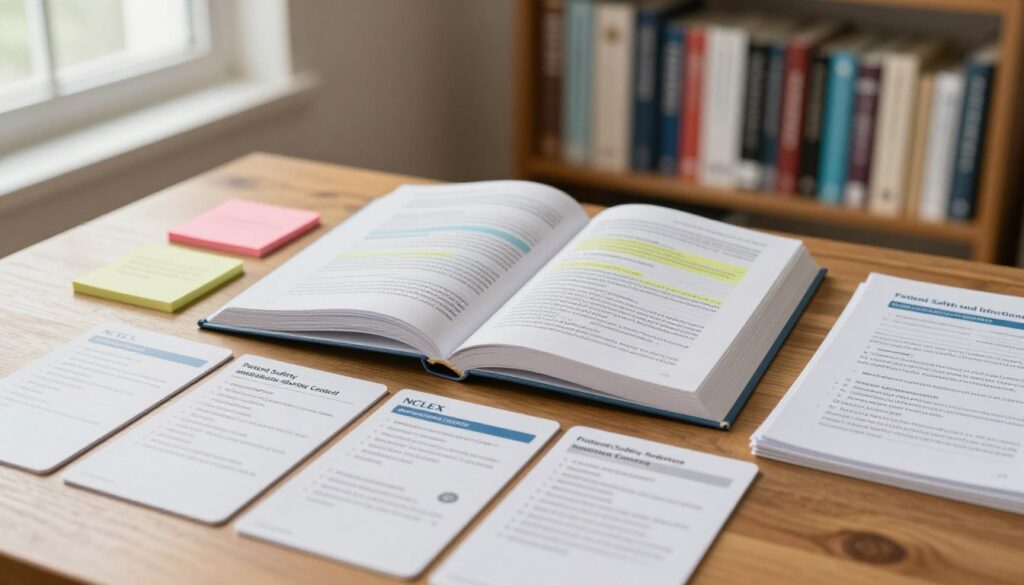
When you sit for your exam, you’ll see how important patient safety and infection control are. These topics are key in NCLEX question examples because they’re the basics of nursing. By knowing these rules, you keep your patients safe from harm while you care for them.
Hand Hygiene Practices
Hand hygiene is the best way to stop infections in hospitals. You need to know when to wash your hands versus using hand sanitizer. For example, if your hands are dirty or you’ve touched a patient with C. difficile, you must wash them with soap and water.
“Clean hands are the most important tool in the nurse’s kit to save lives and prevent the spread of dangerous pathogens.”
Personal Protective Equipment (PPE)
Knowing how to put on and take off PPE is a big part of NCLEX question examples. You should know which gear to use for different situations. Remember, taking off PPE in the right order is just as important as putting it on to avoid getting sick yourself.
- Gloves: Protect against direct contact with bodily fluids.
- Gowns: Provide a barrier against splashes and sprays.
- Masks and Respirators: Essential for preventing inhalation of airborne particles.
- Goggles or Face Shields: Necessary when there is a risk of ocular exposure.
Infection Transmission Precautions
You need to know the different types of infection precautions. Many NCLEX question examples will ask you to pick the right isolation for a certain illness. Being able to apply these rules helps keep patients and staff safe.
| Precaution Type | Target Pathogens | Required PPE |
|---|---|---|
| Contact | MRSA, C. diff | Gloves, Gown |
| Droplet | Influenza, Meningitis | Surgical Mask |
| Airborne | Tuberculosis, Measles | N95 Respirator |
Always check the hospital’s policy for isolation rules. Being able to quickly identify these precautions is a vital skill for nursing students. Using these rules correctly will help you do well on your exam and in your nursing career.
Pharmacology Questions You Might Encounter
Pharmacology questions can be tough, but we can make it easier. Many students struggle, but focusing on key concepts helps. By looking at NCLEX question examples, you can see how to use your knowledge in real situations.
Common Medication Classifications
It’s important to know about drug classes. Instead of memorizing every drug, learn the suffixes and prefixes that show a class. For example, knowing “-pril” means ACE inhibitor helps you understand its role and risks.
Also, knowing drug schedules is key. These schedules show how strictly a drug is controlled based on its abuse risk. Always check the classification before giving a drug to ensure safety.
Dosage Calculations You Should Know
Being accurate with math is essential for nurses. You’ll often see NCLEX question examples that test your unit conversion skills. Remember, 1 teaspoon equals 5 ml.
Practice these conversions until they’re easy. When faced with a math problem, break it down step by step. Precision is vital to avoid errors and ensure the right dose for your patient.
Side Effects to Watch For
Spotting adverse reactions is a key part of nursing. For instance, if a patient gets angioedema from an ACE inhibitor, it’s a medical emergency. You must act fast to keep their airway open.
Always look for signs of serious reactions in the question. When reviewing NCLEX question examples, focus on the nursing actions given. Your goal is to pick the option that keeps the patient safe.
Patient Care and Management
Choosing which patient to help first can be tough. It’s a key skill to master. Using top-notch NCLEX practice questions can improve your decision-making. Whether you’re a student or looking for online classes to help you get ready for the CNA, knowing these basics is essential.
Prioritization of Patient Care
Prioritizing is a critical skill tested through complex scenarios. We suggest using the ABC framework—Airway, Breathing, and Circulation—to spot who needs help right away in an emergency.
By focusing on these key areas, you can quickly sort out who needs help first. Regularly practicing with NCLEX practice questions will help you remember this order. This way, you always help the most unstable patient first.
Delegation Skills in Nursing
Good delegation means giving tasks based on each nursing role’s scope. You need to know the legal limits for Registered Nurses (RNs), Licensed Practical Nurses (LPNs), and Assistive Personnel (AP).
Don’t give tasks that need complex assessment, teaching, or evaluation to unlicensed staff. Proper delegation keeps things running smoothly and ensures patient safety.
Clinical Judgment Scenarios
Clinical judgment scenarios require you to use your knowledge to decide the best action. These questions often have a patient with many symptoms, and you must pick the most important action to avoid a bad outcome.
Practicing these scenarios boosts your confidence and speed. Here’s a table showing how to delegate tasks based on role:
| Task | Registered Nurse (RN) | LPN/LVN | Assistive Personnel (AP) |
|---|---|---|---|
| Initial Assessment | Required | Not Allowed | Not Allowed |
| Medication Administration | Yes | Yes (Selected) | No |
| Vital Signs | Yes | Yes | Yes |
| Patient Hygiene | Yes | Yes | Yes |
By mastering these skills, you’ll be ready for the exam. Keep practicing with NCLEX practice questions to improve your clinical judgment. This will prepare you for any scenario.
Health Promotion and Maintenance Queries
Supporting patients through life’s stages requires understanding developmental milestones and proactive care. Nurses play a critical role in guiding people toward healthier lifestyles and preventing disease. Mastering these concepts is key when practicing for the NCLEX exam.

Developmental Stages in Patients
Understanding growth and development is key in pediatric nursing. For example, an infant usually sits up by six months and recognizes familiar faces by eight months. Tracking these milestones helps us spot delays early, a common theme in NCLEX practice questions.
We must also consider the unique needs of adolescents and older adults. Each stage brings specific physical and emotional changes that need tailored nursing interventions. Focusing on these transitions helps us support our patients better as they navigate their health journeys.
Health Education Techniques
Effective patient education empowers patients to take charge of their health. We recommend using the “teach-back” method to ensure patients understand instructions. This method confirms patients can explain the information in their own words.
When teaching, consider the patient’s literacy level and cultural background. Simplifying medical jargon improves patient compliance. Visual aids or written materials can also help reinforce lessons during clinical encounters.
Preventive Measures and Screenings
Preventive care is vital for long-term wellness. Questions often arise about the timing of screenings, like when to start colonoscopies or mammograms. Early detection is often the best defense against chronic illness, and we advocate for these tests.
Beyond screenings, we must encourage healthy lifestyle changes like balanced nutrition and regular exercise. Helping patients see the long-term benefits of these changes is a key skill. Keep practicing these scenarios to build confidence for your certification exam.
Physiological Integrity in NCLEX Questions
When you face NCLEX test questions, knowing what’s most important is key. This part tests if you can keep patients safe and healthy. It’s about understanding the basic health data nurses need to know.
Understanding Basic Human Needs
You need to know how to meet basic needs like breathing, eating, and going to the bathroom. Meeting these needs first helps stabilize patients. You should be good at reading lab results and vital signs to spot problems fast.
Here’s a quick guide to common health markers:
| Parameter | Normal Range | Clinical Significance |
|---|---|---|
| Heart Rate | 60–100 bpm | Indicates cardiac output |
| Respiratory Rate | 12–20 breaths/min | Reflects gas exchange |
| Blood Pressure | 120/80 mmHg | Measures vascular resistance |
| Oxygen Saturation | 95%–100% | Assesses tissue perfusion |
Emergency Response Protocols
In emergencies, nurses must act fast. You’ll see NCLEX test questions on how to handle sudden problems like shock or breathing issues. Remember, always focus on airway, breathing, and circulation first.
Good emergency care includes:
- Spotting early signs of trouble.
- Starting quick response team actions.
- Doing life-saving actions quickly.
Pain Management Assessment
Pain is seen as the fifth vital sign, and it’s a big part of NCLEX test questions. You need to use special tools to check how much pain a patient feels. Keeping accurate records is key to knowing if your help is working.
Listen to what patients say and watch for signs like facial expressions. Learning these skills helps you make better decisions in your nursing career.
Psychosocial Integrity Topics
When we care for patients, we must think about their emotional and mental health. We need to give care that looks at the whole person, not just their physical symptoms. Many NCLEX test questions ask about how we handle these emotional needs in a clinical setting.
Ethics and Legal Considerations
Nurses must always respect the dignity and rights of their patients. We need to know the legal standards to make sure we act correctly. When we answer NCLEX test questions about ethics, we should always put the patient’s needs first.
Keeping patient information private is key to ethical nursing. We must always protect this information. This trust is essential for a patient’s recovery.
Therapeutic Communication Techniques
Creating a good relationship with patients starts with listening and showing empathy. We use special ways to talk to get the right information. These methods help us understand the patient without judging them.
Using open-ended questions helps patients share their feelings. These tools help us deal with the complex situations in NCLEX test questions. Clear communication is the key to better patient care.
Mental Health Evaluation
Checking a patient’s mental health needs careful watching and structured checks. For patients with conditions like bipolar disorder, we must watch their safety and health. Checking their nutrition and sleep is very important.
We also need to make sure the environment is safe to avoid harm. When you see NCLEX test questions about mental health, first check the patient’s safety. A stable and supportive place is the best way to help them heal.
Fundamental Nursing Skills Questions
Let’s dive into the core skills often seen in NCLEX study questions. These skills are the backbone of your nursing work. Mastering them ensures you give top-notch care to every patient.
Vital Signs Assessment Techniques
Knowing vital signs is key to understanding a patient’s health. You need to know what’s normal for temperature, pulse, breathing, and blood pressure at different ages. Always think about the patient’s usual state and how they’re doing now.
- Pulse: Check the rate, rhythm, and strength.
- Respiration: Look at depth and effort, not just the count.
- Blood Pressure: Make sure the cuff fits right to avoid wrong readings.
Equipment and Safety in Nursing
Keeping a safe environment is critical in healthcare. Many NCLEX questions test your ability to spot dangers early. Knowing how to use assistive devices and safety rules is important.
Always check that equipment works before using it. Patient safety depends on your watchfulness with bed alarms, side rails, and cord management. If something seems broken, don’t use it to keep your patient safe.
Bathing and Hygiene Practices
Bathing is more than a routine; it’s a chance to check the skin. Keep the patient comfortable and their dignity intact. Good hygiene stops infections and keeps the skin healthy.
Here are some key steps to follow:
- Keep privacy by closing curtains and draping the patient.
- Check the water temperature to avoid burns.
- Look at bony areas for early signs of pressure injuries.
By focusing on these key skills, you’ll feel ready for NCLEX questions. Regular practice of these basics sharpens your clinical judgment for your nursing career.
High-Risk Health Behaviors
Understanding and managing high-risk health behaviors is key in nursing today. We look beyond symptoms to see the habits that affect long-term health. Knowing this well helps when you study for the NCLEX study questions.
Risk Factors for Chronic Diseases
Chronic diseases often come from genes and lifestyle choices. We check for signs like a sedentary lifestyle, bad diet, and smoking. Spotting these early helps us stop problems like high blood pressure or diabetes.
Here are common risk factors seen in patients:
- Tobacco use: A big cause of lung and heart problems.
- Excessive alcohol consumption: Can harm the liver and brain.
- Poor dietary habits: Eating too much sugar and fat can lead to obesity.
Lifestyle Modifications for Patients
Changing daily habits needs a careful and caring approach. We aim for small, lasting changes, not quick fixes. Many NCLEX study questions test your skill in suggesting these changes based on the patient’s health.
| Behavior | Recommended Change | Expected Outcome |
|---|---|---|
| Sedentary Life | Daily walking | Improved heart health |
| High Sodium Diet | DASH eating plan | Lower blood pressure |
| Smoking | Nicotine replacement | Reduced cancer risk |
Counseling Techniques
Good counseling is about listening and supporting without judgment. We use Motivational Interviewing to help patients find their motivation. By asking open questions, we help them take charge of their health.
“The greatest discovery of any generation is that a human being can alter his life by altering his attitudes.”
When faced with NCLEX study questions on patient education, remember to build a partnership. Always respect the patient’s feelings while giving advice based on science. This way, our guidance is both culturally aware and medically correct.
NCLEX Critical Thinking and Analysis
The Next Generation NCLEX is not just about memorizing facts. It tests your ability to analyze information and make safe decisions for patients. Using top-notch NCLEX review questions helps you hone these skills before the exam.
Scenarios Requiring Clinical Judgment
Today’s nursing exams often include complex formats like the bow-tie question. These scenarios ask you to combine data from various sources, like electronic health records and lab results. You need to figure out the most likely condition and what nursing actions are best.
Practicing with these NCLEX review questions helps you prioritize care based on patient needs. This ensures you can think clearly under pressure. Developing this skill is key to your preparation.
Problem-Solving Models
Problem-solving in nursing relies on structured models. We often use the nursing process—Assessment, Diagnosis, Planning, Implementation, and Evaluation—to guide our decisions. This framework keeps patient safety and positive outcomes in focus.
“Clinical judgment is the observed outcome of critical thinking and decision-making in nursing practice.”
When faced with tough NCLEX review questions, apply these models to organize the information. This helps you manage the data in case studies. Regular practice makes this approach second nature.
Ethical Dilemmas in Nursing
Nurses often face situations where there’s no clear right answer. You must weigh legal requirements, hospital policies, and the patient’s values. These dilemmas test your ability to advocate for your patient while upholding professional standards.
The table below shows how different analytical approaches help you tackle these complex situations during your exam:
| Approach | Focus Area | Goal |
|---|---|---|
| Clinical Judgment | Patient Safety | Preventing Complications |
| Ethical Reasoning | Patient Advocacy | Upholding Rights |
| Data Synthesis | Evidence-Based Care | Improving Outcomes |
Mastering these skills is essential for your success. By working with diverse NCLEX review questions, you build the confidence needed for any scenario. We encourage you to keep practicing these critical thinking techniques as you prepare for your future career.
Navigating Cultural Competency
As nurses, we must understand and respect our patients’ backgrounds for holistic care. Cultivating cultural humility helps us connect with people from all walks of life. When studying for exams, you’ll see that NCLEX review questions test how personal biases affect care.
Awareness of Cultural Differences
Every patient has their own values and beliefs. We must remember that perceptions of illness, pain, and recovery differ across cultures. For example, some families want to be involved in every decision, while others value individual choice.
Understanding these differences is key to building trust. By recognizing these differences, we create a safe space where patients feel respected. This awareness is vital for delivering top-notch, patient-focused care.
Tailoring Care to Diverse Populations
Adjusting our nursing care to meet cultural needs is essential. We should look for unique requirements, such as:
- Dietary restrictions based on religious or cultural traditions.
- Specific preferences regarding gender-concordant care providers.
- Rituals or practices that support the patient’s healing process.
By incorporating these preferences into care plans, we boost patient satisfaction and adherence. It shows we value the patient as a whole person, not just a diagnosis.
Communication Barriers in Healthcare
Language differences and non-verbal cues can hinder communication. We should use professional medical interpreters for accuracy and privacy. Clear communication is the key to connecting with our patients.
When faced with NCLEX review questions on communication, remember to listen actively and validate. Overcoming these barriers ensures fair care for all. Being patient and empathetic helps us handle tough interactions with kindness.
Exam Preparation Tips for Success
Passing the nursing board exam needs both mental toughness and smart study habits. Make sure to practice regularly to boost your confidence before the exam.
Using top-notch NCLEX prep questions daily helps you grasp complex clinical scenarios. These tools let you practice under exam-like conditions and sharpen your critical thinking.
It’s also key to manage stress well on your path to becoming a registered nurse. Take breaks often to keep your mind clear and focused on nursing basics.
Looking at how you do on NCLEX prep questions can show you what you’re good at and what you need to work on. This focused approach helps you go into the exam with a solid plan and a calm mind.
We have faith in your ability to reach your professional goals. Stick to your study plan and trust the preparation process as you move closer to your nursing career milestone.