

Ever think your hard study schedule might hurt your nursing career more than help? We often push too hard, ignoring our health. This can lead to big problems during our prep.
Starting this journey means keeping an eye on our health. Spotting early signs of exhaustion helps us stay strong. Knowing about NCLEX burnout helps us get through nursing school better.
Key Takeaways
- Spotting physical and mental tiredness early stops long-term health problems.
- Regular study routines work better than cramming at the last minute.
- It’s key to take care of yourself to stay focused during exam prep.
- Getting help from friends or mentors can ease school stress.
- Having a balanced routine helps you remember things better and do well on tests.
Understanding NCLEX Burnout
The NCLEX can be tough, leading to burnout. It sneaks up on us while we’re studying hard for our nursing exams. Many students ask, what are the signs of NCLEX burnout? and how to tell it apart from just being tired.
What is NCLEX Burnout?
Burnout is more than just feeling tired. It’s a deep feeling of emotional, physical, and mental exhaustion from too much stress. Studies show 70.8% of nurses feel burned out, showing it’s a big problem in our field.
It’s easy to mix up burnout with normal stress. Stress makes us feel overwhelmed, but burnout makes us feel like we have nothing left to give. It’s when we’re completely drained inside.
Why is it Important to Recognize?
Spotting these feelings early is key to our success. If we ignore them, our grades and health can suffer. We must check in with ourselves regularly to stay on track.
By knowing what are the signs of NCLEX burnout? we can make changes before it’s too late. Taking a break to check our well-being is not weak. It’s a crucial strategy for passing exams and doing well in nursing.
Common Signs of NCLEX Burnout
Spotting the signs of NCLEX burnout helps us slow down before we crash. Studying for a big exam can make us forget about our well-being. But, it’s key to notice these signs early to succeed in the long run.

Emotional Exhaustion Explained
Feeling emotionally drained is a big sign of burnout. It makes us unable to handle our study tasks. At this point, even small tasks seem huge.
“The greatest weapon against stress is our ability to choose one thought over another.”
Decreased Motivation and Interest
When we lose interest in our goals, it’s a warning sign. We might feel less passionate about nursing. This change shows we need to change how we study.
Spotting these signs early helps avoid getting worse. Learn more about nurse burnout symptoms, recovery, and prevention to safeguard your career.
Feeling Overwhelmed or Stressed
Feeling overwhelmed means we’re ignoring the real issues. We need to face these feelings to find balance. The table below shows the difference between temporary stress and burnout.
| Feature | Temporary Stress | NCLEX Burnout |
|---|---|---|
| Emotional State | Overactive | Blunted or Drained |
| Motivation | High (Urgency) | Low (Detachment) |
| Physical Impact | Tension | Chronic Fatigue |
| Recovery Time | Short-term rest | Lifestyle changes |
By watching for these signs, we can fight NCLEX burnout better. Remember, your health is as vital as your exam score.
Physical Symptoms of NCLEX Burnout
When we push ourselves too hard, our bodies send us warning signs. We often think these signs are just tiredness. But they are actually signs of burnout in nursing school that need our attention.
Ignoring these signs can harm our health in the long run. By listening to our bodies, we can handle the stress of school better.
Fatigue and Sleep Disturbances
Feeling extremely tired is a common nursing exam burnout symptom. Even after a good night’s sleep, we might feel drained and unmotivated.
Sleep problems can show up in different ways:
- It’s hard to fall asleep because our minds are racing.
- We wake up a lot during the night.
- We feel restless or can’t get deep, restful sleep.
Changes in Appetite
Stress can change how we eat. Some of us might stop eating to study more.
Others might eat more as a way to cope with stress. Both are signs that we need to focus on our nutrition.
Frequent Illness
Stress weakens our immune system. We might get sick more often or take longer to get better.
These health problems are big nursing exam burnout symptoms. If we’re always getting sick, it means our body is struggling. Paying attention to these signs is key to keeping our energy for our future careers.
Cognitive Effects of NCLEX Burnout
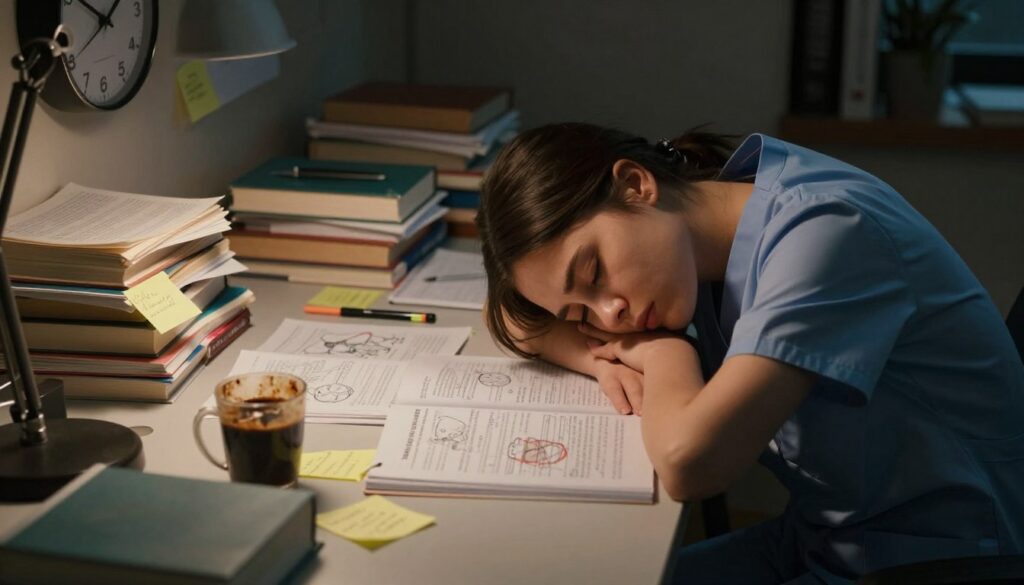
Our mental sharpness is our greatest asset. Yet, it often suffers when we experience burnout. When studying hard, we might notice our cognitive functions decline. Recognizing these nursing exam burnout symptoms early helps us adjust before they affect our performance.
Impaired Concentration and Focus
Staring at the same page for minutes without absorbing a single word is common. This lack of focus shows our brains are tired from constant studying. Struggling to stay focused makes it hard to understand complex medical concepts.
To fight this, taking short, frequent breaks can help. These breaks reset our focus and prevent mental fog from long study sessions. Learn more about how to beat burnout in NCLEX prep.
Memory Problems
Have you noticed sudden memory lapses after intense studying? These memory gaps can be frustrating when trying to learn new things. Persistent fatigue stops our brains from storing information long-term.
- Difficulty recalling basic nursing interventions.
- Forgetting key terminology during practice tests.
- Feeling like information is “slipping away” despite hours of review.
Difficulty in Decision Making
Making sound clinical judgments is key to our nursing practice. Burnout can cloud our judgment, making exams harder. Feeling overwhelmed makes it tough to choose the right answers.
By recognizing these nursing exam burnout symptoms, we can focus on our mental health. Taking breaks is not a sign of weakness. It’s a strategic move to stay sharp for our future careers.
Behavioral Changes Associated with Burnout
Burnout changes us in big ways. It affects how we see and interact with the world. When we’re studying for the NCLEX, we might not notice how our habits are changing. Spotting these signs is key to keeping our well-being safe.
Isolation from Peers
We often pull away from friends when we’re stressed. We might say no to plans or ignore messages. This social withdrawal makes us feel even more alone in our struggles.
Increased Irritability
Being tired emotionally makes us short-tempered. We might get angry easily, even over small things. This heightened sensitivity comes from the pressure we put on ourselves to do well.
Neglect of Responsibilities
Being mentally drained makes everyday tasks seem huge. We might ignore our chores, skip meals, or forget to take care of ourselves. These signs show we need to re-evaluate our approach.
| Behavioral Category | Healthy Study Habits | Burnout-Driven Actions |
|---|---|---|
| Social Interaction | Engaging with peers | Active isolation |
| Emotional State | Patient and focused | Increased irritability |
| Daily Tasks | Consistent routine | Neglect of chores |
| Self-Care | Prioritizing health | Ignoring basic needs |
The Role of Stress in NCLEX Burnout
Stress is a part of our nursing journey, but it shouldn’t control our success. While we learn complex clinical concepts, the exam pressure adds to our daily stress. If we don’t manage it, this stress can turn into NCLEX burnout, leaving us feeling drained and uninspired.
Understanding Stress Triggers
To take back control, we need to know what makes us anxious. For many, stress comes from tight time limits, a lot of hard study material, and the lingering fear of failure. These worries are often made worse by the high-stress environments of clinical rotations.
It’s key to remember that almost 83.3% of nurses work in understaffed settings. This makes our study environment feel even more unstable. By recognizing these outside pressures, we can separate our study goals from the challenges of healthcare.
Managing Stress Effectively
After finding out what stresses us, we can start managing our NCLEX anxiety better. Creating a study plan helps us tackle big topics one step at a time. This makes studying feel less overwhelming.
It’s also important to take small breaks to clear our minds. Activities like deep breathing or moving our bodies can help lower stress during study times. Good NCLEX anxiety management isn’t about avoiding stress. It’s about building the strength to handle it with confidence.
Strategies to Combat NCLEX Burnout
Getting a nursing license is more than just studying. It’s about keeping your mental health strong. Building resilience helps us deal with NCLEX stress and stay focused on our goal. Remember, our health is key to success.
Self-Care Practices
Keeping our bodies healthy is key to avoiding burnout. Regular exercise helps us relax and feel better. Adequate sleep is also important, letting our brains process what we’ve learned.
Eating well and staying hydrated boosts our energy. Taking care of our bodies helps us handle study stress. Small habits can make a big difference in our well-being.
Time Management Techniques
Good time management keeps us from feeling rushed. Breaking study sessions into smaller parts helps us stay focused. Creating a realistic schedule helps us balance study and rest.
Using planners or apps keeps us organized. Knowing what to do each day reduces study anxiety. This method is great for avoiding burnout.
Seeking Support from Others
We don’t have to face this alone. Getting support from mentors, peers, or family is vital. Sharing our struggles can be very relieving.
Connecting with others, like joining a study group, is important. We should never be afraid to ask for help when needed. Building a strong support system gives us the encouragement to finish strong.
Preventing NCLEX Burnout Before It Starts
Avoiding burnout during NCLEX prep begins before we start studying. By being proactive, we can keep our study journey healthy and lasting. Prevention is always more effective than recovery when facing big tests.
Setting Realistic Goals
Trying to cram all study material into one day doesn’t work. Instead, we should aim for SMART goals that fit our abilities. Breaking down big study tasks into smaller ones keeps us moving without feeling too much stress.
“Success is the sum of small efforts, repeated day in and day out.”
Maintaining a Balance Between Study and Life
Keeping study time separate from personal time is key to avoiding burnout. Remember, you are more than your test scores. Doing hobbies, exercising, or spending time with family helps keep your mind sharp.
- Schedule dedicated downtime every single day.
- Prioritize physical activity to reduce cortisol levels.
- Protect your sleep schedule as if it were a clinical shift.
Regularly Evaluating Your Well-Being
It’s important to regularly check in with yourself. If you feel irritable or tired, slow down. Self-awareness helps you change course before it’s too late.
By managing our expectations and time well, we make studying for the NCLEX rewarding and sustainable. We control our study environment and protect our mental health at every step.
The Importance of Mindfulness and Relaxation
Finding balance in nursing studies is more than just hard work. It’s about mental calm. As we work towards licensure, we often forget our brains need breaks. Mindfulness in our daily life is a key NCLEX mental health tip to stay focused.
Practicing Mindfulness Techniques
We don’t need lots of free time for mindfulness. Just a few minutes can change our view and lower stress. These burnout prevention strategies for nursing students are easy to fit into our study breaks.
- Deep Breathing: Inhale slowly for four counts, hold for four, and exhale for four to calm the nervous system.
- Guided Meditation: Use short audio clips to help clear mental clutter before starting a new chapter.
- Grounding Exercises: Identify five things you can see, four you can touch, and three you can hear to stay present.
“The mind is a powerful tool, but it must be rested to perform at its peak during high-stakes examinations.”
Benefits of Relaxation Exercises
Relaxation does more than just calm us. It boosts our cognitive performance and memory. This makes studying more effective and less tiring.
By focusing on these NCLEX mental health tips, we build inner peace. This peace supports our success in nursing. Regular use of these strategies keeps us strong and ready for the nursing field’s challenges.
When to Seek Professional Help
At times, our studies can feel too much to handle alone. We might try to balance things on our own, but sometimes that’s not enough. Knowing when to ask for help is key to becoming a nurse.
If stress or tiredness starts to affect our daily life, it’s time to seek support. Asking for help from a therapist or counselor is a brave and necessary step. Taking care of our mental health shows we’re committed to being the best nurses we can be.
Recognizing the Limits of Self-Help
We often try to manage our stress with NCLEX anxiety management techniques on our own. But if we can’t sleep, eat right, or focus, it’s time to think differently. Feeling hopeless or unable to do simple tasks means we need more than just a break.
At this point, talking to a professional who knows nursing school stress is helpful. They can offer NCLEX mental health tips that fit our needs. Getting help early can stop burnout before it gets worse.
Resources for Professional Support
We often overlook great resources during busy times. University counseling services are usually free or cheap and made for students under pressure. There are also mental health networks that connect us with therapists who understand high-stress careers.
It’s important to use these resources to take care of ourselves. They help us stay well during the licensure process. Below is a table showing the differences between helping ourselves and getting professional help.
| Feature | Self-Help Strategies | Professional Support |
|---|---|---|
| Primary Focus | Daily stress reduction | Clinical symptom management |
| Accessibility | Immediate and independent | Scheduled appointments |
| Best For | Mild, occasional stress | Persistent, impairing anxiety |
| Outcome | Improved study habits | Long-term mental wellness |
Conclusion: A Path Forward from NCLEX Burnout
Our mental and physical health is key in nursing school. We now know how to spot NCLEX burnout early. This helps us perform well and secure our nursing careers.
Identifying Warning Signs
Being aware is our best defense against burnout. We watch our emotional, physical, and mental health closely. This way, we avoid stress and stay focused on our goals.
Staying Motivated on the Journey
We can reach our nursing dreams while staying healthy. By taking care of ourselves, we stay sharp and ready for our patients. Let’s move forward with confidence, knowing our well-being is the base of our nursing success. We can beat NCLEX burnout and achieve our goals with determination.