
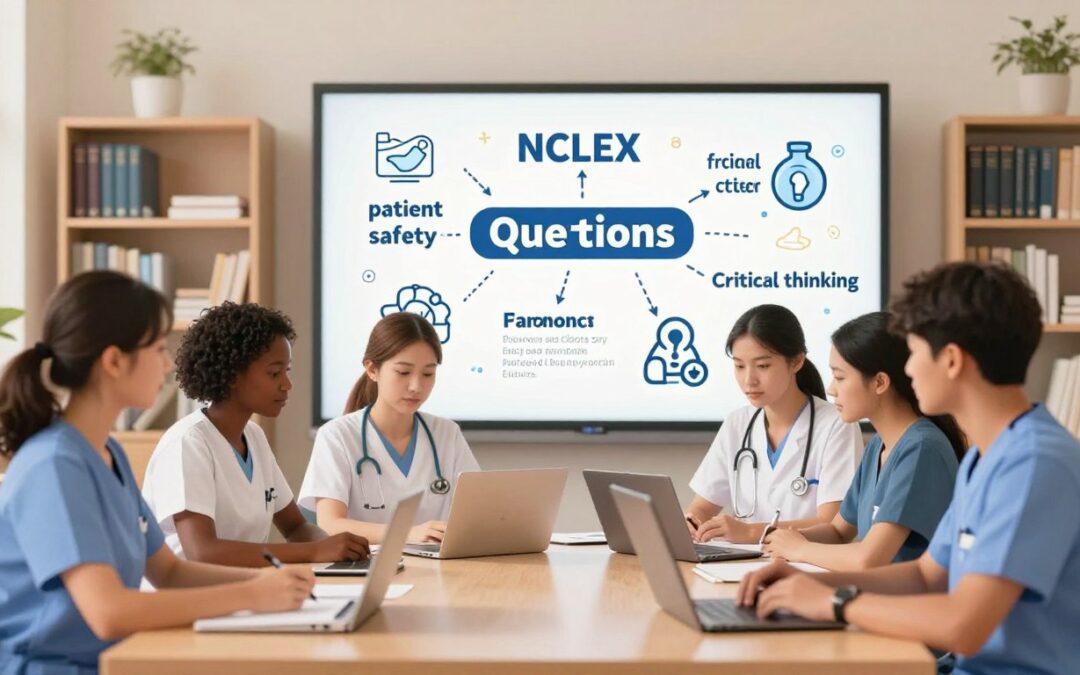
Ever wondered if your nursing knowledge is up to date? Many students get nervous about the latest exam changes. We get it, and we’re here to help you feel confident about these updates.
What are trend questions on the NCLEX? These questions move away from just memorizing facts. Now, you need to think deeply about complex patient situations. You must decide the safest action to take.
This change in the exam makes sure new nurses can think critically. It prepares you for the fast-paced world of healthcare. We’ll show you how to build a strong base for your nursing career. Let’s start your journey to success together.
Key Takeaways
- The exam now prioritizes clinical judgment over rote memorization.
- New formats require candidates to analyze complex patient data.
- Understanding these updates reduces test-day anxiety significantly.
- Preparation should focus on real-world application of nursing concepts.
- Mastering these skills ensures you are ready for modern clinical practice.
Understanding Trend Questions on the NCLEX
If you’re asking what are trend questions on the NCLEX?, you’re on the right path to your nursing career. These questions change how you’re tested. They ask you to think critically, not just memorize.
They focus on how a patient’s health changes over time. This is key for nursing, where patient health is always changing.
Definition and Importance
These questions are about analyzing data points to see if a patient is getting better, staying the same, or getting worse. This dynamic approach is important because it’s like real nursing. In nursing, patient health doesn’t stay the same.
These questions are vital for keeping patients safe and ensuring nurses are competent. They test if you can spot small changes in health early. Being good at this means you’re a safe and effective nurse.
Purpose of Trend Questions
The National Council of State Boards of Nursing (NCSBN) uses these questions to make sure nursing standards are the same everywhere. They want to make sure every nurse can use information from different sources. This makes sure all nurses start at the same level.
When you see NCLEX trend questions, remember they test your clinical thinking. They ask you to look at the big picture of a patient’s care. This prepares you for the challenges of today’s healthcare.
Types of Trend Questions
Students often feel overwhelmed by the different question types. But, breaking them down makes it easier. You’ll see many formats that test your critical thinking in a clinical setting. Knowing about 6 new question types is key to your success.
NCLEX trend questions are unique. They ask you to track a patient’s changes over time. Unlike static questions, these require you to combine data from various sources, like nurse notes and lab reports.

Clinical Judgment Questions
Clinical judgment is essential in nursing today. These questions present evolving scenarios. You must choose the best action based on the patient’s current situation.
You might see a bow-tie item. It asks you to connect patient data, possible complications, and nursing steps. To do well, remember these tips:
- Study the initial patient assessment closely.
- Watch for small changes in lab results or physical signs.
- Figure out if the patient is getting better or worse based on the timeline.
Prioritization and Delegation Questions
New formats have not changed nursing’s core principles. You’ll be tested on managing care through prioritization and delegation.
These NCLEX trend questions mix these ideas. They ask you to pick which patient needs help first after a condition change. You must evaluate the urgency of each case while thinking about your team’s roles.
By understanding these types, you’ll be ready for the exam’s dynamic nature. Remember, every piece of data is a clue to help you make the safest choice for your patient.
How Trend Questions Differ from Regular Questions
It’s key to know how NCLEX question trends affect your study habits for success. Nursing exams used to focus on memorizing facts. Now, they emphasize clinical judgment and applying knowledge in real situations.
Focus on Application over Recall
Old tests asked you to recall specific symptoms or drug names. But today’s NCLEX question trends require you to use that info to solve patient care problems. You’re not just a student; you’re a nurse making patient decisions.
So, your study sessions should focus on understanding the “why” behind treatments. When faced with a question, think about how the info helps a patient. This builds the critical thinking needed for the Next Generation NCLEX (NGN).
Integration of Knowledge
The new exam structure asks you to combine multiple pieces of info. You’ll often need to analyze a patient’s history and current data to decide the best action. These NCLEX question trends mirror real hospital settings, where data is never alone.
By practicing with scenarios that mix different info, you get ready for multi-faceted clinical situations. This way, you can link lab results, physical findings, and nursing actions. The table below shows the main differences between old and new question styles.
| Feature | Traditional Recall | Modern Application |
|---|---|---|
| Primary Goal | Fact Retrieval | Clinical Judgment |
| Data Usage | Single Variable | Integrated Data |
| Thinking Level | Memorization | Critical Analysis |
| Outcome Focus | Correct Answer | Patient Safety |
The Structure of Trend Questions
Let’s dive into the design of these complex questions. Knowing how they look on your screen is a critical advantage. It helps you stay calm and focus on making clinical decisions.
Formats of Questions
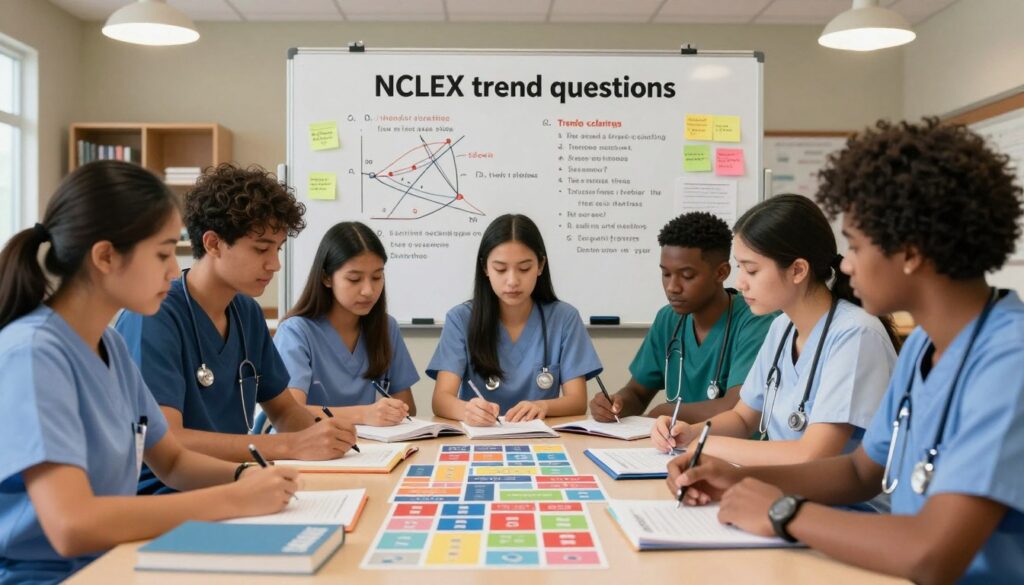
The NCLEX question format tests your ability to understand information over time. You’ll see lists of vital signs or lab results in chronological order. These require you to track changes across different time points.
It’s key to navigate these screens quickly to manage your time well. Practice with digital interfaces that mimic these NCLEX test question patterns. This will help you find the latest data faster.
Common Themes
A common theme in these questions is tracking a patient’s health over time. You might need to spot if a patient is getting worse or better based on the data. These NCLEX trend questions ask you to see the bigger picture, not just a single moment.
Knowing these NCLEX test question patterns can help you stay calm during the test. Whether it’s a drop in blood pressure or a change in oxygen levels, the goal is the same. Mastering the NCLEX question format prepares you for any scenario.
How to Identify Trend Questions
Learning to spot certain question styles can really boost your confidence on the exam. By getting better at recognizing these patterns, you can prepare more effectively. We think that consistent practice is key to mastering this skill.
Analyzing Practice Tests
When you do NCLEX question analysis, look for common themes in different tests. Many students notice that some question types keep showing up in various study materials. By tracking these NCLEX question trends, you can guess how the board might ask clinical questions.
We suggest keeping a record of questions that stand out from the usual recall ones. Pay attention to the wording, the number of choices, and the need for clinical judgment. This practice helps you identify NCLEX exam trends before the actual test.
Reviewing NCLEX-RN Test Plans
The official test plan is your guide to success. It shows the main topics that examiners focus on, which often shapes NCLEX exam trends. By matching your study plan with these blueprints, you make sure you focus on important areas.
Good NCLEX question analysis means comparing your practice to the official categories. If you see a focus shift towards certain patient safety or management topics, adjust your study plan. This way, you can use your time wisely and stay ahead in your prep.
Effective Study Strategies for Trend Questions
Mastering trend questions needs a smart study plan. Success is not just luck; it’s about good preparation. By using active learning, we keep complex info in mind better.
Utilizing NCLEX Review Books
Choose books that focus on the Next Generation NCLEX (NGN) format. These books are key because they match the exam’s style. Make sure your books are up to date with the latest changes.
Look for books with detailed answers. Knowing why an answer is right is a top NCLEX study tip. This knowledge helps us think critically in the test.
Online Resources and Practice Exams
Online tools are great for improving our skills with NCLEX practice questions. They let us practice like the real test, which lowers stress and boosts our timing. Mix review with timed practice to stay sharp.
Staying consistent is key for keeping info in mind. Spend daily time on these tools to build your exam stamina. Here’s a comparison of study resources to find what works best for you.
| Resource Type | Primary Benefit | Best For |
|---|---|---|
| Review Books | Deep Content Knowledge | Foundational Learning |
| Online Question Banks | Adaptive Difficulty | Active Application |
| Flashcard Apps | Quick Recall | Memorizing Terms |
| Video Lectures | Visual Explanations | Complex Concepts |
Using these NCLEX study tips will guide you to success. Focus on NCLEX practice questions that test your judgment. With the right tools, you’ll feel ready and clear for the exam.
The Role of Practice Questions in Preparation
Success on the exam comes from simulating the real test environment. Using top-notch NCLEX practice questions is key. It helps link what you know to how you apply it in real situations.
Benefits of Practice Tests
Full-length exams let you get used to the Computerized Adaptive Testing (CAT) system. This system changes the NCLEX question format based on your answers. It’s just like the real exam.
Looking at your results helps you find areas to focus on. This smart studying boosts your mental stamina. It prepares you to stay focused during a long test.
Timing Practice for Success
Learning to manage your time is vital. Practice under tight time limits to avoid spending too long on one question. This keeps you moving at a steady pace.
Simulating the exam’s pressure helps you make quick, smart choices. This is key for success. It reduces stress and boosts your confidence for the real exam.
| Study Method | Primary Benefit | Outcome |
|---|---|---|
| Passive Reading | Content Review | Basic Recall |
| Timed Practice | Pacing Skills | Improved Speed |
| CAT Simulation | Adaptive Logic | Exam Readiness |
Tips for Answering Trend Questions
Modern nursing exams are more than just memorizing facts. You need to recognize NCLEX test question patterns and apply your knowledge to real-world scenarios. A structured mindset helps you tackle tough questions with clarity and purpose.
Reading Questions Carefully
The first step in NCLEX question analysis is to slow down. Look for the core clinical issue. Many students miss important details by rushing through the scenario.
Look for specific cues that show a change in the patient’s condition. Determine the primary safety concern before looking at the answers. This keeps you focused on the most urgent action.
Eliminating Wrong Answers
When faced with complex options, a systematic elimination process is key. Evaluate each choice against the clinical data provided. See if it directly addresses the patient’s needs.
Regular use of NCLEX practice questions sharpens this skill. Here are strategies to boost your performance:
- Identify distractors: Find options that are safe but don’t address the immediate priority.
- Check for absolutes: Be cautious of answers with “always” or “never,” as they’re rarely correct.
- Focus on the goal: Make sure your chosen action matches the patient’s specific diagnosis.
- Maximize partial credit: If possible, choose all correct options to get the most points.
Every detail in the prompt is important. By filtering out irrelevant data, you can confidently choose the best nursing intervention.
Final Thoughts on Preparing for the NCLEX
Passing the board exam is not just about memorizing facts. It also requires a strong mindset to handle the test’s pressure. Staying calm and confident lets your clinical judgment shine when it counts.
Maintaining Your Mental Edge
Think of your prep as a marathon, not a sprint. A balanced routine helps you grasp complex NCLEX trends without feeling overwhelmed. Trust the effort you put into studying every day.
Building a Foundation for Success
Use top-notch NCLEX study tips from UWorld or NCSBN review materials. These tools help you master changing question formats. We believe in your ability to become a licensed nurse. Keep moving forward as you prepare for this key career milestone.