
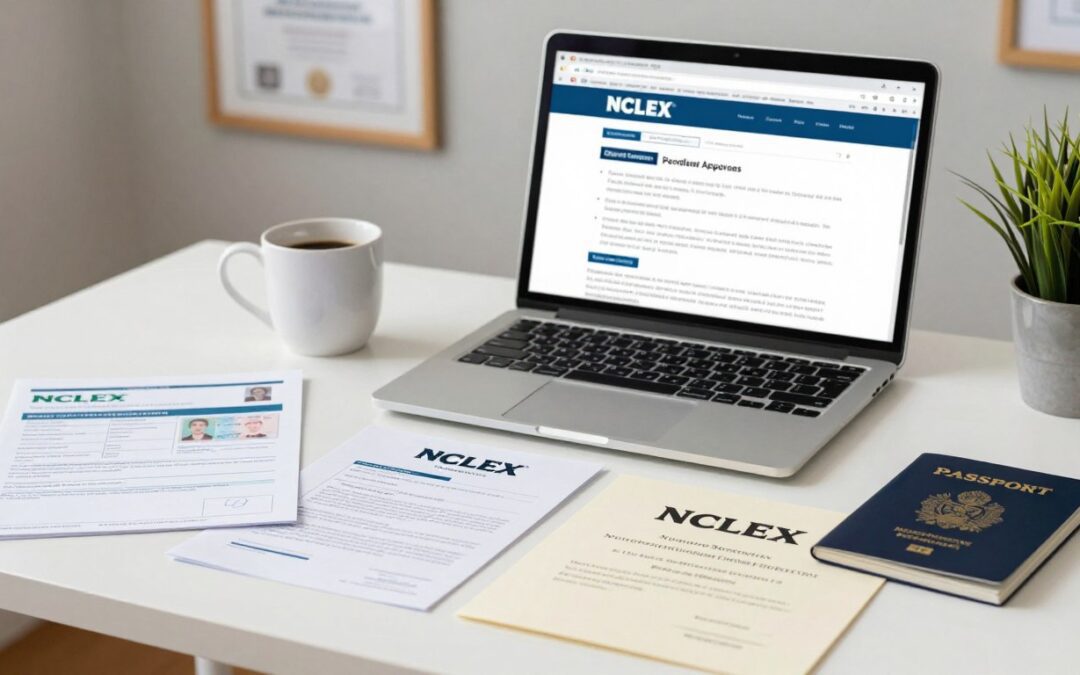
Ever thought a small mistake could stop you from starting your nursing career? Showing up at the testing center only to be turned away is a nightmare. We understand the stress of your exam is huge, so we aim to help you avoid these problems early on.
To make check-in easy, follow the NCLEX identification policies closely. These rules help keep the test fair. Also, remember, some countries are banned from taking the test due to U.S. Department of Treasury rules.
Get your documents ready early to focus on your exam. Being fully prepared means you can walk in feeling confident and ready to do your best.
Key Takeaways
- Verify your government-issued documents meet all name and photo criteria.
- Ensure your primary and secondary forms of proof are original and unexpired.
- Check if your country of citizenship faces any federal testing restrictions.
- Review the official policy document to confirm your specific documentation matches registration details.
- Contact support at least five business days early if you need an exception.
Understanding the NCLEX Exam Requirements
Becoming a registered nurse is tough, and knowing the exam rules is key to success. Your clinical skills are important, but understanding the test process is just as critical. It helps you have a smooth experience.
What is the NCLEX?
The NCLEX is the last step for nursing graduates to get their license. It checks if you have the essential competencies to be a safe nurse. Passing it shows all your hard work and dedication to healthcare.
The National Council of State Boards of Nursing (NCSBN) has strict rules for the NCLEX. These NCLEX ID protocols make sure everyone is who they say they are. Knowing these rules early can help you relax on test day.
Purpose of the Identification Requirement
So, what identification is required for the NCLEX? The main reason is to keep the test fair. It checks if the person taking the test is the same one who applied. This stops cheating and ensures the test is valid.
“Professional integrity is the bedrock of nursing, and it begins the moment you step into the testing center to prove your qualifications.”
Also, federal laws affect these rules. Because of U.S. trade restrictions, people from certain countries can’t take the exam. Check if you’re eligible early to avoid any issues.
| Requirement Category | Primary Objective | Key Consideration |
|---|---|---|
| Identity Verification | Prevent impersonation | Valid photo ID |
| Legal Compliance | Adhere to federal law | Sanctioned country status |
| Testing Integrity | Ensure fair assessment | Strict NCLEX ID protocols |
Types of Acceptable Identification
Knowing which documents to carry is key to success on exam day. We aim to guide you through the NCLEX ID protocols for a smooth check-in. By preparing your paperwork ahead of time, you can focus on your nursing knowledge without stress.
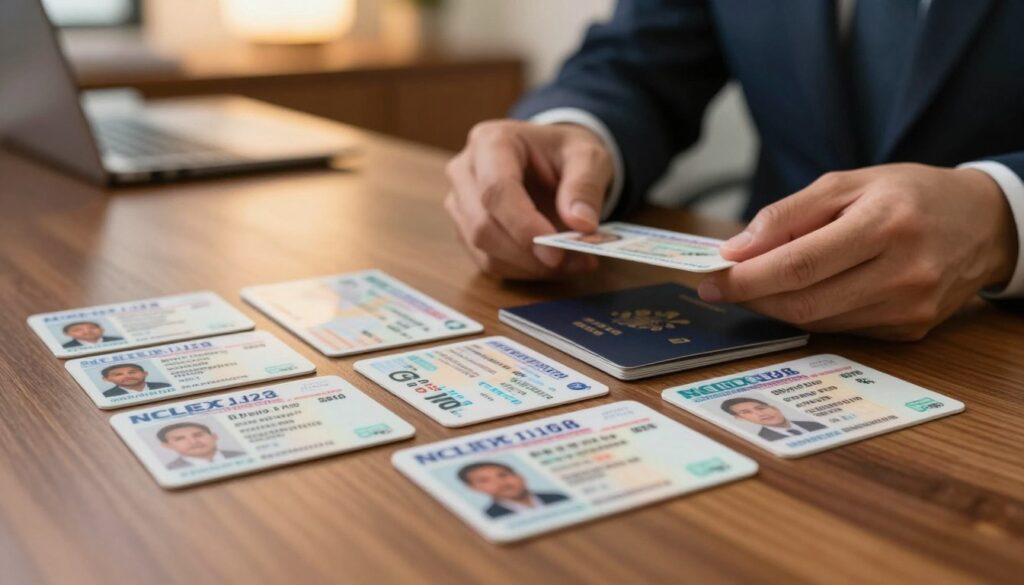
Government-Issued Photo ID
You must show one primary ID to enter the testing center. This ID must be original, not a copy or digital version. It also needs to be valid and not expired.
Your primary ID should come from a government agency. It should have:
- A clear, recognizable photo of you.
- Your full legal name, matching your registration.
- A valid signature to prove your identity.
Secondary Identification Options
You also need a secondary ID. This doesn’t have to be from a government agency. It’s a backup to confirm your identity under NCLEX identification rules.
Your secondary ID must be original. It should show your name and have either a signature or a photograph. Keep these documents safe until you arrive at the testing center.
“Proper preparation is the key to a stress-free testing experience. Always verify your documents against the official requirements well before your scheduled date.”
By following these NCLEX ID protocols, you meet Pearson VUE’s requirements. Organizing your NCLEX identification early will reduce stress on exam day.
Identification Specifications
Understanding the specific requirements for your identification is key to success on exam day. We aim to make sure you’re fully prepared with the right documents. This way, you can avoid any unnecessary stress.
It’s vital to follow the official NCLEX identification guidelines for a smooth check-in. Take a moment to review your documents. Make sure they meet all the standards set by the testing authorities.
Must-Have Features of Your ID
Your ID must be more than just valid. It needs specific features that match your registration details exactly. To ensure entry, your ID’s first and last name must perfectly match the name you registered with.
Your ID should also have a recent, recognizable photo and your signature. If these are missing or unclear, the testing center staff may not be able to verify your identity. We advise you to check your ID closely for these features before your scheduled date.
Expiration Date Guidelines
Following the NCLEX identification expiration rules is essential. Testing centers usually won’t accept expired IDs, as they’re not valid for verification.
But, there’s a small exception if you’re in a tough spot. You can use an expired ID if you have the official renewal paperwork. We suggest following these NCLEX identification guidelines closely. This will help make your check-in experience positive and efficient.
States-Specific Requirements
The NCLEX is a national exam, but the NCLEX ID requirements can be tricky for international candidates. We aim to make sure you’re ready for the test without stress. Remember, some ID rules change based on where you’re from and where you live now.

Variation Across Different States
If you have a passport from a country on the list, you need supplemental proof of residency from a country not on the list. These rules help follow international trade laws and keep everyone safe. If you’re from a restricted area, check with your nursing board to see what you need.
It’s key to follow the NCLEX identification guidelines to pass. Look at the table below to see how your ID needs might change based on your background.
| Candidate Status | Primary ID Needed | Secondary Requirement |
|---|---|---|
| US Citizen | Valid Driver’s License | None |
| International (Non-Sanctioned) | Valid Passport | None |
| International (Sanctioned) | Valid Passport | Proof of Residency |
Make sure you have all your documents ready before the test. The right papers help you focus on doing your best. If you’re unsure about your status, contact your board of nursing for clear and accurate guidance.
Common Mistakes to Avoid
Many candidates forget simple rules that cause stress. We aim to make your test day easy by pointing out common mistakes. Sticking to the NCLEX ID requirements is key to success.
Not Bringing the Correct ID
One big mistake is not matching your ID with your registration name. If your name has changed, bring the original legal document. Photocopies won’t do, so keep your marriage license or decree safe.
Also, make sure your ID is in Roman characters. If it’s not, the testing center might not accept it. Always double-check that your name is spelled correctly to meet all NCLEX test identification requirements.
Issues with Expired Identification
Showing up with an expired ID is a common mistake. Your ID must be valid on test day. Check your driver’s license or passport for expiration dates at least a week before.
If your ID is expired, renew it or get a temporary document right away. Don’t think a renewal receipt will work without checking with the testing center. Being prepared can save you from last-minute trouble.
| Common Error | Potential Consequence | Recommended Action |
|---|---|---|
| Name Mismatch | Denied entry to exam | Bring original legal name change document |
| Expired ID | Unable to verify identity | Renew ID well before exam date |
| Non-Roman Characters | Verification failure | Ensure ID uses Roman characters |
| Missing Secondary ID | Incomplete documentation | Carry a backup government-issued card |
Preparing Your Identification
Getting your NCLEX identification documents ready is key to a smooth check-in. Make sure your ID is up to date and correct. This way, you’ll feel confident and ready when you get to the testing center.
How to Get a New ID Quickly
If your ID is expired or wrong, you need to act fast. Remember, test center staff can’t change your details on the day of your exam. If you’ve changed your name, address, or email, contact your nursing board right away.
Don’t wait until the last minute. It can delay your test. Check your board’s website for quick ID updates. Knowing the NCLEX test identification requirements ensures your ID and records match.
Tips for Organizing Your Documents
Keep your ID documents in a special folder before your test. This keeps everything organized and avoids last-minute stress. You might also want a digital copy for your records.
Make sure your ID name matches your Authorization to Test (ATT) letter name exactly. Use the table below to organize your pre-exam checklist.
| Task Category | Action Required | Priority Level |
|---|---|---|
| Document Review | Verify expiration dates | High |
| Data Accuracy | Match name with ATT | High |
| Regulatory Updates | Contact NRB for changes | Medium |
| Storage | Use a secure folder | Low |
What Happens on Exam Day?
When you enter the Pearson Professional Center, you’re almost there. This day might feel nerve-wracking, but knowing what to expect helps. By following the usual steps, your check-in will be smooth and stress-free.
Checking In at the Testing Center
When you arrive, you’ll go through a standard check-in. This is to keep the exam fair. You’ll need to put away all personal items, like phones and tablets, in special bags.
Pearson has a zero-tolerance policy for unauthorized devices. Make sure these are turned off before putting them away. Following these steps carefully is important to avoid any issues.
Presentation of Identification
The key part of your arrival is showing your ID. You’ll need to show your NCLEX identification documents to the staff. Keep these documents ready so you can hand them over quickly.
Clear communication with the staff is important here. By showing your ID right away, you help the staff check you quickly. Once they confirm your identity, you’re ready to start your exam with confidence.
Can You Use a Digital ID?
Technology makes our lives easier, but the rules for your NCLEX test ID are old-fashioned. Many people keep their driver’s licenses or state IDs on their phones. But, these digital versions don’t meet the security needs for your nursing test.
Current Policies on Digital Identification
Testing centers have strict rules about identification. You must show an original, physical government-issued ID to enter the testing room. Photocopies, scanned images, or digital files on your phone are not allowed.
The NCLEX test ID security is to stop fraud and keep the exam fair. Digital IDs can be changed or not work because of tech problems. So, they’re not accepted. Make sure to carry your physical ID card with you.
Pros and Cons of Digital IDs
It’s good to think about why physical IDs are better than digital ones for important tests. Digital IDs are handy for everyday tasks, but they don’t have the checks needed for professional tests.
“Security is the foundation of any professional certification process. When you arrive at the testing center, your physical ID serves as the primary proof of your identity and eligibility.”
The table below shows the main differences between physical and digital IDs for your exam:
| Feature | Physical ID | Digital ID |
|---|---|---|
| Acceptance for NCLEX | Required | Not Accepted |
| Reliability | High (No battery needed) | Low (Tech dependent) |
| Security Verification | Standardized | Variable |
| NCLEX test ID Status | Valid | Invalid |
By bringing your physical NCLEX test ID, you make sure you can get in without trouble. Check your physical ID the night before to avoid stress.
Tips for a Smooth Identification Process
Starting with a smooth check-in process means planning your identification documents well. We know the exam pressure is high. So, we aim to help you avoid any NCLEX test ID issues.
Double-Check Requirements Before Exam Day
It’s wise to review your documents a week before your test. This gives you time to fix any problems without last-minute stress.
If you need a special exception, act fast. Any special requests must go to your exam sponsor at least five business days before your test.
Having Backup Identification
Carrying a secondary ID is a smart strategy. It ensures you’re prepared for any unexpected issues at the testing center.
Here are some tips to keep your documents in order:
- Keep your primary NCLEX test ID in a safe, easy-to-reach place.
- Make sure your ID name matches your registration records exactly.
- Have a secondary ID, like a signed credit card or student ID, in the same folder.
- Check your NCLEX test ID expiration date to make sure it’s valid for your exam.
By being proactive, you can enter the testing center feeling confident. Knowing your paperwork is correct makes focusing on your nursing career easier.
FAQs About NCLEX Identification
Understanding the rules for your testing day can be tough. We aim to make you feel ready and confident for your exam.
What happens if I forget my ID?
You must show valid ID to get into the testing center. If you forget, you can’t take the exam. This might mean losing your testing fees.
We suggest packing your ID the night before. This way, you avoid last-minute stress.
Can I change my identification info after applying?
Test center staff can’t change your records on exam day. You need to contact your nursing board to update your info. They are the only ones who can give you official results.
Staying on top of these rules helps you avoid delays. It also ensures your hard work is recognized. We wish you success as you reach your nursing career goals.