

Ever thought if your nursing school really gets you ready for tough decisions at the patient’s side? With healthcare getting more complex, nurses need to think critically. This is the heart of what is clinical judgment in the Next Gen NCLEX?
The Next Generation NCLEX started on April 1, 2023. It’s a big change in how nursing skills are tested. This new exam doesn’t just test if you remember facts. It checks if you can solve problems in real situations. We aim to make you feel ready to start your nursing career and give top-notch care.
Key Takeaways
- The exam focuses on measuring complex decision-making skills.
- It officially launched on April 1, 2023, to reflect modern nursing needs.
- The format prioritizes patient safety and clinical reasoning.
- Candidates must demonstrate the ability to analyze data under pressure.
- Understanding this shift helps you study more effectively for success.
Understanding Clinical Judgment in Nursing
When we ask what is clinical judgment in the Next Gen NCLEX?, we’re diving into the essence of patient safety. It’s about observing, understanding, and acting on patient needs quickly. This skill makes a big difference between a new nurse and a seasoned one.
Definition of Clinical Judgment
Clinical judgment is a cycle of noticing signs, deciding what’s most important, and acting on them. The NCSBN clinical judgment model helps us understand this process. It shows how we gather information, make guesses, and act based on what we know.
It’s not just about remembering facts. It’s about combining different pieces of information to make the best choice for our patients. This method keeps our care consistent and precise.
Importance in Patient Care
Clinical reasoning in nursing is key for every nurse at the bedside. When things get unexpected, our quick thinking decides the quality of care. This skill lets us keep checking if our care is right as we learn more.
Good judgment means better health outcomes and fewer mistakes. Being attentive and quick to respond builds trust with our patients and their families. Learning these skills is vital for improving our practice and keeping patients safe.
The Role of Clinical Judgment in Next Gen NCLEX
Understanding how the exam tests your decision-making is key to mastering patient care. The 2013-2014 NCSBN Strategic Practice Analysis showed that new nurses often face tough, complex situations. They need to make quick, accurate decisions. That’s why the Next Gen NCLEX clinical judgment model was created. It makes sure graduates are truly ready for the real world.

Assessment Skills Required
To do well, you need to go beyond just memorizing facts. You must use NCLEX-RN critical thinking. This means recognizing signs, analyzing data, and choosing the best action. Building these skills is key for handling the complexities of today’s healthcare.
“Clinical judgment is the observed outcome of critical thinking and decision-making in nursing practice.”
Many students find online classes helpful for NCLEX-RN prep. These classes focus on Next Gen NCLEX clinical judgment. They teach you to combine information, not just remember facts. This way, your thinking is both smart and safe.
Application in Exam Scenarios
The exam includes new types of questions that reflect real-world challenges. These scenarios test your NCLEX-RN critical thinking skills in a controlled setting. You’ll have to look at client data, spot possible problems, and pick the right actions based on research.
By practicing with these tough scenarios, you get better at the Next Gen NCLEX clinical judgment approach. This practice is essential. It helps you connect what you learn in class to the unpredictable world of patient care. Your ability to show strong NCLEX-RN critical thinking will greatly influence your career success.
Key Components of Clinical Judgment
We can break down the essential components of clinical judgment to help you navigate the complexities of your nursing career. By understanding these core elements, you will be better prepared to handle the high-stakes scenarios found in modern healthcare environments.
These components are built upon the six cognitive functions that guide professional nursing practice. Mastering these NCLEX clinical judgment concepts allows you to maintain a high standard of safety and professional excellence.
Critical Thinking
At the heart of every successful nurse is NCLEX-RN critical thinking. This process involves analyzing information objectively to make a reasoned judgment. It is not merely about memorizing facts, but about questioning assumptions and evaluating evidence.
When you apply critical thinking, you look beyond the surface of a patient’s symptoms. You consider the broader context of their health history and current environment. This skill is vital for identifying and preventing emergencies.
Clinical Decision-Making
Effective clinical reasoning in nursing is the engine that drives your daily decisions. It requires you to synthesize data, prioritize patient needs, and choose the most appropriate interventions. You can improve these abilities through engaging in experiential learning and simulations.
This process often involves a logical sequence of steps:
- Recognizing relevant cues from patient data.
- Analyzing those cues to form a hypothesis.
- Prioritizing hypotheses based on urgency.
- Taking action to address the most critical needs.
Reflective Practice
Reflective practice is the final piece of the puzzle in mastering NCLEX clinical judgment concepts. It involves looking back at your actions and outcomes to learn from your experiences. By evaluating what went well and what could be improved, you grow as a clinician.
Self-reflection ensures that your future decisions are informed by past successes and challenges. It turns every shift into a learning opportunity, helping you refine your clinical reasoning in nursing over time. This commitment to growth is what separates a good nurse from a truly exceptional one.
Differences Between Traditional NCLEX and Next Gen NCLEX
The new NCLEX exam focuses on how you think like a nurse. It’s designed to reflect the real world of healthcare. This change might seem scary, but it’s meant to make the exam more realistic.
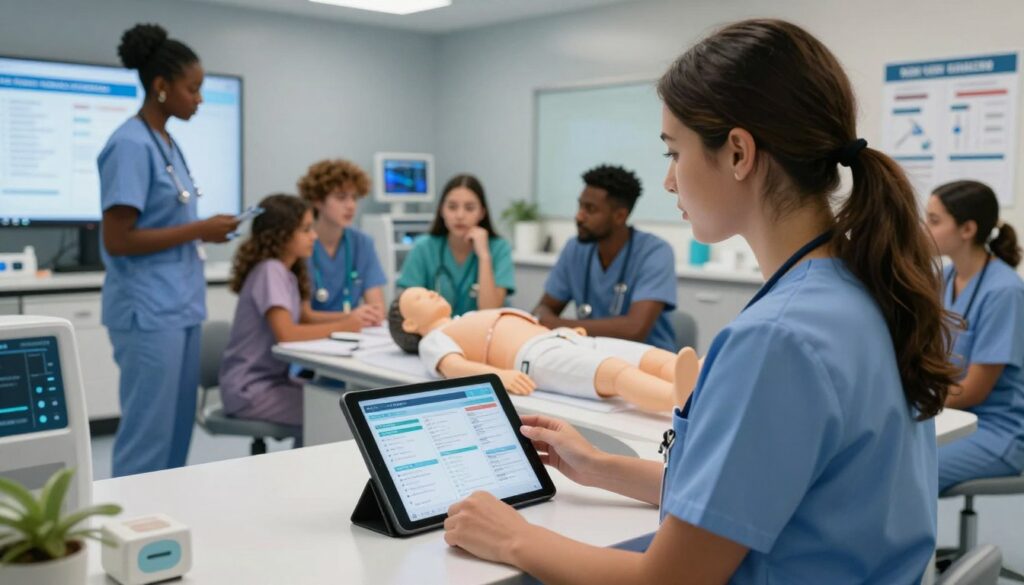
This shift means you’ll be tested on how you process information quickly. Knowing about these changes will help you study better and feel more confident.
Assessment Strategies
The old exam mostly asked simple questions to test your memory. Now, the new exam uses innovative item types. These new methods test your ability to make decisions.
You’ll face case studies that ask you to analyze data and make choices. This is like real clinical practice. It tests how you handle complex situations.
| Feature | Traditional NCLEX | Next Gen NCLEX |
|---|---|---|
| Primary Focus | Knowledge Recall | Clinical Judgment |
| Question Style | Multiple Choice | Case Studies/Simulations |
| Decision Making | Limited | Comprehensive |
Focus on Clinical Judgment
The main change is the focus on Next Gen NCLEX clinical judgment. We want you to make good decisions in real-life situations, not just remember facts.
Use Next Gen NCLEX exam tips every day. Practice with case studies that change as you get more patient information.
By focusing on Next Gen NCLEX clinical judgment, you’ll get better at noticing patient changes. Remember, these Next Gen NCLEX exam tips work best when you use them all the time.
How Clinical Judgment is Assessed in the Next Gen NCLEX
Evaluating your clinical judgment is complex, like real-world patient care. The Next Generation NCLEX goes beyond simple questions. It uses realistic scenarios to test your decision-making skills.
Case Studies and Simulations
The core of this strategy is detailed case studies based on the NCSBN clinical judgment model. These simulations give you a patient’s profile, medical history, and changing clinical data. You need to analyze this to find cues, prioritize hypotheses, and choose the best nursing actions.
These scenarios are dynamic. As the patient’s condition changes, you must adjust your plan. This tests your ability to stay flexible and accurate under pressure.
Use of Technology in Assessments
Technology is key in these interactive experiences. The computerized adaptive testing adjusts question difficulty based on your answers. This ensures a precise measure of your clinical competence during the test.
Interactive elements like drag-and-drop features and trend charts require you to synthesize information like in a hospital. By mastering the NCSBN clinical judgment model, you can use these digital tools confidently. The table below shows how these assessments differ.
| Feature | Traditional NCLEX | Next Generation NCLEX |
|---|---|---|
| Question Format | Static Multiple Choice | Interactive Case Studies |
| Focus Area | Knowledge Recall | Clinical Judgment |
| Data Presentation | Text-based scenarios | Dynamic patient charts |
| Adaptive Logic | Item-level difficulty | Scenario-based progression |
The Next Generation NCLEX offers a more accurate reflection of your readiness. By focusing on these simulations, you develop the mental agility needed for professional success.
Strategies to Improve Clinical Judgment Skills
Improving clinical judgment skills is key to safer patient care. See every clinical encounter as a chance to sharpen your decision-making. Focus on six cognitive functions to tackle complex health scenarios with greater confidence and precision.
Active Learning Techniques
Active learning means diving deep into the material, not just memorizing. Practice spotting cues, analyzing data, and sorting out hypotheses. This method helps you internalize the clinical reasoning needed for high-pressure situations.
Using these techniques turns study habits into useful tools. Try case studies that make you come up with solutions and take actions based on patient data. These Next Gen NCLEX exam tips help bridge the gap between theory and real-world hospital settings.
Real-World Clinical Experiences
Clinical rotations are the best place to test your judgment. Don’t just watch; ask yourself why a nurse made a certain choice. Reflecting on these moments builds a mental library for future decisions.
Keep a reflective journal during tough shifts. It helps you evaluate your decisions and spot areas for improvement. Connecting classroom learning to real-world nursing is the best way to prepare for your career.
| Learning Method | Focus Area | Expected Outcome |
|---|---|---|
| Passive Study | Memorization | Basic knowledge retention |
| Active Simulation | Clinical Reasoning | Improved decision speed |
| Reflective Practice | Self-Evaluation | Long-term professional growth |
Your critical thinking skills will shape your success in healthcare. By using these strategies, you’ll feel ready for the Next Gen NCLEX exam tips and clinical demands. Stay curious, reflective, and keep growing.
The Impact of Clinical Judgment on Nursing Practice
Your ability to make sound decisions shapes the quality of care your patients get. Many students see these skills as a test hurdle. But, they are the core of your professional life. By using Next Gen NCLEX exam tips daily, you learn to handle complex situations with confidence.
Enhancing Patient Outcomes
Strong clinical judgment helps you focus on urgent tasks when time is tight. You must balance urgent needs with routine care, understanding patient safety deeply. Making informed decisions under pressure makes a good nurse great.
By accurately analyzing data, you spot subtle patient condition changes early. This proactive approach is key to preventing complications. Remember, your clinical reasoning is a vital tool that affects recovery rates and health success.
Building Nurse-Patient Relationships
Clinical judgment is not just about numbers and protocols; it’s also about human connection. Showing competence and sound reasoning builds trust with patients and their families. Patients feel safer knowing their nurse is critically thinking about their needs.
Effective communication comes from assessing situations and responding with empathy. By using thoughtful observation, you tailor care to meet each person’s unique needs. This care creates a healing environment where patients can thrive.
Challenges in Developing Clinical Judgment
Developing clinical judgment skills can be tough. We aim to give top-notch care, but the journey is not always easy. We face obstacles that test our will and ability to handle complex info under pressure.
Common Pitfalls for Nursing Students
One big challenge is the heavy mental load from clinical simulations. Trying to make sense of lots of data can feel overwhelming. Stress makes it hard to focus during critical moments.
Another issue is not spotting our knowledge gaps early. Relying too much on memorization can lead to mistakes. This happens when we meet patients who don’t fit the usual textbook cases.
“The beautiful thing about learning is that no one can take it away from you.”
Solutions and Support
To improve clinical judgment skills, we need to keep reflecting. Looking back at our decisions helps us learn from mistakes. Getting feedback from mentors is also key to growing professionally.
| Challenge | Impact | Solution |
|---|---|---|
| Cognitive Overload | Decision Fatigue | Prioritization Tools |
| High Stress | Reduced Focus | Mindfulness Practice |
| Knowledge Gaps | Clinical Errors | Active Reflection |
Building clinical judgment skills takes time and self-awareness. We urge you to use your support networks and keep learning. With the right mindset and tools, you’ll overcome these hurdles and become a more skilled nurse.
Resources for Mastering Clinical Judgment
Building your expertise needs practice and quality study materials. Look into various tools to improve your understanding of NCLEX clinical judgment concepts. This will help you prepare for your nursing career.
Essential Study Materials
Official NCSBN publications are the best starting point. Watch their educational videos and presentations to keep up with testing standards. These materials show how the exam tests your decision-making skills.
Interactive Learning Opportunities
Online courses and workshops are great for learning the clinical judgment model. They let you practice NCLEX clinical judgment concepts in a supportive setting. Use these resources to boost your confidence and get ready for real-world patient care.
Your hard work in learning will pay off as you start practicing. We wish you success as you move toward becoming a skilled and ready nurse.