
Did you know nearly 40% of nursing students find prioritization questions tough on their board exams? This shows why we need a clear plan for making clinical decisions. By mastering Maslow’s hierarchy on the NCLEX, we get a solid guide for handling tough patient situations.
This psychological model is key for organizing care based on urgency. It helps us tell apart urgent needs from less important ones. Understanding this model means we can give safe, effective care when time is of the essence.
In this guide, we dive into what is Maslow’s hierarchy on the NCLEX? We’ll break down each level to make you feel ready for your test. Let’s make these complex ideas simpler to improve your exam score.
Key Takeaways
- Prioritization is a key skill for nursing students.
- The framework sorts patient needs from basic to self-actualization.
- Addressing basic survival needs first boosts clinical judgment.
- This model makes decision-making clearer, reducing anxiety.
- Using these principles consistently leads to better patient care.
Understanding Maslow’s Hierarchy of Needs
Learning about patient care starts with understanding human motivation. NCLEX Maslow’s hierarchy helps us see patient care in a structured way. It focuses on survival and well-being first.
The Five Levels Explained
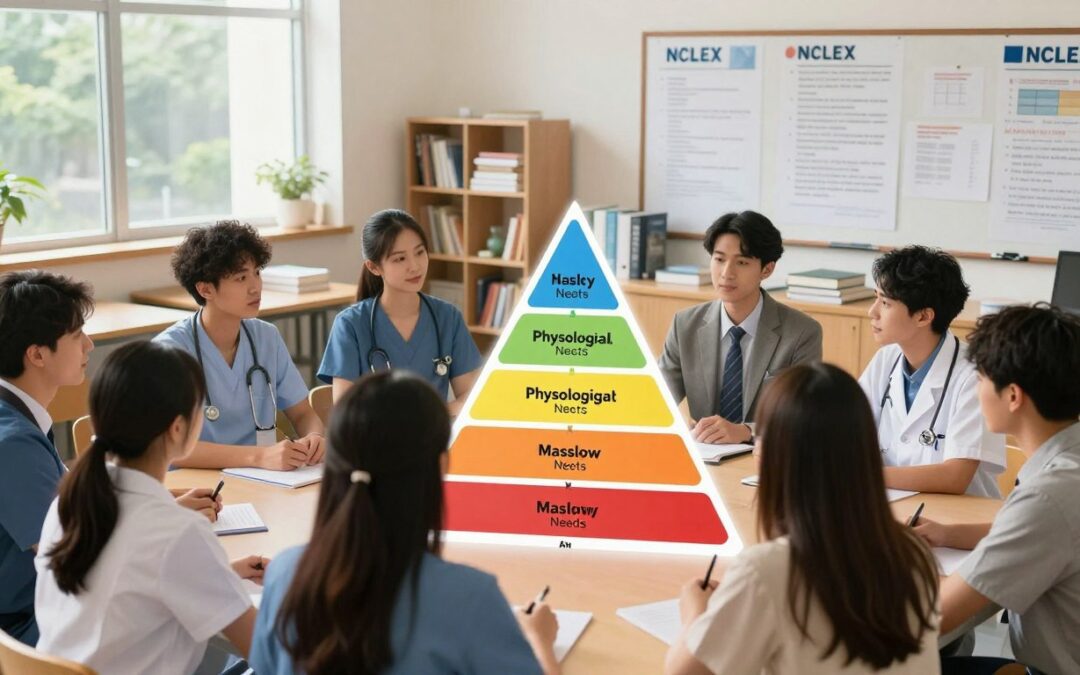
The theory breaks down into five main categories for our clinical decisions. At the bottom, we have physiological needs like air, water, and food. These are essential for life.
Once these needs are met, patients move to safety and security. Then, they seek love and belonging, esteem, and self-actualization.
It’s important to remember that patients can’t focus on higher goals if basic needs aren’t met. Maslow’s hierarchy explained for NCLEX shows us what to prioritize in exams. We start with the basics to keep patients stable before working on emotional or social growth.
“Human needs are organized in a hierarchy of relative prepotency.”
Importance in Nursing
For nursing students, understanding Maslow’s hierarchy for NCLEX is key. It’s not just for exams; it guides our practice. This model helps us sort patient data into clear priorities.
By using this approach, we offer safer, more efficient care. It respects the body’s biological needs.
| Level | Focus Area | Nursing Priority |
|---|---|---|
| Physiological | Survival | Airway, Breathing, Circulation |
| Safety | Protection | Fall prevention, Infection control |
| Love/Belonging | Connection | Family support, Empathy |
| Esteem | Confidence | Patient education, Independence |
| Self-Actualization | Growth | Goal setting, Rehabilitation |
Using NCLEX Maslow’s hierarchy sharpens our clinical judgment. It’s essential in class and at the bedside. Keeping Maslow’s hierarchy explained for NCLEX in mind helps us tackle healthcare’s complexities with confidence.
Application in Nursing Practice
When we start our shift, we need a clear plan to tackle tasks. A 12-hour shift can be tough, but Maslow’s hierarchy of needs on the NCLEX helps us stay focused. It helps us manage our time well and give top-notch care.
Patient Care Prioritization
First, we must focus on physiological needs. This means checking vital signs, keeping airways clear, and giving meds on time. By doing this, we build a strong base for patient care.
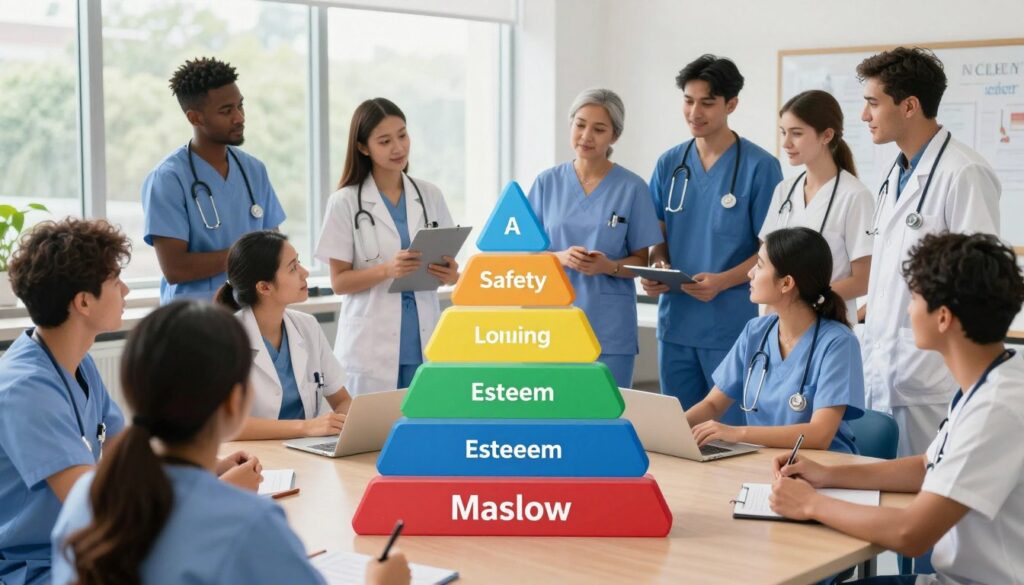
Unexpected events can throw off our plans. But, thinking about Maslow’s hierarchy of needs on the NCLEX helps us quickly get back on track. This way, we make sure critical care isn’t delayed.
Enhancing Holistic Assessments
While keeping patients stable is key, we can’t ignore other needs. A holistic assessment looks at safety, emotional comfort, and belonging. Using Maslow’s hierarchy of needs on the NCLEX helps us see the whole picture of each patient.
This approach helps us spot care gaps that might be missed. For instance, if a patient is stable but anxious, we can focus on their emotional needs. This way, we offer compassionate and thorough nursing care all shift long.
The Role of Maslow’s Hierarchy in NCLEX
Many students wonder, “What is Maslow’s hierarchy on the NCLEX?” and how it affects their scores. This framework serves as a clinical compass. It guides you through complex scenarios where every option seems right at first.
By sorting patient needs from basic survival to self-actualization, you can quickly spot what’s most important. This skill is key for showing the high-level thinking needed by the National Council of State Boards of Nursing.
Study Strategies for NCLEX Students
To get better, focus on finding the most urgent need in each question. Here are some strategies to improve your decision-making:
- Analyze the stem: Check if the patient is in immediate danger.
- Prioritize safety: Always tackle physiological and safety needs first.
- Evaluate the outcome: Think about which action will prevent the most harm.
“Prioritization is the heart of nursing practice; it is the ability to distinguish between what is urgent and what is important.”
Incorporating the Hierarchy into Exam Prep
Make the NCLEX exam and Maslow’s hierarchy a part of your daily study. When you see a question, look for options related to basic needs first.
If you’re unsure, use the hierarchy to choose the option that meets a more basic need. This systematic approach lowers stress and keeps your accuracy high, even when time is tight.
Regular practice with this method changes your thinking from guessing to evidence-based reasoning. As you get more comfortable, your confidence will grow. This prepares you well for your nursing career.
Physiological Needs in Nursing
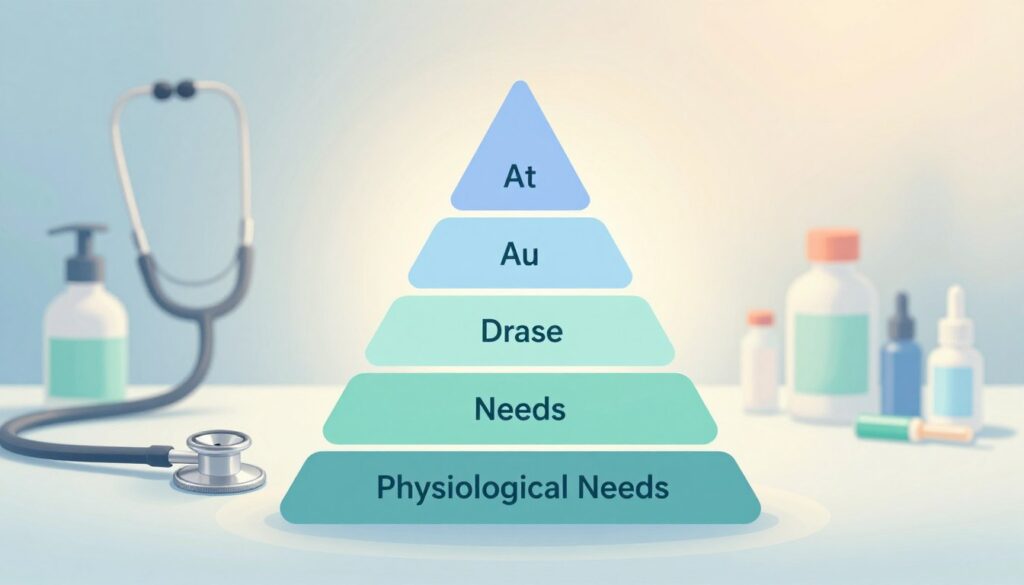
In patient care, we start with the most basic needs for life. These include oxygen, food, fluids, body temperature, and waste removal. Understanding Maslow’s hierarchy explained for NCLEX is key to focusing on the right interventions.
Basic Needs Assessment
As nurses, we always check these essential functions. We watch vital signs to make sure patients are breathing well and their heart is stable. If a patient is in trouble, we act fast to fix it.
We also check how well patients are hydrated and eating. This helps their body heal. We look at how they’re eliminating waste too. You can follow Maslow’s hierarchy of needs to make sure these basics come first.
Importance in Patient Care
Meeting these needs is not just routine; it’s a critical safety measure. By focusing on these basics, we lay the groundwork for all other care. Ignoring them can cause a patient to get worse fast, so we must pay attention right away.
When we make sure patients are physically stable, they can start to heal. Remember, Maslow’s hierarchy explained for NCLEX shows that patients can’t think about emotional or social needs if their body is struggling. Keeping these priorities in mind helps us give the best care every day.
Safety Needs: Ensuring a Secure Environment
After we meet a patient’s basic needs, we focus on making their environment safe. This part of the hierarchy is about keeping patients safe from harm. Maintaining a secure atmosphere is key in all our nursing work.
Patient Safety Protocols
We have special rules to keep patients safe while they’re in the hospital. One big thing we do is fall precautions. We keep the bed low and the call light easy to reach. These steps help prevent injuries in patients who might fall.
Another important thing we do is check the 5 rights of medication administration. We make sure we give the right patient the right drug in the right dose, via the right route, and at the right time. This careful process helps avoid mistakes and ensures patients get the right treatment.
Risk Management in Nursing
Risk management means finding and fixing problems before they hurt our patients. We always look for dangers like tripping hazards or broken equipment. By being alert, we keep everyone safe.
Good risk management also means clear talking and writing. If we spot a risk, we tell others right away. This way, we can fix problems fast and keep care high.
| Safety Intervention | Primary Goal | Nursing Action |
|---|---|---|
| Fall Prevention | Prevent injury | Keep bed low and locked |
| Medication Safety | Avoid drug errors | Verify the 5 rights |
| Infection Control | Prevent cross-contamination | Perform hand hygiene |
| Equipment Check | Ensure device safety | Inspect cords and monitors |
Love and Belonging: Fostering Relationships
Meeting the need for love and belonging changes everything for patients. While doing clinical tasks is important, their emotional well-being is key. By making them feel seen and heard, we ease their emotional pain during a hospital stay.
Patient Communication Techniques
Building rapport begins with good communication. We must listen actively to understand each patient’s fears and concerns. Simple actions like eye contact and a warm tone help build trust.
Encouraging family visits is also important. When patients stay connected to their loved ones, they feel less anxious and more positive. We should support these visits to make them feel secure and comfortable.
Teamwork in Healthcare Settings
Providing complete care needs a team effort. No nurse can handle everything on their own, which is why teamwork is vital. When the whole team works together, patients feel supported and valued.
Good teamwork ensures information flows well between departments. This makes patients feel their needs are met by a caring team. Below are some strategies for keeping these connections strong.
| Strategy | Primary Goal | Expected Outcome |
|---|---|---|
| Active Listening | Validate patient feelings | Increased patient trust |
| Family Inclusion | Reduce isolation | Improved emotional health |
| Interdisciplinary Rounds | Unified care approach | Enhanced patient satisfaction |
| Consistent Rounding | Build rapport | Reduced patient anxiety |
Esteem Needs: Building Patient Confidence
Building a patient’s confidence is key in nursing care. It’s more than just treating their illness. We show them respect and value, making them feel heard and appreciated.
A valued patient is more likely to engage in their recovery. We create a respectful environment. This helps them keep their dignity, even when they’re most vulnerable. Emotional support is vital for their healing.
Empowering Patients
We empower patients by giving them the information they need to manage their health. When they understand their health situation, they feel in control. This knowledge helps them prepare for going home.
Sharing information helps patients make decisions about their care. We should answer their questions fully and validate their concerns. This makes them active partners in their health journey.
Encouraging Independence
Encouraging independence boosts a patient’s confidence and prepares them for life outside the hospital. Even small tasks can make a big difference. We guide them while letting them do things at their own pace.
To support your patients’ emotional well-being, try these strategies:
- Celebrate small victories: Acknowledge every milestone, like walking to the chair or managing medication.
- Offer choices: Give patients options for daily routines, like meal times or bathing schedules.
- Promote self-care: Encourage patients to handle their own hygiene or dressing when safe.
- Validate their feelings: Listen to their frustrations and offer encouragement to build their inner resilience.
By focusing on these areas, we help patients regain their self-esteem before they leave. This ensures they feel capable and confident when they return to their daily lives.
Cognitive Needs: Critical Thinking in Nursing
Sharpening our cognitive skills changes us from just doing tasks to being true leaders in healthcare. Critical thinking is key to understanding complex patient data in changing situations. This skill keeps our decisions based on solid evidence.
Application of Critical Thinking
Using cognitive strategies helps us sort out patient needs clearly. We must dig deeper to spot risks a patient might face. This way, we make sure our actions match the patient’s needs.
“Critical thinking in nursing is a purposeful, self-regulatory judgment which results in interpretation, analysis, evaluation, and inference.”
To do well, we need to think before we act. When we face Maslow’s hierarchy NCLEX questions, we should first figure out the patient’s urgent needs. This helps us focus on what’s most important.
Problem-Solving Strategies for Students
Working on the clinical floor or during exams needs a clear plan. We can get better by using certain thinking habits. Here are some tips for everyday use:
- Assess the data: Always find the most important info first before acting.
- Categorize the need: Figure out if the issue is about keeping the patient stable or about their mental growth.
- Simulate scenarios: Practice with Maslow’s hierarchy NCLEX questions by making “what-if” scenarios for your patients.
- Reflect on outcomes: Check if your decisions really met the patient’s main need.
By using these methods, we become better at helping our patients. Growing our thinking skills is not just for exams. It’s about building resilience for a long, fulfilling career. Learning Maslow’s hierarchy NCLEX questions is just the start of our professional journey.
Self-Actualization: Encouraging Growth
Self-actualization is the highest level of human growth. It’s when people aim to become their best selves. This stage is the pinnacle of a person’s full capacity. But, it’s only reachable after satisfying all lower levels.
True growth happens when someone feels safe, secure, and valued. This is key for personal growth in nursing.
Supporting Patient Goals
Nurses help patients look forward to their future goals. When patients are ready to leave, we can encourage them by celebrating their recovery progress. This helps them feel more in control and purposeful.
We should listen to our patients’ goals. These might include going back to work, starting a new hobby, or reconnecting with family. By supporting these goals, we help them move toward self-actualization. Supporting these goals makes the healing journey more meaningful.
Personal Development for Nurses
Our own growth is as important as the care we give. We must focus on continuous learning and self-reflection. This helps us provide better care and stay fulfilled.
We urge every nurse to find mentors, get advanced certifications, and join research studies. Investing in our growth makes us better advocates for our patients. Prioritizing our development keeps us passionate and skilled in our field.
Maslow’s Hierarchy in Nursing Education
Nursing schools in the U.S. are using Maslow’s framework to help students deal with complex clinical settings. By understanding Maslow’s hierarchy for NCLEX success, educators teach students to sort patient needs. This helps future nurses spot urgent issues first.
Curriculum Integration
Nursing programs include this theory in their core curricula. It helps build a foundation for critical thinking. Students start by focusing on physiological stability at the base of the pyramid.
This method keeps students from getting overwhelmed by many symptoms during clinical rotations. It’s a systematic way to handle patient care.
Healthcare organizations also see the value of this model for staff support. For example, Sutter Health used it to support nurse resilience during the COVID-19 pandemic. They showed that the hierarchy is important for healthcare professionals too.
Benefits for Student Nurses
When you are mastering Maslow’s hierarchy on the NCLEX, you get a useful tool for exams. It helps you organize your thoughts when faced with tough questions. It turns complex scenarios into a clear plan of action.
The table below shows how this framework leads to real nursing outcomes:
| Need Level | Educational Focus | Clinical Outcome |
|---|---|---|
| Physiological | ABC Prioritization | Patient Stability |
| Safety | Risk Mitigation | Injury Prevention |
| Belonging | Therapeutic Communication | Patient Trust |
| Esteem | Patient Empowerment | Improved Compliance |
This structure prepares you for the real world of healthcare. It builds your confidence to give safe, complete care. This is key for becoming a skilled, independent nurse.
Common Questions About Maslow’s Hierarchy and NCLEX
Getting ready for nursing means understanding how to rank patient needs well. We aim to guide you through the NCLEX exam and Maslow’s hierarchy. This way, you’ll feel confident for the test.
Clarifying Common Misconceptions
Many students find clinical scenarios tough. You might think every patient fits into one level of the pyramid. But, Maslow’s hierarchy on the NCLEX is a guide for thinking, not strict rules.
When faced with tough questions, focus on the most urgent need first. This is key for safe nursing.
Expert Strategies for Success
Don’t overthink simple prompts. Look for the most urgent need first. This is the safest approach in nursing.
Use resources like UWorld or Kaplan to practice. They show how these ideas are tested. Trust your instincts and always put patient safety first.
We believe your hard work will pay off on the exam. Stay calm, read each question well, and use these skills in every scenario. You have the knowledge to succeed in nursing.