

Did you know nearly 15% of first-time nursing graduates fail their licensure exam each year? This shows why studying well is not just a good idea, but a critical necessity for your career.
Feeling overwhelmed by the need to pass can be tough. But, you can turn that worry into confidence by using online classes to help you get ready for the NCLEX-RN. These tools offer a clear path to follow.
Good NCLEX study tips are about being steady, not cramming at the last minute. By figuring out what you need early, you make a plan that works with your life. Let us guide you on your way to becoming a licensed nurse.
Key Takeaways
- Success comes from structured study, not cramming at the last minute.
- Personalized learning plans help you tackle specific gaps in your knowledge.
- Regular practice with adaptive tests boosts your confidence and gets you ready for the exam.
- Choosing the right resources helps you keep your work and personal life in balance.
- Planning early is the best way to lower test-day stress and improve your chances of passing.
Understanding the NCLEX: An Overview
Preparing for a big exam can be tough. So, let’s get a clear picture of what you’re up against. Starting your NCLEX exam preparation means understanding the exam’s structure. This helps you manage your time and resources better.
What is the NCLEX?
The National Council Licensure Examination is a test for nursing boards. It checks if you’re ready for nursing practice. It’s not just about memorizing; it tests your ability to apply nursing knowledge in real situations.
The exam uses the Client Needs framework. This framework organizes nursing knowledge into four main areas and six subcategories. It ensures you’re tested on your clinical judgment. For study tips, check out how long to study for the exam.
Why is the NCLEX Important?
This exam is the last hurdle for nurses in the U.S. It makes sure nurses meet a minimum standard of safety and competence before caring for patients.
“The NCLEX is the bridge between your academic education and your professional practice, ensuring that you are prepared to protect the health and safety of the public.”
Passing the exam shows you have the critical thinking skills for complex situations. It’s a key step in your healthcare career.
Different Types of NCLEX Exams
There are two exam versions based on your education. Both focus on NCLEX exam preparation that emphasizes clinical judgment and safe practice.
| Exam Type | Target Audience | Primary Focus |
|---|---|---|
| NCLEX-RN | Registered Nurses | Complex clinical decision-making |
| NCLEX-PN | Practical/Vocational Nurses | Direct patient care and support |
| Common Goal | All Candidates | Patient safety and quality care |
Whether you aim for an RN or PN license, the exam’s core principles are the same. Focus your NCLEX exam preparation on these key areas. This will boost your confidence for the test.
Average Study Time: What Do Statistics Show?
Many students wonder about the right amount of time to study for exams. They ask, what is the average NCLEX study time? They also try to balance school with their personal lives.
General Timeframes for NCLEX Preparation
Most students spend one to three months studying for the NCLEX. The time needed depends on how well you know the nursing program material.
Don’t wait too long after graduation to start studying. Waiting too long can cause you to forget important information. This can lower your chances of passing the exam.
Factors Affecting Study Time
Your study time will change based on several things. First, check how well you remember nursing concepts. Then, think about how much time you have each day.
- Knowledge Retention: How well you recall core nursing concepts from your clinical rotations.
- Daily Availability: Whether you are studying full-time or balancing a job alongside your review.
- Learning Style: Your ability to absorb information through online courses to help you prepare for high-stakes testing.
Comparison of Study Time Among Candidates
Looking at the data, we see big differences between first-time test-takers and those retaking. A good NCLEX study timeline is key for both. It helps make sure you cover all the important topics.
| Candidate Status | Recommended Range | Focus Area |
|---|---|---|
| First-time Taker | 4–8 Weeks | Content Review |
| Repeat Taker | 8–12 Weeks | Weakness Analysis |
Consistency is the key to success no matter your timeline. Keep track of your progress and adjust your study plan. This will help you feel more confident for your next exam.
Creating an Effective Study Plan
Creating a good study plan is key to avoiding burnout and keeping complex medical info in your head. Success isn’t just about studying a lot. It’s about studying smart and managing your NCLEX study timeline well. By breaking down big tasks into smaller ones, you make studying easier.
Setting Realistic Goals
First, define what success means for you. Setting SMART goals helps keep you motivated. If you work and study, learn how to balance both to stay on track.
Break big goals into smaller, weekly ones. This stops you from feeling overwhelmed. Reaching these goals boosts your confidence for the big exam.
Daily Study Routines
Being consistent is key to a good NCLEX study schedule. Divide your day into focused blocks. Spend one hour on core content and another on practice questions.
- Morning: Tackle tough topics when you’re fresh.
- Afternoon: Review or read lightly.
- Evening: Practice questions to solidify what you learned.
Sticking to a NCLEX study hours routine makes studying a natural part of your day. This keeps you focused without harming your mental health.
Using a Study Calendar
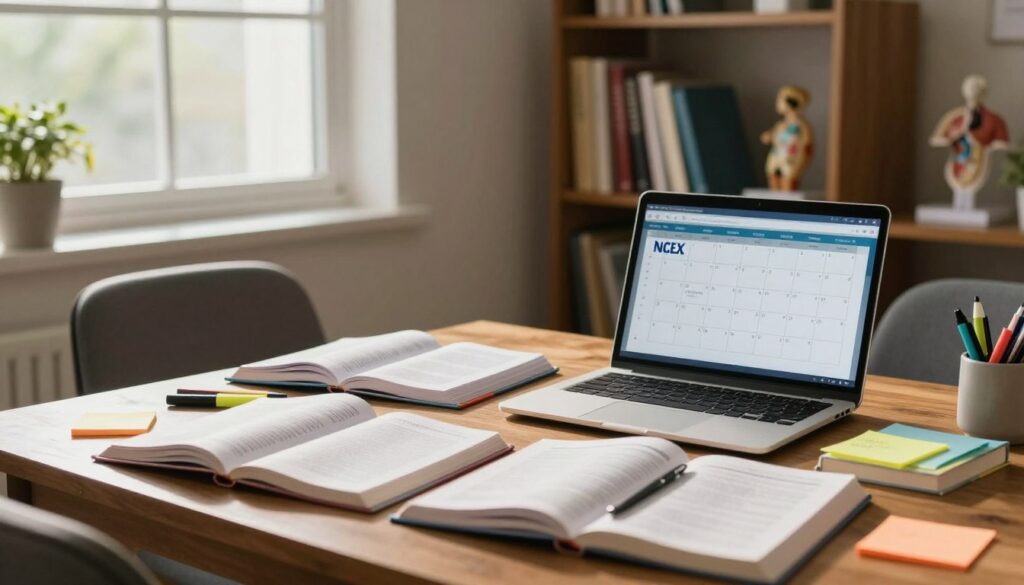
A visual NCLEX study plan keeps you on track. Choose a digital app or a physical planner. A clear plan helps you schedule time for each subject. Check out a professional study plan for tips.
Your calendar should include study time and rest days. Rest is not a sign of weakness; it is a vital component of your preparation. A detailed NCLEX study timeline ensures you cover all topics before the exam. A good NCLEX study schedule lets you adjust your NCLEX study hours as needed, keeping you ready for challenges.
Recommended Study Resources
Looking through all the nursing study aids can be tough. Finding the right materials is key to a good NCLEX study schedule. It helps you stay focused and organized.
NCLEX Prep Books
Many nursing students rely on textbooks. Books like Saunders and Lippincott’s cover important nursing topics. They let you learn at your own speed.
These books help you build a solid foundation before you start practicing. Make sure to mark hard spots to review later.
Online Courses and Tools
Today’s tech offers great ways to improve your NCLEX study plan. Apps like Anki and Quizlet are great for memorizing. They use spaced repetition to help you remember longer.
Adaptive learning platforms are also great. They adjust questions based on how you do. This helps you find and fix weak spots fast.
Practice Exams and Question Banks
Practicing like the real test is the best way to prepare. Good question banks have lots of practice items. They help you stay on track and feel less nervous on test day.
Choose platforms that give detailed rationales for answers. Knowing why an answer is right is more important than just knowing it. This way, you’re ready for any question.
The Role of Study Groups in Preparation
Adding a group dynamic to your study can change how you learn complex nursing concepts. While studying alone is key, a NCLEX study strategy with others lets you test your knowledge against your peers.

Benefits of Group Study
Studying with others lets you share your understanding of nursing theory. Explaining a tough concept to a friend helps you understand it better.
Groups also help with accountability, keeping you on track. By sharing resources and insights, you get a wider view of the exam than alone.
How to Form a Study Group
First, find classmates who want to succeed. Aim for a group of three to five to keep everyone focused.
Set clear rules early to stay productive. Spend time on clinical reasoning and practice questions, not just memorizing facts.
Maintaining Motivation with Others
The path to licensure is long and tiring. Having friends to support you keeps you going when it’s hard.
Sharing your progress builds a sense of unity. A good NCLEX study strategy with friends can make all the difference on exam day.
Techniques for Effective Learning
Success in studying for the NCLEX depends on how you process information, not just how long you study. Many students fall into the trap of passive reading, which leads to poor retention of complex medical concepts. By focusing on evidence-based methods, you can greatly improve your performance and confidence.
Active Learning Strategies
Active learning is key to a successful NCLEX study strategy. Instead of just highlighting notes, try explaining concepts out loud as if teaching a peer. This helps your brain organize information better, strengthening your memory.
Also, use spaced repetition daily. Reviewing difficult topics at increasing intervals helps prevent forgetting. For extra help, consider online classes to help you prepare for the cna as a foundational step for your nursing journey.
“The most effective way to learn is not by consuming information, but by retrieving it from your own mind.”
Utilizing Flashcards
Flashcards are great for memorizing pharmacology, lab values, and medical terminology. Digital platforms like Anki or Quizlet use algorithms to focus on cards you struggle with most. This is a top NCLEX study tip for busy students who need to make the most of their time.
Implementing Practice Questions
Practice with high-quality question banks is essential for a strong NCLEX study strategy. Don’t just look for the correct answer; understand the rationale behind each option. This builds critical thinking skills needed for complex clinical scenarios on exam day.
| Method | Primary Benefit | Effort Level |
|---|---|---|
| Passive Reading | Low retention | Low |
| Active Recall | High retention | High |
| Practice Questions | Critical thinking | High |
| Spaced Repetition | Long-term mastery | Medium |
By using these NCLEX study tips, you turn your study time into a structured path to success. Stay consistent, trust the process, and keep challenging your understanding of the material.
Addressing Anxiety and Stress During Study
Keeping your emotional health in check is key to acing the NCLEX. The pressure can be overwhelming, but you’re not alone. Taking care of your mental health helps you stay focused and retain information better.
Tips for Reducing Test Anxiety
Test anxiety often comes from fear or high expectations. Break your study into manageable chunks instead of long sessions. This approach is better than cramming, which can raise stress levels and hurt memory.
Living a healthy lifestyle is also important. Make sure you sleep well, eat right, and exercise. A strong body helps a strong mind tackle tough nursing questions.
Building Confidence Before the Exam
Building confidence comes from mastering tough topics. Focus on your progress, not mistakes. Celebrate small victories, like mastering a hard concept or improving your quiz score.
Use positive affirmations to boost your mindset. Tell yourself you’re ready and have the skills to pass. Visualizing calmness during practice can lower your heart rate.
Relaxation Techniques
Simple relaxation techniques can keep you calm. Try deep breathing, like the 4-7-8 method, to center yourself. Short breaks can also help you refocus.
| Technique | Primary Benefit | Time Required |
|---|---|---|
| Deep Breathing | Lowers heart rate | 2-5 minutes |
| Mindful Meditation | Improves concentration | 10-15 minutes |
| Physical Exercise | Reduces cortisol | 30-60 minutes |
| Progressive Relaxation | Relieves muscle tension | 10 minutes |
Your NCLEX study strategy should fit your emotional needs. If you’re feeling burnt out, it’s okay to take a break. A refreshed mind is better at critical thinking than an exhausted one.
Real-Life Experiences from NCLEX Passers
Recent graduates share their stories to guide you to success. They’ve gone through the testing process and offer insights. Their experiences show that dedication and the right mindset are key, not just studying.
Study Time Insights from Recent Graduates
We asked successful candidates about how long to study for NCLEX. Their answers varied, but all agreed on one thing: consistency is better than cramming. They found that reviewing over several weeks helped them remember complex concepts better.
Most said they studied for two to three months. This allowed them to keep their personal life in balance. They stayed focused and arrived at the test feeling ready.
Strategies that Worked for Them
The best students moved away from just memorizing. They focused on strong clinical reasoning skills to solve tough problems. They used a NCLEX study plan that focused on key topics and areas they needed to improve.
“I stopped trying to memorize every single fact and started asking myself why a specific intervention was the priority. That shift in thinking changed everything for my test scores.”
They used practice questions every day. This helped them get used to the exam format. It made them feel more comfortable with the test before it happened.
Lessons Learned from the Preparation Process
These nurses stress the importance of starting early. Procrastination can cause unnecessary stress, which can hurt your test score. A good NCLEX study plan helps when life gets busy.
They also say to trust your training. You’ve worked hard in nursing school. This final step is just about refining your approach. Stay consistent, keep your goals in mind, and believe in your ability to pass.
Final Tips for NCLEX Success
Getting to the end of your journey means having a calm mind and a clear plan. We want you to feel ready to walk into the testing center with total confidence in your abilities.
Refining Your Last-Minute Review
Focus on high-yield topics in your final hours of NCLEX exam prep. Don’t cram new info that might confuse you. Just review your notes briefly to keep key concepts fresh.
Preparing Your Exam Day Essentials
Get your ID and required documents ready the night before. Wear comfy clothes and pack a light snack to keep your energy up. Being organized on the big day helps reduce stress.
Cultivating a Winning Mindset
Trust the hard work you’ve put into your NCLEX study schedule. Your dedication shows in your progress. Stay focused on your goal of becoming a licensed nurse.
We believe in your success. Use these NCLEX study tips to stay grounded and perform at your best. Your future in nursing starts with this final push.