
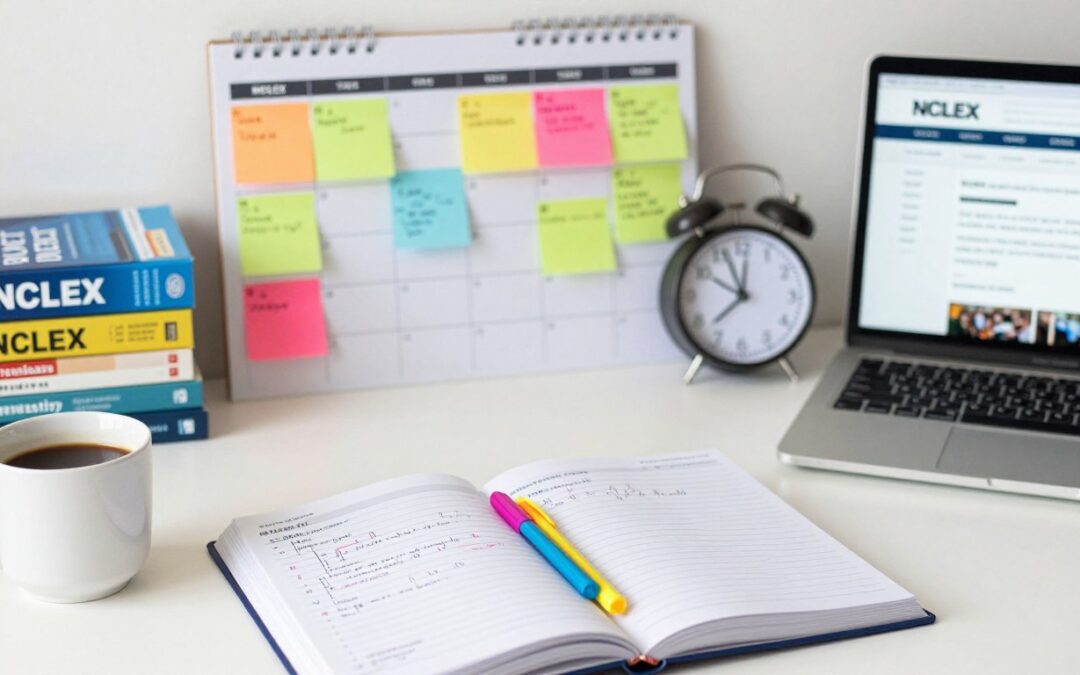
Did you know nearly 20% of first-time nursing candidates fail their licensure exam every year? This shows how important proper preparation is. We know starting your nursing career can feel overwhelming. That’s why we stress the need for a clear plan.
Our 3, 4, 6, 9, or 12-week plans make sure you cover everything. Picking a schedule that fits your life and goals helps you feel ready for the exam. If you need more help, check out online classes for the NCLEX-RN to support your studies.
Whether you want a quick review or a slow pace, your NCLEX study calendar is key. We’re here to help you create a NCLEX test preparation schedule that lets you reach your career dreams without stress.
Key Takeaways
- A structured timeline greatly increases your chance of passing on the first try.
- Choose a duration, from 3 to 12 weeks, that matches your lifestyle and learning needs.
- Staying consistent is better than cramming for complex nursing topics.
- Professional resources can guide you and keep you on track.
- Following a proven plan reduces stress and improves your performance.
Understanding the NCLEX Exam Format
Success on the NCLEX starts with knowing the test’s structure and scoring. When we understand how the exam works, we can find the best NCLEX study schedule for us. This way, our study time becomes more effective.
Types of Questions on the NCLEX
The exam is more than just multiple-choice questions. It tests our critical thinking and clinical skills with different formats. You’ll see traditional questions and new ones like SATA, fill-in-the-blank, and drag-and-drop tasks.
These formats ask us to think critically, not just memorize. We apply our nursing knowledge to real-world scenarios. Learning these question types is key to passing the NCLEX, as explained in this article.
Scoring and Passing Standards
The NCLEX uses Computerized Adaptive Testing (CAT). This means the next question gets harder if you answer the last one right. It’s a tough but fair process.
Studies show that students using review programs have a 98.98% pass rate. This success rate shows the value of structured study. A systematic approach boosts our chances of passing on the first try.
Study Importance Based on Exam Structure
Because the exam adapts, focus on key nursing concepts. This builds a strong foundation for tackling harder questions. The exam structure guides our daily study.
By focusing on what the NCLEX emphasizes, we use our time wisely. Proven NCLEX study strategies help us study efficiently. Here’s how to organize your study based on the exam’s structure.
| Question Category | Primary Focus | Skill Level |
|---|---|---|
| Multiple Choice | Foundational Knowledge | Recall/Application |
| SATA/Alternate | Clinical Judgment | Analysis/Synthesis |
| Case Studies | Patient Safety | Evaluation |
Setting Realistic Study Goals
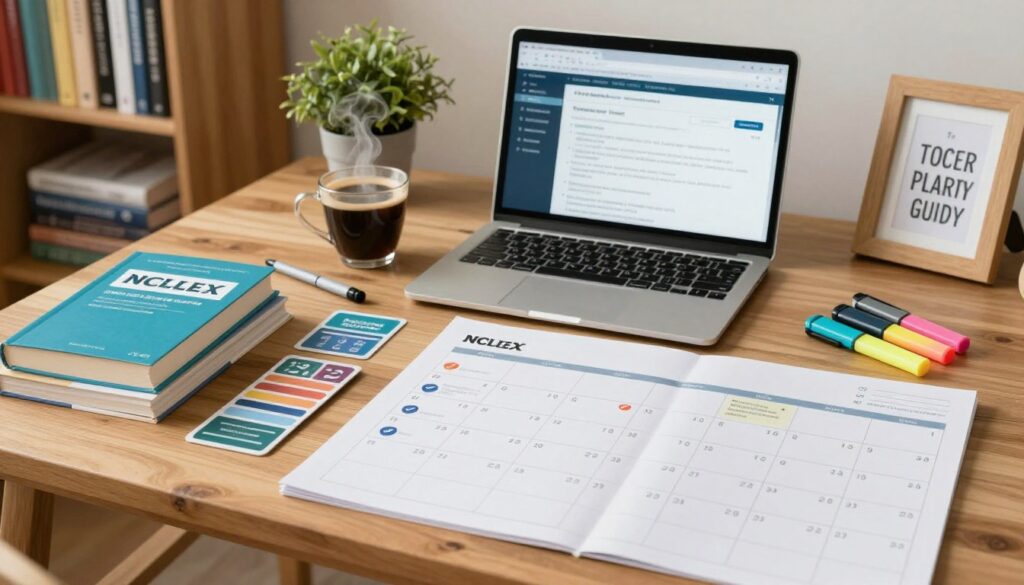
We find that success comes from breaking down big study tasks into smaller ones. A structured NCLEX study planner helps us tackle a huge amount of information step by step. This way, we stay focused and make sure we cover all important topics before the test.
Daily Study Targets
Being consistent is key to our study plan. We aim for 28 days of steady progress, setting aside hours each day for review. These daily targets help us avoid cramming and improve our understanding of nursing concepts. For extra help, a structured NCLEX study plan can guide us.
Weekly Milestones
We break our month into weekly goals to keep our study pace steady. Each week, we focus on a different system, mastering one area before moving on. We track our progress to ensure we meet our weekly goals. These milestones are important NCLEX study tips, helping us see how far we’ve come and adjust if needed.
Long-Term Objectives
Our main goal is to feel ready and confident for the exam. Setting long-term goals helps us avoid feeling overwhelmed by all the nursing content. We focus on understanding the material deeply, not just memorizing it. If needed, online classes can provide the extra support to reach our target scores.
| Week | Focus Area | Primary Goal |
|---|---|---|
| Week 1 | Foundational Concepts | Master core nursing principles |
| Week 2 | System-Based Review | Complete cardiovascular and respiratory |
| Week 3 | Advanced Topics | Review pharmacology and management |
| Week 4 | Final Integration | Simulate full-length practice exams |
Creating a Comprehensive Study Plan
Creating a study plan helps us tackle big amounts of information one day at a time. It ensures we cover all important topics. A good NCLEX study planner is like a map to success, keeping us on track and motivated.
Starting with a plan helps us stay on schedule. A NCLEX study plan template lets us see our progress and adjust our goals. This keeps our confidence high as the exam gets closer.
Breakdown of Study Topics
We should focus on key nursing concepts first, then move to complex body systems. Begin with the basics that often show up on the exam.
- Fluids and Electrolytes: Knowing these balances is key for patient health.
- Basic Care and Comfort: These skills are essential for safe, quality nursing care.
- Safety and Infection Control: These are critical for clinical practice and are tested often.
Allocating Study Time for Each Subject
We should spend more time on tough subjects and quick review on easy ones. This helps us fill in our knowledge gaps.
Set aside specific hours each day for deep study. An NCLEX study plan template helps us plan out topics for each day. This keeps our workload balanced and prevents burnout.
Integrating Practice Questions
Active learning is far more effective than just reading. We should make practice questions a part of our daily study routine.
This method shows us where we need to study more. With a top-notch NCLEX study planner, we can track our progress. Consistent practice is key to mastering the exam and improving our thinking skills.
Choosing Effective Study Materials
Choosing the right study materials is key to getting our nursing license. The tools we pick affect our confidence and skill in nursing. By matching our study materials with a NCLEX study timetable, we make every study hour count.
Recommended NCLEX Review Books
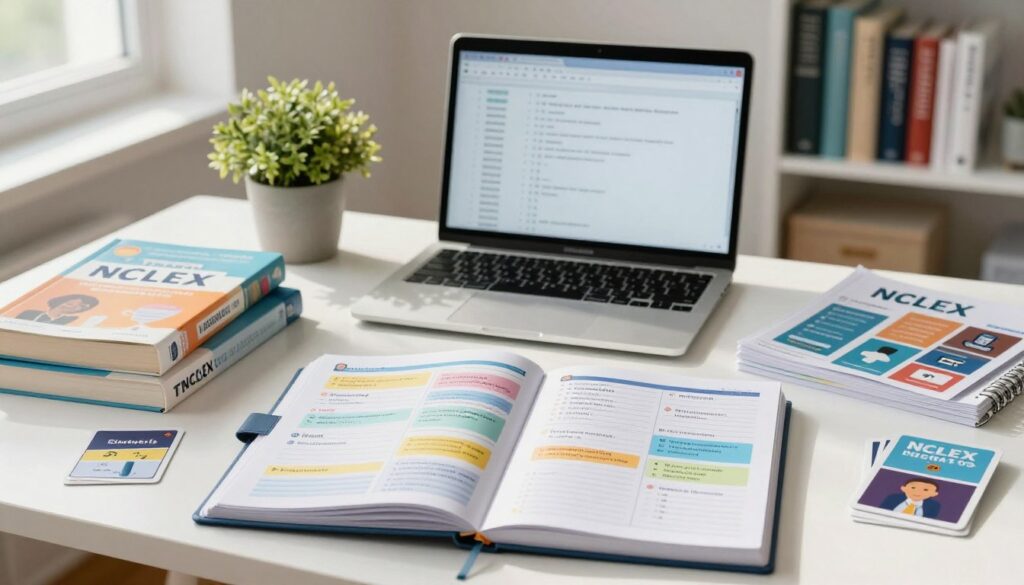
Textbooks are a must for deep learning in nursing. Guides like the Saunders Review give great summaries of key topics. These books help us build a solid foundation for our NCLEX test preparation schedule.
Online Resources and Courses
Digital tools have changed how we study for big exams. There are many online courses to help with exams like the DAT. For nursing, Archer Review offers Q-Bank and CAT packages starting at $129. These are great for those who like to study on their own.
Utilizing Mobile Apps
Mobile apps let us study anytime, anywhere. They’re perfect for quick practice during breaks or on the go. Using these apps keeps us focused and moving forward every day.
| Resource Type | Primary Benefit | Best For |
|---|---|---|
| Review Books | Deep content knowledge | Foundational learning |
| Q-Banks | Simulated testing | Active recall practice |
| Mobile Apps | High flexibility | On-the-go review |
| Video Courses | Visual explanations | Complex topic mastery |
Incorporating Practice Exams
Creating a strong NCLEX study timetable begins with using practice tests wisely. Reading alone is not enough. We need to apply what we learn to real-life situations. This way, we get used to the exam’s pressure and build our endurance.
Importance of Simulated Testing
Practice tests let us feel the exam’s pressure before the actual day. UWorld offers over 3,100 questions, including the newest ones. These are key for getting used to the test format. Regular practice with these questions makes us comfortable with the Computer Adaptive Testing (CAT) style.
Analyzing Practice Test Results
It’s not just about taking the test; it’s about what we learn from it. We must understand why each answer is correct or incorrect. This helps us find areas where we need to improve.
- Review the explanations for every incorrect choice to understand why it was wrong.
- Track our progress over time to see which clinical areas need more attention.
- Use the data to refine our focus during future study sessions.
Timing and Strategy for Practice
Good NCLEX study strategies mean managing our time well. We should answer questions at a steady pace. This way, we avoid running out of time during the real exam.
We suggest setting aside time each week for full-length practice exams. This builds our endurance for the test. By treating these sessions seriously, we increase our chances of passing.
Scheduling Study Sessions
Creating an effective NCLEX study routine is key for busy nursing students. The main challenge is often finding time to study amidst work and life. A structured plan helps keep our study sessions consistent and manageable.
Best Times of Day to Study
Finding our peak study hours is essential for learning complex medical info. Some prefer quiet mornings, while others focus better at night. It’s important to find what works best for us.
Try different study times in the first week to see when we’re most alert. Once we find our best study hours, protect them. Consistency is key for long-term memory.
Balancing Study with Personal Time
For those working 3×12-hour shifts, a 9-week study plan is realistic. Use work days for light review, like audio lectures or phone practice questions. Save longer study sessions for days off to tackle tough topics.
Telling family and friends about our study schedule is important. It helps us keep our study time without losing personal connections. Remember, this temporary sacrifice is for a future career goal.
Avoiding Burnout
Burnout is a risk if we study too hard without rest. Make sure to include rest days in our weekly plan. These breaks are not lazy; they’re vital for studying well.
If a topic is hard, use remediation blocks to review it calmly. Celebrating small victories keeps our motivation up. Here’s a weekly plan to balance study and rest.
| Day Type | Study Focus | Duration |
|---|---|---|
| Work Day | Mobile Practice Questions | 30-60 Minutes |
| Off Day | Content Review & Simulations | 3-4 Hours |
| Rest Day | Complete Disconnect | 0 Minutes |
Utilizing Study Groups
Creating an effective NCLEX study routine often means looking beyond our own notes. It’s about embracing the power of teamwork. While studying alone is key, working with others can give us the motivation and clarity we need.
Benefits of Group Study
Studying in a group opens up new ways of thinking about tough topics. Explaining a concept to a friend helps us solidify our own understanding of it.
Also, group settings make us more accountable. We’re less likely to put off studying when we know others are counting on us.
Guidelines for Effective Group Sessions
To keep our sessions productive, we need clear rules from the start. We should have a specific agenda for each meeting. This helps us stay focused and cover important topics.
For extra structure, Archer Review offers tutor guidance and group sessions. These resources provide personalized feedback and help us stay on track.
Resources for Finding Study Partners
Finding the right study partners is essential. We can start by reaching out to classmates or joining online nursing forums. Many local nursing programs also have study hubs where we can meet motivated peers.
| Feature | Solo Study | Group Study |
|---|---|---|
| Pacing | Self-directed | Collaborative |
| Feedback | Limited | Immediate |
| Motivation | Internal | Social |
| Focus | High | Variable |
By combining solo study with group efforts, we get a balanced approach. Sticking to these proven strategies will boost our confidence for the exam.
Revisiting Weak Areas
Turning our weaknesses into strengths is key to our success. We must be honest about what challenges us. This self-awareness is essential for long-term success. By adding these insights to our NCLEX study calendar, we make sure we cover everything.
Identifying Knowledge Gaps
We use performance dashboards to track our progress. These tools show us where we need to focus. Identifying these gaps early lets us adjust our study plan before the exam.
Focused Review Sessions
After finding our weak spots, we set aside time to review them. We focus on understanding the concepts, not just memorizing. This intentional study approach helps us connect ideas, making them easier to remember under pressure.
Strategies for Improvement
To get better, we need to actively engage with the material. We suggest testing ourselves often to improve memory and critical thinking. Having a flexible NCLEX study calendar lets us keep practicing until we’re confident.
| Assessment Type | Goal | Action Required |
|---|---|---|
| Baseline Quiz | Identify initial gaps | Review low-scoring modules |
| Mid-Point Review | Track improvement | Adjust study focus areas |
| Final Simulation | Verify readiness | Target remaining weak points |
Tips for the Final Week Before the Exam
We’re almost there! The final week is all about fine-tuning what we know. Our NCLEX study plan template keeps us calm as we go over key areas one last time.
Refining Last-Minute Study Techniques
Now, we focus on reviewing our notes and summaries. We skip adding new, complex topics to avoid confusion. Our aim is to strengthen our understanding of nursing basics through regular, easy review sessions.
Building Confidence for Exam Day
We set up our test environment early to reduce stress. We imagine ourselves doing well and practice deep breathing. Our hard work on the NCLEX study plan template lets us enter the test with confidence.
Managing Stress and Staying Balanced
We take care of our mind and body by getting enough sleep and staying active. We do things that relax us and keep us grounded. Sticking to our routine helps us show our nursing skills when it counts.