

Did you know nearly 20% of first-time nursing graduates fail their licensure exam each year? This shows how much pressure students are under when preparing for such a big test.
Studying for this big moment can feel overwhelming. But don’t worry, we’re here to help. We’ll share strategies that make studying easier.
We break down huge amounts of nursing info into manageable, bite-sized pieces. Using science-backed methods, you can make sure important details stay in your memory.
We’ll show you how to make a study plan and improve your clinical judgment. With these tips, you’ll feel more confident and clear about your exam.
Key Takeaways
- Break complex nursing topics into smaller, digestible segments.
- Use active recall to strengthen your long-term memory retention.
- Prioritize clinical judgment skills over simple rote memorization.
- Create a consistent study schedule to reduce pre-exam anxiety.
- Focus on high-yield information to maximize your limited study time.
Understanding the NCLEX Exam Structure
Before you start studying, let’s look at the NCLEX exam’s structure. Passing this test is a big achievement. Knowing what to expect on test day is key to NCLEX exam preparation.
Overview of the NCLEX Format
The NCLEX uses Computer Adaptive Testing (CAT). This means the questions get harder or easier based on your answers. It’s a way to accurately measure your nursing skills.
You’ll see between 85 and 150 questions. You have up to five hours to finish. This gives you plenty of time to think about each question.
Types of Questions You Will Encounter
You’ll see many types of questions, not just the usual multiple-choice. Be ready for Select All That Apply (SATA), fill-in-the-blank, and drag-and-drop questions.
These questions test your ability to prioritize and make clinical decisions. Preparing for these types will boost your confidence when facing the computer.
| Exam Feature | Details | Purpose |
|---|---|---|
| Question Count | 85 – 150 Items | Adaptive Assessment |
| Time Limit | 5 Hours | Comprehensive Evaluation |
| Core Focus | Safe Decision Making | Licensure Readiness |
Importance of the NCLEX in Nursing
The NCLEX is more than a test; it’s about patient safety. It checks if nurses can make safe decisions under pressure.
The exam tests your knowledge in areas like pharmacology and physiology. Seeing it as a tool for growth makes studying more meaningful.
Creating a Study Schedule
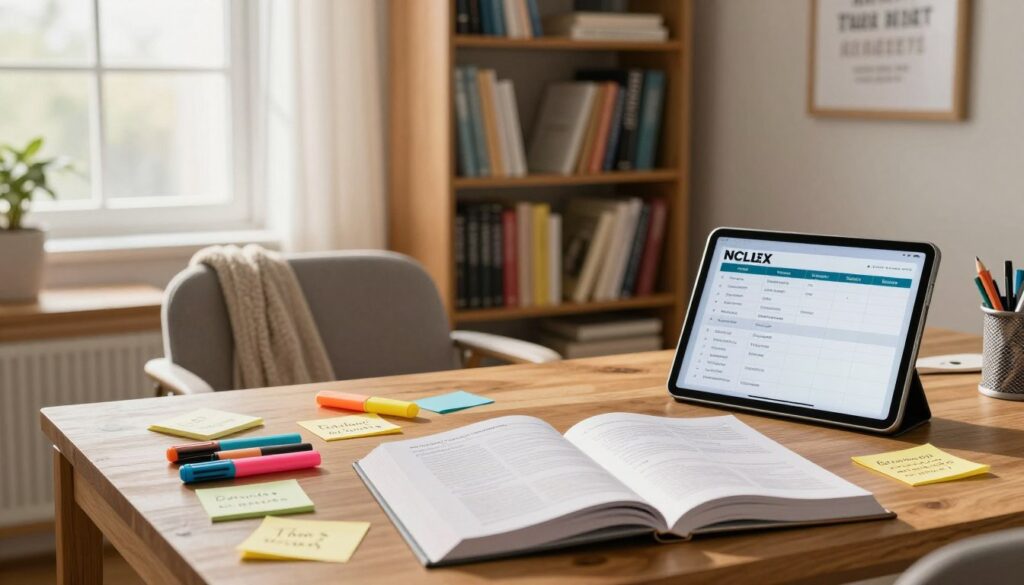
Success starts with a good study plan. Being consistent is key to passing exams. We suggest making a routine that suits your life. By using NCLEX study tips daily, you stay focused without feeling stressed.
Setting Achievable Goals
Set SMART goals for each study session. Goals should be specific, measurable, attainable, relevant, and timely. This makes big tasks into smaller, manageable wins.
Tracking your progress shows you how far you’ve come. It helps you see what needs more work and what you know well. Celebrating small wins keeps you motivated.
Allocating Time for Each Subject
Good NCLEX study methods break study into short, focused periods. Instead of long study sessions, try 60 to 90 minutes. This method helps you learn better and avoid burnout.
Focus on tough subjects first and review easy ones briefly. This way, you cover all the material before the exam.
Utilizing Study Tools Effectively
Good NCLEX study habits need the right tools. Mix digital tools, flashcards, and books into your study routine. This variety keeps your mind active and interested.
Quality study time is more important than how long you study. Choose top-notch resources and use them regularly. Be open to changing tools if they don’t fit your learning style.
Active Learning Techniques
Switching from passive review to active learning changes how you keep medical info. Just reading textbooks can make you think you know it all. But using NCLEX memorization techniques makes your brain work harder. This builds a strong base for your exam.
Benefits of Active Recall
Active recall means testing yourself without notes or textbooks. It makes your brain stronger by recalling info. This cognitive engagement is key for keeping info long-term and applying it under pressure.
Instead of re-reading, try summarizing main points out loud. This change helps you really learn, not just recognize words. Regular practice boosts your confidence.
Implementing Spaced Repetition
Spaced repetition reviews material at longer intervals. It fights the “forgetting curve” and keeps key nursing concepts fresh. Reviewing hard topics regularly solidifies your understanding and boosts your NCLEX memory strategies.
Use digital flashcard apps for scheduled reviews. They save you time and let you focus on improving. Consistency is the key for this technique.
Engaging in Group Study Sessions
Studying with peers tests your knowledge through explaining concepts. Teaching someone else helps you spot your own knowledge gaps. This social learning is a powerful NCLEX memorization technique.
In these sessions, discuss clinical scenarios, not just facts. Debating nursing interventions sharpens your critical thinking. These discussions are great NCLEX memory strategies for real-world exam prep.
Visual Learning Strategies
Using visual aids can change how you study for nursing exams. The amount of information needed can be too much. But, the right NCLEX memorization tools help break it down. This way, you remember information better than just memorizing it.
Utilizing Flowcharts and Diagrams
Flowcharts and diagrams make complex nursing processes easier to understand. Try drawing your own to see how body systems work together in emergencies. Visualizing these connections helps you see the whole picture, not just facts.
For more tips on studying, check out these effective NCLEX study strategies. Diagrams are great for pharmacology, helping you link drugs to their effects and when not to use them.
Flashcards for Quick Recall
Digital flashcards are top NCLEX memorization tools. They turn big textbooks into easy-to-review questions. Apps that use spaced repetition help you focus on tough topics.
- Create cards for lab values and normal ranges.
- Include images of skin conditions or ECG strips.
- Use color-coding to categorize different medication groups.
Incorporating Videos and Online Resources
Reading alone might not be enough for tough concepts. Videos offer a different way to learn, fitting different learning styles. Watching a pro explain a procedure can make things clearer.
Looking for help? There are many online classes to help you get ready for the NCLEX-RN. These classes include videos that make NCLEX memorization tools even better. Combining these with your notes creates a strong study plan.
Practice Tests and Sample Questions
Testing yourself with exam-style questions is the best way to see how you’re doing. It lets you know what you know and what you need to work on. This way, you can get better at the NCLEX test strategies and feel ready for the real test.

Importance of Practice Questions
Practicing with questions is a great way to check if you’re ready. It’s not just about reading; it’s about using what you know in real situations. This active learning helps you remember things better.
“Success is the sum of small efforts, repeated day in and day out.”
Where to Find NCLEX Practice Tests
It’s important to use trusted sources for your practice questions. Look for online classes that offer good question banks. Make sure they have:
- Detailed explanations for each answer.
- Testing formats that feel like the real thing.
- Tools to track how you’re doing.
Analyzing Your Test Performance
After a practice test, it’s key to really look at your results. Just knowing your score isn’t enough. You need to understand why you got some questions wrong. This helps you improve your NCLEX test strategies and get better at making clinical decisions.
Keep a journal of your mistakes to spot patterns. By focusing on these areas, you can turn mistakes into valuable learning opportunities. Mastering these NCLEX test strategies will make you more confident and help you do well on the actual test.
Study Groups and Peer Learning
Working with others can make studying more exciting. While studying alone is important, teaming up with friends can offer new insights. This keeps you motivated and helps build your confidence for the NCLEX test.
Finding the Right Study Group
Finding the right group is key. Look for people who are as committed as you are. A group of three to five is usually the best size for staying focused.
Make sure everyone studies at a similar pace. This makes it easier to stick to a plan without feeling left behind. You might also look into online courses for extra help.
Sharing Knowledge and Resources
Working together lets you share resources and find missing pieces. You can swap notes, flashcards, and practice questions. This way, everyone gets the best study materials.
Sharing what you know helps you learn more. Explaining a tough concept to someone else helps you understand it better. This collaborative approach prepares you for teamwork in real-world settings.
Scheduled Discussions on Key Topics
Staying consistent is important. Set regular meeting times to keep everyone on track. Focus on specific, hard topics during these sessions.
Use these times to discuss practice questions. Talking about why certain answers are right helps you learn better. This makes studying more meaningful.
| Feature | Solo Study | Group Study |
|---|---|---|
| Flexibility | High | Moderate |
| Accountability | Self-driven | Peer-supported |
| Perspective | Limited | Diverse |
| Focus | Deep | Collaborative |
Tips for Managing Test Anxiety
The pressure of the NCLEX can feel overwhelming. It’s important to keep your cool during this time. Remember, your emotional state is key to your success. Using NCLEX study tips means more than just memorizing facts. It’s about keeping your mind at peace.
Techniques for Staying Calm
When stress hits, simple physical techniques can help. Deep breathing is a great way to calm down. Inhale for four seconds, hold for four, and exhale for four.
Meditation is also a powerful tool. Just five minutes of quiet can reset your focus. Staying calm keeps your brain open to new information, not stressed.
Visualization and Positive Thinking
Your mindset is the base of your performance. Visualize yourself answering questions confidently. This mental practice reduces fear and builds mental resilience.
Positive thinking is key to your NCLEX study tips. Believe in your skills and preparation. Replace negative thoughts with positive affirmations to boost your test performance.
Importance of Self-Care
Managing your mental health is as important as studying. Your physical health affects your brain. Make sure to sleep well, eat right, and stay hydrated.
Don’t forget to relax outside of studying. Take walks, listen to music, or hang out with friends. These breaks are essential. By following these NCLEX study tips, you’ll stay balanced and reach your goals.
Utilizing NCLEX Prep Courses
If you’re feeling overwhelmed by nursing information, a prep course could be your best friend. These programs offer a clear path through the vast material needed for success. By choosing the right NCLEX exam preparation, you can improve your study habits and feel more confident.
Benefits of Enrolling in Prep Courses
The main benefit of these courses is the expert instruction they provide. Teachers who specialize in this area know which concepts are most important. They help you focus on what really matters.
These programs also offer a structured environment that keeps you on track. You don’t have to guess what to study next. Instead, you follow a proven plan designed to help you retain information better. This level of organization is a game-changer for effective NCLEX exam preparation.
Popular NCLEX Review Courses
Several industry leaders have helped many students pass their exams. Programs like UWorld are known for their high-quality question banks that mimic the actual test. Hurst Review focuses on mastering core content.
Kaplan is another top choice, known for its strategies on critical thinking. Each program offers a unique approach to NCLEX exam preparation. We recommend trying their free trials to find the best fit for you.
Comparing Course Features and Pricing
When choosing a program, consider the features and your budget. Some courses offer live webinars, while others have self-paced modules. The table below highlights key differences to help you decide.
| Course Provider | Primary Focus | Price Range |
|---|---|---|
| UWorld | Question Bank | Moderate |
| Hurst | Content Review | High |
| Kaplan | Strategy & Logic | High |
The best investment is one that fits your learning style. Take time to compare these features carefully. By using these professional tools, you’re setting yourself up for a successful nursing career.
Mastering Clinical Knowledge
Developing strong clinical judgment is key to your success on the nursing board exam. The exam tests your ability to make safe, effective decisions under pressure. Using effective NCLEX memory strategies helps you organize complex information into easy-to-remember pieces.
Focusing on Critical Thinking Skills
Critical thinking is essential for patient care. Always ask “why” when reviewing nursing interventions. This helps you understand the treatment plan’s rationale, moving beyond simple memorization.
Use mnemonics to group information into easy-to-remember acronyms. These strategies help you recall vital data quickly under pressure. Mastering the logic behind nursing care prepares you for any exam scenario.
“The art of nursing is not just about what you know, but how you apply that knowledge to save a life.”
Applying Knowledge in Practical Scenarios
The exam tests your ability to apply theoretical knowledge to real-world patient situations. Practice with case studies that reflect actual hospital environments. This helps you visualize patient conditions and choose the best nursing action.
Identify the patient’s priority needs in each scenario. Simulating these situations builds your confidence for test day. Regular practice sharpens your clinical intuition.
Integrating Clinical Practice with Theoretical Learning
Connecting your textbooks to bedside practice is vital for long-term retention. Integrating theoretical learning with clinical experience deepens your nursing standards understanding. Actively connect classroom lessons with patients in your clinical rotations.
- Review pathophysiology alongside current treatment protocols.
- Use NCLEX memory strategies to link symptoms with nursing interventions.
- Reflect on your clinical experiences to reinforce theoretical concepts.
By merging theoretical learning with clinical experience, you prepare for professional nursing realities. Stay curious and seek the “why” behind every clinical decision.
Resources for Additional Support
Building a strong support system is key to becoming a registered nurse. You don’t have to go through exam prep alone. By using different NCLEX study methods, you can tackle tough topics and stay motivated.
Books and Study Guides
Many students rely on traditional textbooks. Guides like the Saunders Complete Review for the NCLEX-RN are essential. They cover topics like physiological adaptation and pharmacological therapies.
“Success is the sum of small efforts, repeated day in and day out.”
These guides help you organize your notes well. Highlighting important points is a good way to remember key information.
Online Communities and Forums
Connecting with others can be a big help. Sites like AllNurses or subreddits offer a place to share experiences. You can get advice on tough clinical scenarios and learn from those who’ve passed.
- Exchange tips on time management.
- Discuss difficult practice questions.
- Find encouragement during stressful weeks.
Apps Designed for NCLEX Preparation
Today’s tech offers great NCLEX memorization tools that are easy to carry. Apps let you study anywhere, anytime. They use smart learning to focus on your weak spots.
| App Name | Primary Feature | Best For |
|---|---|---|
| UWorld | QBank | Critical Thinking |
| Kaplan | Decision Tree | Strategy |
| Picmonic | Visual Mnemonics | Memorization |
Using these digital tools daily keeps you on track. Whether you like books or apps, having many resources makes you feel fully prepared for your test.
Evaluating Your Progress
Keeping track of your studies is key. We recommend keeping a detailed log of your grades. This helps spot trends and areas that need more work.
Self-Assessment Techniques
You can create a personalized learning plan to track your progress. Use quizzes and practice tests to check if your methods are effective. This way, you can find the best way to memorize NCLEX content for you.
Tracking Your Study Habits
Staying consistent is vital for success. By tracking your daily study habits, you learn your most productive times. Adjusting your schedule to these times keeps you efficient and focused.
Adjusting Strategies Based on Progress
Be prepared to change your approach if something isn’t working. Being flexible lets you switch resources or routines to fit your learning style better. This cycle of assessment and improvement will help you pass the exam and start your nursing career with confidence.