
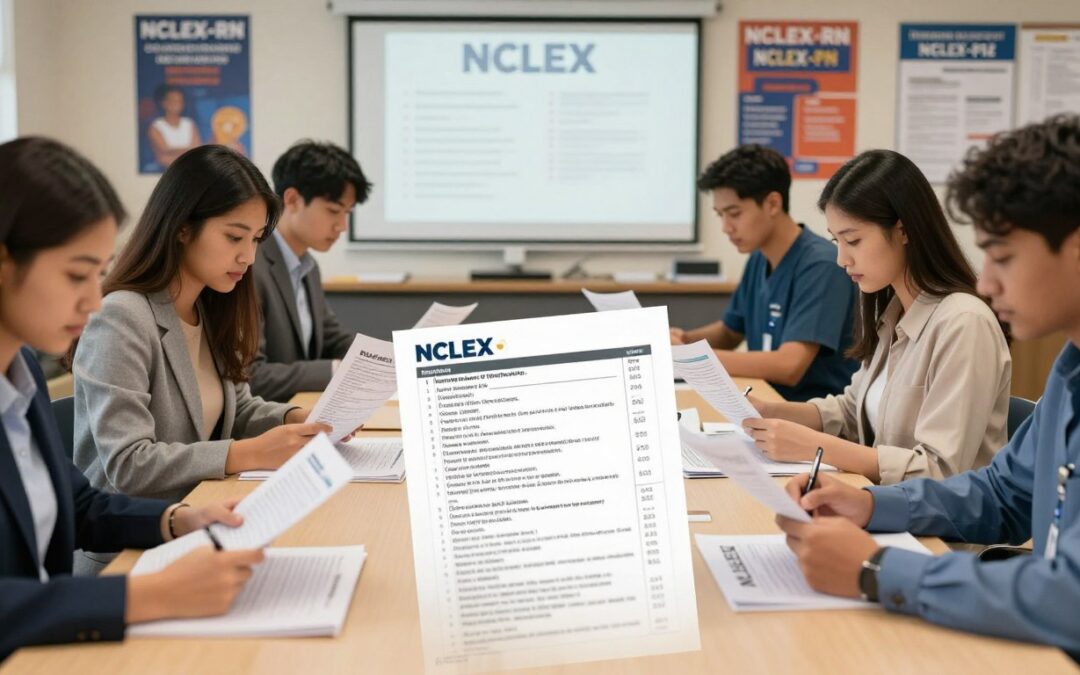
Did you know over 200,000 nursing candidates take national board exams each year in the U.S.? Passing these NCLEX licensing exams is the last step before starting your healthcare career. Every state requires you to pass one of these tough tests to get your license.
We’ll look at the main differences between these two paths. Knowing these details helps you pick the right study materials and online classes for the NCLEX-RN. Navigating this journey needs clarity, and we’re here to guide you.
Key Takeaways
- Both exams are mandatory for legal nursing practice across all U.S. states.
- The tests evaluate your clinical judgment and safety knowledge for entry-level roles.
- RN and PN designations involve different scopes of practice and educational backgrounds.
- Preparation strategies should align with your chosen exam track.
- Success on these boards is the essential gateway to your professional nursing career.
Understanding NCLEX Examinations
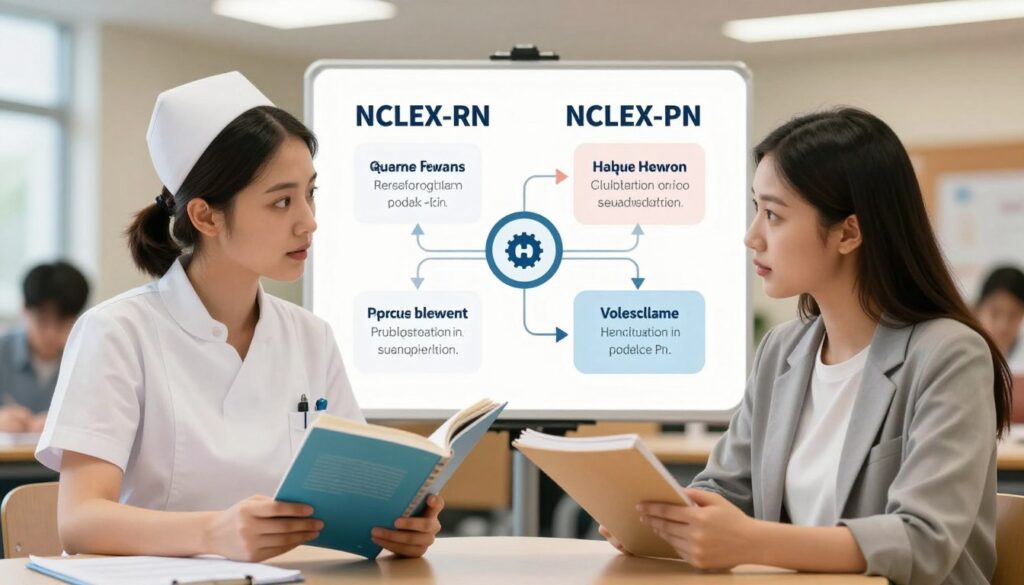
The National Council Licensure Examination is the last step for aspiring nurses in the U.S. It checks if a candidate knows how to practice nursing safely and effectively. By comparing NCLEX exams, students can choose the right path for their career.
Both exams have a similar structure but are designed for different nursing roles. Knowing the difference between NCLEX-RN and NCLEX-PN helps focus study efforts. This clarity makes preparation more efficient.
Overview of NCLEX-RN
The NCLEX-RN is for registered nurses. They handle complex patient care, do assessments, and plan treatments. The exam tests critical thinking and clinical judgment.
Candidates must show they can manage care in different healthcare settings. Passing this exam means you’re ready for high-level decisions in clinical environments.
Overview of NCLEX-PN
The NCLEX-PN is for licensed practical or vocational nurses. It’s for those who work under doctors or registered nurses. The exam focuses on basic nursing skills and patient support.
The table below shows the main differences between these nursing paths:
| Feature | NCLEX-RN | NCLEX-PN |
|---|---|---|
| Primary Focus | Complex Care & Assessment | Fundamental Nursing Skills |
| Role Scope | Independent Decision Making | Supervised Patient Care |
| Exam Context | NCLEX RN vs NCLEX PN | NCLEX RN vs NCLEX PN |
Both exams are key to ensuring patient safety in the U.S. Understanding their specific demands helps prepare for nursing challenges.
Key Roles of RNs and LPNs
Choosing a career in healthcare often leads to comparing different nursing roles. The NCLEX RN vs NCLEX PN roles are designed to work together in a clinical setting. It’s not just about job titles; it’s about understanding the clinical judgment needed for each role.
Responsibilities of Registered Nurses
Registered Nurses (RNs) handle the most complex patient care. They create care plans, perform detailed assessments, and administer advanced treatments. Their extensive training makes them leaders, delegating tasks to others.
The critical thinking needed for RNs involves analyzing patient data for quick, life-saving decisions. You can learn more about the specific types of nurses and what they do. Their role is key in coordinating care across teams.
Responsibilities of Licensed Practical Nurses
Licensed Practical Nurses (LPNs) focus on basic care for stable patients. They monitor vital signs, dress wounds, and help with personal hygiene. Their tasks help the healthcare team work efficiently.
“The strength of the nursing profession lies in the collaborative effort between different levels of providers, where each role is vital to the patient’s recovery journey.”
Looking at the NCLEX-RN vs NCLEX-PN contrast, LPNs work under RNs or physicians. This ensures patient care is safe and consistent. The table below shows the main differences in their daily work.
| Feature | Registered Nurse (RN) | Licensed Practical Nurse (LPN) |
|---|---|---|
| Primary Focus | Complex care & management | Stable patient care & tasks |
| Care Planning | Develops and updates plans | Implements established plans |
| Delegation | Delegates to LPNs/UAPs | Works under supervision |
| Assessment | Comprehensive & diagnostic | Focused & observational |
The NCLEX RN vs NCLEX PN exams test the knowledge needed for each role. Understanding the NCLEX-RN vs NCLEX-PN contrast helps prepare for the specific judgment needed on each exam.
Educational Requirements for Each Exam
Education is key to your future in healthcare. Before you can take your licensing exam, you must graduate from an accredited nursing program. Knowing the NCLEX-RN vs PN differences means understanding each path’s unique academic needs.
“The beautiful thing about learning is that no one can take it away from you.”
NCLEX-RN Educational Pathways
To take the NCLEX-RN, you usually need an Associate Degree in Nursing (ADN) or a Bachelor of Science in Nursing (BSN). These programs give you a broader academic background. They cover complex theory, research, and leadership training.
Registered nurse programs focus on critical thinking and patient assessment. By finishing these tough courses, you’re ready for the big decisions in today’s clinics.
NCLEX-PN Educational Pathways
For the NCLEX-PN, your education is shorter. Most practical nursing programs are certificate or diploma-based. They focus on technical skills and direct patient care.
These programs are great for students who want to start working fast. The curriculum is shorter than an RN degree. But it gives you the key knowledge for a supportive nursing role.
It doesn’t matter which path you choose. Make sure your school is fully accredited. Accreditation means your education meets national standards for your licensure exam.
Exam Structure and Format
Getting ready for your nursing career means understanding your exam’s format. The NCLEX exam comparison can seem tough, but knowing the details helps a lot. Knowing what to expect makes test day less scary and more clear.
Content Areas Tested in NCLEX-RN
The Registered Nurse exam tests your clinical judgment and decision-making skills. You’ll face questions on prioritizing care, keeping patients safe, and understanding test results. The Next Generation NCLEX (NGN) items make sure you can think like a real-world nurse.
Content Areas Tested in NCLEX-PN
The PN exam covers similar topics but with a focus on practical skills. It’s about applying care plans under supervision. Questions are designed to match the PN’s role.
Length and Format of Each Exam
Both exams use Computerized Adaptive Testing (CAT), adjusting question difficulty based on your answers. This means your exam length can change a lot. For more details, check out the NCLEX-PN vs NCLEX-RN key differences to get ready for what’s coming.
| Feature | NCLEX-RN | NCLEX-PN |
|---|---|---|
| Primary Focus | Clinical Judgment | Practical Application |
| Adaptive Nature | Yes (CAT) | Yes (CAT) |
| NGN Integration | High Complexity | Moderate Complexity |
| RN and PN exam variances | Broad Scope | Focused Scope |
Passing Criteria for NCLEX Exams
To get your professional license, you must pass a test that checks your safety and skills. Many students fear needing a perfect score. But, the truth is much easier.
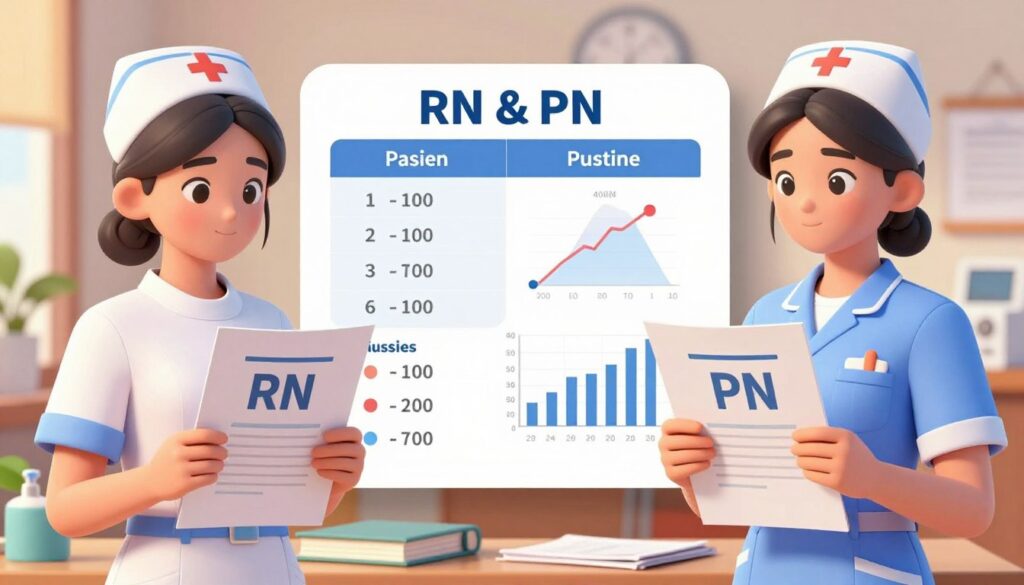
You don’t have to get every question right to pass. The test uses a smart way to check if you’re ready. It’s good to know about the RN and PN exam variances. Both tests use Computer Adaptive Testing (CAT) to see how skilled you are.
What It Means to Pass NCLEX-RN
When you take the NCLEX-RN, the computer checks if you can provide safe care. It doesn’t look for a certain number of correct answers. It keeps giving questions until it’s 95% sure you’re ready.
Success on this exam shows you have the clinical judgment of a registered nurse. When the computer is sure you’re ready, the test ends. This makes sure all nurses meet the same safety standards everywhere.
What It Means to Pass NCLEX-PN
The NCLEX-PN also checks if you’re ready for your job as a practical nurse. You’re judged on your ability to make safe, effective decisions. The goal is to show you can work safely with the healthcare team.
You should be confident that the exam is fair and fair. It stops when it’s sure you’re ready. This shows your hard work and preparation. By focusing on safe practice, you’re on your way to getting your license.
Next Steps After Passing the Exams
Passing your exam is just the beginning. You now move into the workforce. But, you must complete some administrative steps to get your license. Contact your local board of nursing right away to start the process.
Licensure Process for RNs
After passing the NCLEX-RN, you become a candidate for licensure. Make sure your nursing program has sent your transcripts to the state board. Most states need you to do a few things to complete your licensure:
- Submit a formal application for licensure by examination to your state board.
- Pay the required state-specific licensing fees.
- Complete a criminal background check or fingerprinting process if mandated by your jurisdiction.
- Confirm that your educational institution has verified your graduation status.
It’s essential to keep an eye on your application. Many states send digital updates on your status. This lets you know when your license is ready. Once your credentials are verified, you’ll get your license number and can start your career as a Registered Nurse.
Licensure Process for LPNs
The process for those who passed the NCLEX-PN is similar. While the exact steps may vary, the goal is the same: to show you’re ready to care for patients safely. These NCLEX licensing exams are the last step before you start working in healthcare.
Stay active during this time. Make sure your contact info is current with the board of nursing. This way, you won’t miss any important updates. By being organized, you can start your career as a Licensed Practical Nurse with confidence and professional pride.
Employment Opportunities for RNs vs LPNs
In today’s healthcare world, RNs and LPNs are both key players. The NCLEX-RN vs NCLEX-PN contrast shows how each role meets different medical needs. Your choice of license affects the patients you’ll care for throughout your career.
Job Outlook for Registered Nurses
The need for NCLEX-RN graduates is high across the U.S. RNs work in busy places like hospitals and clinics. They often grow into leadership roles or advanced positions.
RNs are vital in critical care and emergency rooms. Their broad training lets them move easily between specialties. This flexibility means they have stable careers and good pay.
Job Outlook for Licensed Practical Nurses
LPNs, who pass the NCLEX-PN exam, are also essential. They work in long-term care, rehab centers, and home health. Their work focuses on caring for patients who need ongoing attention.
The job outlook for LPNs is bright, thanks to an aging population. LPNs are vital for healthcare stability. They build strong bonds with patients in residential settings, finding great fulfillment in their work.
| Feature | Registered Nurse (RN) | Licensed Practical Nurse (LPN) |
|---|---|---|
| Primary Setting | Hospitals & Acute Care | Long-term Care & Clinics |
| Scope of Practice | Complex Care & Management | Direct Patient Support |
| Career Growth | High Advancement Opportunity | Stable & Essential Role |
Continuing Education and Advancement
We believe that passing your exam is just the start of a rewarding career in healthcare. Your growth doesn’t end with your license. It opens doors to specialization and leadership.
Whether you’re aiming for the NCLEX for registered nurses or the NCLEX for practical nurses, education is a lifelong journey. Keeping up with medical advancements ensures top-notch patient care.
Opportunities for RNs
Registered nurses have many career paths to explore. Many seek advanced degrees like a Master of Science in Nursing (MSN) or Doctor of Nursing Practice (DNP). This leads to specialized roles.
Certifications in areas like critical care, pediatrics, or oncology can boost your career. They show your expertise and often lead to better pay and more responsibility. Common paths include:
- Becoming a Nurse Practitioner or Clinical Nurse Specialist.
- Transitioning into nursing management or hospital administration.
- Pursuing roles in nursing education or clinical research.
Opportunities for LPNs
Licensed practical nurses have many ways to grow. Many choose to work in specialized areas like long-term care, wound care, or hospice nursing.
For those wanting to expand their role, bridge programs offer a clear path to becoming a registered nurse. These programs build on your existing knowledge, helping you move into higher roles. Consider these options for your growth:
- Enrolling in LPN-to-RN bridge programs to advance your career.
- Earning certifications in IV therapy or pharmacology.
- Taking on leadership roles as a charge nurse in a clinical setting.
Your commitment to learning is key to success in the medical field. By setting goals, you can build a career that grows with your interests and community needs.
Conclusion: Choosing the Right Path
Choosing between the NCLEX-RN and NCLEX-PN is a big step in your career. Think about what you’re good at and what kind of care you enjoy giving. Both paths are important in the US healthcare system.
Evaluating Personal Priorities
Consider how much time you want to spend in school versus starting work fast. Think about where you feel most at home. Registered Nurses handle complex care, while Licensed Practical Nurses focus on bedside care.
Aligning with Future Ambitions
Think about your goals for the next five or ten years. Some nurses like the hands-on work of practical nursing. Others want to lead and handle more complex tasks as a Registered Nurse. Your future goals should help you decide now.
We believe you’ll find joy in your chosen career. Stay focused and committed to your studies. We’re excited to see you thrive in healthcare.