

Did you know that 91.2% of first-time, U.S.-educated candidates passed their nursing boards in 2024? This high pass rate is a key indicator for students and educators everywhere.
These numbers show how tough nursing school is today. They point out the high standards needed for safe nursing care. We believe that understanding these stats can help you study better.
So, you might wonder, What is the NCLEX pass rate? and how it affects your path? By looking at these trends, we offer a clear guide for your nursing license journey. Let’s dive into what this data means for your nursing career.
Key Takeaways
- The 2024 first-time pass figure for U.S.-educated candidates reached 91.2%.
- These statistics act as a reliable benchmark for nursing program quality.
- High success percentages reflect the intense preparation required for clinical practice.
- Analyzing annual data helps students set realistic expectations for their exams.
- We aim to provide the confidence you need to succeed in your nursing career.
Understanding the NCLEX Exam
Many students wonder, “What is the NCLEX pass rate?” First, you need to know what the NCLEX exam is. It’s the last step for nursing graduates in the U.S. to get licensed. The exam has been a key test for nursing skills and knowledge for over 30 years.
What is the NCLEX?
The NCLEX is a detailed, computer test. It checks if you’re ready for safe, entry-level nursing practice. It’s not just about remembering facts. It tests your ability to make important decisions in real situations.
The test gets harder or easier based on your answers. This helps find out how well you really know the material.
Purpose of the NCLEX
The main goal of the NCLEX is to keep patients safe. It makes sure nurses have the right skills to care for them. Nursing schools and educators agree that passing the NCLEX is a big deal.
“The exam acts as a gatekeeper for the profession, ensuring that only those who demonstrate a mastery of safe care can enter the workforce and protect patient lives.”
Types of NCLEX Exams
There are two NCLEX exams, each for a different nursing role. The NCLEX-RN is for registered nurses. The NCLEX-PN is for practical or vocational nurses. Both exams aim to ensure public safety, but they test different skills.
| Exam Type | Target Role | Primary Focus |
|---|---|---|
| NCLEX-RN | Registered Nurse | Complex clinical judgment and care management |
| NCLEX-PN | Practical/Vocational Nurse | Direct patient care and supervised tasks |
| Standard | Criterion-Referenced | Entry-level safety competency |
It’s important to know the differences between the exams. Whether you’re aiming for an RN or PN license, understanding the exam specifics helps you study better. Remember, your success in the NCLEX depends on mastering the standards for your nursing career.
Latest NCLEX Pass Rate Statistics
We’re diving into the latest numbers to see how nursing candidates are doing. By looking at these figures, we can grasp the current state of nursing education. We also see the challenges students face on their path to licensure.
Examining NCLEX pass rate statistics is key for anyone getting ready for their test. It shows us the big picture of how ready candidates are across the U.S.
National Pass Rate for 2024
The data for this year gives us a clear view of student performance. The 2024 NCLEX-RN pass rate for U.S. licensure seekers was 73.3%.
This number is a big deal for nursing programs and students. It shows how tough the exam is and how critical good prep is.
Comparison to Previous Years
Looking at the data over time helps us see if performance is changing or staying the same. An NCLEX pass rate comparison lets us understand the current results against past ones.
For example, comparing the NCLEX pass rate 2021 shows how the field has changed after global challenges. These changes often relate to new testing formats and how education is delivered.
By watching these trends, we can get ready for what’s next. We think it’s crucial for every future nurse to understand these numbers for success.
Factors Influencing Pass Rates
Getting a nursing license is more than just memorizing facts. It’s about combining your academic skills with hard work and dedication. Achieving a passing score is often the result of these combined efforts.
Looking into the different factors that affect NCLEX pass rates helps us understand the path to licensure better. Success in this journey requires focusing on both your study habits and the exam environment.
Candidate Preparation
How well you prepare is key to your success. It’s not just about how many hours you study. The quality of your study materials matters a lot.
Many students find that having a structured study plan helps a lot. For extra help, checking out online courses for the USMLE can give you valuable tips on how to take tests effectively.
- Consistent practice: Regularly practicing with questions builds your endurance.
- Active recall: Testing yourself often is better than just reading.
- Time management: Learning to manage your time during practice is critical.
Education Programs Quality
The quality of your nursing program is essential. Schools that focus on critical thinking and clinical skills often have higher pass rates.
“Education is the most powerful weapon which you can use to change the world.”
A good curriculum teaches you more than just facts. It helps you understand how to apply what you learn in real-world situations. Programs that keep their teaching methods up-to-date prepare students better for the nursing field.

Testing Environment Changes
The NCLEX uses Computerized Adaptive Testing (CAT). This system aims to fairly measure your nursing skills.
The computer adjusts the test based on your answers, making it fit your level of knowledge. This means the test gets harder or easier as you go along, keeping it at the right level for you.
Because the test changes based on your answers, staying calm and focused is important. Believe in your training and know the system is designed to find your true level of skill. This can help reduce your stress during the test.
Pass Rate by State
The NCLEX pass rate by state shows a detailed map of how well nursing schools do across the country. While national averages are useful, local data often shows how different places do things differently. This is key for anyone thinking about becoming a nurse.
Overview of State-by-State Data
The National Council of State Boards of Nursing (NCSBN) releases detailed reports. These reports for 2024 show that the NCLEX pass rate by state varies a lot. This variation comes from many factors, like student backgrounds, school standards, and clinical training.
States that support nursing students well tend to have better results. Looking at this data helps you understand nursing education in your area.
States with Highest Pass Rates
Some areas consistently do better, thanks to high academic standards and strong clinical partnerships. These states often help students who struggle early on. Key factors include:
- Comprehensive faculty mentorship programs.
- Investment in simulation-based learning.
- Curriculum that matches exam blueprints well.
States with Lowest Pass Rates
Other areas face challenges that affect the NCLEX pass rate by state. These challenges include limited clinical sites and a lack of qualified teachers. Here are some main differences:
| Region Type | Common Performance Trend | Primary Driver |
|---|---|---|
| High-Performing States | Above 90% | Strong Accreditation |
| Mid-Range States | 80% – 89% | Standardized Testing |
| Developing Regions | Below 80% | Resource Constraints |
A lower NCLEX pass rate by state doesn’t mean all schools in that area are bad. Many things, like local economy and teacher-to-student ratio, affect these numbers. We suggest looking into specific programs you’re interested in.
Demographic Trends in NCLEX Pass Rates
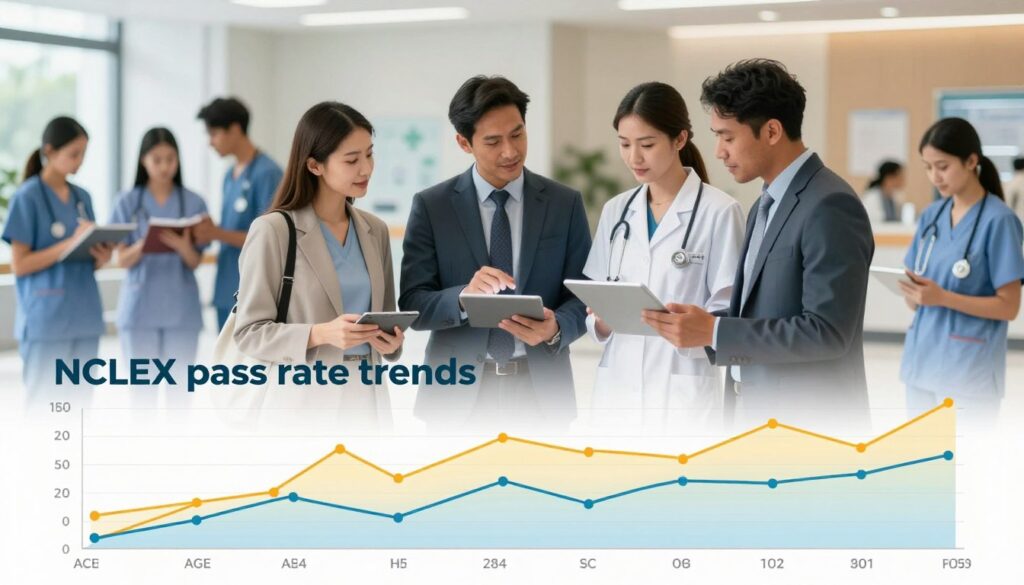
Understanding our nursing workforce’s diversity is key to spotting NCLEX pass rate trends across the country. The National Council of State Boards of Nursing (NCSBN) regularly updates the passing standard. This keeps the exam fair and accurate, no matter when big changes happen.
Age and Gender Statistics
Age affects how well candidates do on the NCLEX. Those who’ve just graduated tend to do better than those returning after a long time. Life experience helps, but staying current with nursing knowledge is critical for all.
Over the last decade, nursing has become more diverse. While women are the majority, the gap between genders has narrowed. Inclusive teaching methods have helped ensure all students can pass on their first try.
Impact of Ethnicity on Pass Rates
Looking at how ethnicity affects test results is important. We know that equitable access to resources is key for nursing success. By understanding NCLEX pass rate trends for different ethnic groups, schools can improve support for their students.
We aim to create an environment where every student can succeed. With targeted mentorship and study materials that fit different cultures, we can make a big difference. Supporting a diverse student body strengthens healthcare for everyone.
Role of Nursing Programs in Pass Rates
Starting a nursing career is more than just the exam. The school you choose is key to learning complex nursing skills. A good program boosts your chances of passing the exam on the first try.
Accreditation of Nursing Schools
Accreditation is a big deal in nursing education. It means the school meets high national standards. Always check the NCLEX pass rate by school to see how graduates do.
Accredited schools are checked on their teaching and student success. This ensures quality nursing education across the U.S. Choosing an accredited school means your education meets NCSBN standards.
Curriculum Effectiveness
Coursework is as important as the school’s reputation. Different programs teach nursing in different ways. Look at the NCLEX pass rate by program to see which one works best.
Whether you get an Associate Degree, Baccalaureate, or Diploma, focus on critical thinking and clinical skills. Programs that use active learning strategies often have better pass rates. Check how your program mixes classroom learning with clinical practice.
| Degree Type | Primary Focus | Preparation Style |
|---|---|---|
| Associate Degree | Technical Skills | Fast-paced clinical |
| Baccalaureate | Leadership & Theory | Comprehensive research |
| Diploma | Hospital-based | Immersive practice |
Your success depends on how well your learning style fits the program. Take time to think about these factors. A good choice now will help you pass the exam.
Study Strategies for NCLEX Success
The journey to nursing licensure can seem daunting, but a solid study plan can make a huge difference. It’s not just about reading books; it’s about mastering critical thinking under pressure. By planning your study time well, you’ll feel ready and focused for the test.
Recommended Study Materials
Picking the right study materials is key to building a strong base. Look for resources that match the exam format to get used to the style and questions.
- UWorld: Known for its top-notch question bank and detailed explanations.
- Kaplan Nursing: Great for learning how to tackle complex clinical scenarios.
- Saunders: A top choice for reviewing content and nursing basics.
- Official NCSBN Practice Exams: These are the closest to the real test experience.
Effective Study Techniques
With your materials in hand, it’s time to improve your study methods. Remember, the average test time for NCLEX-RN candidates in 2024 was 2 hours and 14 minutes. This shows how important it is to pace yourself during practice.
Here are some techniques to help you do better:
- Active Recall: Test yourself often instead of just re-reading.
- Spaced Repetition: Review hard topics at longer intervals to keep them in your memory.
- Simulated Testing: Take full practice exams in a quiet spot to build your endurance.
- Anxiety Management: Use deep breathing or mindfulness to stay calm during tough questions.
Your study plan should reflect your unique needs. Be gentle with yourself and adjust your plan if needed. With a consistent effort and the right tools, you’re on the path to success.
NCLEX Retake Policies and Pass Rates
If you need to retake the exam, remember you’re not alone. Many nurses have been in your shoes. Taking a moment to breathe and regroup is the most important first step.
Understanding Retake Restrictions
The National Council of State Boards of Nursing (NCSBN) has rules for retakes. You must wait 45 days before trying again. This gives you time to study and fill in knowledge gaps.
It’s key to look at your Candidate Performance Report (CPR) closely. This report shows where you did well and where you need to work harder. Use this info to make a study plan that targets your weak spots.
Impact of Retakes on Overall Pass Rates
Looking at the big picture, the NCLEX pass rate comparison is interesting. In 2024, repeat candidates in the U.S. had a 50.9% pass rate. This shows that while it’s tough, it’s doable with the right mindset.
Success on a second or third try often means changing how you study. Moving from just reading to active recall and practice questions can help. Knowing this can help you plan your next try better.
Your hard work and commitment are what truly matter. A retake is just a pause, not a stop. With persistence and a smart plan, you can boost your NCLEX pass rate comparison and become a licensed nurse.
How NCLEX Pass Rates Affect Nursing Careers
The results of an NCLEX pass rate analysis are very important when you apply for your first nursing job. Passing this exam is a big step that shapes your career in healthcare. It shows you have the knowledge needed to care for patients safely and well.
Implications for Employment Opportunities
Healthcare places a big value on candidates who pass the exam on their first try. This shows you’re ready and serious about nursing. Getting your license quickly opens up better job opportunities in hospitals and clinics.
The NCSBN helps nursing regulators set high standards to protect the public. Your pass status is seen as a sign of your skill and commitment. Passing early helps you move smoothly from student to nurse.
“Professional excellence in nursing begins with a commitment to the standards that protect our patients and elevate our practice.”
Impact on Nursing Salaries
Your starting salary depends on where you work and your role. But passing the exam quickly can help you grow faster in your career. Nurses who start work quickly can get promotions and special certifications sooner. A good NCLEX pass rate analysis shows that starting strong can lead to better jobs and more money.
The table below shows how passing the exam early can shape your career and future in healthcare.
| Career Factor | First-Time Pass | Multiple Attempts |
|---|---|---|
| Job Placement Speed | High | Moderate |
| Employer Preference | Strong | Standard |
| Salary Growth | Fast | Slow |
| Clinical Confidence | High | Building |
Your hard work in preparing for the exam will pay off in many ways. It leads to a stronger start in your nursing career. Staying focused and consistent is key to success in nursing.
Resources for NCLEX Candidates
Studying for the NCLEX can feel overwhelming. But, you don’t have to face it alone. A good NCLEX pass rate analysis helps you know where to focus. With the right tools and professional help, you can feel confident on exam day.
Online Study Resources
The National Council of State Boards of Nursing (NCSBN) has valuable resources. They offer historical records on passing standards. These records are essential for any serious NCLEX pass rate analysis.
Also, check out online classes to improve your skills. These classes can help you become a certified medical or nurse.
Here are some digital assets to improve your prep:
- Official NCSBN practice exams that mimic the real test.
- Interactive modules that simplify complex nursing concepts.
- Tools to track your performance and see where you need to improve.
Support Groups and Community Forums
Connecting with peers who are also studying is beneficial. Sharing experiences in forums keeps you motivated. It also gives you insights from those who have passed the exam.
Peer support is key to your study plan. Joining a study group or online community is a great idea. It turns studying into a team effort, helping you stay positive and focused.
Future Trends in NCLEX Pass Rates
The world of nursing education is changing fast. We see a future where NCLEX pass rates show a focus on critical thinking. This is because the nursing field is moving towards higher standards.
Predictions for the Next Few Years
Nursing schools will change how they teach to meet new challenges. They will focus more on hands-on learning to boost decision-making skills. This should help students do better on tests as they get used to the new standards.
Potential Changes to the Exam Format
The Next Generation NCLEX, starting on April 1, 2023, is a big step forward. It will focus on clinical judgment for years to come. Keep up with updates from the National Council of State Boards of Nursing.
Join our forums to share your thoughts on these changes. Talking with others helps everyone stay ready for the nursing board exams. We wish you success in your nursing career.