
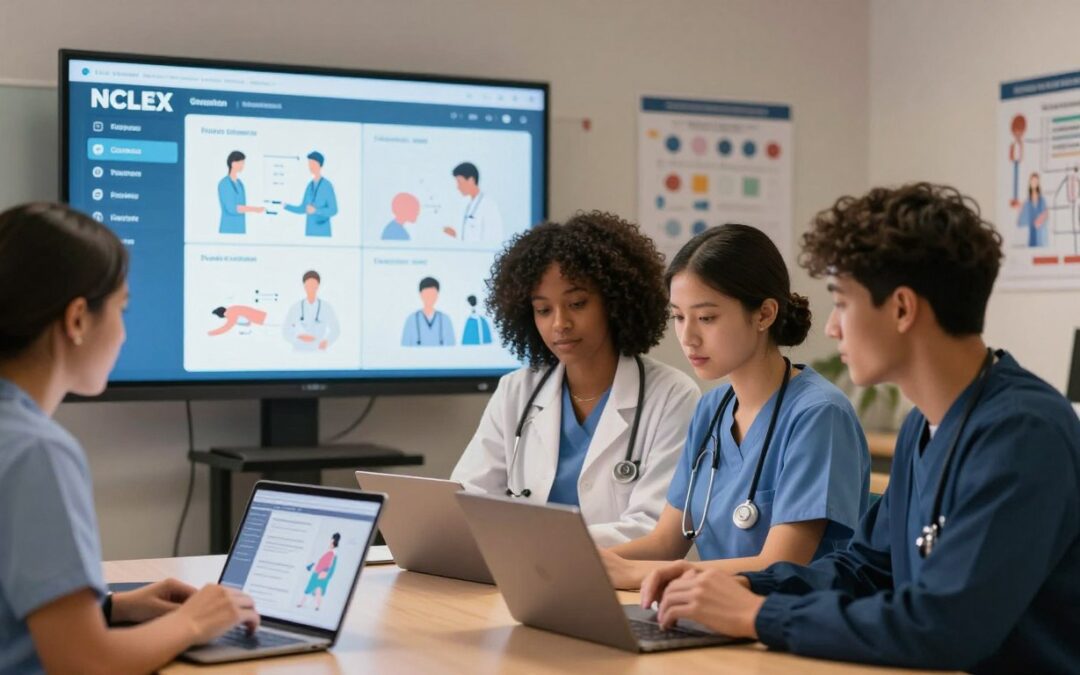
Did you know over 60% of new nurses make mistakes because of bad decision-making? This fact led to a big change in how we test nurses. Welcome to our guide to help you understand this new exam.
Knowing about these changes is crucial for your career. The exam now tests your ability to think critically, just like in real healthcare. We want to guide you so you feel ready and confident for your test.
If you want to get good at these new questions, check out online classes to help you get ready for the NCLEX-RN. We’re here to help you do well in this new nursing test.
Key Takeaways
- The exam has evolved to prioritize clinical judgment over simple memorization.
- New question types simulate real-world patient care scenarios.
- Understanding the scoring methodology is essential for your success.
- Preparation requires a focus on analytical thinking and problem-solving.
- Utilizing specialized resources can significantly boost your confidence before testing.
What is the NCLEX?
To become a licensed nurse, you must pass a key national exam. This test checks if you’re ready to give safe care to patients. It makes sure all new nurses have the basic skills needed for their job.
Overview of NCLEX Examination
The National Council Licensure Examination, or NCLEX, tests nursing graduates’ skills and knowledge. The Next Generation NCLEX is an update of this test. It shows how the exam keeps up with healthcare’s changing needs.
“Nursing is an art: and if it is to be made an art, it requires an exclusive devotion as hard a preparation as any painter’s or sculptor’s work.”
Purpose and Goals of the NCLEX
The exam’s main goal is to keep the public safe by only licensing qualified nurses. It’s a vital gatekeeper for the nursing field. The test checks if you can make good decisions in patient care situations.
| Exam Feature | Primary Focus | Target Audience |
|---|---|---|
| Clinical Judgment | Decision Making | Entry-level Nurses |
| Safety Standards | Patient Protection | Nursing Graduates |
| Professionalism | Ethical Practice | Licensure Candidates |
Who Needs to Take the NCLEX?
If you want to be a registered or licensed practical nurse in the U.S., you must pass the NCLEX. It’s a must for students who finish an accredited nursing program. Check your state’s board of nursing for Next Generation NCLEX details.
It doesn’t matter if you went to a traditional or accelerated program. The exam sets the same high standards for all nurses. Passing it is the last step before starting your nursing career.
The Evolution to Next Generation NCLEX
The world of nursing assessment has changed a lot with the Next Generation NCLEX. As healthcare gets more complex, we need to update how we test nurses. This Next Generation NCLEX overview shows how nursing exams are getting better.
Why a New Version Was Needed
Nursing today is not just about remembering facts. Nurses face high-pressure situations where quick decisions matter a lot.
The National Council of State Boards of Nursing (NCSBN) did a lot of research. They found that clinical judgment is key for new nurses. By changing the exam, we make sure new nurses are ready for today’s healthcare.
Key Differences from Previous Versions
The biggest NCLEX-RN changes are moving from simple questions to thinking critically. Old exams mostly tested basic knowledge with multiple-choice questions.
The new exams ask candidates to think deeply, spot patterns, and decide what care to give first. This better shows what nurses do every day.
Timeline for Implementation
Switching to this new model took a lot of planning. After lots of research and testing, it started on April 1, 2023.
These NCLEX changes 2023 are here to stay. They raise the bar for nursing, making sure every nurse has the essential skills for safe care.
Features of the Next Generation NCLEX
The Next Generation NCLEX is changing nursing assessment. These NCLEX-RN changes aim to prepare new nurses for today’s healthcare. The exam now tests skills needed in real-world nursing, not just simple recall.
Innovative Question Formats
The exam has five new question types. These formats test your ability to think critically, not just find the right answer.
- Extended Multiple Response: You can pick multiple correct options.
- Extended Drag-and-Drop: You organize information into categories.
- Cloze (Drop-down): You choose the right term to complete a sentence.
- Matrix: You compare patient findings with possible interventions.
- Enhanced Hot Spot: You identify specific areas on a chart or image.
| Question Type | Primary Skill Tested | Complexity Level |
|---|---|---|
| Matrix | Prioritization | High |
| Cloze | Clinical Reasoning | Medium |
| Enhanced Hot Spot | Data Interpretation | High |
Integrated Clinical Judgment
The NGN exam details focus on clinical judgment. You need to spot when a patient is getting worse and act fast. This shows you’re ready to make life-saving decisions.
“Clinical judgment is the observed outcome of critical thinking and decision-making in nursing practice.”
Every scenario is like real patient care. You’ll review electronic health records and nursing notes to decide the best action. This makes the exam more like real nursing.
Technology Enhancements
The testing platform has been improved for these new formats. The interface is now more user-friendly, making it easier to handle complex data. These updates make the exam feel more like a real clinical experience.
Benefits of the Next Generation NCLEX
We’re seeing a big change in how we check if nurses are ready. The NCLEX changes 2023 aim to test real-world skills, not just memorization. This means nurses will be better prepared for the challenges of the job.

Improved Assessment of Nursing Competency
The main goal is to accurately measure a candidate’s decision-making skills. The exam now uses scenarios that reflect real-life situations. This lets us see how nurses think on their feet.
“The shift toward clinical judgment is not just a change in testing; it is a fundamental improvement in how we validate the readiness of our future nursing workforce.”
Better Preparation for Real-World Scenarios
It’s key to bridge the gap between classroom learning and real-world practice. The new exam format requires students to think critically and make quick decisions. This prepares them well for their first day on the job.
- Enhanced clinical reasoning: Students learn to connect symptoms to possible actions.
- Prioritization skills: Candidates must choose which patient needs help first.
- Data interpretation: The exam tests their ability to understand lab results and patient charts.
Enhanced Candidate Experience
The NCLEX changes 2023 also aim to make the test-taking experience better. The new interface is easy to use, letting candidates focus on the clinical challenges. This approach reduces stress and lets their true skills show.
Structure of the Next Generation NCLEX
The modern nursing exam is designed to match today’s clinical settings. It focuses on clinical judgment, preparing you for real-world patient care. Knowing these elements helps build your confidence.
Test Format and Length
The exam uses Computerized Adaptive Testing (CAT) for a personalized experience. It adjusts question difficulty based on your answers. You can find more details in the official 2023 RN test plan.
The test’s length varies, with 85 to 150 questions. This dynamic length helps determine your pass or fail status accurately.
Types of Questions Included
The NGN test format includes new question types to test your decision-making. You’ll face complex case studies that require analyzing patient data and prioritizing interventions. These scenarios are like those found in a hospital ward.
You’ll also see drag-and-drop, cloze, and matrix-style questions. These formats test your clinical reasoning by requiring interaction with the interface. Each question is designed to evaluate your ability to process information under pressure.
Scoring Methodology
The NGN test format now uses a more detailed scoring system. It moved from an all-or-nothing approach to a polytomous scoring method. This allows you to earn partial credit for correct components within a question.
This change reflects your nursing knowledge and clinical judgment more accurately. It rewards partial understanding, recognizing that clinical decisions often involve complex thought. Review the table below to see how these scoring changes affect your performance.
| Question Type | Scoring Approach | Focus Area |
|---|---|---|
| Multiple Choice | Binary (Correct/Incorrect) | Foundational Knowledge |
| Case Studies | Polytomous (Partial Credit) | Clinical Judgment |
| Matrix/Grid | Polytomous (Partial Credit) | Data Analysis |
| Drag-and-Drop | Polytomous (Partial Credit) | Prioritization |
Preparing for the Next Generation NCLEX
Success on your nursing boards depends on adapting your study habits to new clinical judgment models. The NGN test format focuses on critical thinking, not just memorization. So, your study methods need to change.
We recommend moving away from simple flashcards. Instead, try active learning techniques.
Recommended Study Resources
To do well, look for study materials that reflect real-world nursing. Choose resources with high-fidelity simulations and interactive case studies. These tools let you practice decision-making in a safe, virtual setting.
- Clinical judgment workbooks that focus on patient safety scenarios.
- Interactive software that mimics the actual NGN test format interface.
- Peer-led study groups that discuss complex patient care plans.
Test-Taking Strategies
When facing new question types, stay calm and methodical. For Bowtie or Matrix questions, first identify the main clinical issue. Then, choose your answer.
Always read the patient data carefully. It’s key for making the right choice. Strategic guessing is less helpful here. Instead, focus on understanding the reasoning behind each answer.
Practice Exams and Simulations
Regular practice builds confidence in handling complex scenarios. Start with full-length simulations to get used to the NGN test format. This familiarity reduces anxiety and helps you manage your time better.
Set up regular practice sessions that mimic the test environment. This prepares you for the exam’s challenges. Each practice session is a chance to improve your clinical reasoning skills and performance.
Understanding the Scoring System
The new scoring model changes how your answers are checked. We aim to give you the best Next Gen NCLEX info to boost your confidence. This new system gives a deeper look at your decision-making skills.
How Scoring Differs from Traditional NCLEX
Before, the exam was simple, marking answers as right or wrong. Now, it uses polytomous scoring, giving partial credit for complex questions. This shows your clinical judgment better.
This change lets you earn points for almost correct answers. It makes your score more about your skills, not just yes or no answers. Here’s a table showing the main differences.
| Feature | Traditional Model | New Scoring Model |
|---|---|---|
| Answer Type | Binary (Right/Wrong) | Polytomous (Partial Credit) |
| Clinical Focus | Knowledge Recall | Clinical Judgment |
| Assessment | Limited Depth | Comprehensive Analysis |
Minimum Passing Standard Explained
The minimum passing standard shows if you’re ready for nursing. It’s set by the National Council of State Boards of Nursing. They make sure it’s fair for everyone.
You don’t need a perfect score to pass. You just need to show you can make safe decisions. This Next Gen NCLEX info helps you understand the exam’s purpose.
What Happens After the Exam?
After you finish, the system tells you it’s done. You’ll get a confirmation. Then, your results go to your nursing board.
You’ll get your official results in a few days. Be patient, as they make sure everything is fair. Good preparation will help you feel better after the exam.
Common Misconceptions About the Next Generation NCLEX
It’s time to clear up the truth about the nursing licensure process updates. Many students get worried about the exam’s difficulty. We want to give you the right info to feel confident.
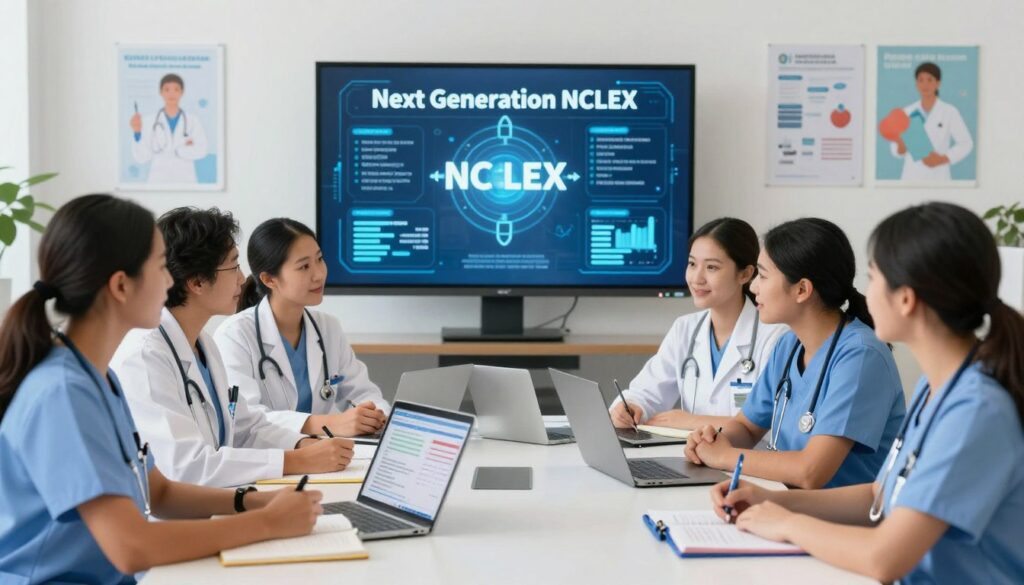
Myths vs. Facts
One big myth is that the exam is too hard to pass. But, the test really checks your clinical judgment, not just memorization. You don’t need new nursing knowledge to pass.
Looking for Next Gen NCLEX info? Remember, nursing basics stay the same. The exam just tests how you apply that knowledge in tough scenarios. If you’ve learned your nursing curriculum well, you’re set.
| Common Myth | The Reality | Impact on Student |
|---|---|---|
| The test is impossible to pass. | Pass rates remain consistent with previous versions. | Reduces unnecessary exam anxiety. |
| Requires new nursing knowledge. | Focuses on applying existing clinical skills. | Encourages critical thinking over rote memorization. |
| It is just a harder version of the old test. | It is a more accurate measure of safety. | Better preparation for real-world nursing. |
Clarifying Doubts About the Test
Many worry about new question formats. Our Next Generation NCLEX FAQ says these formats help show your decision-making. You’ll practice with case studies, showing how you’d care for patients.
Don’t worry about the tech; it’s easy to use. It lets you focus on clinical reasoning without stress. You have everything you need to do well.
Understanding the Impact on Future Nursing
These changes are good for healthcare. They make sure new nurses are ready for today’s clinics. This helps connect classroom learning to real-world nursing.
This new testing way helps you grow as a nurse. It’s not just a test; it’s about showing you can give high-quality care. We think this will lead to better care for nurses and patients.
Resources for Candidates
Studying for the exam can feel overwhelming, but you’re not alone. There are many high-quality tools to help you succeed. The Next Generation NCLEX FAQ pages can answer common questions. These resources can help you feel ready for your test.
Official NCLEX Resources
The best information comes from the source. We suggest checking the National Council of State Boards of Nursing (NCSBN) website for updates.
- Access official practice exams that are like the real test.
- Check the candidate bulletin for the latest rules and procedures.
- Use the Next Generation NCLEX FAQ for answers on scoring and question types.
Community Support and Study Groups
Connecting with peers can really help. Joining a study group lets you talk about tough clinical scenarios with others who understand.
These groups are great for sharing effective study habits and getting emotional support. If you’re stuck, hearing how others solve problems can give you new ideas.
Online Workshops and Webinars
Interactive learning can improve your clinical skills. Many groups offer webinars on the new exam format.
These webinars feature experienced teachers who explain complex case studies live. By attending, you’ll learn the latest strategies and feel ready for your exam.
Success Stories: Candidates in Action
Listening to those who have passed the new exam format offers invaluable insights for your path. We’ve collected stories from recent nursing graduates who conquered these tough clinical scenarios. Their experiences show that with the right attitude, you can reach your goals too.
Real-Life Experiences Taking the Next Generation NCLEX
Many graduates say the exam feels like a real-world clinical shift more than a test. Sarah, a recent BSN graduate, found that the case studies made her slow down and think deeply about patient needs. She believes the new format mirrors the quick pace of her hospital work.
Marcus, another candidate, felt overwhelmed by the new question types at first. But once he grasped the clinical judgment model, the questions became easier. He stressed that the exam tests your ability to make safe choices, not just memorize facts.
Tips from Successful Test-Takers
Top candidates emphasize the need for active learning over just reading. They say it’s key to understand the “why” behind each nursing action. Knowing the underlying health issues helps pick the right answer in complex scenarios.
Creating a study plan that focuses on practice questions is advised. Many students found simulating the test environment helped lower their test-day anxiety. Being consistent is the secret to gaining the confidence needed for success.
How They Prepared for the Exam
Preparation often involves a blend of resources and consistent practice. Most successful test-takers mixed question banks with clinical judgment workbooks. They also reviewed rationales, even for correct answers, extensively.
“The shift to clinical judgment was a game-changer for my study habits. I stopped memorizing lists and started visualizing the patient in front of me, which made all the difference during the exam.”
We’ve put together a summary of effective study methods used by top performers. These strategies aim to improve your retention and application of nursing knowledge.
| Preparation Method | Primary Benefit | Frequency |
|---|---|---|
| Case Study Practice | Improves Clinical Judgment | Daily |
| Rationale Review | Deepens Conceptual Understanding | After Every Quiz |
| Timed Simulations | Builds Exam Stamina | Weekly |
| Peer Study Groups | Clarifies Complex Topics | Bi-Weekly |
Future of the NCLEX
Healthcare is getting more complex, and so is the way we test nurses. The NCLEX is not set in stone; it’s a dynamic tool to keep patients safe. By keeping an eye on NCLEX future updates, you can stay on top of your game.
Potential Changes Beyond the Next Generation
Testing is always getting better. We think future tests will use advanced simulation technology to feel more like real hospitals. This will help nurses think critically and care for patients better.
Ongoing Feedback and Adjustments
The National Council of State Boards of Nursing (NCSBN) works hard to improve the exam. They listen to educators, new nurses, and hospital leaders. This way, NCLEX future updates meet the real needs of nurses.
The Role of Nursing Education
Nursing schools are key in this process. They’re teaching more about clinical judgment than just memorizing facts. By knowing these changes, students can get ready for a fulfilling career.
| Focus Area | Current Standard | Future Direction |
|---|---|---|
| Assessment Type | Clinical Judgment | Advanced Simulation |
| Data Collection | Periodic Surveys | Real-time Analytics |
| Curriculum Goal | Knowledge Base | Adaptive Reasoning |
We urge all candidates to keep learning. Staying updated on NCLEX future updates is a smart move. It helps you stay relevant in a changing medical world.
Conclusion: Navigating the NCLEX Landscape
The Next Generation NCLEX changes how we check if nurses are ready. It lets you show your critical thinking in ways that match today’s healthcare needs.
Key Takeaways for Your Journey
You now know about the new question types and how they’re scored. This knowledge is key as you get ready for your exam. Keep up with NCLEX updates to keep your studying current with the latest rules.
Empowering Your Professional Future
Mastering clinical judgment is key to your success as a healthcare worker. See these changes as chances to prove you can make safe, smart choices for your patients. Focus on giving top-notch care in today’s complex medical world.
Looking Ahead
The nursing field is always evolving and facing new challenges. By staying ahead and watching for NCLEX updates, you’ll lead the way. We believe in your hard work and commitment to this important career.