

Ever felt overwhelmed by the vast amount of nursing knowledge needed for your final board exam? Many candidates face this overwhelming sensation when starting their prep.
Finding a clear starting point is a common challenge for nursing graduates. We think a structured approach is key to passing on your first try. By planning out the test scope early, we can better manage our time and reduce test anxiety.
We aim to give you practical NCLEX study tips to make your review easier. Let’s go through the key steps to boost your confidence and get you ready for the big day.
Key Takeaways
- Prioritize high-yield topics to maximize your study efficiency.
- Create a realistic schedule that balances review with necessary rest.
- Use active recall techniques to improve long-term information retention.
- Focus on understanding core concepts, not just memorizing.
- Maintain a positive mindset to reduce stress during your prep.
Understanding the NCLEX Exam Structure
Getting to know the NCLEX is key to your success. Learning about the test environment helps us feel less stressed. A good NCLEX prep guide is like a map to help us through.
Test Format and Duration
The NCLEX uses Computerized Adaptive Testing (CAT). This dynamic technology changes the question difficulty based on our answers. If we get it right, the next question is harder. If we get it wrong, it’s easier to check our knowledge.
The number of questions can change a lot. We might see between 85 and 150 questions. The exam lasts five hours, including breaks and tutorials.
Question Types and Categories
We need to focus on the Client Needs framework by the NCSBN. It breaks the exam into four main areas and six subareas. These cover the essential responsibilities of a nurse. Learning these well is key to any good prep guide.
The four main areas are:
- Safe and Effective Care Environment
- Health Promotion and Maintenance
- Psychosocial Integrity
- Physiological Integrity
Critical thinking is important here. The exam often has complex patient scenarios. By focusing on these basics, we make sure our study time is worth it. This helps us pass the exam the first time.
Creating a Study Plan
Before we start, we need to know where we stand. A detailed NCLEX study plan helps us organize and cover all material. This way, we avoid feeling overwhelmed and stay focused.
Assessing Your Current Knowledge
Our first step is a self-assessment test. It shows us our strengths and weaknesses. Knowing where we are lets us focus more on tough areas and build on what we know.
This test is like a guide for our study sessions. We can focus on areas that need more work. Using these NCLEX study tips helps us use our time wisely.
Setting Realistic Goals
After finding our gaps, we set clear goals. We break down our study into smaller parts that fit our daily routine. Setting attainable milestones keeps us motivated and gives us a sense of achievement.
Creating a weekly plan helps us stay on track. A consistent NCLEX study plan reduces stress and boosts our confidence. Remember, steady effort is better than short, intense study sessions.
Focusing on Core Nursing Concepts
To build a solid foundation for your exam, we must address the most critical topics immediately. The question is: “What should I study first for NCLEX?” Focusing on high-yield areas early helps us develop the clinical judgment needed for complex patient scenarios.
By prioritizing these core concepts, we ensure our study time is spent on the material that appears most frequently on the test. If you’re looking for more foundational support, consider online classes to help you prepare for the CNA exam. This will reinforce your basic nursing knowledge before diving into advanced NCLEX topics.
Prioritizing Patient Care
Management of care is a cornerstone of the nursing profession and a significant portion of the exam. We need to understand how to delegate tasks, prioritize patient needs, and maintain safety in a clinical environment.
Mastering these skills early helps us feel more confident when facing questions about legal responsibilities and ethical dilemmas. We recommend practicing scenarios that require you to decide which patient needs attention first. This is a common testing pattern.
Understanding Pharmacology
Many students ask, “What should I study first for NCLEX?” and the answer often points directly to pharmacology. This subject represents the second largest category on the exam, accounting for 13% to 19% of the total questions.
Because pharmacology has the highest student failure rate, we suggest tackling this content during your very first week of study. Do not wait until the end to memorize drug classes and side effects. By starting early, we give ourselves enough time to truly grasp how these medications impact patient outcomes.
Utilizing NCLEX Review Resources
Success on the NCLEX depends on the quality of our study resources. There are many options, but we need to focus on tools that challenge us. They should also prepare us for the actual exam.
Choosing the Right Study Materials
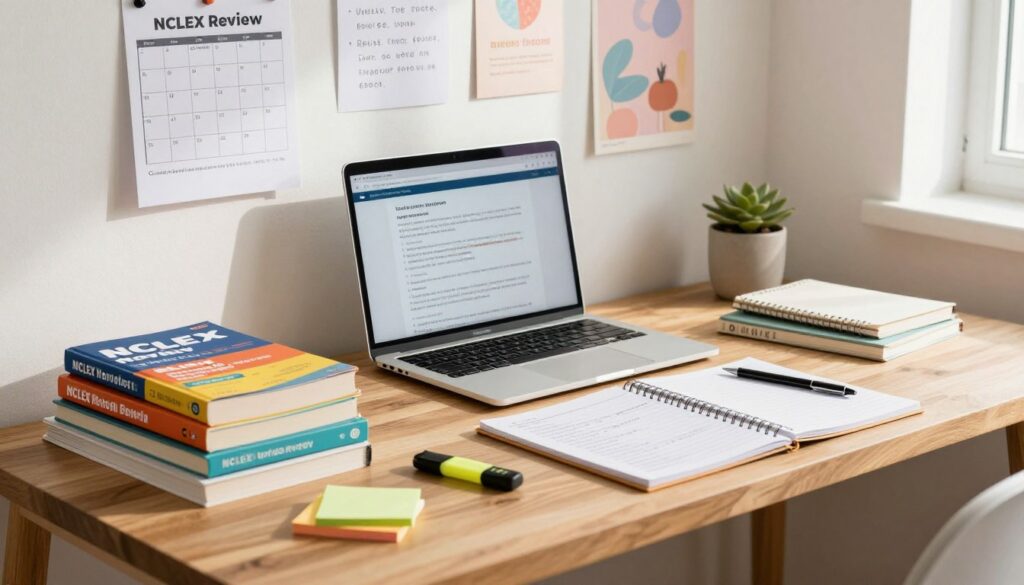
When picking NCLEX study materials, look for detailed rationales for each question. Knowing why an answer is right is key. This helps us understand nursing concepts deeply, not just memorize them.
“Success is the sum of small efforts, repeated day in and day out.”
Choose platforms that simulate the test environment to reduce stress. For example, UWorld students pass at a 98% rate, thanks to over 10,000 user surveys. Use a structured NCLEX study plan to stay on track with these resources.
Online Courses and Apps
Today’s NCLEX test prep often includes digital tools tailored to our learning needs. Adaptive testing platforms are great because they pinpoint our weaknesses. This targeted practice boosts our study efficiency and retention.
When choosing NCLEX study resources, look for these features:
- High-yield lecture videos that make complex topics easy to understand.
- Adaptive question banks that adjust to our skill level.
- Mobile accessibility for easy review anywhere, anytime.
The best NCLEX test prep matches our learning style. Try free trials to see if the tools and content work for you. By making the right choice, we’re more likely to pass the test.
Practicing with NCLEX Sample Questions
Passing the NCLEX often depends on how well we use sample questions. Reading textbooks is good, but active retrieval practice is key. By doing exam-style questions, we make our brains recall info under pressure. This is essential for NCLEX test prep.
Importance of Question Practice
Many of us just re-read notes or highlight chapters. But research shows testing ourselves is better for keeping info. When we do questions, we get used to the test feel. This helps us deal with nerves and stay on pace.
“Success is not final, failure is not fatal: it is the courage to continue that counts.”
Regular practice helps us find our weak spots. We can focus on what needs more work instead of guessing. This way, our study time is always used well, focusing on key topics.
Strategies for Answering Questions
To make the most of NCLEX prep, we should look at all answer choices. Knowing why a distractor is wrong is as important as the right answer. This builds the clinical judgment needed for tough patient cases.
Here’s how to review your practice results:
- Read the rationale: Check if your reasoning matches the clinical standard, even if you got it right.
- Analyze distractors: Figure out why the wrong options were there to trick you.
- Identify patterns: Spot common themes in missed questions to adjust your study plan.
Seeing every practice question as a chance to learn sharpens our critical thinking. This turns study sessions into a powerful tool for success. The goal is to grasp the logic behind nursing care, not just memorize facts.
Time Management During Study Sessions
Learning to manage time is as critical as learning nursing theory for your exam. We need to balance study sessions with daily life to stay consistent without getting tired. Treating our study time like a job helps us stay focused on our goals.
Methods to Stay Focused
Staying focused during long study sessions takes effort and the right setting. The Pomodoro technique is helpful. It involves studying for fifty minutes, then taking a ten-minute break. This keeps our concentration high and prevents burnout.
It’s also key to avoid digital distractions. Turn off phone notifications or use website blockers. Having a quiet, dedicated space helps us focus on our NCLEX study plan.
Creating a Study Schedule
A detailed NCLEX study schedule is the best way to plan study time. A 4-week plan is often recommended for recent graduates. It allows us to cover all material without rushing.
We should organize our study time into different activities. Alternating between reading and practicing questions keeps our sessions interesting and effective. Here’s a weekly plan to help stay organized.
| Study Focus | Daily Duration | Primary Goal |
|---|---|---|
| Content Review | 3 Hours | Master core concepts |
| Question Practice | 2 Hours | Apply critical thinking |
| Review & Remediation | 1 Hour | Analyze missed questions |
Consistency is key to success. Sticking to our NCLEX study plan builds confidence for the test. Remember, every small effort each day adds up to our success with our NCLEX study schedule.
Knowing NCLEX Test Taking Strategies
Developing a sharp, systematic approach to the exam is key for many nurses. While clinical knowledge is essential, mastering NCLEX exam strategies shows our skills under pressure. We should see each question as a puzzle needing a logical solution.
Approaching Multiple Choice Questions
When faced with a complex question, first identify the core issue. Always read the stem carefully to understand the question’s focus. Critical thinking is vital, helping us ignore unnecessary details.
Breaking down the question into smaller parts makes it easier. Here are key steps for every question:
- Identify the specific client condition mentioned.
- Determine if the question is positive or negative (e.g., “which action is correct” vs. “which action is inappropriate”).
- Look for keywords like “first,” “best,” or “most important” to guide our priority.
Eliminating Incorrect Answers
Removing wrong choices is a key skill for tough questions. By using NCLEX exam strategies to eliminate distractors, we boost our chances of picking the right answer. Look for options that are clearly unsafe or outside nursing practice.
“Success is not final, failure is not fatal: it is the courage to continue that counts.”
We often see “distractor” answers that seem right but are wrong. Be wary of absolute terms like “always” or “never,” which are rarely correct. Applying these NCLEX exam strategies ensures we focus on the safest, most effective care during the test.
Building Clinical Judgment Skills
Let’s dive into how we can improve our decision-making skills for the NCLEX. It’s more than just memorizing facts. We need to understand patient care deeply. This way, we can tackle the exam’s challenges with genuine confidence.

Analyzing Patient Scenarios
When we face unfolding case studies, our goal is to spot the patient’s condition fast and right. We must pick up on small signs that show a change. By practicing to choose the right actions and guess outcomes, we get better at focusing on what’s most important.
Think of each scenario as a story that demands our full focus. We should guess the most likely problem and plan how to act if it gets worse. This way, we’re not just reacting to symptoms. We’re anticipating patient needs before they become urgent.
Applying Critical Thinking
Critical thinking is key to safe nursing. We can boost these skills by taking online courses to develop your research and critical thinking. These courses help us evaluate evidence better. This way, we make informed, logical choices based on clinical standards.
We should always question our own thinking during practice. By asking “why” a certain action is right, we strengthen our knowledge. This analytical mindset is what the exam board wants to see in future nurses.
| Feature | Simple Memorization | Clinical Judgment |
|---|---|---|
| Primary Focus | Recalling isolated facts | Synthesizing patient data |
| Decision Basis | Textbook definitions | Evidence-based practice |
| Outcome | Limited flexibility | Adaptive problem solving |
| Exam Utility | Low for complex cases | High for case studies |
Joining Study Groups or Forums
Working together with other nursing students can make studying easier. It’s great to have someone to lean on during tough times. This way, we can all get through the journey to licensure together.
Benefits of Collaborative Learning
Learning together has its own perks. When we teach others, we learn more ourselves. It’s like a two-for-one deal.
It also gives us emotional support when we need it most. We remember we’re not alone. Sharing NCLEX study tips helps us see things from different angles.
“Alone we can do so little; together we can do so much.”
Finding the Right Study Partners
It’s important to find study buddies who are as dedicated as you. They should have a similar NCLEX study schedule. This way, your study sessions will stay on track.
Accountability is key. Knowing someone is counting on you keeps you motivated. If your group gets off track, suggest a plan or ask questions online.
Being part of online groups helps us solve tough questions together. We tap into each other’s knowledge. This builds our confidence for the exam.
Exam Day Preparation Tips
Let’s go over the key steps to make our exam day smooth and stress-free. We’ve spent a lot of time using NCLEX study resources. But, the hours right before the test are just as important for success.
What to Bring for the Exam
First, we need to know what we must bring to the testing center. We must have a physical, non-digital, government-issued, and unexpired ID to get in. Digital IDs or expired documents won’t work, so check your ID the night before.
It’s also good to know the rules about personal items. Most centers have lockers for your stuff. But, it’s better to leave things you don’t need at home. Using NCLEX exam strategies helps us stay focused.
Relaxation Techniques Before Testing
Handling pre-test nerves is key to doing well. Try deep breathing or visualization to stay calm. Staying grounded helps us answer questions clearly, not anxiously.
Also, get a good night’s sleep and eat well before going. These simple steps help our brain work better. Here’s a quick checklist to make sure we’re ready for the exam.
| Category | Requirement | Action Item |
|---|---|---|
| Identification | Government-issued ID | Verify expiration date |
| Logistics | Testing center address | Confirm route and parking |
| Well-being | Hydration and rest | Sleep 8 hours minimum |
| Preparation | NCLEX study resources | Final review of notes |
Reviewing Test-Day Logistics
Let’s look at the key steps for a smooth test day. Our NCLEX study plan has us ready for the exam. But, we also need to focus on the testing center’s environment. Preparation is the key to reducing anxiety and doing our best.
Understanding the Testing Center Protocol
Testing centers have strict rules to keep the exam fair. We need to know about personal belongings. Most centers ask us to lock up items in a secure locker. Prohibited items, like smartwatches or unauthorized notes, are not allowed in the testing room.
If a technical issue happens, like a computer glitch, stay calm. Tell the proctor right away. Proctors are trained to help without making us lose time. Knowing the rules for breaks helps us manage our energy.
Knowing Your Test Window
Our test time is set, and we must stick to it. Arriving thirty minutes early lets us check in without stress. Punctuality helps us start the exam focused and calm.
Check your appointment details on the official portal early. Knowing our test time helps us plan better. Staying organized keeps our study momentum going.
| Category | Action Item | Importance |
|---|---|---|
| Documentation | Valid Photo ID | High |
| Arrival | 30 Minutes Early | High |
| Prohibited Items | Leave at Home | Medium |
| Logistics | Confirm Location | High |
Importance of Post-Exam Review
Passing the exam is a big step in our nursing career. We reflect on our hard work to see how it shapes our future patient care. A good NCLEX preparation guide was key in building our foundation.
Analyzing Your Test Results
We look at our performance reports to find our strong and weak points. This self-reflection helps us see where we did well during the test. It also helps us understand our professional identity better.
Planning Next Steps Based on Results
Our journey ahead involves using what we learned from our NCLEX study materials in real-world settings. We set new goals for our first nursing roles to keep learning every day. We’re excited to provide top-notch care to our patients as we take on new responsibilities.