

Did you know nearly 20% of first-time test-takers fail their nursing boards every year? This fact shows how important it is to plan well. Many students wonder, “Can I study for the NCLEX in one month?” While it seems very tight, you can do it with a strict plan.
Think of this as a long race, not a quick sprint. Good NCLEX exam preparation needs focus and a clear plan. We’ll make complex topics easy to handle each day. Consistency is your greatest ally when time is short. Let’s create a solid plan to make you feel confident for your exam.
Key Takeaways
- A four-week timeline is feasible with strict daily discipline.
- Treating your review as a marathon prevents mental burnout.
- Prioritize high-yield topics to maximize your limited study hours.
- Maintain a positive mindset to stay motivated throughout the process.
- Use a structured schedule to track your progress effectively.
Understanding the NCLEX Exam Structure
To ace the NCLEX, we need to move beyond traditional tests. It’s not like the exams we took in nursing school. This test checks if we’re ready to practice safely as new nurses. Good NCLEX exam preparation means knowing it focuses on clinical judgment, not just memorizing.
The Purpose of NCLEX
The main goal is to check if we have the critical thinking skills for patient safety. It’s not about recalling facts from books. It tests our ability to analyze data and make decisions quickly.
Our study approach must change because of this. We should focus on understanding the reasons behind nursing actions, not just memorizing them. A structured NCLEX study plan helps us meet these goals.
Types of Questions on NCLEX
The exam uses Computerized Adaptive Testing (CAT) to test our knowledge. The next question’s difficulty depends on our previous answers. If we get it right, the next question is harder to check our level.
This makes the test very personal. We might see different question types, like multiple-choice and fill-in-the-blank. To get better, check out online classes for NCLEX-RN prep, which mimic this format.
Scoring and Passing Standards
Passing the NCLEX isn’t about a score. The CAT system keeps checking our ability based on the questions we answer. The test ends when it’s 95% sure we’re above or below the passing mark.
This scoring way means don’t worry if questions seem tough. NCLEX study tips say getting harder questions is a good sign. Stay calm and focused to show your clinical skills and pass with confidence.
Setting a Realistic Study Schedule
Getting ready for the NCLEX in thirty days means moving from just reading to a detailed plan. A good NCLEX study plan beats months of random reading. It helps us remember more and feel more confident.
Time Commitment per Day
Being consistent is key to success. We should spend 1-2 hours each day on focused study. This daily NCLEX study schedule keeps us on track without getting too tired.
Even when we’re very busy, a short study session keeps our minds sharp. We must see these sessions as important meetings with our future careers.
Prioritizing Study Materials
Not all study materials are the same. We should focus on the best NCLEX study materials that match the exam. For structured help, check out online courses for the USMLE or nursing-specific platforms.
By choosing what’s most important, we save time. We should focus on practice questions and rationales, not whole textbooks.
Creating a Weekly Study Plan
Breaking down our study into weekly parts helps us see our progress. We can organize our NCLEX study plan by nursing topics. This way, we can spot and fix weak areas early.
Don’t forget to include a “catch-up” day each week. This flexibility is essential for dealing with life’s surprises while staying focused on our goals.
Key Study Resources for NCLEX Preparation
Choosing the right tools is key to getting our nursing license. With just one month to prepare, we must pick the best NCLEX study resources for our daily routine. Using high-quality materials means every study hour counts towards our success.
Recommended NCLEX Review Books
A good NCLEX study guide is essential for our review. Books like the Saunders Review for the NCLEX-RN give a clear overview of nursing basics. They help us remember complex topics we might have forgotten.
Online NCLEX Prep Courses
Digital platforms can also boost our learning. Many students prefer online courses for their structure and accountability. These courses include video lectures and tracking to keep us on track.
Practice Questions and Simulations
Practice questions are vital for our prep. They should make up most of our study time. Using NCLEX study materials, we get used to the test format and sharpen our thinking. Daily practice helps us spot our weaknesses before the exam.
| Resource Type | Primary Benefit | Best For |
|---|---|---|
| Review Books | Content Depth | Foundational Knowledge |
| Online Courses | Structured Learning | Guided Preparation |
| Practice Banks | Active Application | Exam Simulation |
Effective Study Techniques for Quick Learning
We can change how we study by using methods that improve memory. Instead of just reading, we should use techniques that make us think hard. These NCLEX study strategies help us remember nursing concepts better.

Active Learning Strategies
Active learning is key when time is short. We should use proven methods to study for the NCLEX. This includes active recall, where we test ourselves without looking at our books.
Spaced repetition is also important. It helps us remember by reviewing material at different times. This keeps the information in our minds longer.
Utilizing Flashcards
Flashcards are great for memorizing important nursing info. We can make digital decks with images and scenarios. These NCLEX study tips help us stay focused, even during short breaks.
Consistency is key with flashcards. Reviewing daily keeps the information fresh. This builds a strong base for exam day.
Study Groups vs. Solo Study
Choosing between group study and solo study depends on how we learn best. Solo study lets us focus on our weaknesses. Study groups help us explain concepts, which strengthens our own understanding.
If we study with others, we can find online classes for support. The table below helps us decide between solo and group study.
| Feature | Solo Study | Study Groups |
|---|---|---|
| Pacing | Self-directed | Group-dependent |
| Focus | Deep concentration | Collaborative learning |
| Accountability | Internal motivation | Peer pressure |
| Best For | Complex theory | Clarifying difficult topics |
Managing Test Anxiety
Let’s find ways to turn nervous energy into calm focus. It’s completely normal to feel pressure when preparing for a big milestone in our nursing careers. By recognizing these feelings early, we can take steps to make sure our nerves don’t get in the way.
Techniques for Staying Calm
When we feel overwhelmed, our bodies go into fight-or-flight mode. This makes it hard to think clearly. We can fight this by practicing deep, rhythmic breathing. Just a few minutes of focused breathing can lower our heart rate and improve our focus.
Grounding techniques are also helpful. If our minds start racing, we can pause and notice our surroundings. We can list five things we see, four things we can touch, and three things we can hear. This simple exercise brings us back to the present and helps us calm down.
Role of Practice Tests
One great way to reduce fear is to make the testing environment feel familiar. We should take full-length practice exams under simulated testing conditions to build our mental stamina. This makes the actual exam feel less surprising and reduces anxiety.
It’s important to take these practice exams in a quiet, uninterrupted space. We should also stick to the time limits for each section. This helps us get used to the exam’s pace and manage our time without feeling rushed or panicked.
Visualization Strategies for Success
Visualization is a powerful tool for mental rehearsal. We can imagine ourselves answering each question with clarity and confidence. By picturing ourselves staying calm, even when faced with tough questions, we prepare our brains for real-life challenges.
This mental rehearsal boosts our belief in our preparation and abilities. Visualizing success helps replace self-doubt with purpose. This shift is key to staying focused and succeeding on exam day.
| Technique | Primary Benefit | Best Time to Use |
|---|---|---|
| Deep Breathing | Lowers heart rate | During study breaks |
| Grounding | Restores focus | When feeling overwhelmed |
| Practice Exams | Builds stamina | Weekly simulation |
| Visualization | Boosts confidence | Before starting study |
Focusing on High-Yield Nursing Topics
When time is short, we must focus on key nursing ideas that show up a lot on exams. Instead of trying to remember everything in our books, we should concentrate on the most important topics. This way, we build a solid base of clinical skills needed to pass the NCLEX.
Critical Care Nursing Concepts
Critical care is a big part of the exam, testing how well we handle unstable patients. We need to understand hemodynamics, ventilator use, and ABG interpretation. Spotting early signs of trouble is more important than knowing every detail of equipment.
If you need help with these tough topics, online classes can be a good option. You can find classes to help you prepare for the CNA or similar nursing courses. These resources can help improve your critical thinking for high-risk care. The goal is to know the best action in emergencies.
Pharmacology Essentials
Pharmacology is tough, but we can get it by focusing on drug classes, not individual drugs. Learning the prototype drug in each class helps us understand side effects and nursing needs for other drugs in that group.
“The art of medicine consists of amusing the patient while nature cures the disease.” — Voltaire
We should look for common actions and contraindications. Knowing how drugs work helps us avoid memorizing everything. This saves time during our review period.
Maternal and Child Health
Topics on maternal and child health test our knowledge of safety, growth, and body changes. We need to know what’s normal and what’s not during pregnancy and labor. Keeping patients safe is key to answering these questions right.
- Learn the stages of labor and what nurses should do.
- Review important developmental milestones for kids at different ages.
- Know how to spot fetal distress and postpartum issues.
By mastering these key areas, we can feel confident on the exam. We’re not just studying to pass; we’re learning to give safe and effective care to our patients.
Incorporating Breaks and Self-Care
To pass the NCLEX, we must care for our bodies and minds as much as our patients. Many think more hours studying means better results. But, strategic rest is key to success.
Importance of Taking Breaks
Long study sessions can make us mentally tired. This makes it hard to remember complex medical info. Taking breaks for snacks or walks keeps us motivated and focused. Stepping away from our notes lets our brains refresh and absorb what we’ve learned.
“Rest is not idleness, and to lie sometimes on the grass under trees on a summer’s day, listening to the murmur of the water, or watching the clouds float across the sky, is by no means a waste of time.”
Incorporating Exercise into Study Time
Exercise keeps our minds sharp during intense study periods. A short twenty-minute workout boosts blood flow and focus. Making exercise a daily must helps us stay energized for our 30-day plan.
Mindfulness and Relaxation Exercises
Stress management is vital when we’re racing against time. Mindfulness or deep breathing exercises help keep our stress low and focus high. These simple tips help us stay calm, even when studying feels tough. By focusing on our well-being, we have the energy to complete our prep.
Assessing Your Progress
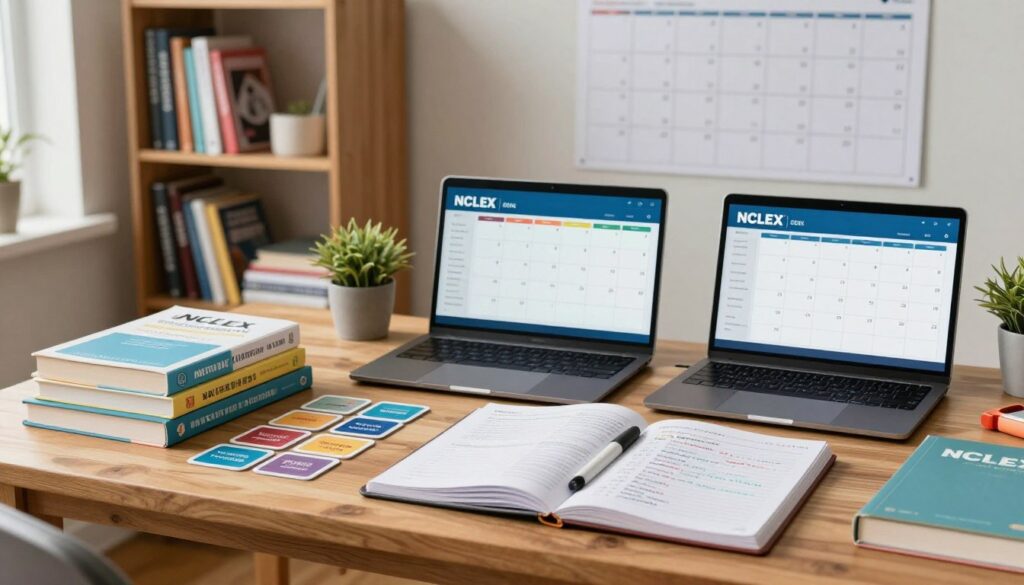
How do we know if our prep is working as the exam nears? Regular checks guide us through our study journey. By checking our progress, we keep our NCLEX study schedule on track for passing the exam.
Taking Practice Exams
Practice exams are key to feeling like the real test. We should treat these as real tests to improve our mental endurance and time skills. For more help, check out online classes for pharmacy tech certification or nursing modules to get better at tests.
Analyzing Weak Areas
Learning from our mistakes is the best part. We should dissect every rationale for correct and wrong answers. This helps us understand the clinical logic.
By diving deep, we spot patterns in our errors. Whether it’s pharmacology or critical care, knowing our weak spots lets us focus better.
Adjusting Your Study Plan
Being flexible is key with an NCLEX study schedule. If scores don’t improve, we need to change our plan. We might spend more time on tough topics or try new resources for a fresh view.
The table below helps us track our progress and know when to change our study plan:
| Metric | Goal | Action Required |
|---|---|---|
| Practice Score | Above 70% | Maintain current pace |
| Rationale Accuracy | High | Continue deep analysis |
| Weak Topics | Decreasing | Review core concepts |
| Study Schedule | Consistent | Adjust if needed |
By making our NCLEX study schedule flexible, every study session becomes valuable. We stay confident and ready by always improving our strategy based on our results.
Mastering Time Management During Review
When we prepare for the NCLEX, time is our most valuable resource. A successful NCLEX study plan in 30 days needs discipline and focus. Every hour at our desks must count.
Setting Timers for Each Study Session
Setting timers for study blocks helps us feel the exam’s pressure. Focused intervals train our brains to stay sharp, even when tired.
This method keeps us from passive reading. We stay engaged, actively testing our knowledge, not just skimming.
Balancing Review with Rest
Understanding the “why” behind answers is key. We need to balance review with rest to absorb clinical reasoning.
Knowing when to step away is part of using our NCLEX study guide well. A rested mind retains complex concepts better than an exhausted one.
Success is the sum of small efforts, repeated day in and day out.
Avoiding Last-Minute Cramming
Cramming causes anxiety and poor retention. We spread our workload evenly to process information deeply.
Consistency is key for long-term memory. A structured NCLEX study guide helps us face the exam without last-minute stress.
| Study Method | Focus Area | Recommended Duration |
|---|---|---|
| Timed Practice | Clinical Reasoning | 50 Minutes |
| Active Review | Weak Subject Areas | 40 Minutes |
| Mental Break | Cognitive Recovery | 15 Minutes |
Following this NCLEX study plan keeps our preparation sustainable. We’re not just memorizing; we’re building clinical judgment for our careers.
Networking and Community Support
Often, the best NCLEX study resources are the people around us. The journey to licensure can be tough, but we don’t have to go it alone. By connecting with others, we get different views and support that keeps us going.
Finding Study Partners
Having a study buddy makes studying easier. We can quiz each other and explain tough topics. Collaboration makes hard tasks easier to handle together.
Joining Nursing Forums
Online nursing forums are great NCLEX study resources. We can ask questions and get help from those who passed. These places are for discussing important topics and tips on test anxiety. They make us feel less alone while studying.
Participating in NCLEX Prep Events
Workshops and webinars are also valuable. They let us meet others and learn from experts. These events boost our confidence and show us new study ways.
| Support Method | Primary Benefit | Best For |
|---|---|---|
| Study Partners | Active Recall | Daily Review |
| Nursing Forums | Peer Advice | Clarifying Doubts |
| Prep Events | Expert Guidance | Strategy Building |
Using these NCLEX study resources builds a strong support network. Whether with a partner or in a forum, being part of a community is key. We do better when we study together.
Final Review Strategies Before the Exam
As the exam date approaches, our main goal is to solidify our knowledge. We aim to refine our NCLEX study strategies by focusing on key concepts we’ve already learned. This strategy boosts our confidence and prevents burnout.
Last-Minute Study Tips
In the final days, reviewing summary sheets or high-yield notes is better than tackling new textbooks. Consistency is key, so keep study sessions short and focused. Getting enough rest is also essential to keep our minds sharp.
Looking back at our practice test results can help us spot patterns in mistakes. By focusing on these areas, we can improve without feeling overwhelmed. The key is to stay calm and trust the preparation we’ve done.
Essential Items to Bring on Exam Day
Preparation isn’t just mental; we must also prepare physically. We need to bring an acceptable form of physical, government-issued, and non-expired identification to the testing center. Without it, we can’t take the exam.
Knowing the rules of our testing center is also important. Packing our bag the night before helps avoid morning stress. Being organized lets us focus on our performance, not logistics.
Strategies for Staying Focused During the Test
Keeping our focus during the exam is critical. If we start to lose concentration, taking a deep breath and using our breaks can help. A short break can clear our minds and prepare us for the next questions.
It’s also important to stay positive, even when faced with tough questions. Remember, each question is a chance to show our nursing skills. By staying present and tackling each question individually, we can do our best.
Conclusion: Is One Month Enough?
We’ve looked into our timeline and found that studying for the NCLEX in one month is doable. With a focused plan and a strict schedule, we can make our study time effective. This turns our prep into a journey we can handle.
Looking back, we see that staying consistent is key. Our dedication to learning is what will help us in our nursing careers. If balancing work and study gets tough, we can find ways to manage it better.
Moving Forward Regardless of the Outcome
Our value as nurses goes beyond just passing the NCLEX. We’ve learned so much that will help us care for patients for years. Even if we don’t get the score we hoped for, we can try again and improve our strategy.
Making a Plan for Future Success
Our NCLEX study plan should grow with us. By setting goals and using the right tools, we keep growing professionally after the test. We go forward with confidence, knowing we’ve prepared as well as we could for this important moment in our careers.