

Ever thought your exam might read your mind? Many nursing students feel scared by the boards’ mystery. But, the truth is much simpler.
Preparing for your licensure can seem too much. So, we’re here to make it easier for you.
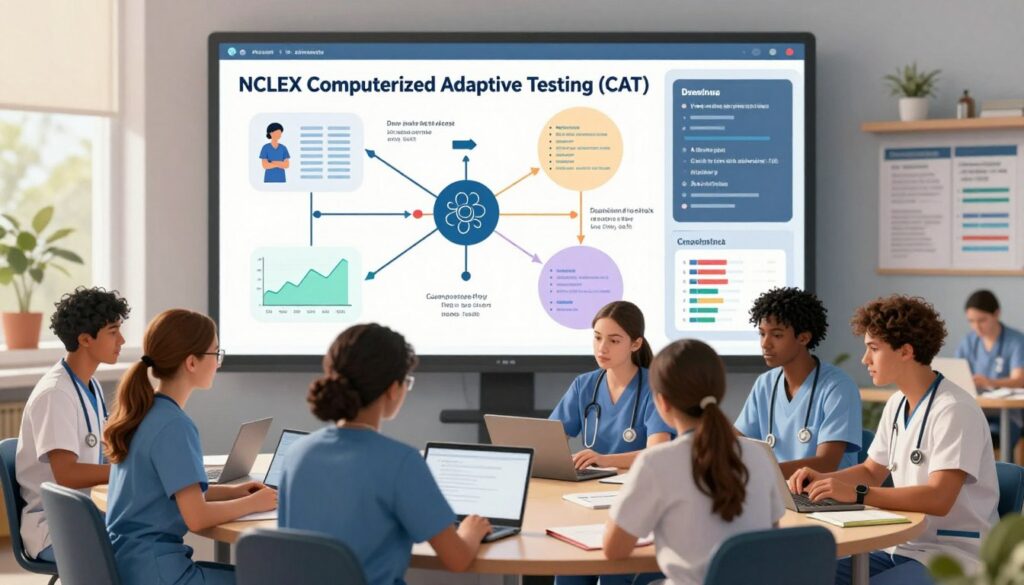
By learning how does NCLEX computerized adaptive testing work, you can feel more confident. This smart system checks your skills in real time. It changes the question difficulty based on your answers. It’s not just a test; it’s a deep check of your readiness.
We’ll explain the algorithm and scoring that decide your score. Knowing these will help you study better. You’ll feel more focused as you get ready for the exam.
Key Takeaways
- The exam uses a dynamic algorithm to adjust question difficulty based on your performance.
- Your ability estimate is updated in real time after every single response you provide.
- The system aims to reach a 95% confidence interval regarding your competency level.
- You must answer a minimum of 85 items to receive a valid pass or fail result.
- Understanding these mechanics helps reduce stress and improves your overall test-taking strategy.
Understanding Computerized Adaptive Testing (CAT)
Computerized Adaptive Testing is a big change in how we check if nurses are ready. It moves away from old paper tests to a dynamic and exact way to test skills. This NCLEX CAT explanation will show why it’s the top choice for today’s tests.
Definition of Computerized Adaptive Testing
This testing method changes the question difficulty based on how you do. If you get a question right, the next one is harder. If you find a topic tough, you get an easier question to check your knowledge.
The test keeps adjusting as you go along. It makes sure the test is just right for you. It’s not just about how many questions you answer. It’s about the level of difficulty you can handle.
The Technology Behind CAT
The tech behind it uses a smart algorithm to keep the test safe and fair. Because the test changes for each person, no one gets the same questions. This makes it hard to cheat or memorize answers.
“The true power of adaptive testing lies in its ability to pinpoint a candidate’s proficiency level with fewer questions than a traditional exam, ensuring both efficiency and accuracy.”
The system picks questions from a huge, safe database that fits your skill level. As you answer, it gets closer to knowing exactly how good you are. This makes sure the final score really shows how much you know.
Benefits of CAT in NCLEX
This method has many good points for nursing students. It saves time by avoiding questions that are too easy or hard. This makes the test more efficient and respectful of your time, while keeping standards high.
| Feature | Static Testing | Adaptive Testing |
|---|---|---|
| Question Difficulty | Fixed for everyone | Tailored to the user |
| Test Length | Always the same | Varies by performance |
| Security | Lower (shared questions) | Higher (unique sets) |
| Accuracy | General assessment | Precise competency measurement |
In the end, this method makes sure the test is fair and true for everyone. It focuses on your actual performance to make sure you’re ready for nursing.
Overview of the NCLEX Examination
The NCLEX is seen as a big challenge, but it’s key for patient safety. It sets a standard to ensure nurses have the minimum knowledge required for good care. Knowing the NCLEX adaptive test details helps you understand how you’re tested.
Purpose of the NCLEX
The NCLEX aims to keep patients safe. It checks if you can use nursing skills in real situations. Safe and effective practice is what every question is about.
Types of NCLEX Exams: RN and PN
There are two exams based on your nursing level. The NCLEX-RN is for Registered Nurses, and the NCLEX-PN is for Practical or Vocational Nurses. Both exams are similar but require different levels of clinical thinking.
Preparation is key. If you’re getting ready for the NCLEX-RN, consider online classes to help. They offer the support you need, no matter which exam you take.
Key Eligibility Requirements for Test Takers
To take the exam, you must meet certain state Board of Nursing rules. First, you need to finish an accredited nursing program that fits your state’s rules. After graduation, your school must confirm your status. Then, you apply for a license and get your Authorization to Test (ATT).
Important steps for eligibility include:
- Submitting your application to the state Board of Nursing.
- Registering with the testing service provider.
- Receiving your official ATT via email.
Remember, your eligibility depends on your state. Check all requirements early to start your career on time.
How CAT Adjusts to Test Taker Responses
At the heart of your testing experience is a dynamic engine. It constantly adjusts based on your performance. This NCLEX CAT overview explains why the exam feels tailored to your knowledge.
The system doesn’t just pick random questions. Instead, it acts as a highly intelligent partner. It checks your skills in real-time.
The Algorithm Behind Question Selection
The algorithm’s main goal is to give you questions with a 50% chance of success. This makes the test challenging but fair for all.
If you answer a question right, the computer gives you a harder one next. If you get it wrong, you get an easier question. This helps figure out your baseline knowledge.

Determining the Difficulty Level of Questions
The computer updates its guess of your ability after every answer. This iterative process helps pinpoint your skill level with great accuracy.
The difficulty level changes based on your answers. This NCLEX CAT overview shows the exam aims to find where your skills meet the passing standard.
This adaptive nature means no two students have the same test. You control your path through the exam by showing your clinical judgment with each question.
Structure of the NCLEX Exam
Understanding the exam structure is key to managing your time well. Knowing what to expect in the testing center is essential for effective time management. This knowledge helps you prepare for the physical and mental challenges of the exam.
Number of Questions and Time Limits
The exam’s design is flexible, with the number of questions varying based on your performance. You’ll face a minimum of 85 and a maximum of 150 questions. You have a maximum of five hours to finish the exam.
This time includes your tutorial, sample questions, and breaks. It’s vital to pace yourself to stay focused without rushing. Watching the clock helps you manage your time effectively.
Types of Questions on the NCLEX
The exam reflects real-world nursing scenarios through various question formats. You’ll see the Next Generation NCLEX (NGN) styles, including case studies. These require you to analyze complex patient data.
One benefit of these formats is partial credit scoring. You can earn points for correct answers, even if you don’t get every part right. This scoring method better assesses your clinical judgment skills.
Scoring Criteria Explained
The NCLEX uses an advanced algorithm to assess your skills. Each question you answer updates your ability level. If you get it right, the next question will be harder to test your knowledge.
If you get it wrong, you’ll get an easier question to show your current level. The exam ends when the computer is 95% sure of your ability level. This dynamic scoring method makes the exam a fair test of your readiness to practice as a nurse.
Strategies for Preparing for NCLEX CAT
Preparing for the NCLEX means training your brain for questions that change based on your answers. This format needs a flexible mindset, focusing on deep understanding, not just memorizing.
To do well, you must use materials that feel like the real test. Focus on high-level clinical judgment. This will help you with the NCLEX CAT algorithm as it adjusts to your skill level during the exam.
Recommended Study Resources
Choosing the right tools is key to feeling confident. Look for platforms with large question banks and detailed explanations for each answer.
- UWorld: Known for its tough questions and clear explanations that help you understand complex nursing concepts.
- Archer Review: Highly regarded for its readiness assessments that closely mirror the actual exam experience.
- Kaplan: Offers a structured approach with a focus on decision-making trees to help you navigate difficult scenarios.
Test-Taking Strategies for Success
Success in the exam is not just about knowing the content. It’s about how you approach each question. Practice identifying the main issue in each scenario, not just looking for keywords.
“Success is not final, failure is not fatal: it is the courage to continue that counts.”
The NCLEX CAT algorithm is designed to find your ability level. If you face a tough question, stay calm and use your clinical knowledge systematically. Critical thinking is your best tool when the difficulty level changes.
Lastly, don’t rush through practice sessions. Take time to think about why you missed a question. This reflection is essential for improving your performance on test day.
Common Misconceptions About NCLEX CAT
Understanding the NCLEX requires knowing what’s true and what’s not. Many feel stressed because they believe rumors over facts. A good NCLEX adaptive testing strategy comes from knowing how the exam really works.
Misunderstandings About Question Difficulty
Some think getting hard questions means they’ll pass. But, the computer just adjusts to how well you do. If you get it right, it gives you tougher questions to check your competency.
Getting easier questions doesn’t mean you’re failing. The system keeps changing based on your answers. It’s better to focus on your clinical judgment than worry about question difficulty.
Fallacies Regarding Passing Standards
Many believe practice exams can predict the real test’s score. But, this is not true. The real scoring is a proprietary and complex process that’s kept secret.
Practice tools are for learning, not predicting scores. A good NCLEX adaptive testing strategy means learning nursing concepts well. Trust your preparation and focus on nursing standards.
| Common Myth | The Reality | Impact on Strategy |
|---|---|---|
| Hard questions mean a pass | Questions adjust to ability | Focus on accuracy, not difficulty |
| Easy questions mean a fail | Algorithm seeks your level | Maintain consistent clinical focus |
| Practice tests predict scores | Algorithms are proprietary | Use tests for content review |
The Role of Practice Tests in Preparation
To truly understand NCLEX CAT, we must look at how practice exams bridge the gap between theory and clinical application. While no simulation can perfectly replicate the proprietary algorithm used by the board, these tools remain essential for your success. They provide a safe environment to test your knowledge and refine your clinical judgment.
Benefits of Simulated NCLEX Practice Exams
Engaging with high-quality practice questions helps you identify specific knowledge gaps before they become a problem on the actual exam. By consistently challenging yourself, you build the mental stamina required to maintain focus during a long testing session. If you are looking for additional support, you might consider online courses to help you prepare for the PCAT or similar rigorous testing environments to sharpen your skills.
Regular practice offers several key advantages for nursing students:
- Improved time management during complex clinical scenarios.
- Exposure to a wide variety of question formats, including alternate items.
- Reduction in test-day anxiety through repeated exposure to the testing interface.
Tools for Evaluating Practice Test Performance
Once you complete a practice exam, the real work begins with analyzing your results. You should look beyond your final score to understand NCLEX CAT mechanics by reviewing the difficulty level of the questions you missed. Many platforms provide detailed analytics that highlight your strengths and weaknesses across different nursing categories.
We recommend using the following metrics to track your progress:
| Metric | Purpose | Goal |
|---|---|---|
| Percentile Rank | Compare your performance to peers | Consistent growth |
| Category Accuracy | Identify weak subject areas | Above 70% |
| Time Per Question | Monitor pacing efficiency | Under 90 seconds |
By carefully reviewing these performance indicators, you can adjust your study plan to focus on areas that need the most attention. This systematic approach ensures that you are not just memorizing facts, but truly mastering the critical thinking skills needed to pass. Stay consistent, and you will walk into the testing center with the confidence you deserve.
Real Experiences from NCLEX Test Takers
We believe that hearing personal stories can turn your anxiety into confidence. Connecting with peers who have already taken the NCLEX adaptive test mechanics offers a sense of community. These stories show that success comes from both preparation and mental strength.
Success Stories from Recent Graduates
Many recent graduates say trusting the process is key during the exam. Sarah, a registered nurse in Ohio, found that harder questions boosted her confidence. She realized the system was pushing her to show her clinical judgment.
Marcus, another graduate, mastered the NCLEX adaptive test mechanics before his exam. He understood how the algorithm selects questions. This knowledge helped him stay calm, even when faced with tough topics.
Lessons Learned from Failed Attempts
Learning from those who had to retake the exam is just as important. Many admit they focused too much on memorization, not critical thinking. They say understanding the logic behind questions is more important than memorizing facts.
Reflecting on these experiences can help you avoid common mistakes. Candidates often report rushing through early questions, which hurt their scores. Taking time to analyze each scenario is a key lesson for anyone preparing for their next attempt.
| Preparation Habit | Successful Candidate | Candidate Needing Retake |
|---|---|---|
| Study Focus | Critical Thinking | Rote Memorization |
| Exam Pace | Steady and Deliberate | Rushed and Anxious |
| Mindset | Confident in Logic | Fear of Difficulty |
| Resource Use | Simulated Practice | Passive Reading |
Your journey is unique, but you’re never alone. By applying these lessons, you can approach your exam with a stronger strategy and a clearer understanding of what to expect.
Closing Thoughts on NCLEX CAT
Understanding the exam mechanics is key to becoming a registered nurse. We hope this guide helps you grasp how NCLEX computerized adaptive testing works. This way, you’ll feel ready for your challenge.
The Value of Exam Literacy
Knowing the exam’s logic boosts your confidence. You now understand that a logit measures your performance against the item’s difficulty. This knowledge makes the scoring process clear.
Empowerment for Future Nurses
We believe you can master these concepts and pass your exam. Knowing how NCLEX computerized adaptive testing works gives you a mental advantage. Your hard work will pay off as you reach this milestone in your nursing career.
Keep practicing with reliable resources like UWorld or Kaplan to improve your skills. Stay focused on your goal and trust your preparation. We’re excited to see you become a professional nurse in the United States.