

Did you know nearly 15% of first-time test takers fail their nursing boards on the first try? This fact shows how important strategic preparation is for aspiring nurses. Finding your way to licensure can seem daunting, but a well-planned approach can make a big difference.
Finding the right study time depends on your past studies and how confident you feel in your clinical skills. We need to fit our study plans around our busy lives and the high standards of healthcare. To help, you might look into online classes for the NCLEX-RN. These classes provide structured paths to success.
Identifying what we don’t know early helps us create a sustainable routine and avoid burnout. Let’s see how to manage our time well to be ready for the challenges of nursing.
Key Takeaways
- Success often requires a personalized timeline based on individual learning needs.
- Consistent, high-quality practice is more effective than last-minute cramming.
- Utilizing professional resources can significantly boost your confidence and test performance.
- Understanding the exam format helps reduce anxiety on the big day.
- Prioritizing mental well-being alongside academic review is essential for long-term retention.
Understanding the NCLEX Exam Format
The NCLEX is a unique challenge that tests our clinical judgment through a sophisticated computer-adaptive system. It doesn’t rely on rote memorization. Instead, it evaluates our ability to make safe, effective nursing decisions in real-time. Learning tips for studying for the NCLEX early helps us prepare better for the actual test.
Overview of NCLEX Structure
The exam uses Computerized Adaptive Testing (CAT) to check our competency level. As we answer questions correctly, the system gets harder to test our skills. This dynamic process ensures that the exam is tailored to our individual performance.
We can’t skip questions or go back to previous ones. We must give the best answer for each question as it comes. Knowing this helps us stay calm during the test.
Question Types
We’ll see many question formats to challenge our critical thinking. Traditional multiple-choice questions are common, but there are also “select all that apply,” fill-in-the-blank calculations, and ordering steps in a clinical procedure.
These questions often present complex clinical scenarios that require us to prioritize patient care. By practicing these diverse formats, we become more comfortable with the NCLEX study strategies needed to navigate the exam successfully. We should focus on understanding the “why” behind each answer choice.
Test-Taking Strategies
Mastering the art of elimination is key to improving our scores. We should look for distractors that are clearly incorrect to narrow down our options. Staying calm and methodical allows us to apply our nursing knowledge effectively under pressure.
Effective NCLEX study strategies also involve managing our time wisely throughout the exam. We should read each question carefully to identify the core nursing concept being tested. By focusing on safety and prioritization, we can approach every question with confidence and clarity.
Setting Up Your Study Schedule
Let’s dive into creating a plan that makes our study goals achievable. A clear NCLEX study schedule is key to managing our study time effectively. It helps us avoid feeling overwhelmed and ensures we cover all important topics.
Creating a Study Plan
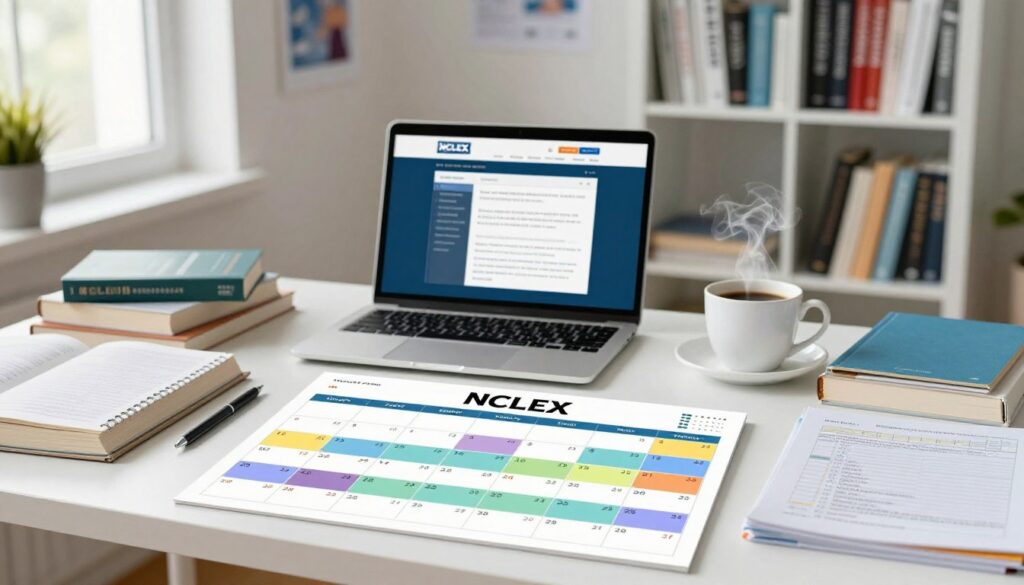
A good NCLEX study plan starts with knowing what we need to learn. We should break down nursing content into smaller goals for each week. This makes it easier to track our progress and adjust our focus as needed.
Using a digital calendar or a planner is a great way to organize our study time. By setting specific topics for each day, we stay on track. This structure keeps us consistent and maintains our study momentum.
Recommended Study Hours Per Week
Finding the right amount of NCLEX study hours varies based on our starting knowledge and schedule. Most find that steady, consistent study is better than cramming. Aim for a pace that fits your lifestyle but meets your goals.
Here’s a suggested weekly study plan for those with other commitments:
| Study Intensity | Hours Per Week | Focus Area |
|---|---|---|
| Light | 10-15 Hours | Reviewing core concepts |
| Moderate | 16-25 Hours | Practice questions and remediation |
| Intensive | 26+ Hours | Full simulations and weak areas |
Balancing Study with Work and Life
Life doesn’t pause for our studies. It’s important to fit our study time into our work and family life. Use short breaks, like during commutes or lunch, for quick study sessions.
Don’t forget to take care of your mental health. Regular breaks help prevent burnout and keep your mind sharp. By balancing study and life, you’ll feel ready and confident for the exam.
How Long Should You Study Overall?
Figuring out how long to study for your nursing exam is a personal choice. We often wonder, how long should I study for the NCLEX? The answer depends on our past studies and how well we know clinical concepts.
Average Study Duration for Candidates
Most nursing students find six to twelve weeks enough to feel ready. For more tips on using this time, check out how much time to study for the NCLEX. It’s better to study regularly than to cram. This way, we keep information better.
Factors Influencing Study Length
Several things affect how long you need to study for the NCLEX. When you take the exam after school matters a lot. Those who test soon after school tend to remember more.
Also, how well you did in nursing school and your experience with tests matter. Your work or family life can also impact your study time. If you work full-time, you might need more time than a student who can study all day.
Looking into other medical tests can also help. Some students find online courses for the USMLE useful for improving their test skills.
Personal Study Goals
Setting realistic goals helps avoid burnout. First, check your confidence in clinical areas. If you find big gaps, spend more NCLEX study hours on those topics early.
| Study Intensity | Weekly Commitment | Recommended Duration |
|---|---|---|
| Light Review | 10-15 Hours | 12+ Weeks |
| Moderate Pace | 20-25 Hours | 8-10 Weeks |
| Intensive Prep | 30+ Hours | 4-6 Weeks |
Your goal is to feel ready to answer many types of questions. By tracking your progress and adjusting your study plan, you can meet your needs for success.
Utilizing NCLEX Prep Resources
To pass the NCLEX, we need top-notch resources that match the real exam. Choosing the right tools is key to making our study time count. A structured NCLEX study plan helps us stay organized and track our progress.

Popular NCLEX Review Courses
Many find that detailed review courses are essential. These courses include video lectures, summaries, and tools to spot knowledge gaps. Choosing a reputable course saves time by focusing on key topics.
When picking courses, look for ones that offer real exam simulations. The best way to study for the NCLEX is with materials that match the exam format.
Utilizing Practice Questions Effectively
Practice questions are key to any good study plan. It’s not just about answering questions; we need to understand why each answer is right or wrong. This active learning approach helps us learn the clinical concepts, not just memorize.
Make a regular schedule for practicing questions. Reviewing the reasons behind each question boosts our critical thinking. This habit is vital for mastering the best way to study for the NCLEX and gaining confidence for the exam.
Study Groups and Their Benefits
Study groups are great for those who do well in team settings. Talking through tough nursing topics with others helps us learn and grow. It also fights the feeling of being alone during long study periods.
But, keep group sessions focused and productive. A good NCLEX study plan can guide everyone. When used right, groups are a strong support system that keeps us motivated and on track.
Diagnosing Your Study Needs
To make the most of our NCLEX study duration, we need to understand our unique learning needs. Starting with textbooks without a plan can be a waste of time. It’s important to know where we stand first, so every study hour counts.
Assessing Your Learning Style
Everyone learns differently, and knowing our style is key. Whether we learn best through seeing, hearing, or doing, we should tailor our study methods.
- Visual: Use color-coded notes and flowcharts.
- Auditory: Listen to recorded lectures or explain concepts aloud.
- Kinesthetic: Engage with interactive simulations and practice questions.
Identifying Strong and Weak Areas
Knowing how we learn helps us figure out what to study. We should look at our nursing school grades and clinical work to find our strengths. If we struggle with basics, online classes or refresher courses can help.
“The secret to progress is knowing exactly where you stand before you take the first step.”
Taking Diagnostic Tests
Diagnostic tests are the best way to see how we’re doing. They mimic the real test and show us where we need to improve. By looking at these scores, we can focus our NCLEX study duration on weak areas.
These scores are a guide, not a final verdict. They tell us where to improve, helping us use our time wisely. With a clear plan, we can study with purpose and confidence.
Creating a Study Environment
Creating the perfect study space can make studying more effective. Your study area greatly affects how well you remember nursing concepts. To study well for the NCLEX, make a space that helps you focus and avoid getting tired.
Importance of a Distraction-Free Zone
A dedicated study area helps your brain get ready to work. Keeping your space tidy reduces the effort needed to stay focused. Consistency is key; studying in the same place every day helps you start more easily.
“The environment is the invisible hand that shapes human behavior.”
Essential Study Materials
Having the right tools helps you stay focused. Mix physical and digital tools to fit your learning style. Here’s what you should have on your desk:
| Material Category | Specific Item | Primary Benefit |
|---|---|---|
| Stationery | Color-coded pens | Improves memory retention |
| Organization | Physical planner | Tracks progress milestones |
| Reference | NCLEX review books | Provides structured content |
| Comfort | Ergonomic chair | Prevents physical fatigue |
Utilizing Online Resources
Using digital platforms is key for nursing students today. The best way to study for the NCLEX often combines books with online tools. Check out online classes to help you prepare for the CBX exams.
These digital tools offer adaptive tests and feedback. They help you focus on what you need to improve. A well-organized study space is the first step to success.
Staying Motivated While Studying
Preparing for the NCLEX can feel like a long race. It’s normal to feel ups and downs in energy as you work towards your nursing career. Using tips for studying for the NCLEX helps us keep going and stay focused on success.
Setting Milestones
Big goals can be too much to handle. That’s why we break our study plan into smaller parts. Setting weekly goals gives us a clear path to follow. Celebrating these small wins keeps us motivated for the big goals.
Rewarding Yourself
Positive rewards are key to staying positive. We plan small treats after tough study sessions or a week of steady work. A favorite snack, a walk, or a show break helps our brains recharge.
Strategies to Overcome Burnout
Spotting burnout early is key for our mental health. Feeling tired, cynical, or unfocused means it’s time to take a break. Taking breaks and balancing work and study helps us avoid burnout.
Here’s a quick look at how we keep motivated during our study time.
| Strategy | Primary Benefit | Frequency |
|---|---|---|
| Micro-Goal Setting | Reduces anxiety | Daily |
| Scheduled Rewards | Boosts dopamine | Weekly |
| Active Rest Days | Prevents burnout | Bi-weekly |
| Peer Support | Increases accountability | Ongoing |
Consistency is more important than how hard we study. Being gentle with ourselves and keeping a steady pace helps us feel ready and confident for the exam.
Final Weeks Before the Exam
As the exam date gets closer, we need to switch from learning new stuff to mastering how to take the test. This part of our NCLEX preparation time frame focuses on using our clinical judgment well under pressure. By changing our approach, we make sure we feel prepared and calm when we take the test.
Review Strategies
In these last days, we should focus on active recall over just reading. We should concentrate on key topics we found weak during practice. Good NCLEX study strategies now mean reviewing why we got questions wrong, not just the right answers.
Making summary sheets or flashcards for tough topics helps us remember better. But, we should avoid cramming new info to avoid stress. Instead, we trust the solid base we’ve built over months.
Practice Exams and Simulations
It’s key to do full-length practice tests to get used to the exam’s format. We should practice in a quiet spot and stick to the time limits. This helps us get used to the computer format and question pace.
After each test, we need to review our mistakes carefully. We look for patterns, like misreading or rushing. By spotting these, we can tweak our NCLEX study strategies to do better on the real test.
Finalizing Your Exam Day Plan
Getting the logistics right is important for success. We should plan our exam day carefully, including visiting the testing center if we can. Having our ID ready and a snack for breaks helps us stay focused.
Mental prep is as important as physical planning. We should practice relaxation techniques to handle any nerves. With a solid plan, we can focus on showing off our nursing skills.
| Activity | Primary Goal | Recommended Frequency |
|---|---|---|
| Full-Length Simulation | Build endurance | Once per week |
| Rationale Review | Identify knowledge gaps | Daily |
| Logistics Check | Reduce stress | Three days before |
| Relaxation Exercises | Maintain focus | Every morning |
Tips for the Day of the NCLEX Exam
The morning of the test is the end of our long journey. We’ve spent hours preparing and following our NCLEX study schedule. Now, we need to be physically and mentally ready to do our best.
Essential Pre-Exam Preparation
We should collect our ID and testing documents the night before to avoid stress. Getting a good night’s sleep is key for our brain. We plan to arrive at the Pearson VUE testing center early to get settled.
Navigating the Testing Environment
We expect a quiet and secure room for our test. Knowing the test interface helps us stay calm. We use the NCLEX study tips we learned to help us when questions are tough.
Strategies for Managing Test Anxiety
Deep breathing exercises help us stay calm if we feel stressed. We remember that our hard work has prepared us for this. We go into the exam room feeling confident and ready.