

Did you know that nearly 20% of first-time candidates fail their nursing board exams on their first try? It’s a surprising fact, but it shows you’re not alone in feeling nervous. Passing this exam is the last step to becoming a licensed nurse.
The pressure can be overwhelming. Many students wonder, How many people fail the NCLEX? We aim to clear up any confusion and give you a plan for success. Our goal is to make the testing process clear, so you can face it with confidence.
By understanding the truth behind these numbers, we can move from fear to effective preparation. Let’s dive into what you really need to know to overcome this challenge with confidence.
Key Takeaways
- Understanding pass rates helps reduce pre-exam anxiety.
- Preparation is the most effective tool for success.
- First-time attempts are common, but retakes are a standard part of the process.
- Focusing on core nursing concepts builds long-term confidence.
- We provide the resources you need to approach your test day calmly.
Understanding the NCLEX Exam
Every nursing student needs to know how the NCLEX works. It’s the last test before you can start your nursing career. Knowing how it works helps you prepare better for good NCLEX exam results.
What is the NCLEX?
The NCLEX is a test for nursing students in the U.S. It checks if you’re ready to start nursing safely and well.
Passing the NCLEX is key to getting your nursing license. Without it, you can’t work as a Registered Nurse (RN) or Licensed Practical Nurse (LPN).
Importance of the NCLEX in Nursing
The NCLEX is a big deal for public safety. It makes sure nurses know their stuff and can make good decisions quickly.
Healthcare is complex, and this test makes sure nurses can handle it. It keeps patients safe by making sure only qualified nurses care for them.
Structure of the NCLEX Exam
The exam uses Computer-Adaptive Testing (CAT). This means the questions get harder or easier based on how you do.
Right answers mean harder questions. Wrong answers mean easier ones. You can learn more about how this works and your chances of passing at this link.
This way, the test really checks if you’re ready. Understanding this helps you get the NCLEX exam results you need to start your nursing career.
NCLEX Pass Rates Over the Years
Looking at how testing data has changed helps us understand nursing education in the U.S. today. By seeing how candidates have done over time, we get a clearer picture of the hard work needed to become a nurse. We think it’s key to look at NCLEX pass rates for anyone planning their nursing career.
Historical Pass Rates Overview
For years, becoming a registered nurse has been a tough challenge. The exam’s difficulty has changed, but nursing schools keep working hard to prepare students. Despite changes in the exam, most graduates show they can give safe care to patients.
Recent Trends in Pass Rates
In recent years, the pass rate for new nurses has stayed steady. For example, in 2024, about 91% of first-time, U.S.-educated NCLEX-RN candidates passed. This shows how dedicated educators and students are to meeting today’s nursing needs.
Looking at this NCLEX pass/fail data helps students know what to expect. The numbers are good, but they also show how important it is to prepare well. Here’s a table showing how different groups have done.
| Candidate Category | Average Pass Rate | Performance Trend |
|---|---|---|
| First-Time U.S. Educated | 91% | Stable |
| Repeat Test Takers | 45% | Variable |
| International Educated | 40% | Improving |
Factors Influencing Pass Rate Changes
Many things affect the yearly changes in pass rates. One big reason is new testing formats, like the Next Generation NCLEX, which tests clinical judgment. These updates keep the exam up-to-date with healthcare’s changing needs.
- Educational Standards: Schools keep updating their courses to meet new clinical needs.
- Preparation Quality: Good study materials really help students do well.
- Testing Environment: Changes in how the exam is given can affect how students do.
Understanding these trends helps us better support nursing students. By focusing on NCLEX pass/fail data, we can see where students might need more help. We’re hopeful that with the right tools, every candidate can pass the exam.
Who Takes the NCLEX?
Knowing who takes the NCLEX is key to understanding nursing education in the U.S. Many different people prepare for this exam, each with their own story.
The testing board keeps an eye on these groups to ensure nursing standards are high. By studying these groups, we learn about the challenges students face.
Types of Candidates
The pool of candidates is very diverse. It includes both domestic nursing graduates and internationally educated nurses. Each group has its own unique challenges on their path to licensure.
Domestic graduates usually go through a set path in accredited schools. Internationally educated nurses, on the other hand, must deal with complex credentialing before they can take the exam.
All candidates must meet strict clinical standards. Success demands hard work, no matter the educational journey.
First-Time Test Takers vs. Repeat Test Takers
It’s important to know the difference between first-time and repeat test takers. Their study needs are often different. Repeat takers need to fill knowledge gaps from previous tries.
The NCLEX Pass Rate dashboard offers insights into pass rates and volumes, including repeaters. This data shows the value of focused study plans.
First-timers usually do well with general review courses. But those retaking need to work on analytical skills and test-taking strategies.
Knowing your category helps you use resources better. By figuring out if you’re a first-timer or repeater, you can make a study plan that works for you.
Statistics on NCLEX Failures
If you’re worried about your NCLEX test, looking at failure data can help. Remember, these numbers are just tools to help you prepare. They don’t define your future career.
Understanding nursing licensure can reduce test anxiety. By looking at the latest NCLEX statistics, you can study with more confidence.
Current National Failure Rates
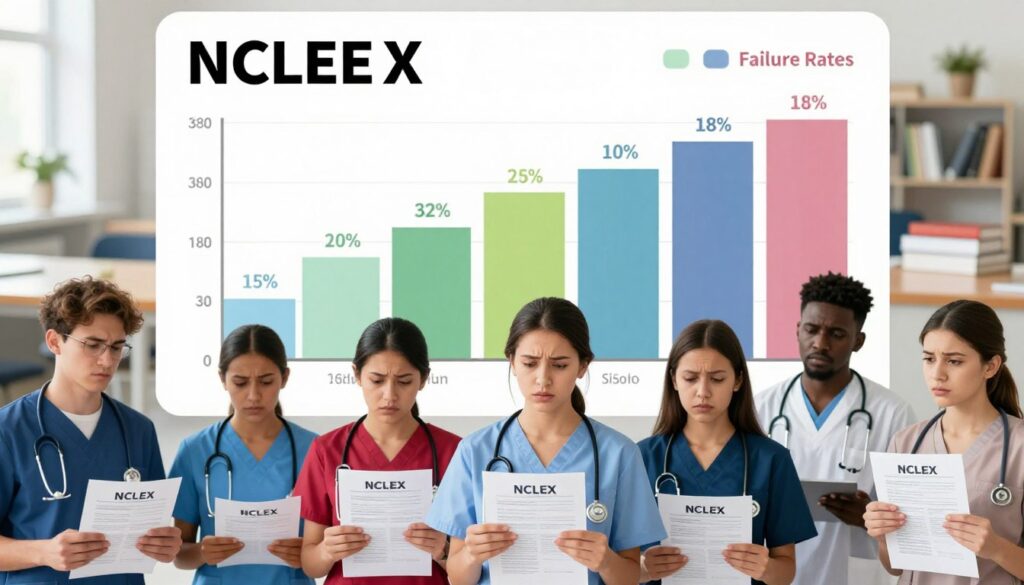
The latest data shows a 20% failure rate for first-time test takers. This means 80% pass on their first try. While this might seem tough, many succeed after more practice.
If you need help, consider online classes for the NCLEX-RN. These can fill knowledge gaps and boost your score.
Comparison with Previous Years
Looking at NCLEX pass rates over the last decade shows changes. These changes reflect updates in healthcare standards in the U.S.
NCLEX failure rates can vary yearly. But, the core nursing skills needed to pass stay the same. This ensures all nurses are ready for their jobs.
State-Specific Failure Rates
Success rates also vary by state. This is because nursing schools in different places have different outcomes.
These differences come from different curricula and clinical training. No matter where you are, consistent study habits and a good review plan are key to success.
Reasons for NCLEX Failure
The exam is tough, but knowing why you might fail can help you pass. By spotting common barriers early, you can change your study ways. Knowing what leads to NCLEX failure rates helps you plan better for your next try.
Common Mistakes Made by Candidates
Many students just memorize facts instead of really getting the clinical concepts. This makes it hard when the exam asks complex scenario questions. Critical thinking is key, and just memorizing is a big mistake.
- Neglecting to practice with high-quality, computer-adaptive test banks.
- Failing to simulate actual testing conditions during study sessions.
- Overlooking the importance of understanding the “why” behind nursing interventions.
Emotional and Psychological Factors
The exam’s emotional impact can be as tough as the content itself. Many feel test anxiety, which can mess up your thinking and choices. Your mental state really affects how you do.
Burnout also plays a part in failing. Working too hard without rest makes your brain less sharp. Make sure to take care of your mental health as much as your study plan.
Preparation Gaps
A big reason for NCLEX failure rates is not matching your study materials with the exam. Some spend too much time on easy topics and ignore the hard ones. This leaves big gaps in your knowledge.
To fix these gaps, check your practice exam scores. Find your weak spots and focus on those. Remember, steady and focused study is the best way to avoid NCLEX failure rates and reach your career goals.
Preparing for the NCLEX
Getting ready for your nursing boards needs a smart plan, not just memorizing. The journey to licensure can seem tough, but breaking your study into smaller parts helps a lot. By focusing on key topics, you can boost your NCLEX test success rate.
Study Strategies for Success
Good studying isn’t just about how long you study. It’s about how you learn. Active recall and spaced repetition help you remember things better.
- Create a consistent schedule: Set aside specific times each day for studying key nursing ideas.
- Focus on weak areas: Don’t spend all your time on subjects you already know.
- Use active learning: Teach what you’ve learned to a friend or write it in your own words to check your understanding.
Recommended Resources and Tools
Picking the right tools is key for your prep. Look for platforms with lots of content reviews and practice questions. These tools help spot gaps in your knowledge before the exam.
Many people who pass the NCLEX use platforms with detailed explanations for each question. Knowing why an answer is right is as important as knowing the answer itself. This deep understanding helps you do better on the NCLEX test success rate.
The Role of Practice Tests
Practice tests are the heart of a good study plan. They help you get used to the exam’s computer format. Using platforms like SIMCLEX gives you a feel for the real exam.
When you take these tests, try to match the real exam’s setting. Study in a quiet place without distractions for the whole test. This builds your mental strength for a high NCLEX test success rate during the test.
The Retake Policy for the NCLEX
Getting a nursing license is a journey, not a single test. It’s completely normal to feel down if you don’t pass the first time. Many have been in your shoes and succeeded. Knowing the rules helps you plan your next step.
How Many Times Can You Retake?
The National Council of State Boards of Nursing lets you retake the exam many times. You can take it up to eight times a year. This gives you plenty of chances to show you know your stuff.
While you can try eight times, most pass sooner. Remember, your career is not just one test. Focus on what you learned before.
Waiting Period Between Attempts
After failing, you must wait 45 days before trying again. This break is not just downtime. It’s a critical window to look at your mistakes.
Use this time to study your NCLEX exam results and find your weak spots. Make a study plan to fix these areas. Then, you can sign up for your next test.
Retake Success Rates
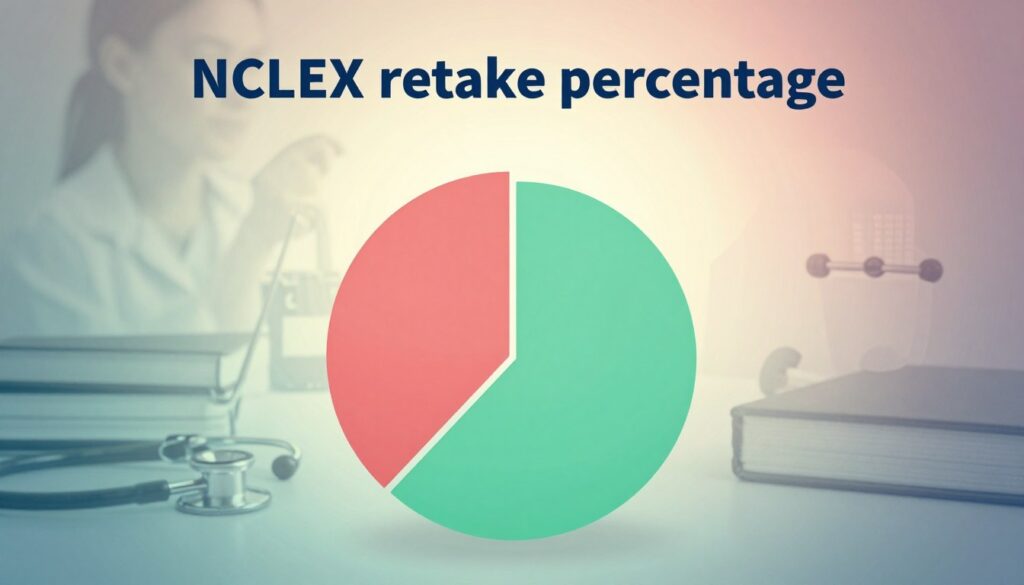
Many worry about the NCLEX retake percentage. But, stats show that keeping at it pays off. Nurses who didn’t pass first time around often have great careers. By learning from your past NCLEX exam results, you can pass next time.
Knowing the NCLEX retake percentage helps remove the shame of needing more than one try. Success often comes from better study habits and managing test nerves.
| Process Step | Action Required | Expected Outcome |
|---|---|---|
| Analysis | Review performance report | Identify knowledge gaps |
| Registration | Submit new application | Receive new ATT |
| Preparation | Focused study sessions | Increased confidence |
| Examination | Retake the test | Achieve licensure |
Impact of NCLEX Failure
Dealing with an NCLEX failure takes patience and understanding. It’s a tough moment, but many nurses have overcome it. Acknowledging these challenges is the first step to a stronger future.
Institution Accountability
Nursing programs in the U.S. are committed to their students’ success. When pass rates change, schools look at their teaching and training. Accountability is key in nursing education, ensuring students have the tools to succeed.
Many colleges now have special programs for students who don’t pass first time. These programs help students fill knowledge gaps and build confidence. This support helps students stay on track to becoming licensed nurses.
Mental Health Considerations
Not passing the exam can be emotionally tough. It’s normal to feel down or worried about the future. But, taking care of your mental health is very important during this time.
It’s okay to take time to deal with your feelings. This allows you to come back to your studies with a fresh perspective. Remember, your worth as a nurse isn’t just about one test score. Building resilience is a key skill for your future in healthcare.
Career Implications for Nurses
Some worry about how not passing will affect their job chances. But, the NCLEX retake percentage shows many go on to have successful careers after passing later. Employers care more about your clinical skills and patient care abilities once you’re licensed.
While some programs might have specific requirements, nursing is supportive of growth and perseverance. Preparing well and learning from your experience will make you a better nurse. The table below shows how different support systems can help you move forward.
| Support System | Primary Benefit | Outcome |
|---|---|---|
| Peer Study Groups | Shared accountability | Increased motivation |
| Faculty Mentorship | Targeted guidance | Improved test strategy |
| Mental Health Counseling | Stress management | Enhanced focus |
| Remediation Courses | Content review | Higher pass probability |
Success Stories After NCLEX Failure
The NCLEX statistics might seem tough, but they don’t define your future. Many dedicated nurses have faced a failing score and come out stronger. We share these stories to remind you that one test result doesn’t end your nursing career.
Interviews with Successful Nurses
We’ve talked to many nurses who turned setbacks into triumphs. One candidate studied for two years after facing many challenges. He passed the NextGen NCLEX on his 7th try, showing that determination beats speed.
These stories show that the NCLEX test success rate is not a fixed barrier. It’s a metric that can change with a new strategy. By changing study habits and finding new resources, nurses can pass the test.
Lessons Learned from Failure
Failure often gives you the most valuable feedback. Many successful nurses say their first tries focused too much on memorization. They learned to think critically, understanding the “why” behind clinical decisions.
“Success is not final, failure is not fatal: it is the courage to continue that counts.”
Changing your perspective is key to growth. Seeing a failed attempt as a chance to learn helps you find your knowledge gaps. This makes your study plan more focused and efficient.
Building Resilience in Nursing
Resilience is vital for nurses. Being able to bounce back from a tough exam prepares you for hospital life. We encourage you to see your current struggles as a chance to grow for your future career.
| Mindset Aspect | Before Failure | After Failure |
|---|---|---|
| Study Focus | Memorizing facts | Applying clinical judgment |
| Emotional State | Fear of the unknown | Confidence in preparation |
| Goal Setting | Passing the test | Mastering nursing concepts |
Building mental toughness makes you more than just a test passer. It makes you a competent and reliable healthcare provider. Remember, your persistence today prepares you for the care you’ll give tomorrow. Stay focused, stay positive, and keep moving toward your goal.
Resources for NCLEX Preparation
Looking through all the study materials can be tough for nursing students. Finding the right tools is a critical step on your path to licensure. By looking at NCLEX pass/fail data, we see that using structured resources helps students feel more ready for the exam.
Overview of Prep Courses
Many students do well by using detailed prep programs with NextGen NCLEX questions and real test simulations. These programs give you a chance to practice in a setting that feels like the real test. Choosing a good course helps you find your weak spots before the actual exam.
Online Study Materials
The internet has many platforms for different learning styles. You can find mobile apps and interactive video modules to learn from anywhere. Looking at NCLEX pass/fail data helps pick platforms that boost scores.
Support Groups and Forums
Talking to peers who are also studying can offer invaluable emotional support. Online forums and study groups let you share tips, discuss tough topics, and stay motivated. But, always check the info against official NCLEX pass/fail data to make sure it’s right.
Tips for First-Time Test Takers
Starting your first test requires more than just knowing the material. It needs a strategic mindset. The pressure can feel overwhelming, but you can handle it with confidence. Focus on practical habits to set yourself up for success.
Setting Realistic Goals
Success starts with setting manageable milestones. Don’t try to learn everything in one day. Instead, aim for small, consistent goals that build your confidence. This approach helps you see your progress and avoid burnout.
Clear, achievable goals create a roadmap for success. Consistency is your greatest ally in this journey. Every focused study hour brings you closer to your nursing license.
Time Management Strategies
Effective time management is key when balancing work and study. Many find that balancing work and online learning requires a structured routine. Focus on high-yield topics and dedicate time to practice questions.
During the test, watch your pacing to avoid spending too much time on one question. If stuck, use your best judgment and move on. Staying on track ensures you have time to review your answers at the end.
Stress Reduction Techniques
Test-day anxiety is common, but it can be managed. One effective way is to approach each question with a blank mental slate. This helps you avoid overthinking and prevents previous questions from affecting your judgment.
If stress rises, try deep breathing or a quick grounding exercise. Staying focused on the present question is more productive than worrying about the exam outcome. Trust in your preparation and know you have the skills to succeed.
Final Thoughts on NCLEX Success
Becoming a registered nurse is more than just knowing the facts. It takes a strong will and a dedication to grow in your career.
The Importance of Perseverance
Success in nursing often goes to those who don’t give up. We think your ability to stay focused, even when it’s hard, shows your future in nursing. Keep going, even when it feels like too much.
The Future of Nursing Licensure Exams
The National Council of State Boards of Nursing is always improving how they test your skills. They’re keeping up with new healthcare tech. Stay updated on these changes to stay ready for anything.
Encouragement for Candidates
You’ve put a lot of time and effort into getting here. We see your hard work and dedication every day. Trust in your preparation and ability to learn.
You have the skills to give great patient care. We believe in your ability to excel in the medical field. Take a deep breath and move forward with confidence.