
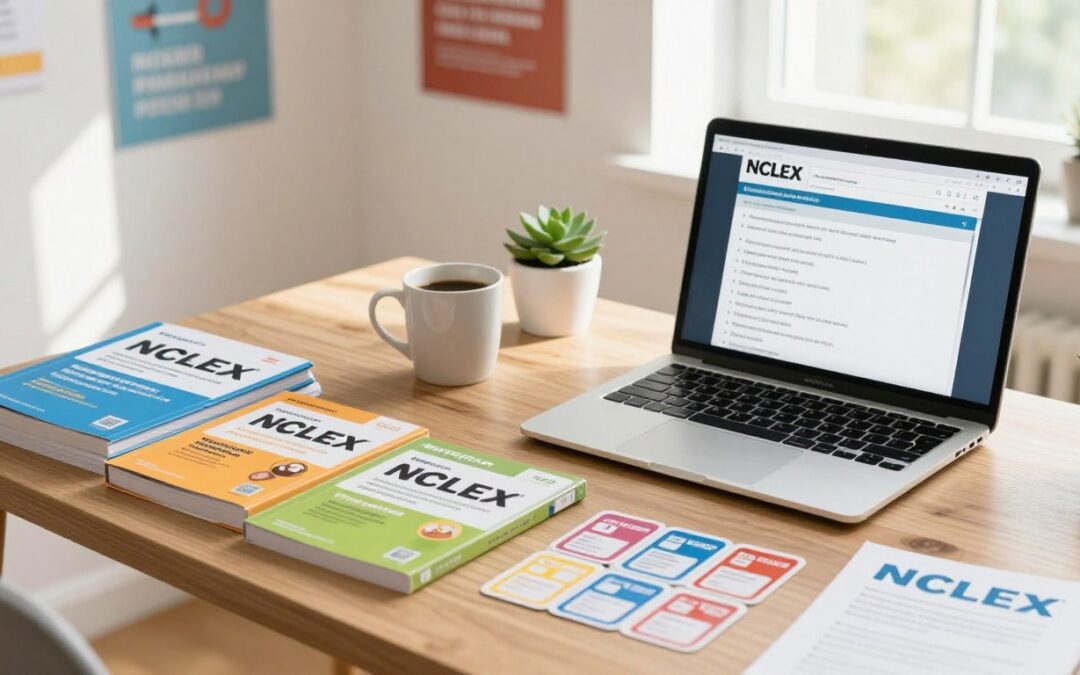
Ever felt like your brain is going to burst from all the drug names and side effects? Pharmacology can seem like a huge challenge in nursing school. It’s easy to get overwhelmed by all the information needed for exams.
The secret lies in changing our approach. We should move away from just memorizing. Instead, we need to understand how drugs work and why they’re important for patient safety. Using effective NCLEX pharmacology review study strategies helps us connect theory to practice.
Adopting the right mindset and using the right tools can help us overcome these hurdles. Let’s find out how to make studying easier and achieve our goals.
Key Takeaways
- Shift your focus from simple memorization to understanding clinical application.
- Use active recall techniques to improve long-term retention of drug classes.
- Group study materials by body system or drug action, not alphabetically.
- Incorporate visual aids and mnemonics to make complex information stick.
- Prioritize learning life-threatening adverse effects to ensure patient safety.
- Practice NCLEX-style questions early to strengthen your critical thinking skills.
Understand the Importance of Pharmacology in Nursing
Pharmacology is a big challenge for many nursing students. To overcome this, we need to do more than just memorize. We should see medications as tools that help the body get better and avoid problems.
Key Concepts in Pharmacology
Building a solid base starts with understanding pharmacokinetics. This is how a drug moves through the body from start to finish. Knowing these steps is key to guess how a patient will react to a treatment.
| Phase | Definition | Nursing Focus |
|---|---|---|
| Absorption | Movement of drug into bloodstream | Route of administration |
| Distribution | Transport to body tissues | Protein binding levels |
| Metabolism | Chemical breakdown of drug | Liver function assessment |
| Excretion | Removal from the body | Renal health monitoring |
Role of Pharmacology in Patient Care
Nursing is more than just giving out medicine. We check the safety of medications before they reach the patient. By mastering NCLEX pharmacology, we can teach patients about their drugs and watch for their effects.
We also watch for bad reactions. Knowing how drugs work helps us spot side effects early. This is what makes nursing care top-notch.
Implications of Medication Errors
Medication mistakes are serious and can harm patients and our careers. A small error can cause big health problems. We focus on these topics to ensure we give safe, evidence-based care always.
- Preventing harm through double-checking orders.
- Understanding the legal responsibilities of drug administration.
- Recognizing the importance of clear communication with the healthcare team.
Create a Study Schedule
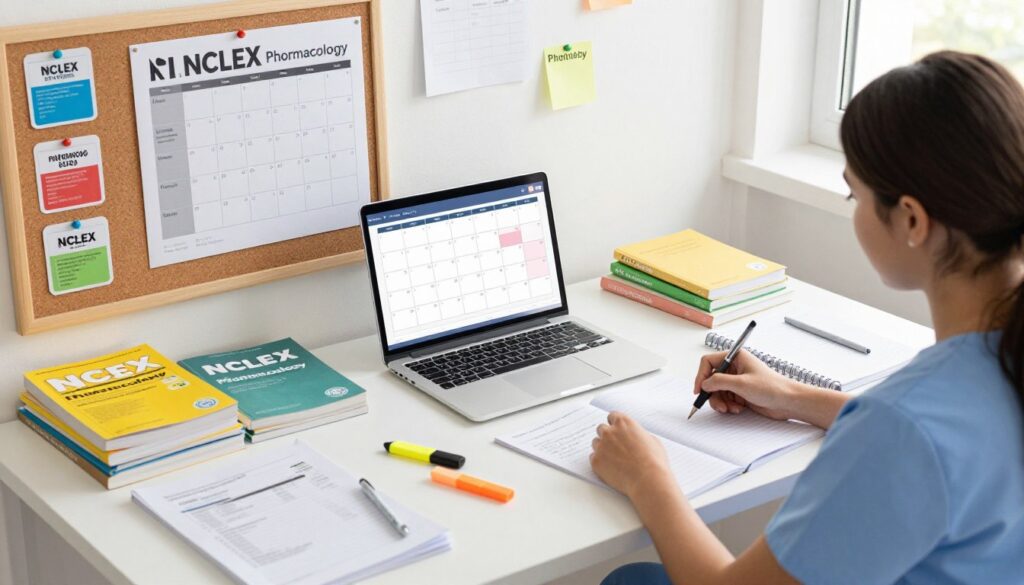
Organizing your study time is key to mastering drug classes. Seeing your progress helps turn big amounts of data into a clear path to success. Using NCLEX pharmacology study strategies early keeps you focused and avoids stress.
Designing a Realistic Timeline
Start your prep as early as you can. A step-by-step study plan helps cover all material without rushing. Aim to finish your main review 24 to 48 hours before the exam.
This time lets your brain soak up the info, not just cram it. Being consistent helps you remember complex drug info better.
Prioritizing Topics Based on Difficulty
Some drug classes are harder than others. Start with your weakest areas and focus when you’re most alert. Online classes, like those at internetlearners.com, can help with tough topics.
Dealing with hard topics first boosts your confidence. These NCLEX pharmacology study tips help you use your time wisely.
Incorporating Breaks for Retention
Breaking study into smaller parts keeps your focus sharp. Our brains can’t handle too much info at once. Short breaks keep your mind fresh.
Remember, it’s better to study well than to study a lot. Taking breaks helps your brain remember what you’ve learned, making test day easier.
Utilize NCLEX-Specific Resources
Choosing the right NCLEX pharmacology resources can make studying easier. A good plan is key, but the right tools help us remember drug info better. By picking proven study guides, we make our prep work smoother.
Recommended Textbooks and Study Guides
Knowing the basics of drug classes is vital. The Saunders Review for the NCLEX-RN Examination is a top choice. Also, the Pharmacology 10th edition textbook is great for learning about medication actions.
Online Practice Questions and Flashcards
Practicing with flashcards is a great way to learn. Pharm Phlash offers flashcards for key drug classes. We can also make quizzes to improve weak spots, making our NCLEX pharmacology study materials fit our needs.
Mobile Apps for On-the-Go Study
Today’s tech lets us study anytime, anywhere. Apps like Epocrates give quick access to drug info. Picmonic uses stories to help us remember tough pharmacology facts. Using these apps daily keeps us on track for the exam.
Engage in Active Learning Techniques
To really get pharmacology, we need to do more than just read. Passive learning can make us feel like we know it, but active learning makes us truly understand. Using effective NCLEX pharmacology study techniques boosts our memory and confidence.

Practice Quizzes and Sample Tests
Using practice quizzes is a top NCLEX pharmacology study tip. Try to remember drug details without looking at answers first. This strengthens our memory and gets us ready for the exam.
“The art of teaching is the art of assisting discovery.”
Group Study Sessions for Discussion
Studying with friends helps us talk about tough topics. We learn more when we share ideas. This turns hard facts into meaningful clinical dialogue, key for success.
Teaching Concepts to Peers
Teaching others helps us understand better. If we can explain a drug’s effects simply, we really get it. This method, called the Feynman technique, is very effective NCLEX pharmacology study technique. It makes us better at using what we know in real situations.
Focus on High-Yield Pharmacology Topics
Studying high-yield pharmacology topics is the best way to get ready for the NCLEX. By focusing on the most tested concepts, we use our study time wisely. This builds strong clinical confidence. Online classes, like those found at internetlearners.com, help us apply these facts to real-life situations.
Commonly Prescribed Medications
Some medications are tested more often because they are critical for patient safety. We focus on high-alert medications like insulin, anticoagulants, and opioids. These drugs are risky if not used correctly.
It’s important to know the specific rules for these drugs. We make a special list for these common medications. This ensures we don’t miss any safety details during practice exams.
Drug Classes and Mechanisms of Action
Grouping medications by class or body system is a game-changer. Instead of memorizing each drug, we look for patterns. This helps us understand how new drugs work based on their class.
For example, studying antihypertensives, we focus on how different classes like ACE inhibitors or beta-blockers work. This method helps us connect the drug’s action to its purpose.
Side Effects and Nursing Considerations
Every medication has unique side effects we must watch for. We focus on the most dangerous side effects. This ensures we can provide safe patient care.
The following table highlights key differences between common high-alert medication classes to help with your review:
| Drug Class | Primary Use | Key Nursing Consideration |
|---|---|---|
| Anticoagulants | Prevent blood clots | Monitor for signs of bleeding |
| Insulins | Lower blood glucose | Check for hypoglycemia symptoms |
| Opioids | Pain management | Assess respiratory rate frequently |
| Beta-Blockers | Manage heart rate/BP | Check pulse before administration |
Use Visual Aids and Mnemonics
Visual tools help us understand complex drug data better. They make learning more engaging than just reading text. These effective NCLEX pharmacology study techniques break down information into easy-to-remember chunks.
Creating Drug Class Charts
Using tables to organize medications makes studying easier. We can quickly see how drugs work, what they’re used for, and what nurses need to watch. This way, we can spot patterns in drug families more easily.
| Drug Class | Primary Action | Key Nursing Priority |
|---|---|---|
| ACE Inhibitors | Vasodilation | Monitor for dry cough |
| Beta-Blockers | Lower heart rate | Check apical pulse |
| Diuretics | Increase urine output | Monitor potassium levels |
Developing Memory Aids for Complex Concepts
Mnemonics are great for remembering tricky information. For example, “CAPTOPRIL” helps us remember ACE inhibitors’ side effects. It stands for Cough, Angioedema, Potassium excess, Taste changes, Orthostatic hypotension, Pregnancy contraindication, Renal failure, Increased creatinine, and Leukopenia.
“The art of memory is the art of attention. By linking abstract concepts to vivid images, we transform how we store and retrieve medical knowledge.”
Make your own mnemonics for hard drug classes. Personalized memory aids make studying easier and help you remember during exams.
Utilizing Infographics for Quick Reference
Infographics are like visual maps that connect ideas. They help us see how medications affect the body. This way, we understand how different drugs work together.
Using visual aids regularly makes studying more effective. Whether you draw or use digital tools, the goal is to make studying fun and efficient. Try different styles until you find what works best for you.
Practice Critical Thinking Skills
When we face complex patient scenarios, our ability to apply pharmacological knowledge becomes our greatest asset. Relying on rote memorization is rarely enough to pass high-stakes exams. Instead, we must adopt effective NCLEX pharmacology study strategies that challenge our clinical judgment and decision-making abilities.
Relating Pharmacology to Clinical Scenarios
We sharpen our clinical judgment by creating mock patient scenarios. These scenarios require us to determine the correct medication, dosage, and possible side effects. By placing ourselves in the shoes of a bedside nurse, we learn to anticipate how different drug classes interact with specific patient conditions.
If you need extra support, you can explore online classes to help you prepare for the CNA to build a stronger foundation.
Analyzing Case Studies
Analyzing detailed case studies allows us to practice prioritizing patient safety in real-world situations. We examine a patient’s history, lab results, and current symptoms to identify the most appropriate pharmacological intervention. This analytical approach ensures we understand the “why” behind every medication order.
Applying Knowledge in Simulations
Simulation labs provide a safe environment to test our skills under pressure. By applying our knowledge in these controlled settings, we bridge the gap between theory and practice. This hands-on experience reinforces our pharmacological knowledge while simultaneously honing essential nursing skills such as communication, precision, and effective patient care.
| Study Method | Primary Benefit | Focus Area |
|---|---|---|
| Case Studies | Diagnostic Reasoning | Patient History |
| Mock Scenarios | Prioritization | Medication Safety |
| Simulation Labs | Practical Application | Clinical Workflow |
By consistently utilizing these NCLEX pharmacology study strategies, we build the confidence needed to excel in our careers. Remember that every case study we analyze brings us one step closer to becoming safe and competent healthcare providers.
Take Care of Your Well-Being
While we focus on mastering NCLEX pharmacology, we must remember our health is key. Nursing school is tough, and it’s easy to forget about our own needs. By taking care of ourselves, we keep our minds sharp and ready for challenges.
Importance of Stress Management
Pharmacology is tough, but staying positive is the way to success. We can avoid burnout by celebrating small wins, like understanding a complex drug. Acknowledging our progress keeps us motivated and focused during long study times.
Healthy Study Habits
Staying consistent is important for long-term learning. Instead of studying for hours, break it into smaller chunks. This way, we can learn better without feeling overwhelmed by the amount of material in mastering NCLEX pharmacology.
Ensuring Adequate Sleep and Nutrition
Our brains need good sleep and food to work best. We must focus on quality sleep and healthy eating to solve complex problems. Proper hydration and healthy snacks during study times help us remember drug interactions when it counts.
Review and Assess Your Progress
Improving medication safety is a journey. We aim to meet the high standards of the National Council of State Boards of Nursing. This helps us grow and reach our goals.
Tracking Performance Metrics
We use self-assessment to find our weak spots. Practice exams from UWorld or Kaplan show us where to focus. This way, we tailor our study plan to fit our learning style.
Refining the Study Strategy
We adjust our study plan based on our results. If a topic is tough, we spend more time on it. This strategy helps us use our time wisely and improve faster.
Building a Support Network
When we struggle, we turn to nursing faculty or friends. Talking about drug interactions helps us understand better. It also makes us more confident. We stay ready for the exam by staying proactive in our studies.