


Did you know nearly 15% of your nursing board exam questions are about medication? This shows how important learning about drugs is for your license.
Studying can feel like trying to manage IV pumps and complex math at the same time. You’re not the only one feeling overwhelmed by all the information needed to pass.
We’ve made a reliable resource to make studying easier. You can get a free NCLEX pharmacology cheat sheet to help. By focusing on key concepts, you’ll build a strong base for safe patient care.
Key Takeaways
- Prioritize understanding drug classes and suffixes over rote memorization.
- Focus on nursing safety, side effects, and therapeutic outcomes.
- Use high-yield study tools to organize your review sessions effectively.
- Practice scenario-based questions to apply your knowledge in clinical contexts.
- Identify your weak areas early to seek targeted support or additional resources.
Understanding the NCLEX and Pharmacology’s Role
Knowing how drugs work in the body is essential for passing the NCLEX and keeping patients safe. Medication management is key in nursing, affecting patient care in all settings. By mastering essential pharmacology for NCLEX, we gain confidence to manage complex patient needs.
Importance of Pharmacology in Nursing
Pharmacology is more than just remembering drug names. It’s about understanding the why behind treatments. As nurses, we check the safety of medications before they reach patients. Knowing possible side effects can save lives.
Looking for more support? Check out online classes to help you prepare for the CNA exam. Knowing pharmacology well lets us advocate for patients and work well with the healthcare team. This knowledge makes us stand out as exceptional nurses.
Overview of NCLEX Exam Components
The NCLEX tests our ability to apply knowledge, not just remember it. When we face NCLEX pharmacology questions, we must think critically to choose the safest option. The exam checks our clinical judgment in several areas.
The table below shows how pharmacology fits into the exam framework:
| Exam Domain | Pharmacology Focus | Clinical Application |
|---|---|---|
| Safe Care Environment | Medication Safety | Preventing Errors |
| Health Promotion | Patient Education | Drug Adherence |
| Physiological Integrity | Drug Mechanisms | Monitoring Effects |
| Psychosocial Integrity | Mental Health Meds | Behavioral Impact |
By focusing on these areas, we prepare better for the exam. Practicing with NCLEX pharmacology questions sharpens our critical thinking. This prepares us for the exam and our future careers.
Key Pharmacological Concepts for NCLEX
Let’s explore the main ideas about how drugs work and how we sort them for safety. Understanding these basics is key to our NCLEX pharmacology review. Knowing these concepts well helps us feel more confident when answering exam questions.
Drug Classifications and Mechanisms
Grouping medications helps us grasp their goals and risks. We use drug stems and suffixes to quickly spot a drug’s class during exams. For instance, knowing “-pril” drugs are ACE inhibitors helps us guess their use in treating high blood pressure.
Learning NCLEX drug classifications is more than just memorizing. It’s about grasping how each drug class works. Knowing this lets us anticipate side effects and nursing actions.
Pharmacokinetics and Pharmacodynamics
To do well on the exam, we need to understand drug handling and effects. Pharmacokinetics deals with drug movement in the body, while pharmacodynamics looks at the body’s response. This is a big part of our NCLEX pharmacology review.
The table below helps us remember the difference between these two important areas.
| Concept | Definition | Key Focus |
|---|---|---|
| Pharmacokinetics | Body’s effect on the drug | Absorption, Distribution, Metabolism, Excretion |
| Pharmacodynamics | Drug’s effect on the body | Receptor binding, physiological response, potency |
| Clinical Goal | Safe dosing | Therapeutic efficacy and safety |
By focusing on NCLEX drug classifications and drug action, we get ready for success. We should keep practicing to recognize these patterns. Regular study will make these ideas easy to remember by the time we take the test.
Common Medication Categories You Should Know
Knowing how medications work is key to passing the NCLEX. By learning about NCLEX drug classifications, we can understand their effects and risks. This knowledge boosts our confidence in answering tough questions.
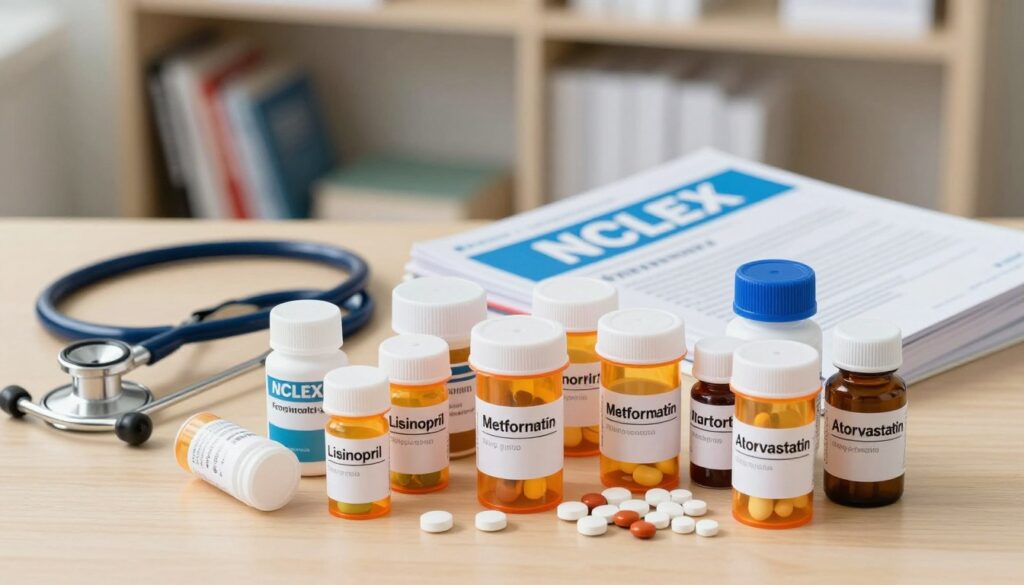
Antihypertensives
Managing blood pressure is a critical nursing skill. We must watch for orthostatic hypotension when patients start these meds. Tell patients to move slowly to avoid falls.
Antibiotics
Antibiotics are a top topic in NCLEX pharmacology medications. It’s important to finish the whole treatment to avoid resistance. Always check for allergies before giving them out.
Analgesics
Pain management is all about finding the right balance. We need to keep an eye on breathing when using strong pain meds. Also, teach patients about the risk of constipation.
“The art of medicine consists of amusing the patient while nature cures the disease.”
The table below highlights important points for these medication types. It’s a great tool for your study.
| Category | Primary Goal | Key Nursing Alert |
|---|---|---|
| Antihypertensives | Lower blood pressure | Monitor for dizziness |
| Antibiotics | Treat infection | Check for allergies |
| Analgesics | Manage pain | Assess respiratory rate |
By focusing on these NCLEX drug classifications, we lay a solid foundation for nursing practice. Regular review of NCLEX pharmacology medications will greatly enhance your test scores.
High-Risk Medications to Focus On
Patient safety is our top priority, focusing on high-risk medications. These drugs need strict safety protocols and constant checks. Knowing these NCLEX pharmacology medications well is key to safe care.
Insulin and Antidiabetic Agents
Insulin is a high-alert medication that requires our full focus. We must know how to calculate doses and understand the effects of different insulins. Hypoglycemia, or low blood sugar, is a common side effect we must watch for.
Always check blood sugar levels before giving insulin. For a quick review, check this NCLEX medications cheat sheet. Teaching patients about diet and glucose monitoring is as important as the injection.
Anticoagulants
Anticoagulants like warfarin and heparin prevent clots but raise the risk of serious bleeding. We must watch for signs of bleeding, such as dark stools or unexplained bruises. Regular lab tests are essential.
It’s our job to teach patients to avoid injuries while on these drugs. We must be ready to stop the medication and call the doctor if lab results are off. Keeping these NCLEX pharmacology medications in mind helps us act fast in emergencies.
Opioids
Opioids help manage pain but can cause respiratory depression and sedation. We must check the patient’s breathing and alertness before and after giving the drug. If there’s an overdose, we need to know how to use naloxone.
Accurate pain level documentation is key to effective pain management. By focusing on safety, we can manage pain without risking harm. These NCLEX pharmacology medications are often tested, so knowing their side effects is critical.
Side Effects and Adverse Reactions
Knowing the difference between a mild side effect and a serious reaction is key for nurses. We must stay vigilant when patients start new drugs. This knowledge helps us give safe, quality care everywhere.

Recognizing Common Side Effects
Most drugs cause side effects that are not harmful. These can be things like dry mouth, feeling tired, or a little nausea. These effects are usually expected when a drug works.
We teach patients how to handle these small issues at home. For example, eating before taking medicine can help with stomach problems. Keeping records of these side effects is important to see how well a patient is doing with treatment.
Reportable Adverse Reactions
Adverse reactions, on the other hand, are unexpected and can be dangerous. They might show damage to organs like the liver or kidneys, or severe allergic reactions like anaphylaxis. Patient safety is our main concern when we see signs of trouble.
“The art of nursing is not just in the administration of medicine, but in the keen observation of the patient’s response to that medicine.”
If we spot a serious reaction, we must stop the drug right away and tell the healthcare team. We also need to write down what happened in the patient’s electronic health record. The table below helps us tell the difference between side effects and adverse reactions.
| Feature | Common Side Effect | Adverse Reaction |
|---|---|---|
| Severity | Mild and manageable | Severe and dangerous |
| Predictability | Expected and common | Unintended and rare |
| Action Required | Monitor and educate | Stop drug and report |
| Patient Impact | Minor discomfort | Life-threatening risk |
Patient Safety and Medication Administration
Keeping our patients safe during medication is our top job as nurses. We know that even a small mistake can cause big problems. So, we stay alert and follow rules to make sure patients get the right care.
The Five Rights of Medication Administration
We use the Five Rights to keep our patients safe. These steps help us avoid mistakes when giving medicine. We check each step every time we give a drug.
- Right Patient: Always confirm identity using at least two identifiers, such as name and date of birth.
- Right Drug: Carefully check the medication label against the order to ensure accuracy.
- Right Dose: Double-check calculations and verify the dosage against the physician’s order.
- Right Route: Confirm the method of administration, whether it is oral, intravenous, or topical.
- Right Time: Ensure the medication is given at the prescribed frequency and scheduled interval.
Error Prevention Strategies
We also use advanced methods to prevent mistakes. Using electronic Medication Administration Records (eMAR) has changed how we track our work. These systems alert us in real-time, helping us avoid errors.
We also double-check high-risk medicines with a colleague. This teamwork adds extra safety for both patients and nurses. Below is a table showing our main safety strategies.
| Strategy | Primary Benefit | Implementation |
|---|---|---|
| Electronic MAR | Reduces transcription errors | Digital scanning |
| Independent Double-Check | Catches calculation mistakes | Peer verification |
| Barcode Scanning | Ensures patient accuracy | Bedside verification |
| Standardized Protocols | Promotes consistency | Institutional policy |
By following these evidence-based practices every day, we greatly reduce the chance of harm. We stick to these rules because our patients deserve the best care. Following these steps is what makes us professional nurses.
Special Populations and Considerations
Pharmacology is not a one-size-fits-all discipline when treating diverse patient groups. Nurses must recognize that physiological differences affect how medications work. Tailoring our care ensures the safest outcomes for each patient.
Pediatric and Geriatric Pharmacology
Children and older adults face unique challenges with drug metabolism. In kids, immature organ systems like the liver and kidneys process drugs differently. We use weight-based dosing to avoid toxicity.
For older adults, declining physiological function makes medication management harder. We often see challenges such as:
- Polypharmacy: The risk of drug-drug interactions grows with multiple prescriptions.
- Reduced Renal Clearance: Slower kidney function can lead to drug buildup in the blood.
- Altered Body Composition: Changes in fat-to-water ratios affect drug distribution.
Pregnancy and Lactation Considerations
Caring for pregnant or lactating patients requires balancing the mother’s needs with the safety of the fetus or infant. Many medications can harm the developing child.
We must evaluate the risk-benefit ratio before starting any new treatment. Important factors include:
- Teratogenicity: Some drugs can cause birth defects, mainly in the first trimester.
- Transfer Rates: We assess how easily a medication enters breast milk based on molecular weight and protein binding.
- Clinical Necessity: We choose treatments essential for the mother’s health while minimizing risk to the fetus.
Always consult current clinical guidelines and pharmacy resources for these vulnerable groups. Vigilance and knowledge help us prevent adverse reactions and provide high-quality care.
Ethical and Legal Aspects in Pharmacology
Our role in medication management goes beyond the bedside. It touches on legal and ethical rules. These rules protect patients and our professional licenses. Understanding them helps us provide safe, quality care and keep patient trust.
Informed Consent
Informed consent is key to patient autonomy. It makes sure patients know the risks, benefits, and options of treatments before agreeing. We play a critical role in explaining this to them.
We must check if patients understand and can make decisions. If they seem unsure, we act as their advocate. Remember, our signature on consent forms is just a witness, not a confirmation of explanation.
- Autonomy: Respecting the patient’s right to refuse medication.
- Beneficence: Acting in the best interest of the patient.
- Non-maleficence: Doing no harm through careful medication administration.
- Justice: Ensuring fair and equitable access to pharmacological care.
Scope of Practice for Nurses
Knowing our scope of practice is key for legal compliance and patient safety. Each state has a Nurse Practice Act that outlines our limits. Administering medications must stay within these limits to avoid legal issues and ensure quality care.
Here are important factors to consider in managing treatments:
- Institutional Policy: Always follow your facility’s specific protocols regarding medication administration.
- Competency: Never perform a task or administer a drug if you have not been properly trained.
- Accountability: We are legally responsible for every medication we verify, prepare, and deliver to a patient.
- Collaboration: When in doubt about a medication order, consult with the prescribing provider or a pharmacist immediately.
By knowing these legal and ethical standards, we protect our patients and careers. Professional integrity is the base of excellent nursing. Following these principles makes healthcare safer for all.
Strategies for Studying Pharmacology for NCLEX
Mastering essential pharmacology for NCLEX means moving from just memorizing to thinking strategically. The many drug names can seem too much, but breaking them into smaller parts helps a lot. Learning about drug classes helps us understand how they work in the body.
Effective Study Techniques
Using mnemonics is a great NCLEX pharmacology study tip. They help us remember drug suffixes and side effects. Learning drugs by their class, like ACE inhibitors or beta-blockers, makes it easier to know their main uses and when to avoid them. This way, we build a strong mental structure for remembering.
It’s also key to use active recall every day. Instead of just reading, try explaining how a drug works out loud. This active engagement helps us really understand the material, not just recognize it.
Utilizing Practice Questions
Using NCLEX pharmacology questions is the best way to check our knowledge. Focus on questions that ask us to think about patient scenarios, not just simple recall. This gets us ready for the real exam and how we’ll think in a clinical setting.
When checking our answers, look closely at the reasons for both right and wrong choices. Knowing why a drug is best for a patient helps us make better choices. Here’s how different study methods can help us do better.
| Study Method | Primary Benefit | Focus Area |
|---|---|---|
| Mnemonics | Rapid Recall | Drug Suffixes |
| Concept Mapping | Visual Learning | Drug Classes |
| NCLEX pharmacology practice questions | Clinical Judgment | Patient Scenarios |
| Active Recall | Deep Retention | Mechanism of Action |
Resources for Pharmacology Practice
Success on the nursing boards needs a smart way to learn drug info. We can feel more confident by choosing the best tools for our study sessions.
Essential Study Materials
Books like Saunders help us start strong. NCLEX pharmacology flashcards are great for quick learning. They’re perfect for studying during busy times.
Digital Learning Tools
Online sites like UWorld and Archer Review offer top-notch practice questions. They help us get used to the exam format. Detailed explanations for each answer choice are a big plus.
Staying consistent with our study plan is key. Active recall helps us remember important drugs. Using all these tools prepares us to care for patients safely and effectively. Our hard work will pay off in our nursing careers.